
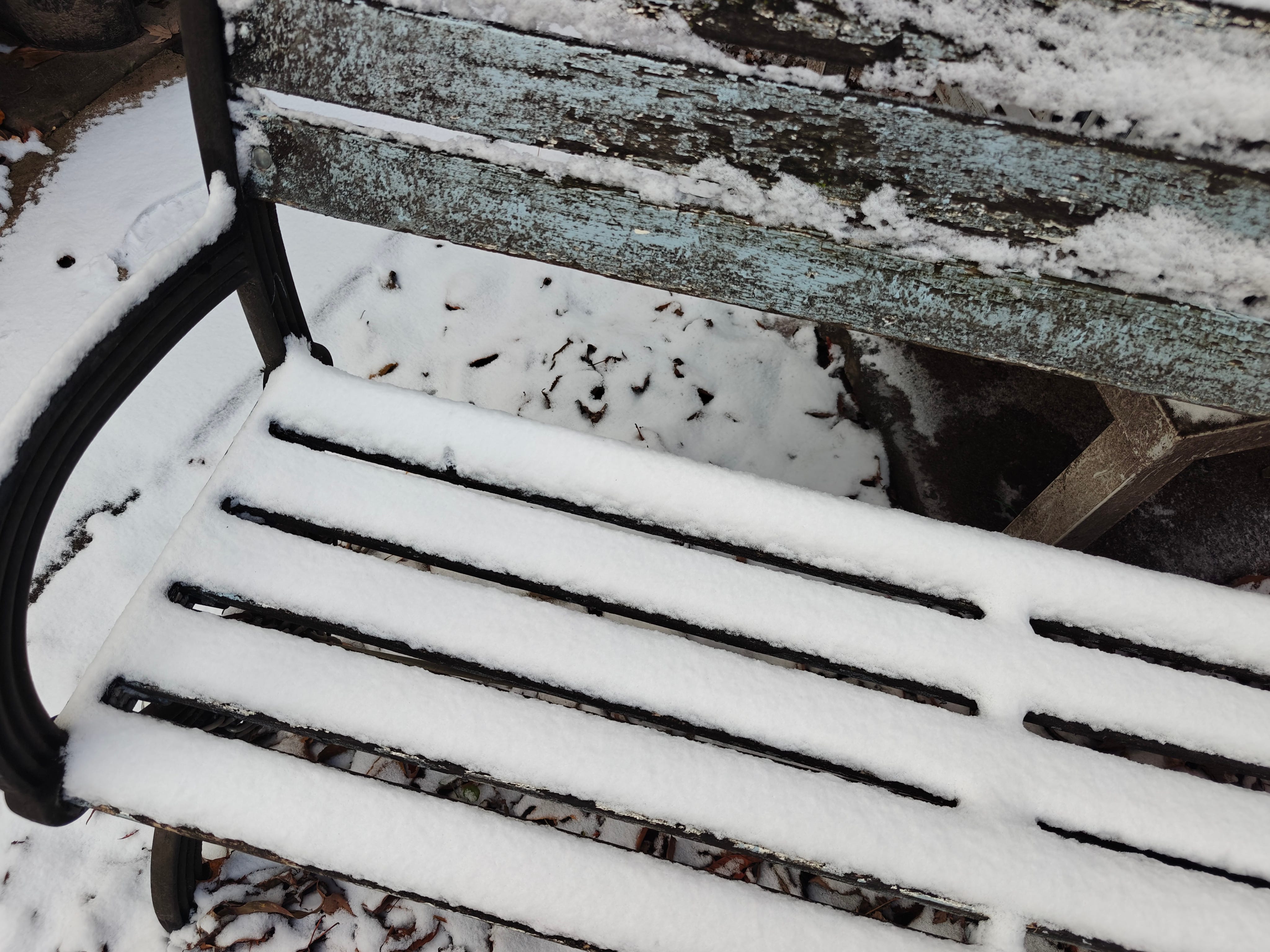
We’ve had every kind of weather here in Toronto since Christmas: snow and wet snow and snow fog, rain, and freezing rain, icy streets, hard frost and deep cold, gusting penetrating winds. And we had a day when water leaked down into a basement window due to ice-clogged gutters. We’ve also had brilliant cloudless skies, long shadows from the low-in-the-sky sun, clear nights with intensely bright stars and planets, and now the huge silvery orb of the full moon.
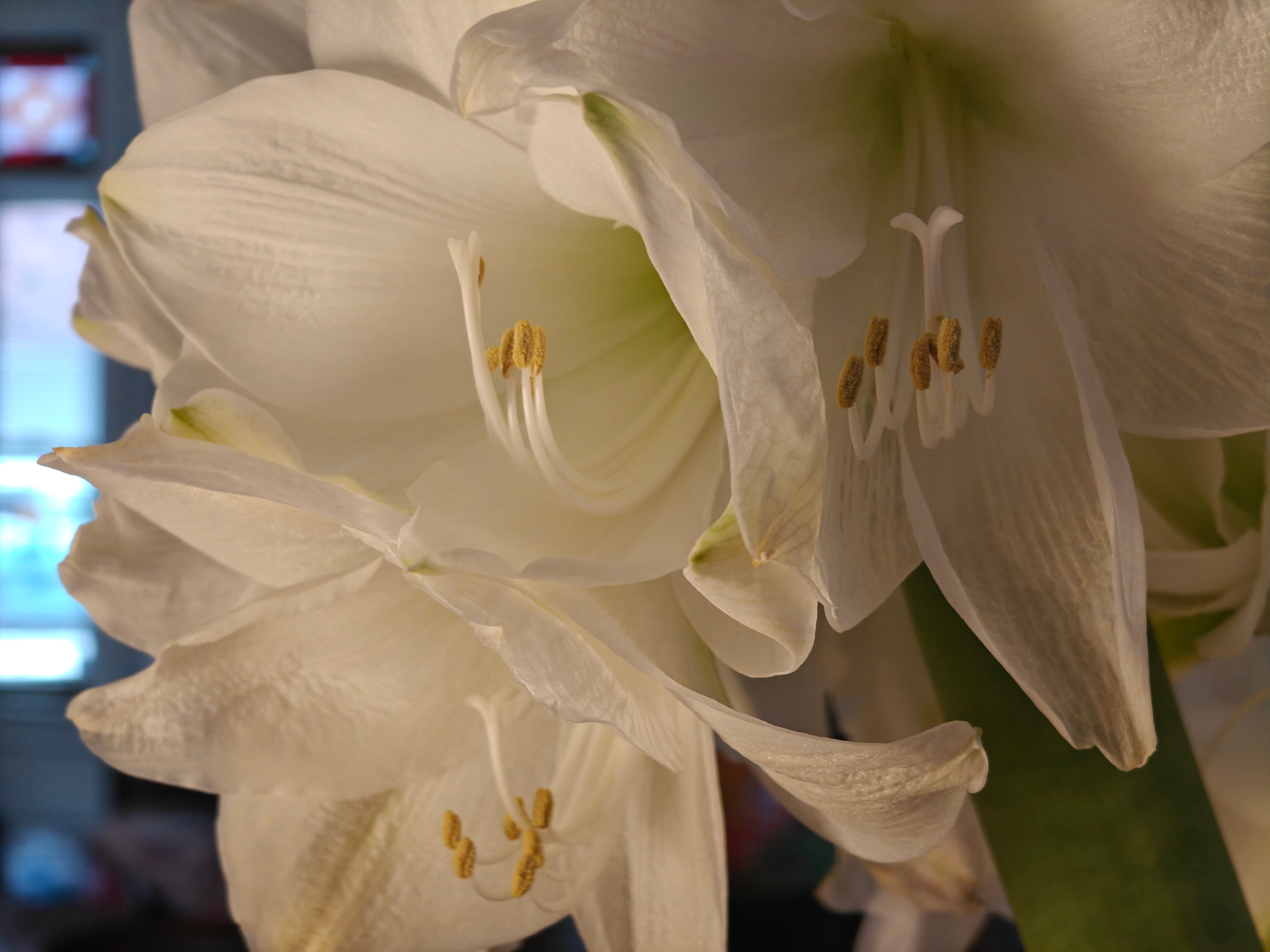
And I’ve had everything too: joy, delight, deep sorrow, shocking grief, laughter and tears, sobs and quiet delight. No wonder I lose track of the day and of time of day. No wonder I’m in a fog of tiredness.
I tell myself that I need to inhabit this space of grief and lostness wholeheartedly. It’s a necessary part of living fully. Of being human. It’s a way of being aware of the suffering of others. And at moments I feel less isolated in my sorrow as I imagine myself part of this larger whole.
I learned the other day from a young friend who is dealing with the pain and frustration of lupus, that Tashi had talked with her about transparency. He told her that he’d decided the only way to deal was to be completely transparent with everyone about his brain tumour diagnosis. He took dread off the table by being open. He told her he thought that covering up or pretending takes a lot of energy. And lack of knowledge makes other people worried and uncomfortable. Better they should know where things stand. Only then is it possible to live lightly, rather than weighed down by a dread of the unknown.
She told me that her conversation with Tashi had made a huge difference to her. It enabled her to be open with others about her illness. It took away her feelings of shame, lifted a weight off her. She no longer felt she needed to apologise or be embarrassed when she asked for a sick day from work or an accommodation from her professors.
And as I think about on these last years, as I relive moments of joy or intensity, I’ve come to understand that the way Tashi dealt with life after his diagnosis was a lesson in living well. He wasn’t in denial. But he managed to not sink into moroseness or despondency. That would be to waste the life he had. He managed to be so present, to take on new work, to take care of his friends, to have fun, to engage with the world and be curious about it.
And I guess that lesson from him, though we never talked about it explicitly, is why and how I am writing here about the day-to-day of living with grief and its many aspects and consequences. As I write I come to understand a little more, and as I explore it further, or it explores me, I’m able to write about it.

the cold, like hard times, has its own beauty
KITCHEN EXPLORATIONS: GOOSE BROTH RISOTTO & RECIPE LESSONS
In my last post I mentioned the broth I’d made from the carcass of the roast goose we made and devoured on Boxing Day. Some of the broth has gone into the freezer in labelled jars (with a lot of empty space at the top of each jar for expansion). But before that, I’d strained the broth, tossed the bones and bits, and then put the rest back in the pot. It sat in a cool place overnight so I could skim off the fat. Goose fat is so precious. I look forward to frying potatoes!
On Monday it was time to make risotto. First I put a couple of litres/quarts of broth in a tall pot over medium low, so it would be hot and ready to be added when heeded. Then I started with a little chopped garlic in a generous layer of olive oil in the bottom of my heavy Staub pot over medium heat. Once the garlic had softened I sprinkled on washed carnaroli rice (I wash/rinse all rice). I gave it a gentle stir as it started to heat, then scooped up a cup full of hot broth and added it to the pot. It boiled almost immediately and I added a second cup. After that, as always with risotto, it was a matter of keeping the heat low enough that it cooked without sticking, and adding broth when the liquid got too low. Somewhere in there I tasted for salt and added a little. About halfway through cooking I added some thin slices of delicata squash
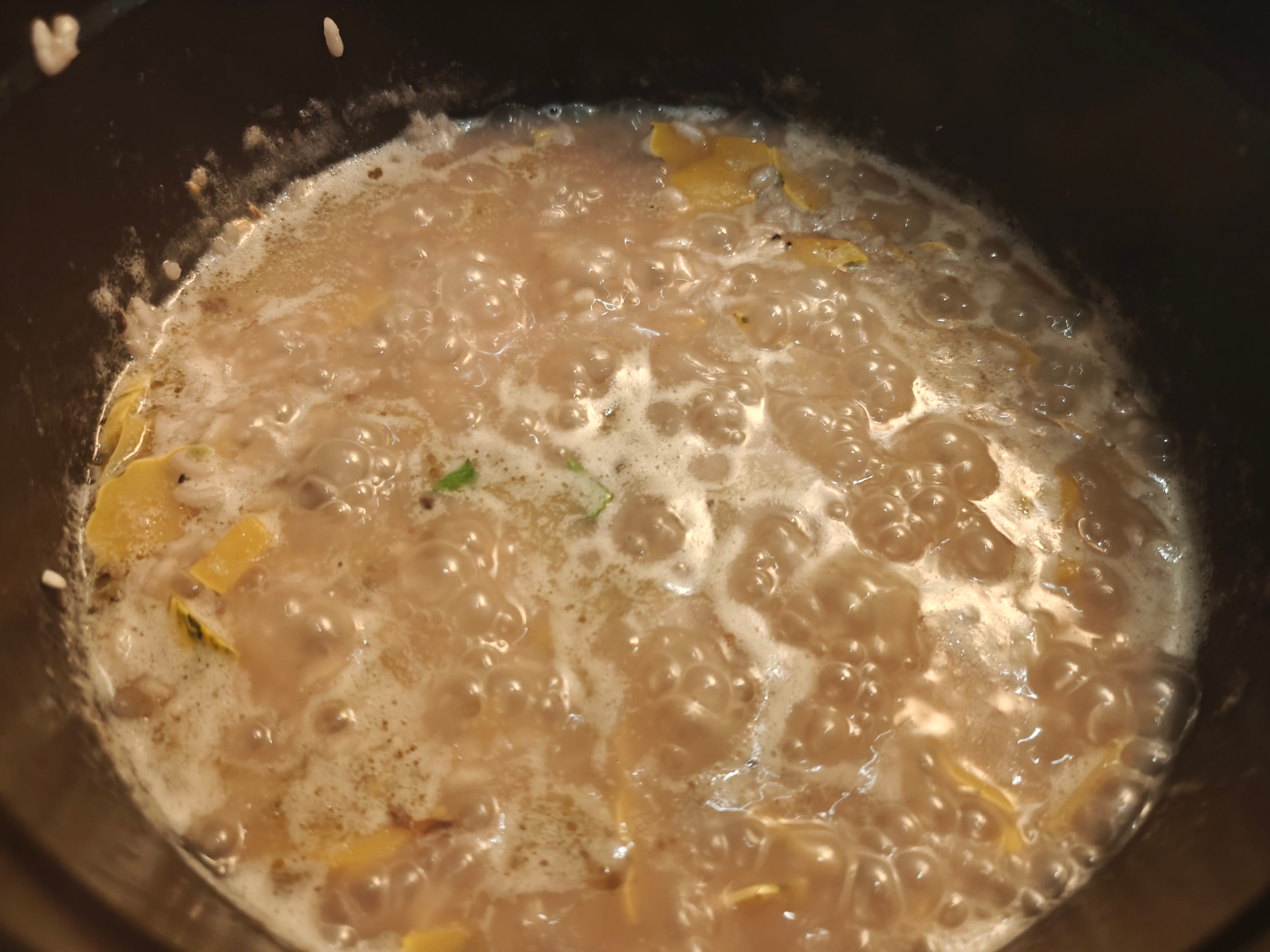
risotto bubbling
And sometime soon after that I put a very large purple carrot, cleaned and sliced in half lengthwise, on top of the rice. It lay there steam-cooking under a half-covered lid. Why add a carrot? It was a way of lightly cooking the carrot that was going to be chopped into a small salad with arugula and radicchio, without using another pot
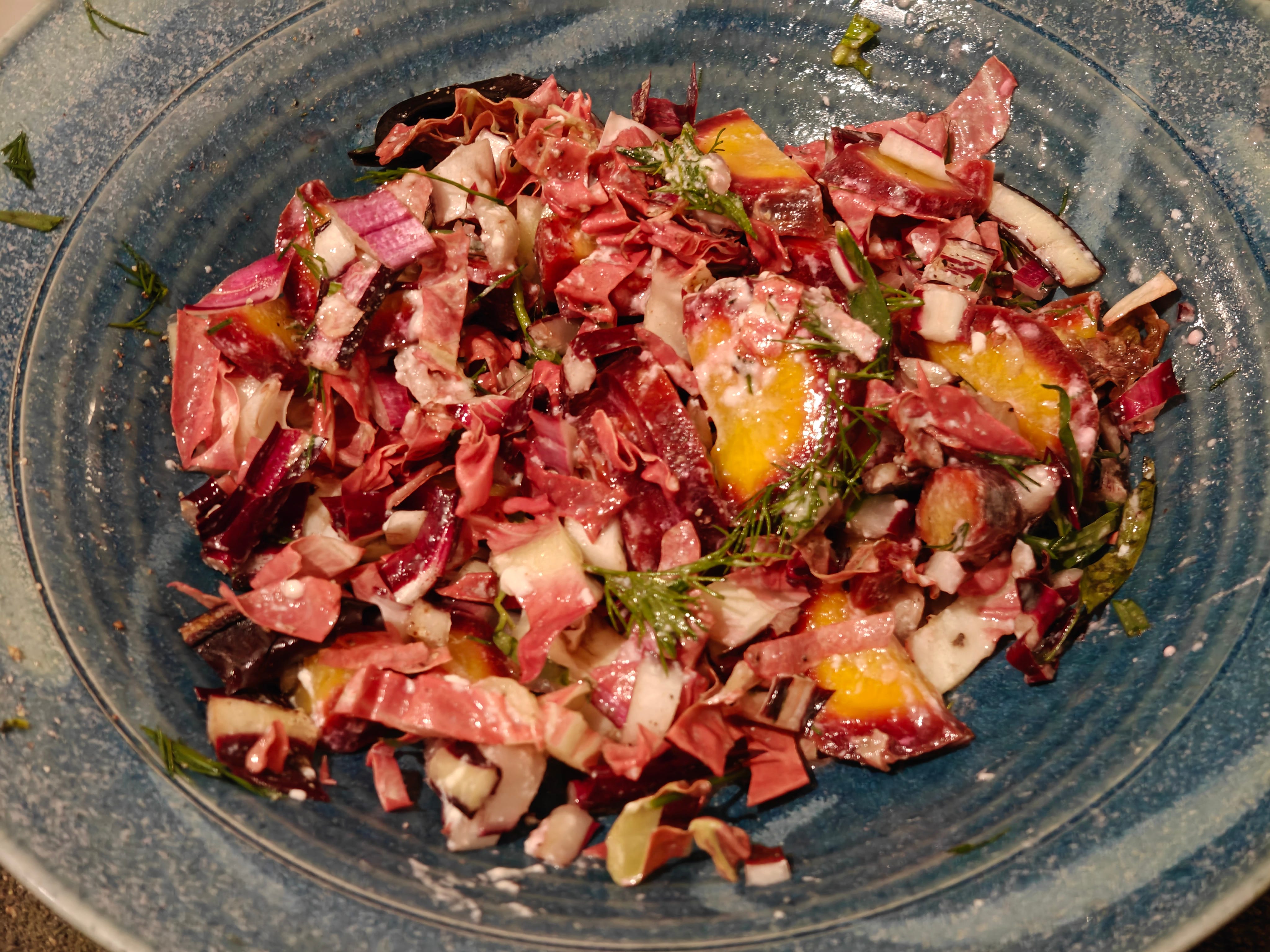
radicchio and carrot salad with a little dill
Later on I added a generous dollop of red wine (there was no white open). I like to finish the cooking with enough liquid that there’s a very loose soupy texture. Once the rice was at a tender al dente, I turned off the heat and added small chunks of butter. After it sat a little so the rice could firm up, I gave it a stir and folded in some grated parmesan, about a half cup.
After that pause, the rice had absorbed more of the liquid, but the risotto still had a loose texture, so it was easy to spoon up, mouthful by succulent mouthful. It was a perfect second gift from the goose, warming on a cold snowy night

the other treat this week has been having time to read this remarkable book
The following evening I had a less easy ride in the kitchen. It taught me an old lesson.
I had read Nancy Harmon Jenkins’s clear lovely recipe for “Wintertime Pasta with Walnuts for a Healthy New Year” on her substack last week: spaghettini or other thin long pasta dressed in a walnut and anchovy dressing, elegantly simple and quick. For the first time in years I decided to follow someone else’s recipe, a recipe new to me.
I discovered, or perhaps I should say I rediscovered, that it’s not easy. (I was particularly handicapped by using my phone to display the recipe. It meant I couldn’t see the whole thing in one glance, as you can do when you use a well-designed cookbook.)
You can find the recipe in Nancy’s Substack “On the Kitchen Porch” dated December 28, 2025. Highly recommended.
Basically while the water comes to a boil and the pasta cooks, you make a simple sauce in a large pot: You heat the garlic in a generous amount of olive oil to soften it, then add about 1 ½ cups of finely chopped toasted walnuts, and about ten (rinsed off) mashed anchovies. Then you stir in hot water from the pasta pot to lengthen the sauce. Once the pasta has cooked to a bare al dente, you drain it and add it to the sauce in the pot, tossing it to coat. The warmth of the sauce helps the pasta finish cooking
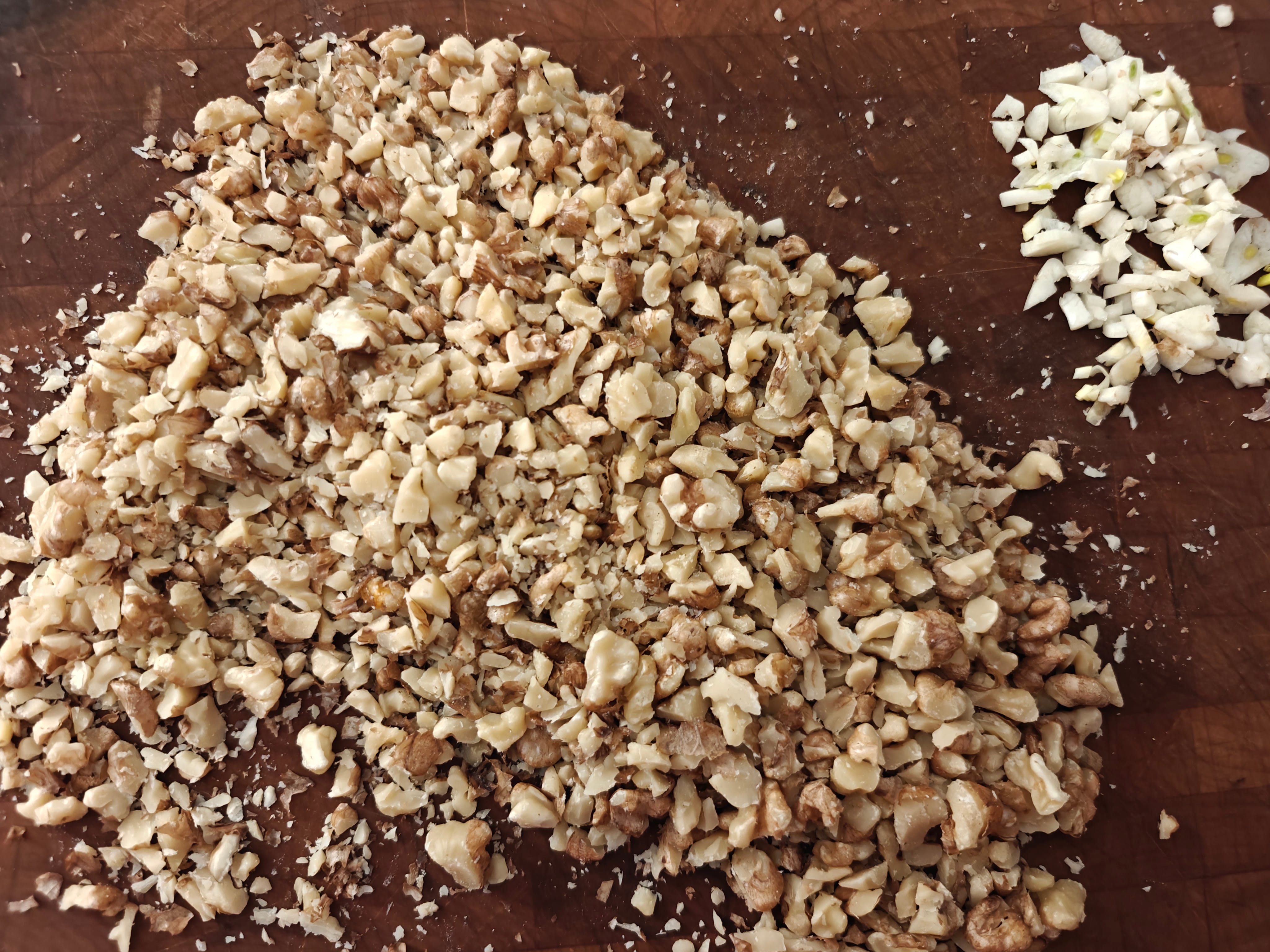
chopping a pile of walnuts, and garlic too
The flavour was terrific. The execution not so much. I scrambled, was scattered and disorganised, kept checking my phone for details. I was a messst all because I had forgotten a basic rule: the first time we use an unfamiliar recipe, the task is not simply to follow it, but also to understand it.
I’d glanced through the recipe and decided it sounded delicious. The simplicity appealed. But I’d skipped the essential, which is, before embarking, to read the whole thing carefully and slowly, and to visualise each step. Even a simple recipe requires imaginative attention the first time or two. That visualising helps me understand why it’s done that way and allows me to inhabit the process as I work. There’s a pleasurable harmony to it.
Without that understanding, I floundered. So silly. But out of it we had a delicious supper nonetheless.
All of this is a reminder that when we’re off track because of grief or exhaustion or distress of any kind, it’s often reflected in our cooking and our other work. But let’s not beat ourselves up over it. Life goes on.

crossing streetcar tracks on a cold snowy night, Spadina Avenue
I've read this twice now. Like 4 AM this morning, and a few minutes ago. I was right to have been impressed, and triggered as always, by the way you relate a process of life, or rather one way to deal with life and the physically irreversible part we call death that I ended up helping thousands of people to deal with through my previous career. There was always food, and always cooking, and always choreography to be learned through observation, or repetition, or just diving right in. If you visualize anything, it's the choreography of cooking, of making a thing, of seeing in your mind or in a video or a visual the actual movements that are the dance steps of a recipe. Often, failure and missteps are our best teachers, perhaps our best and harshest critics, especially if amplified by the person criticizing the performance. I'm glad you're understanding the things that Tashi was doing not only for himself, but in his role as a loving son to his mother, brother, friends, and whoever else was listening. When someone dies, or is dying, they are experiencing the part of life that most people are unwilling to accept - they shouldn't - or unable to accept as the end of the physical part. He is vibrantly alive within you and in those with whom he shared. It is an unbreakable bond. No, you can't control when memories or feelings come on stage, sometimes in bitter cold, often when you feel you are most vulnerable and unable to take another step. You can, however, accept them all as the gift they are. Keeps you on your toes, eh? Sometimes people use recipes (and their authors) as deflectors, shields against criticism, or to hide their fears about not performing in a way they would like to. Most people buy cookbooks as aspirational tools, anyway. When you cook food, you're always sharing. That something is never just food. It's your contribution to this dance that is life, which is just as valuable and exciting and sustaining as improvisation as it is if you followed the choreographed recipe of someone else. Whoever you are cooking for is much more interested in communicating with your food than someone else's, because you're making it and sharing so much more than rice and radicchio. A little bit of Tashi. Beautiful.
This is such a lovely piece Naomi. I’m sharing it with other people who really need your wisdom right now. And Tashi’s. ❤️