
The full moon arrived last night and glowed a pure white, unlike the pink-persimmon tones of the fire-haze-tinted moons of the last few weeks
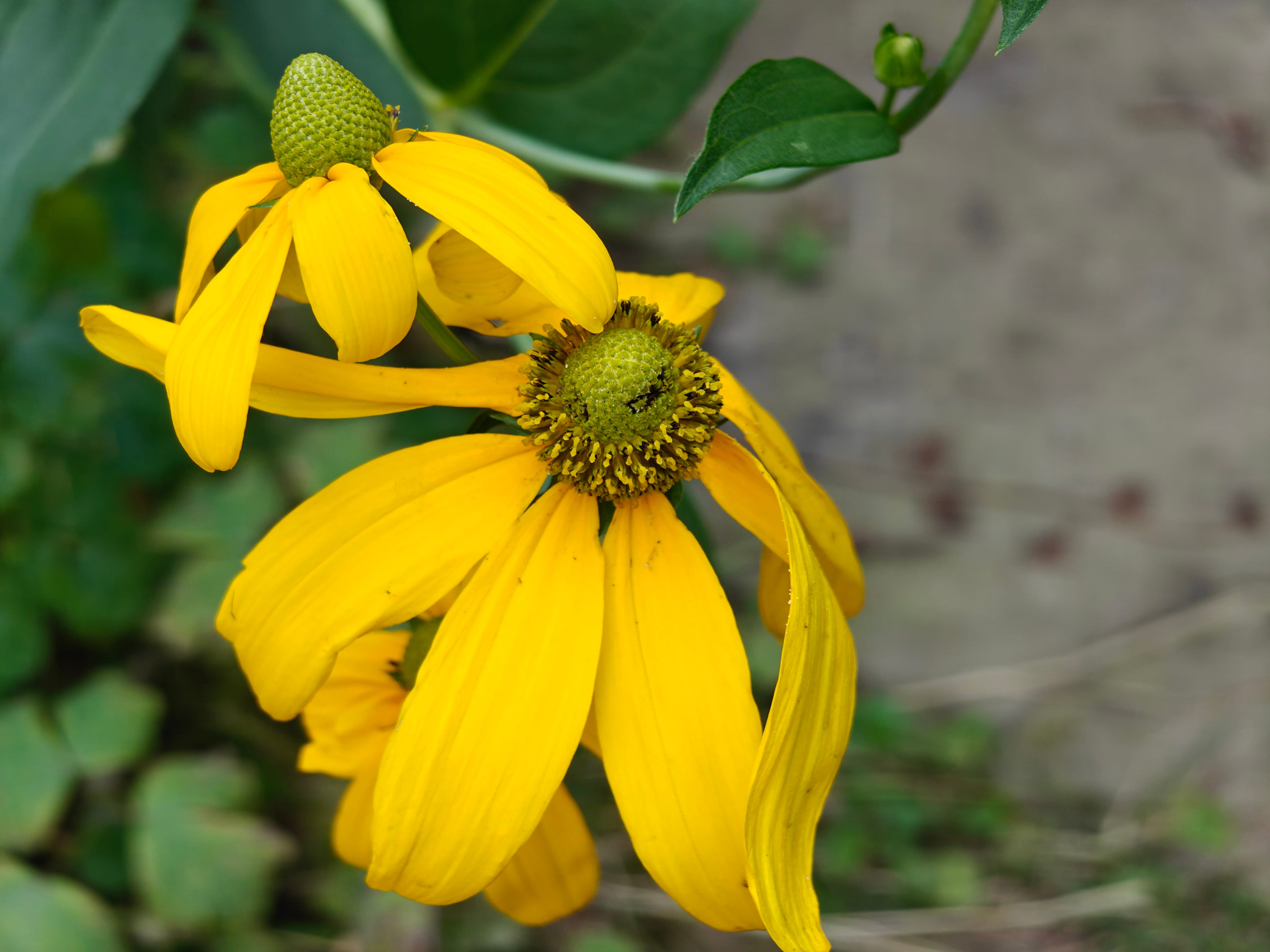
bright spot in the day, always
Do you travel through the year with strong connections to lunar cycles and important dates? I sure do. It just happened over the years, without any ambition on my part, and has become an enriching sub-thread to daily life. I love the way the calendar is animated and given vibrant texture by association with the phases of the moon and human anniversaries such as birth days and death days, as well as historical events large and small. I like drifting across the month in my mind’s eye, remembering significant dates. If you follow more than one calendar, say the Muslim or Jewish or Druidic calendar as well as the standard western one, then you have even more layers of meaning to work with.
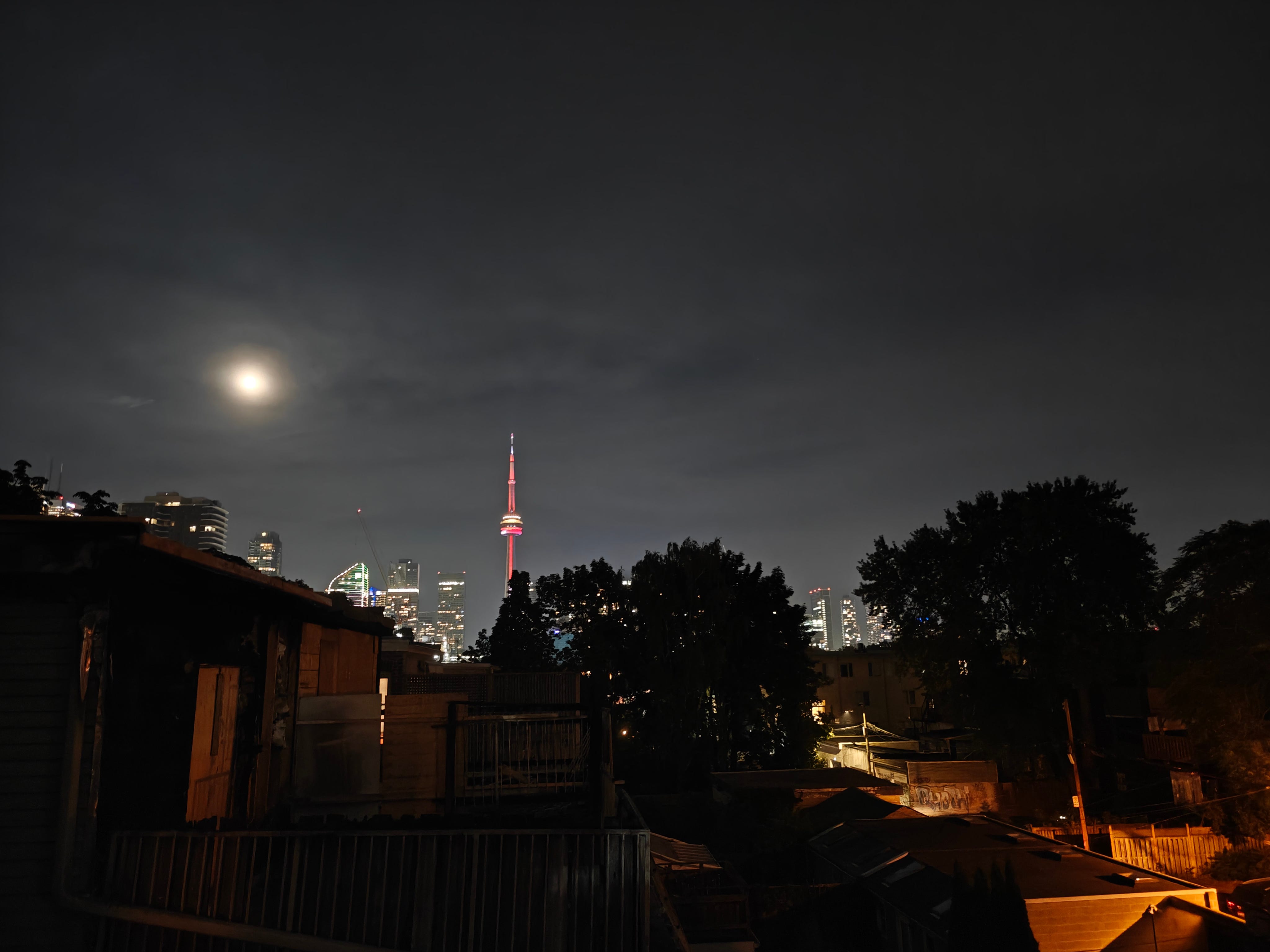
.full moon last night over Toronto
If you farm or garden then you are probably very aware of the phases of the moon, especially in planting season. I don’t know if any science-minded research has been done on the influence of the phases of the moon on plant growth, but traditionally it’s important to plant when the moon is waxing rather than waning.
There’s a light haze today in Toronto, but the Air quality index assures us that the air is reasonably good, with the colour code green, meaning between 50 and 100 ppm of the lethal PM2.5 particles. Here in southern Ontario we’ve been oppressed over the past month by poor air quality caused by the smoke from raging fires in the forests of Manitoba, Northern Ontario, and farther afield too. It’s become a terrible new “normal” to have to flee indoors rather than inhaling fresh air.
Chokingly bad air has been the norm for many people in other parts of the world, in certain seasons. It used to be that in northern China the poor quality coal used for heating and cooking created heavily polluted air in winter, especially in the cities. For years, until the mid-1950’s, London England had blindingly thick “pea-soup” fogs in winter. Regulations and changes in technology have eased both of those situations.
But the bad air that afflicts many places in Southeast Asia in February and March is still an issue and getting worse each year. It’s generally attributed to the burning of rice straw and other stubble by farmers at the end of the dry season, in anticipation of the rains of April.
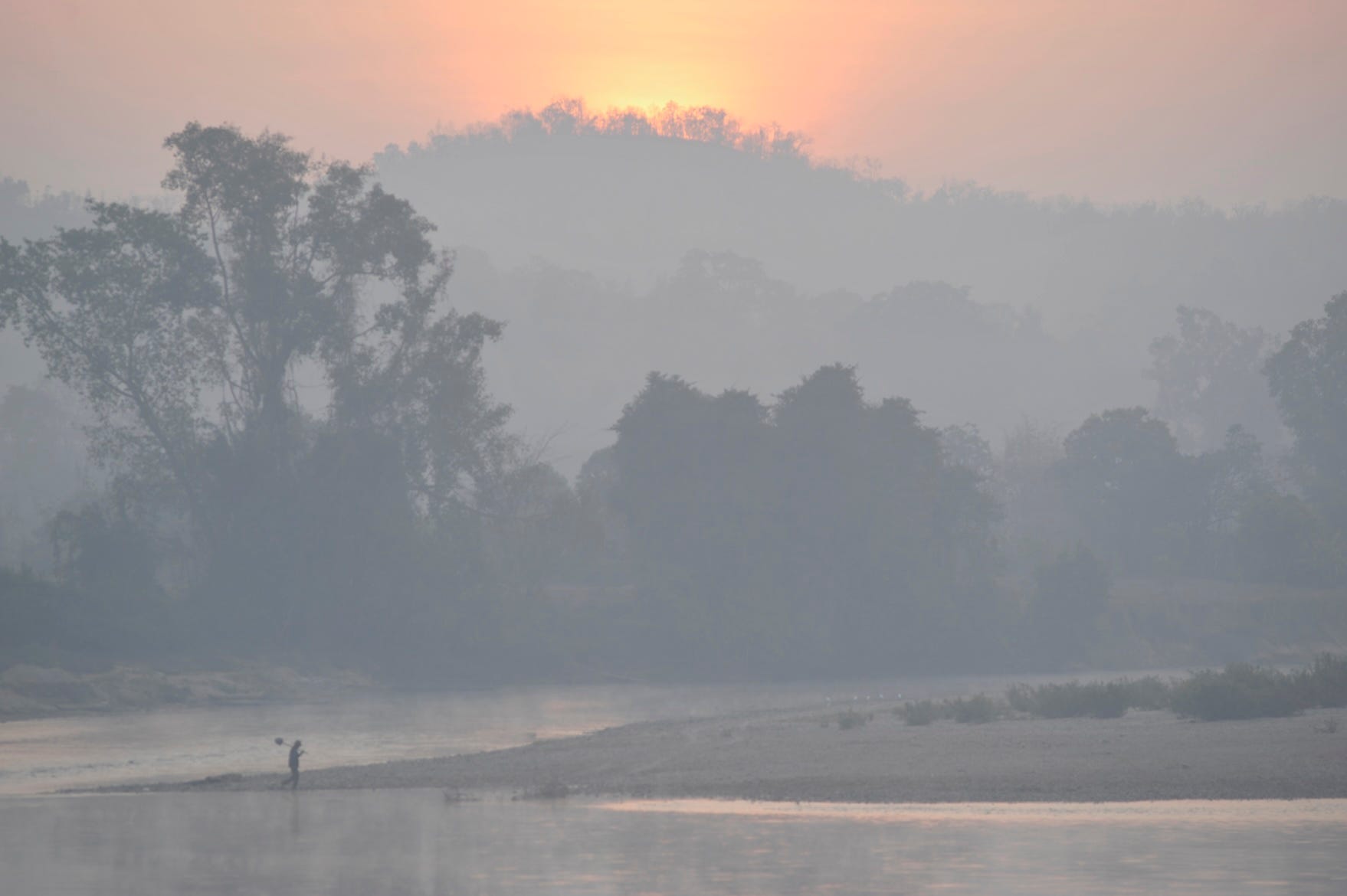
this is morning mist over the Doktawaddy River in Burma, a shot taken fifteen years ago
It seems as if there’s a similar impossibility to fixing the forest fire problem here in North America. Climate change brings hotter drier weather in summertime, and government and industry have for years failed to manage the forests. In Canada the embedded interest in sticking with the status quo by continuing with the carbon-catastrophic Tar Sands project in Northern Alberta, and generally protecting the oil and gas industry sector, is going to choke us all before our due date.
What is it about humans that makes us take a short-term view of things? Is it our awareness that we can never count on the future, so we might as well go on consuming resources as we are?
Our children and our fellow citizens need that future to look better than it does. Why can we not yield our short-term interests to the interests of succeeding generations, those who should be able to live longer than we will? Is it the same reason people cannot see the suffering of others, whether in Gaza or Sudan or amongst the homeless in their own city? Is it because we’re all feeling disconnected from a core shared humanity?
Have humans always been this narrow and short-sighted in their thinking? I imagine so. We don’t like change, unless it is exciting; cutting back on our consumption and comforts does not thrill people. We like the ease and comfort of repetition. We prefer the known, however imperfect, over the (feels risker) unknown. It’s a version of choosing the bird in the hand over the possibility of greater benefit from an as-yet unknown/uncaptured bird in the bush.
And the consequence of our inability/unwillingness to change course is looking increasingly catastrophic.
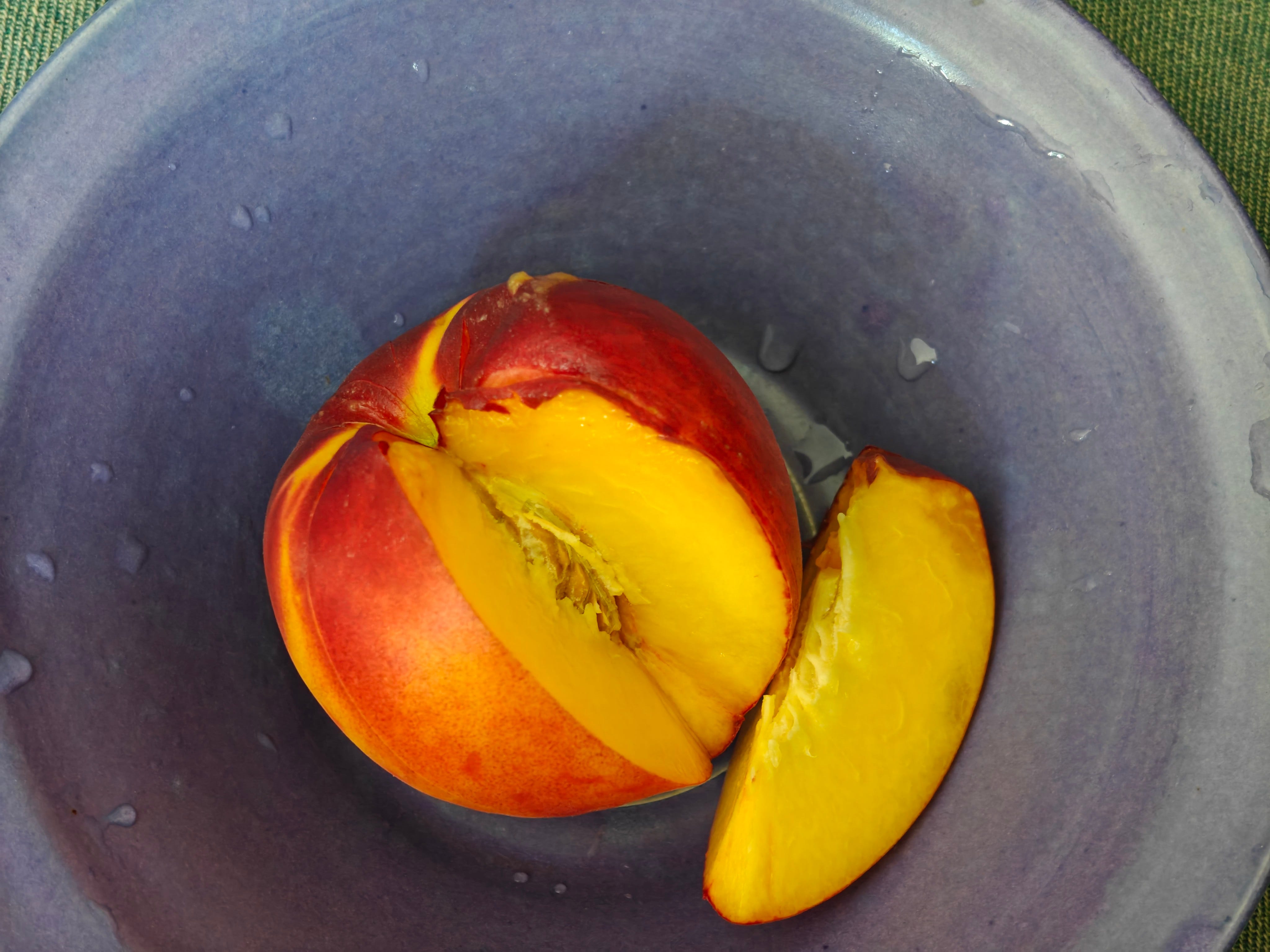
newly ripe peach from Niagara; we’re lucky to have them
KITCHEN EXPLORATIONS - COFFEE AND TART-ACID PLUS…
Nearly twenty years ago, when I was making regular trips into Burma to try to understand enough to write my Burma cookbook, I stumbled on the pleasure of black coffee with a slice of lemon. It wasn’t an exciting innovation, but instead a kind of accidental serendipity. At a local teashop in Rangoon/Yangon I’d asked for black coffee, At the time teashops served coffee made with “3-in-1” single-serving made-in-China packages that were a mix of instant coffee granules with whitener and sugar. Awful stuff. I knew black coffee was unlikely to be available, but I always asked, on the off-chance. And I was lucky this time. After a fairly long wait the waiter brought a cup of black coffee, with a slice of lemon on a saucer It looked like an elegant coffee twin of black tea with lemon.
I was charmed and intrigued. I squeezed the slice lightly into the black liquid and then dropped it in. Though the coffee wasn’t memorably good, the taste combination had promise.
And now, many years later, black coffee accompanied by a slice of lemon or orange or yuzu is being served in some of the newer coffee shops. I love it: There’s the tart-acid of the lemon juice, which dances with the bitterness of the black coffee. And then there’s bitter with bitter, as the peel contributes its bitterness.
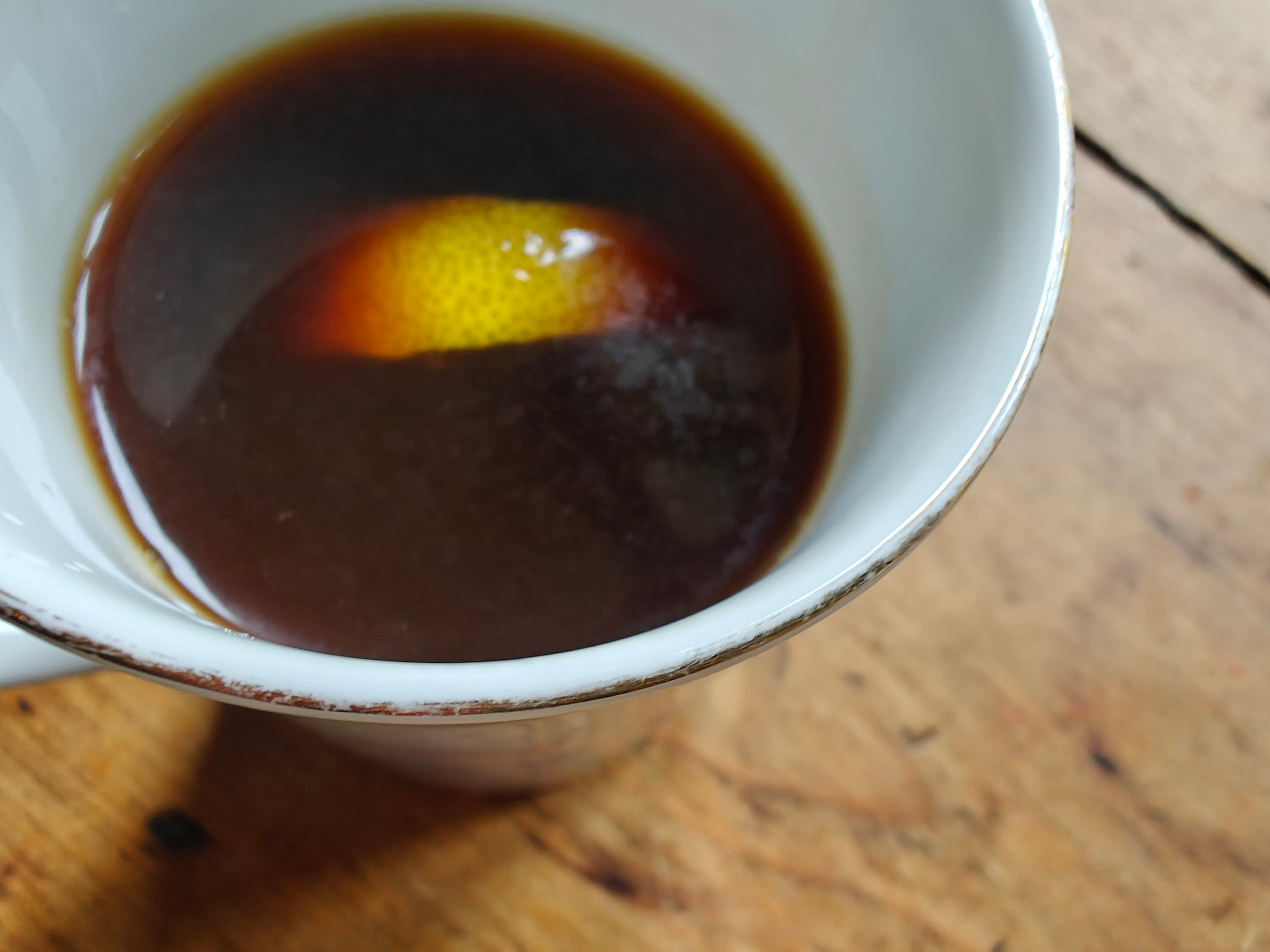
simple black coffee with a slice of lemon, at home
Some like to add sugar to the coffee in this situation. But for those of us who love the intensity of straight black coffee, the pleasure is in the clear biting edge of double-bitter plus tart-acid. Do give it a try, if you haven’t already, and let me know what you think.
SMALL GARDEN REPORT
Despite my neglect and the hot drought of the last few weeks, the garden has produced some shishito peppers, and some tomatoes, as well as its on-going yield of mint, basil, tarragon, shiso, lovage, and chives. I let some of the shishitos ripen to red just to see what happens. I discovered that they seem to lose all flavour, or at least mine did. But they’re very pretty. The green ones are delicious raw, or lightly oiled, grilled, and salted.
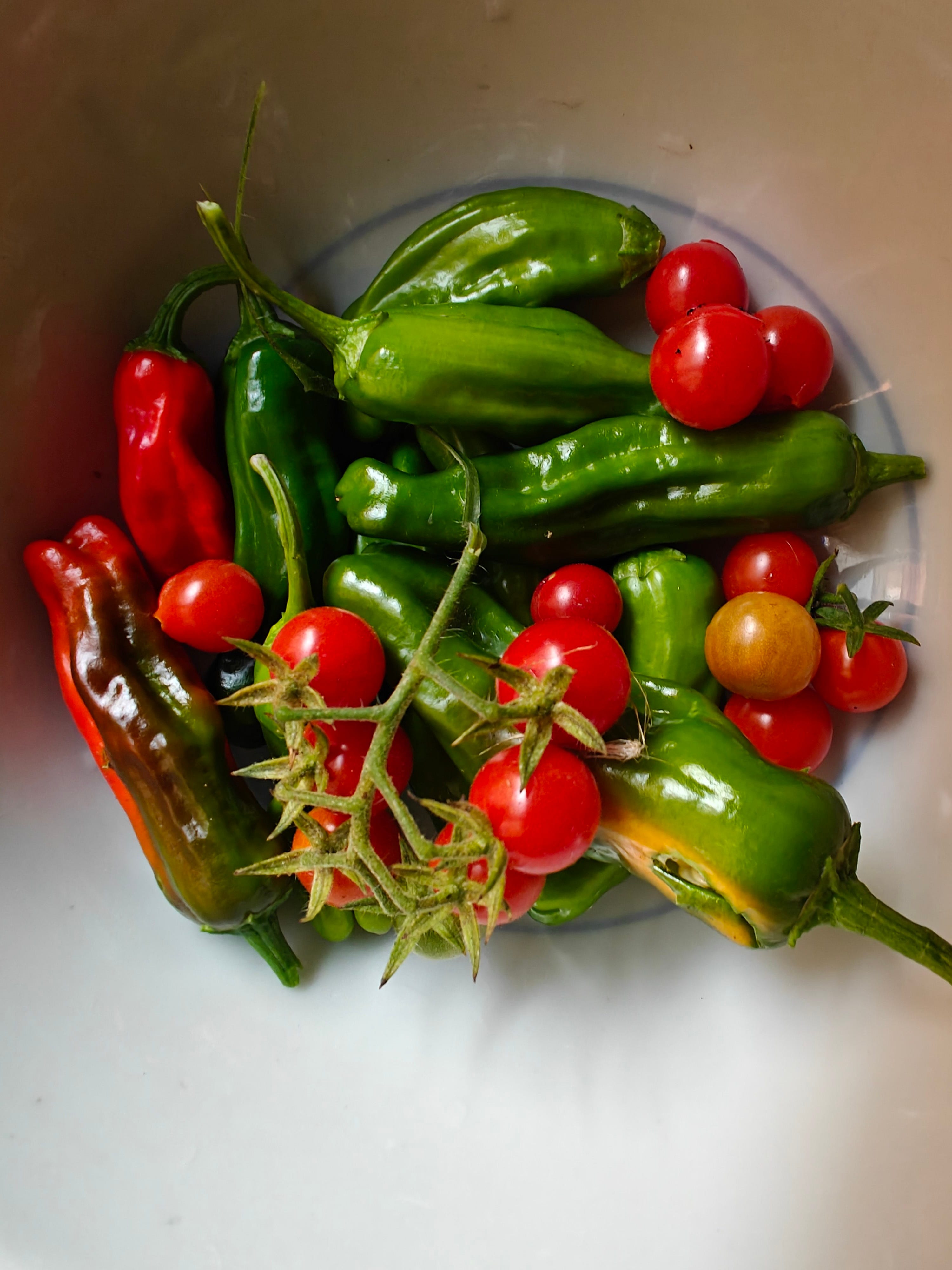
a handful of freshly gathered cherry tomatoes and shishitos
I usually plant only cherry tomatoes because the squirrels here are voracious. They try to take one bite out of everything they can reach. A lost cherry tomato is less of a loss than a despoiled full-sized tomato. But this year I have one tomato plant in a pot that’s so far produced two medium-large fruit. I lost one to the squirrels, but rescued a second. It was delicious sliced, drizzled with a little olive oil, and lightly sprinkled with salt.
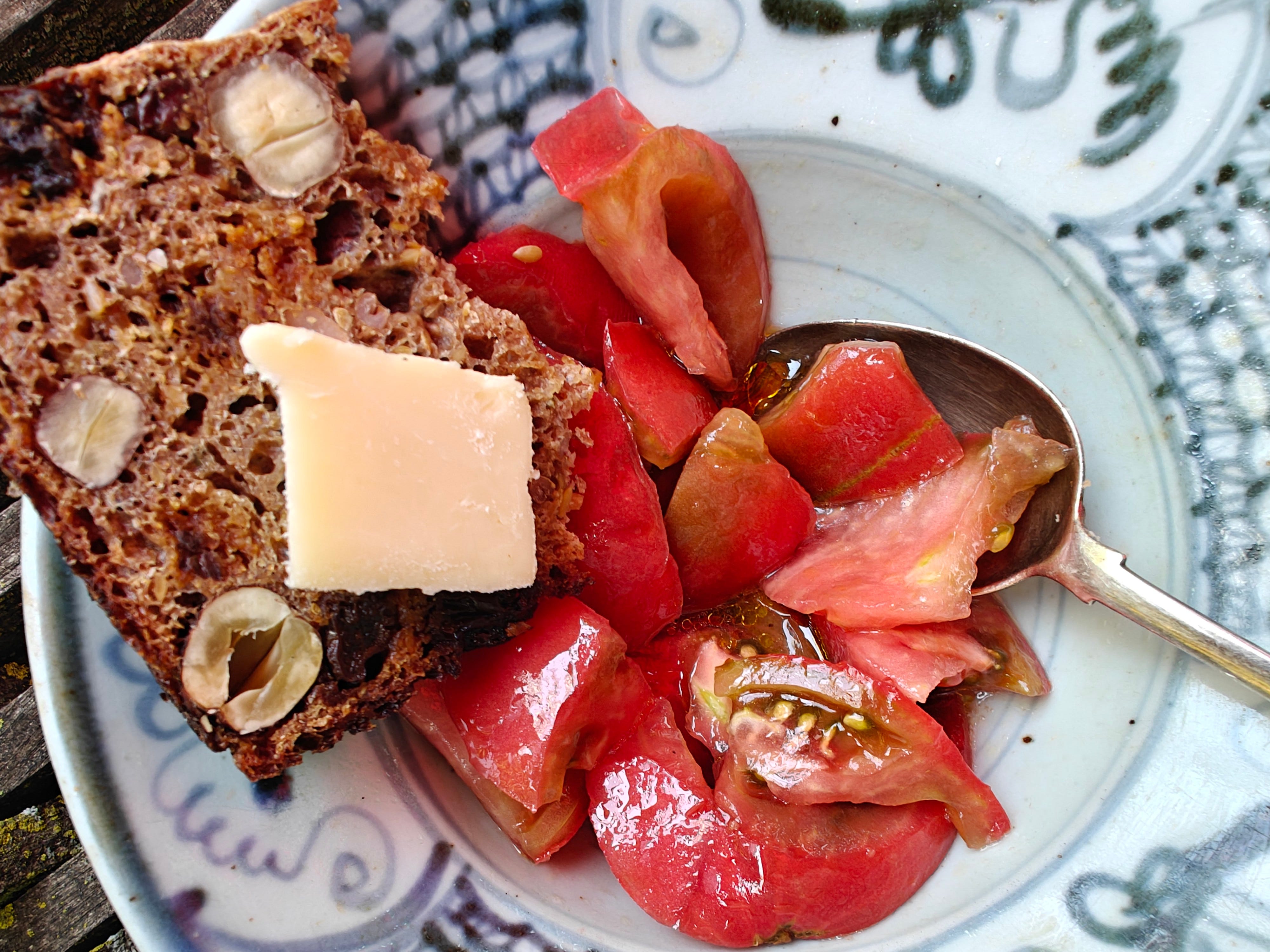
seen here with a slice of Dawnthebaker’s rye bread and aged raw milk cheddar from Quebec
Just a very small comment I will leave here after enjoying reading your text. I discovered the combination of tastes described by you totally by chance. Usually I drink lemony water in the morning and then I drink black coffee without sugar. and I remember the exact moment some years ago when I guess I still had taste of lemon in my mouth when I took a sip of the coffee. I exclaimed with excitement. Great moment and great combo <3
I have now adopted a slice of lemon in my black coffee, Naomi--what an unusual and fantastic combination. Of course my husband thinks I'm nuts...😊
Thank you as always for your thoughtful commentary on our fragile world; I look forward to your perspective every week.