
I’ve been incubating an idea, a theme, a thread, that I find very exciting and that I had thought could grow into a book.
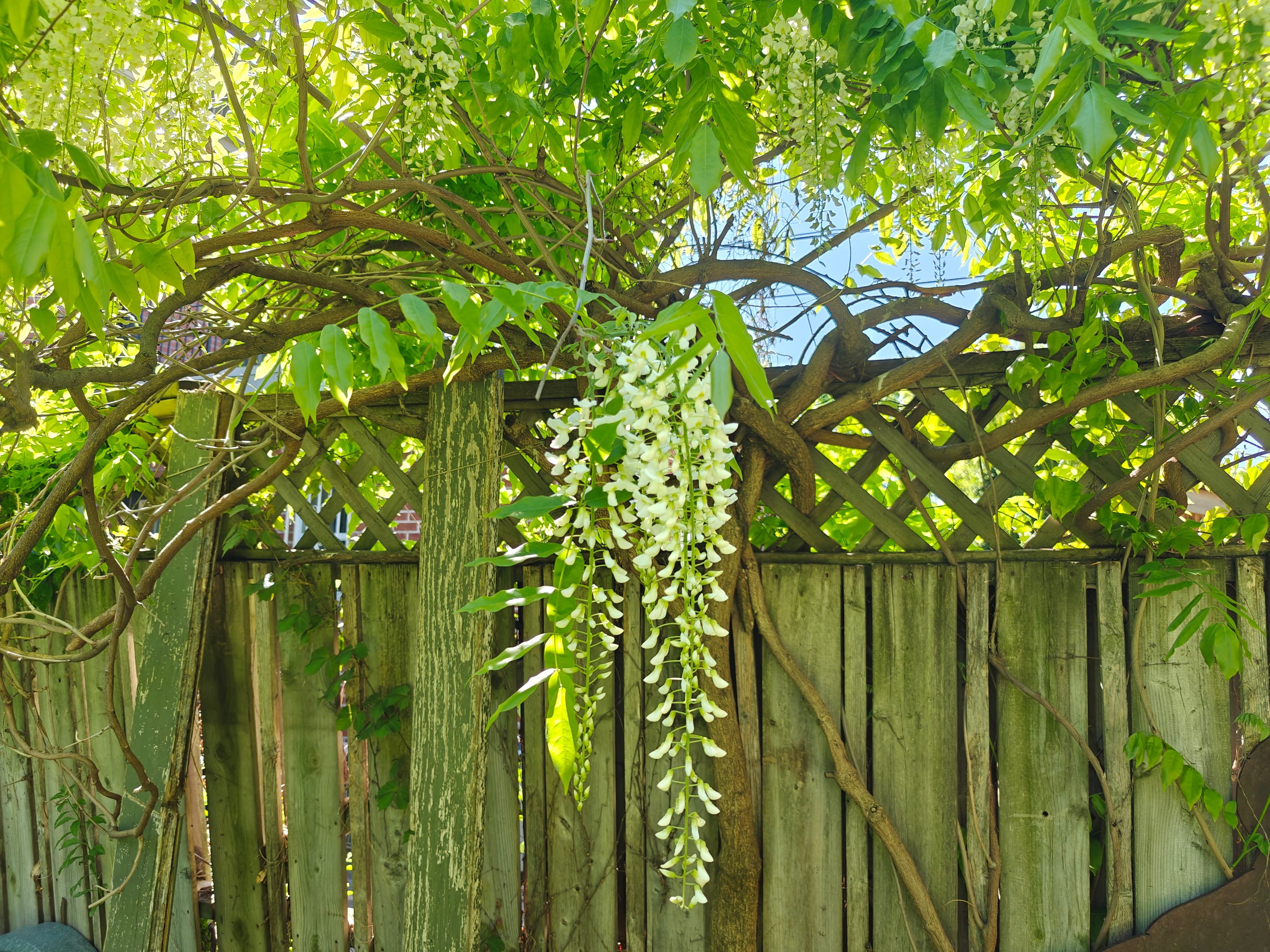
miraculous blooming wisteria this year; unexpected generosity in my garden
I am very lucky to have been well published over the years, and to have been able to explore subjects that interest me deeply. But quirky idea-driven cookbooks have always had to struggle for acceptance, and now perhaps more than ever, as costs rise and the marketing shifts.
Perhaps that’s why my editor wasn’t thrilled by my book idea. I was disappointed, but that soon morphed into relief. I was off the hook. I didn’t have to face the deadlines and anxieties of owing her a manuscript. Perhaps even more important, as I reflected on it all, I realised that the pressures of publishing and book-selling had come to feel restrictive and uninviting.
And so here’s my idea: I’d like to explore the way we – cooks and eaters all over the world - depend on and seek out the liveliness of tart acid flavours in our cooking and eating. Nowadays lemons are widely available and a kind of fall-back when we need an acid zip to brighten a dish. But until relatively recently lemons were an expensive exotic ingredient outside the Mediterranean region. Instead cooks in northern and eastern Europe, and in North America, used to rely far more on a wide range of traditional techniques and local ingredients to meet the need for tart-acid flavours. In the rest of the world they still do.
This is a huge subject of course. And it’s a rich vein of flavour and tradition to explore.
Many of the ingredients used by cooks all over the world to create tart-acid flavours are fruit based. Apart from citrus of various kinds in some areas (think of the many limes of Southeast Asia, the kumquats and yuzu in Japan, the salted dried limes of Iran, Iraq, and beyond, as well as all kinds of lemons), the fruits used include tamarind, hog plum, kokum, rhubarb, crabapples, red and black currants, cranberries, sour plums, tart pomegranates, tomatillos, and many locally specific seasonal berries. Unripe fruits are another source of tart acid: think green mango, green papaya, green grapes for verjus, and more. And the many other plant sources of tart-acid flavour include sumac, hibiscus, and sorrel.
The techniques for creating acidity are mostly connected with fermentation: the creation of vinegars and pickles from all kinds of ingredients; the culturing of yogurts and related milk ferments such as kefir and lait caille; even the souring of meat (the fermented pork sausage of northern Thailand, for example).
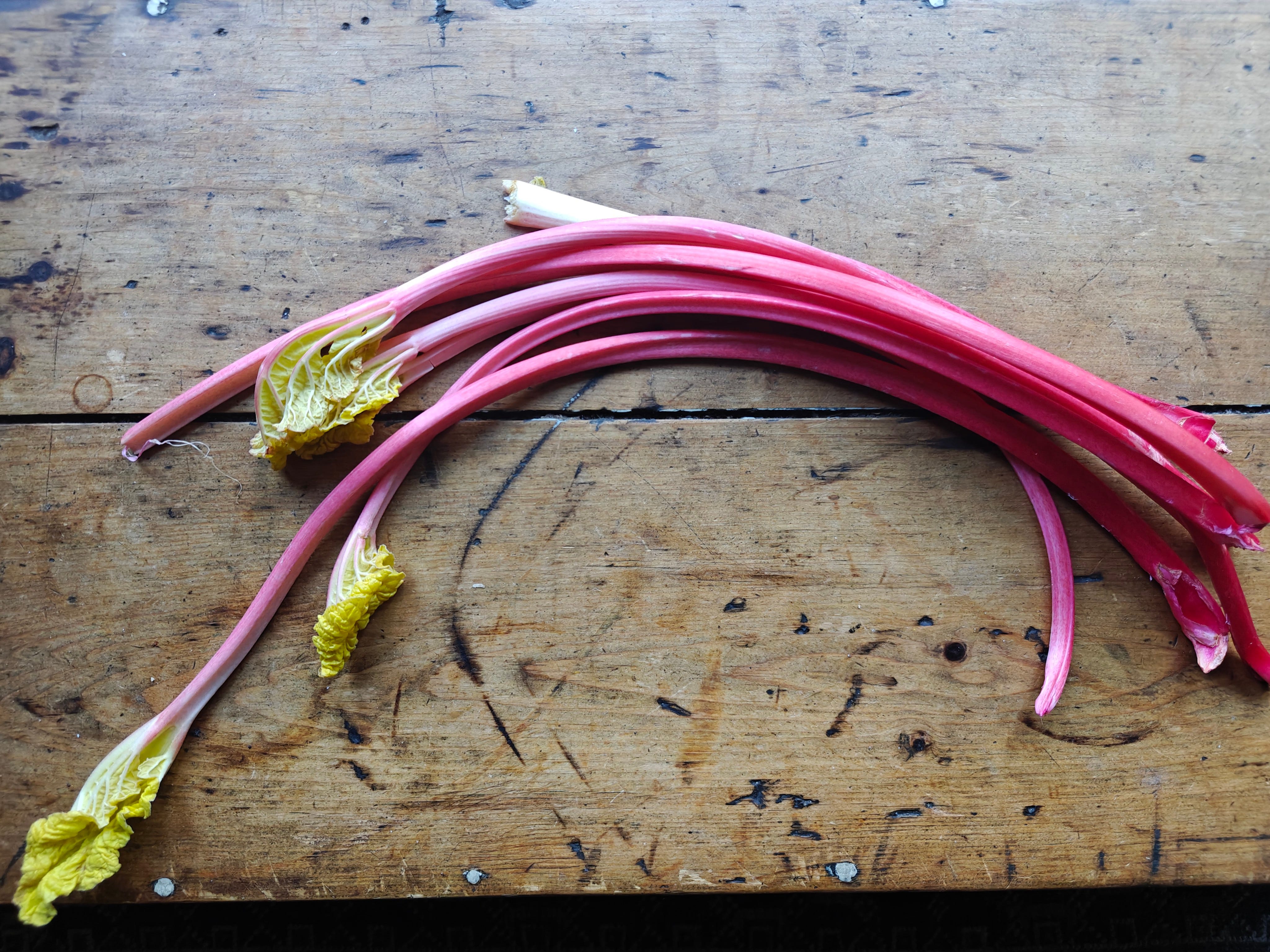
tender Ontario-grown forced rhubarb
I’d like to start focusing on the role of tartness and acidity in the Kitchen Explorations of this weekly substack. I’m not sure how all this will work. (If any of you have suggestions I’m happy to hear them.)
There are recipes in many culinary traditions that depend on tart-sour ingredients. And then there’s the concept of tart-acid as the rescue remedy. I think of it as the element I turn to when I know there’s something missing in a dish. Often the quick solution to a flavour balance problem is a version of “just squeeze in a little lemon/ add a dash of vinegar or dry white wine/ sprinkle on a little sumac.”
Magic.
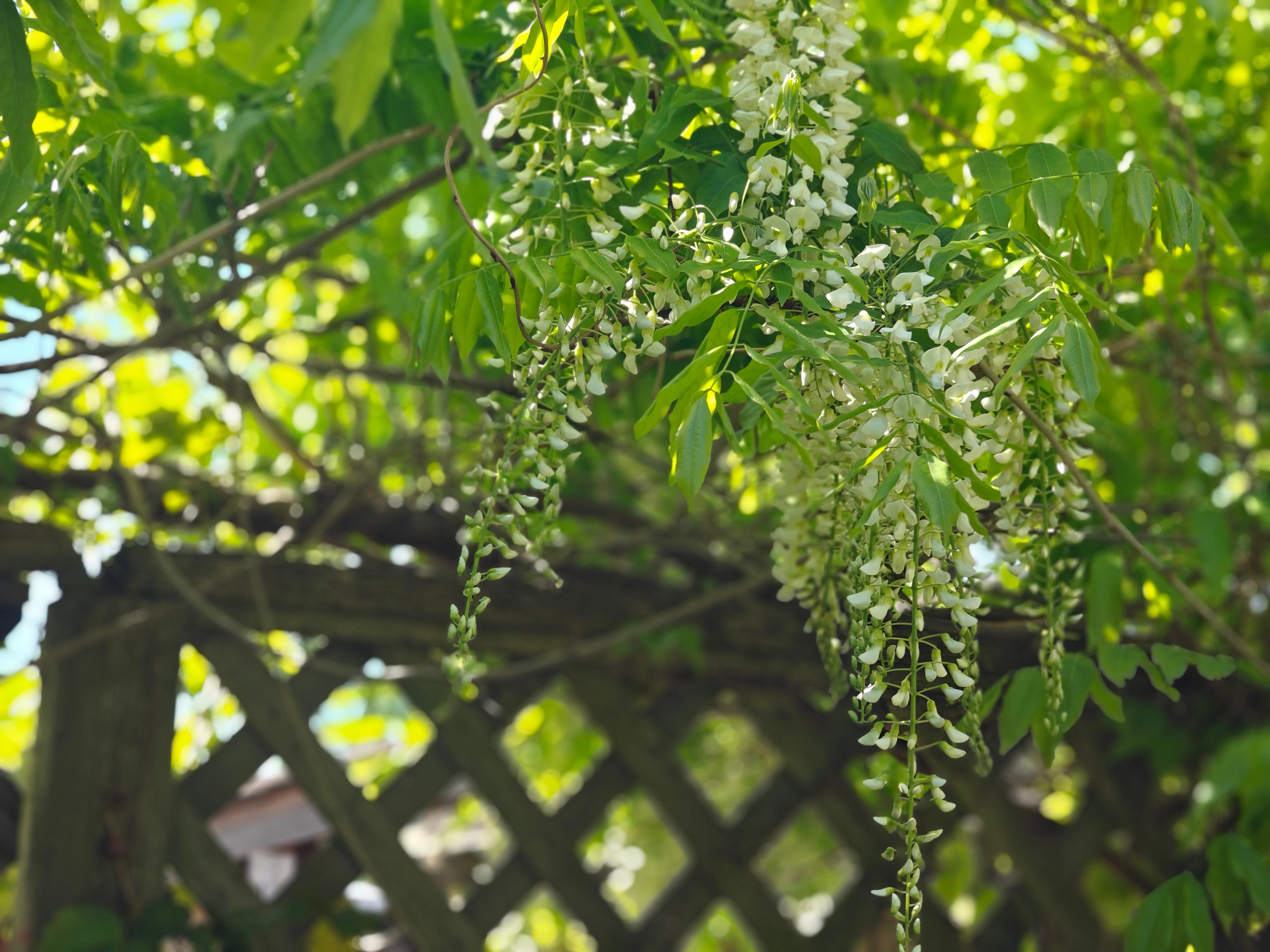
more wisteria, magical; I’ve never before had such a generous blooming from it
KITCHEN EXPLORATIONS - rhubarb
I love rhubarb. Its lovely intensity is like a wake-up call to the palate after the mild sweetness of winter’s root vegetables. This year I was given a little forced rhubarb (see the photo, above, of its graceful pink stems), and about a month later, in late April, regular local rhubarb came available. I’ve had one pick from the clump in my back yard and it looks like another is due this weekend.
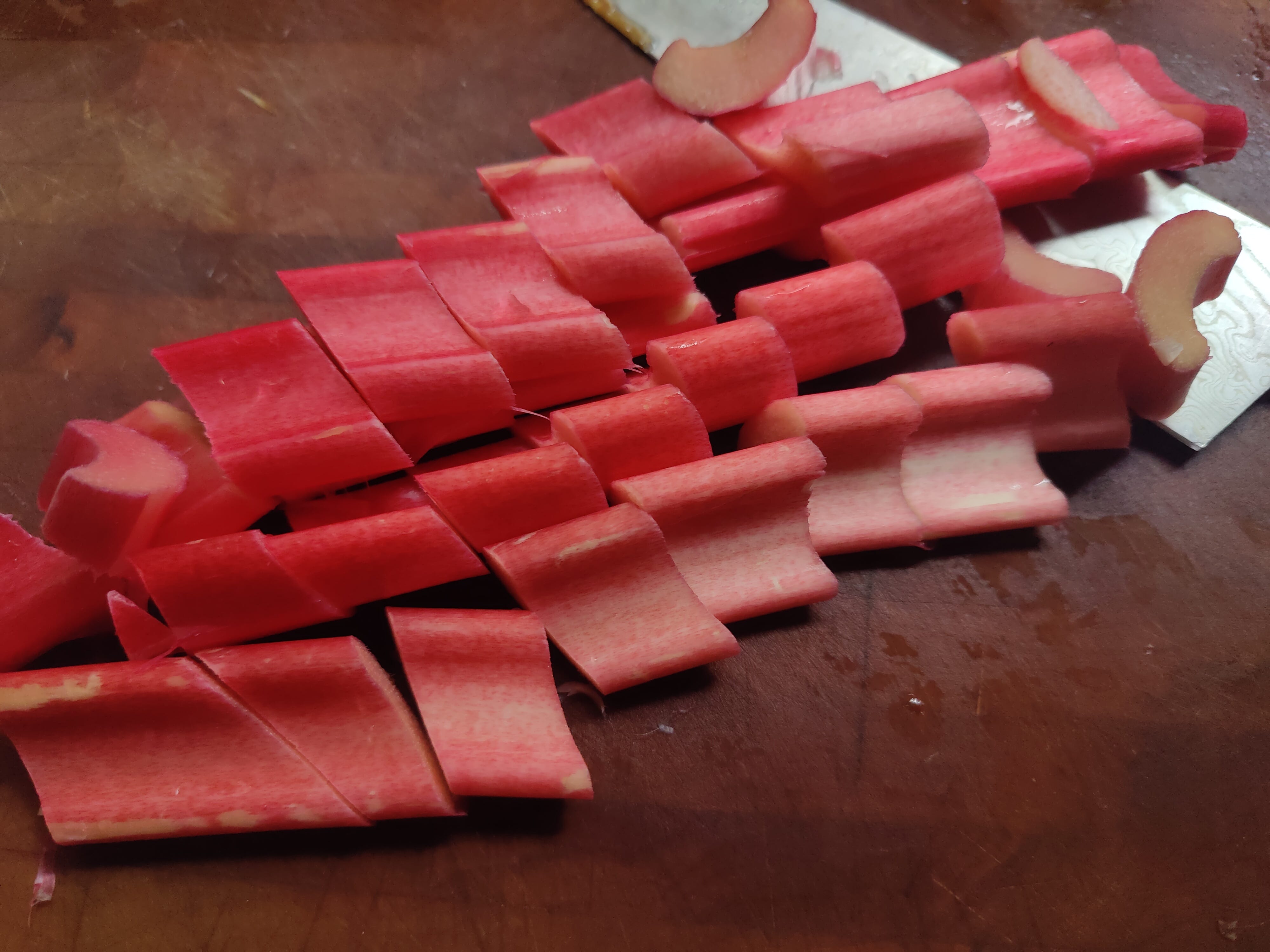
chopped fat-stalked rhubarb on the cutting board
I usually do the simplest thing with rhubarb: wash it, cut off the leaves and trim the bottom end, then chop it into short lengths, less than an inch/2 cm. I then use my mother’s and grandmother’s trick to rinse out some of the intense acid: I add hot water to the pot of rhubarb, swirl it around, pour it off, then repeat with cold water. I do that combination rinse two or three times before setting the pot over medium heat with a tiny amount of water, with the lid on. Once it comes to a strong boil it usually softens in a minute or two. I turn it off and leave it. Once it cools, I taste it, add a dollop of maple syrup, stir it in, taste again, and decide whether to add a little more. The rhubarb then goes into the fridge, available to be added to morning granola, or eaten as a treat with a little yogurt - sweetened acid with a touch of dairy sour - a great combo.
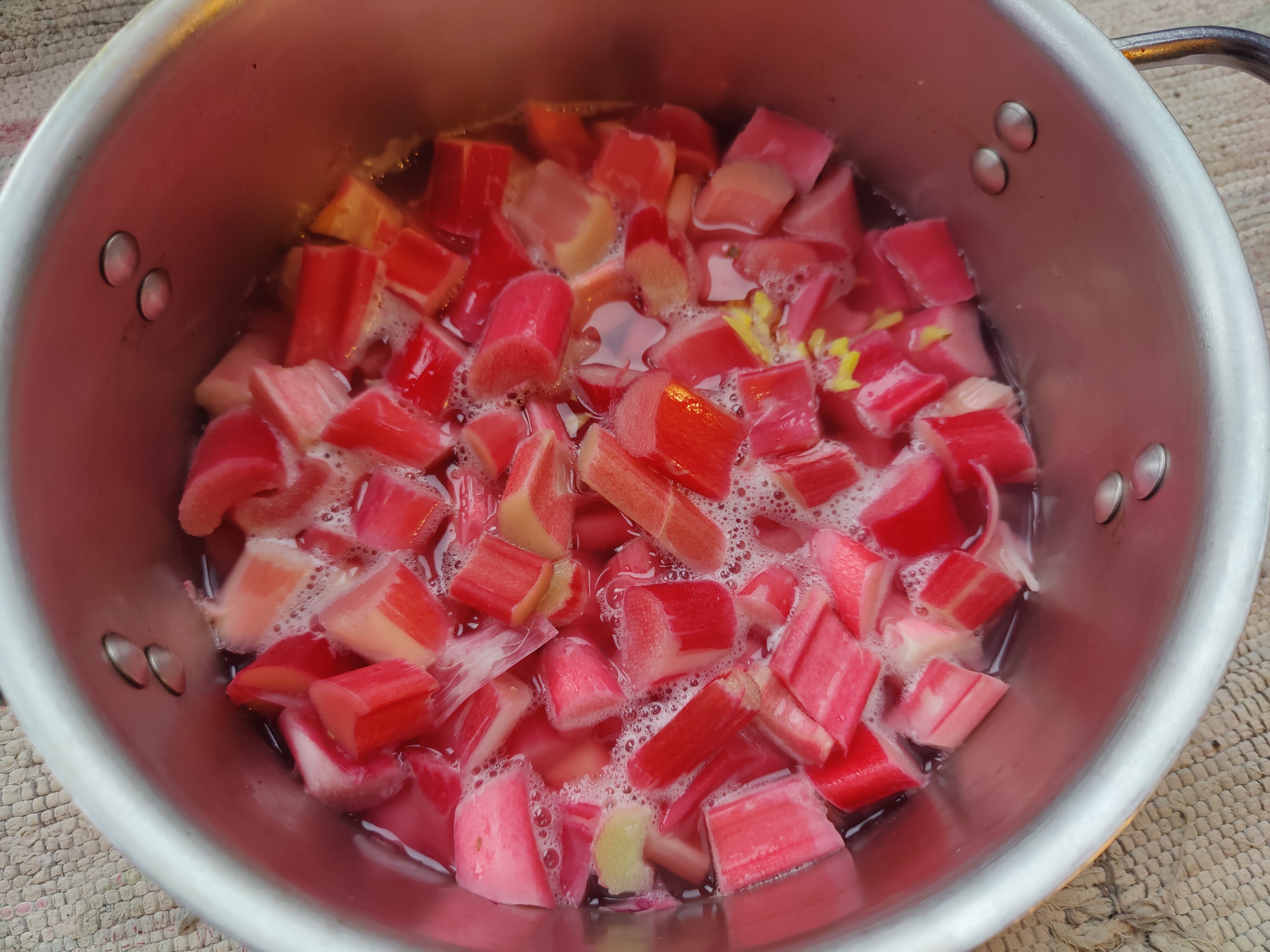
nearly softened rhubarb, with a little chopped ginger included
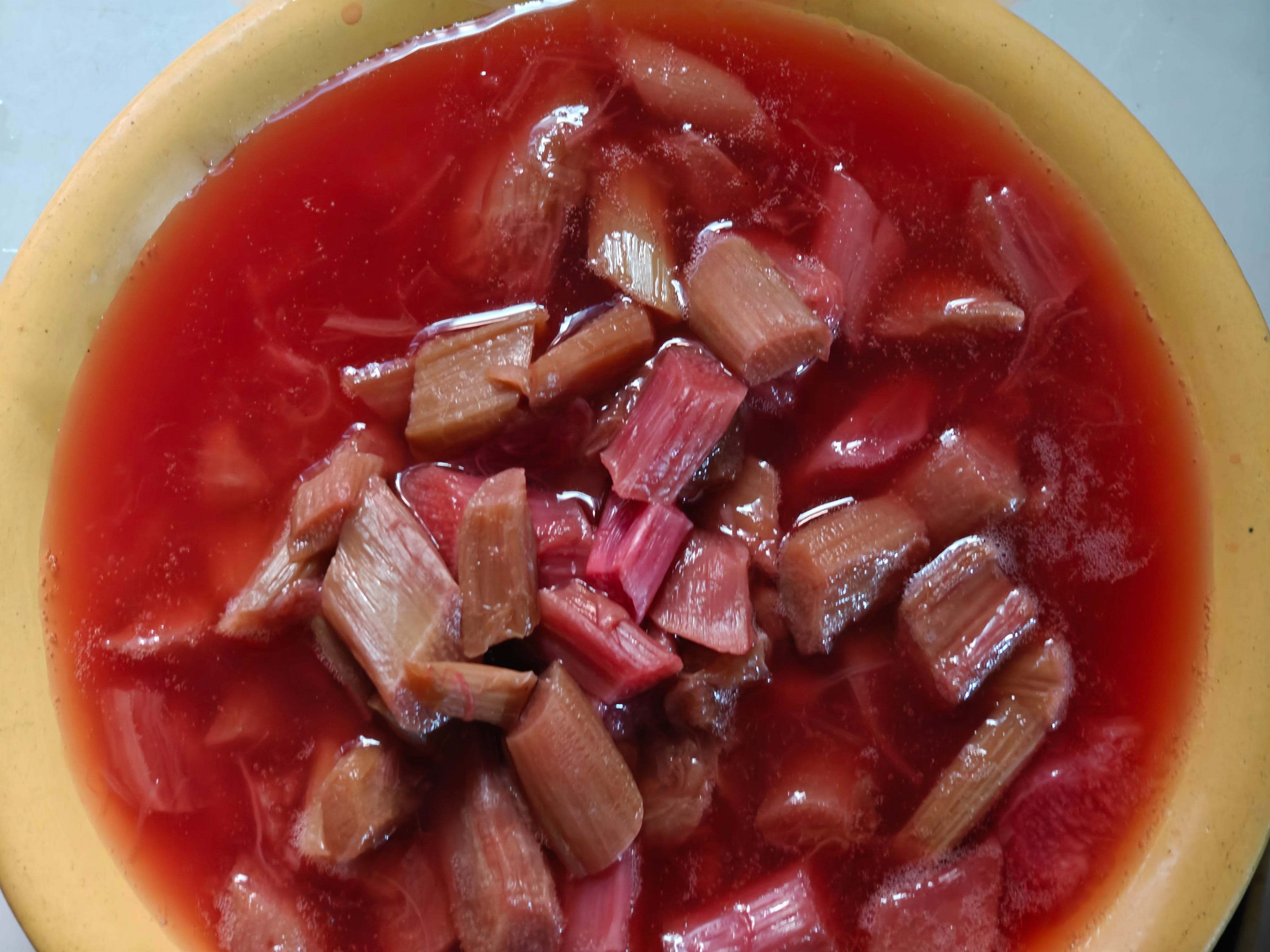
cooked rhubarb in a yellow bowl, ready for action
Rhubarb can also play the role of tart-acid ingredient in savory dishes. In khoresh rivas, a delectable Persian stew, rhubarb is paired with lamb or beef, playing the role of vegetable. There’s a recipe for it in my second book, Seductions of Rice. (If you’re not a meat-eater, you might try replacing the meat with loads of mushrooms and some cooked chickpeas.) I’ve also used it to make a rhubarb version of the brilliant Georgian sauce tkemali, which is usually made with sour plums. I often add a tiny amount of sugar or maple syrup to it to take away its harshest edge, before using it in the tkemali recipe. It’s a fun substitute, and useful, since sour plums are hard to find, unless you have a Persian or Turkish grocery nearby. There are recipes for tkemali in both Flatbreads & Flavors and Taste of Persia.
Back to sweetened rhubarb: another great use of rhubarb is in open-faced tarts, perhaps arranged on top of a little custard or frangipane. The sweet and tart-acid dance together beautifully in the mouth.
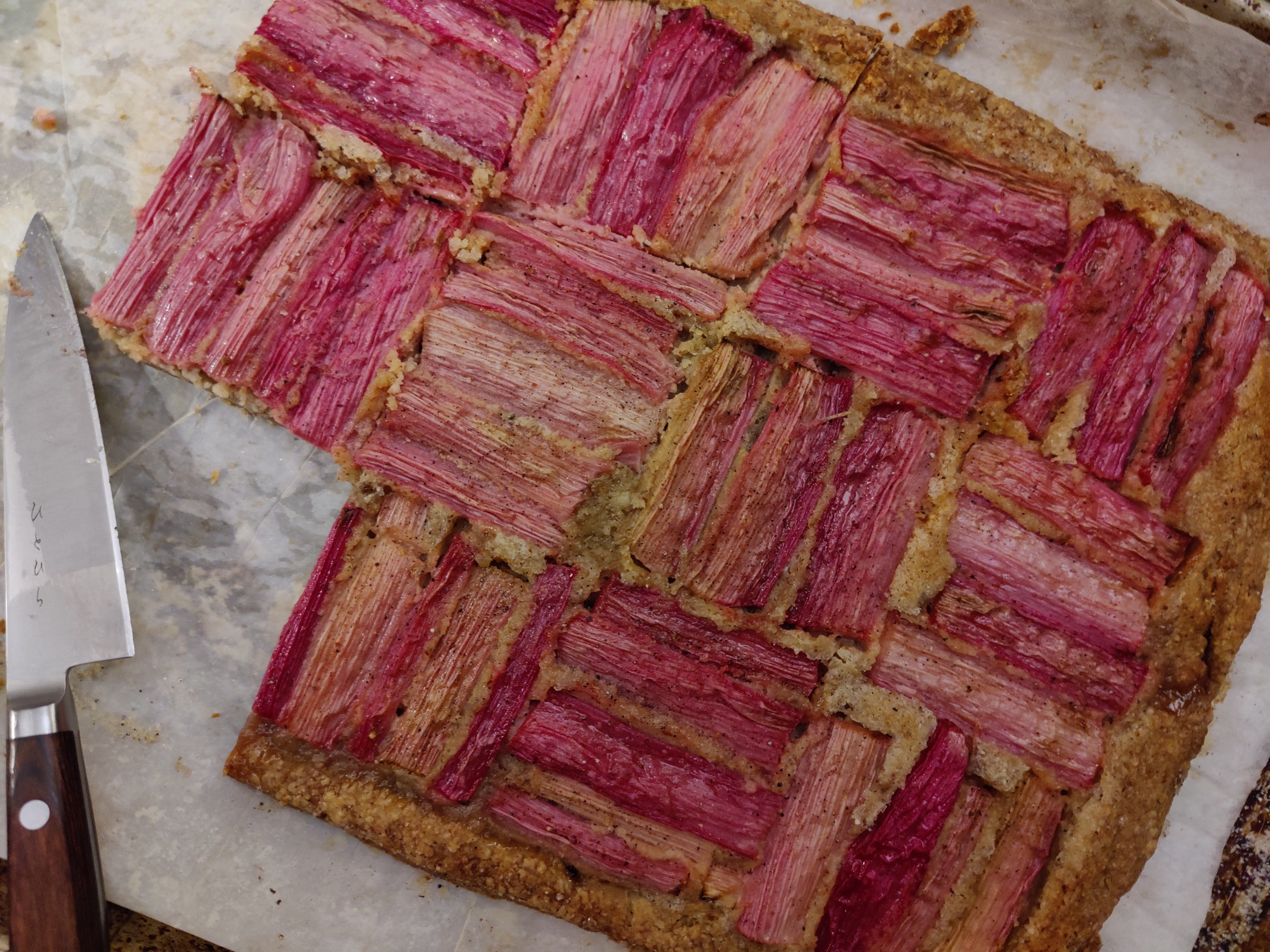
a rustic rhubarb tart that I made last spring: stalks laid onto a frangipane base; easy as pie
you know i'm biased given my roots, but i love this idea for a cookbook and think it has a lot of potential ! It reminds me of Mark Diacono's book "Sour" published a few years ago.
I wrote an article on savory rhubarb recipes a while back and one of the dishes I come back to is pickled rhubarb - so good on a cheese plate or tossed in a grain or lentil salad.
Another great post and a “quirky” cookbook I would gladly own and use over and over! I discovered khoresh last year when I was looking for a savoury use for rhubarb. So delicious! It opened up a whole world of how Persian cooking uses this most wonderful ingredient.
At this time of year I also make a big mason jar of rhubarb shrub. It’s a great alternative to a G+T (gin, soda water and the shrub), with sparkling wine or just sparkling water.
Even with this dreary rain we’ve been having, it really is a season of possibilities, isn’t it?