
I’ve been feeling flat these days, and flattened. Of course it’s sorrow, sapping energy, sapping the life and colour from the landscape. It’s as if I got through the last two plus months on the last remnants of the focused energy of Tashi’s last months. And now that more time has passed, I’m weighed down in this landscape that’s been stripped of the joy of his being, the joy I had from his birth, for nearly 35 years.
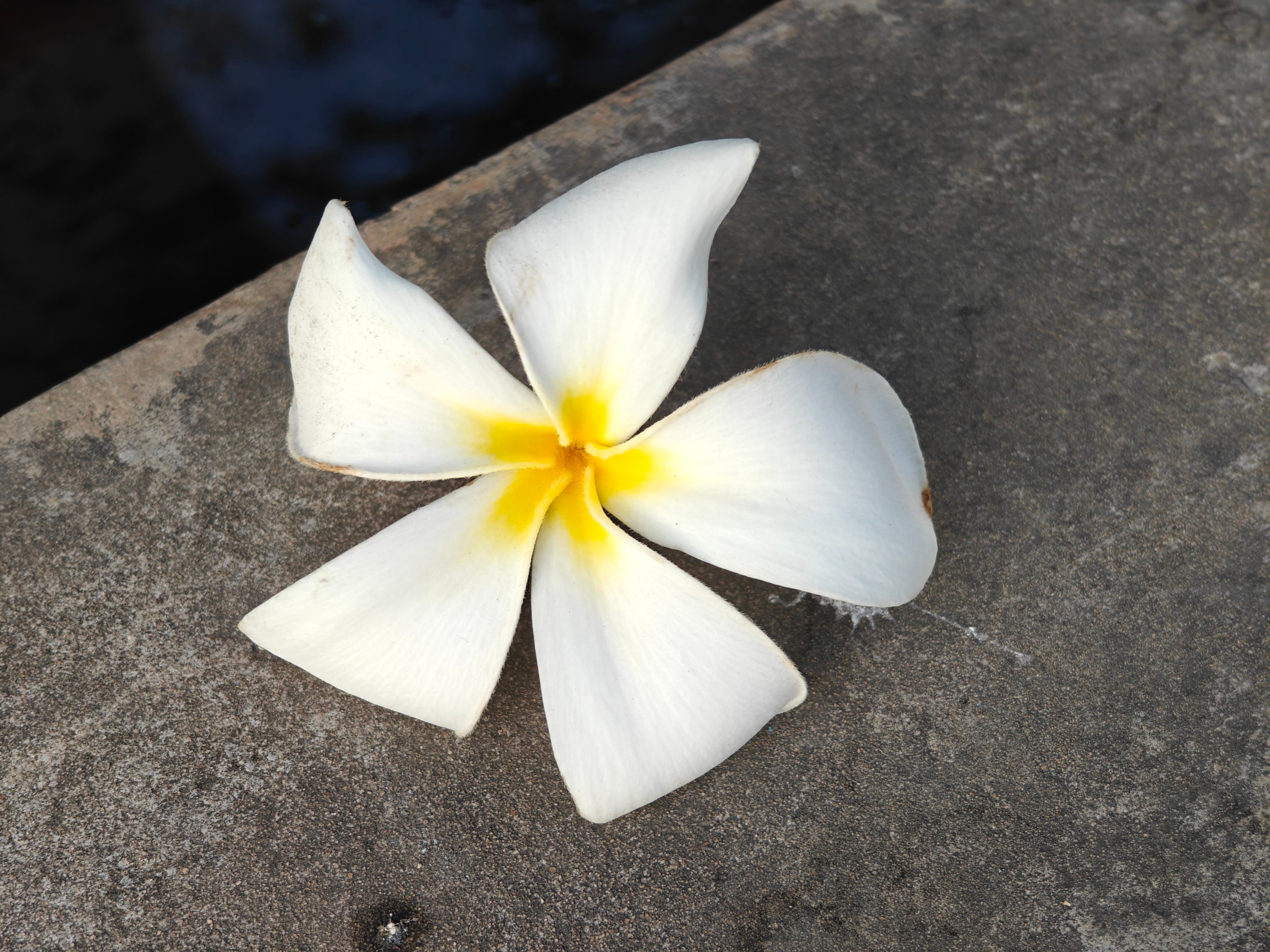
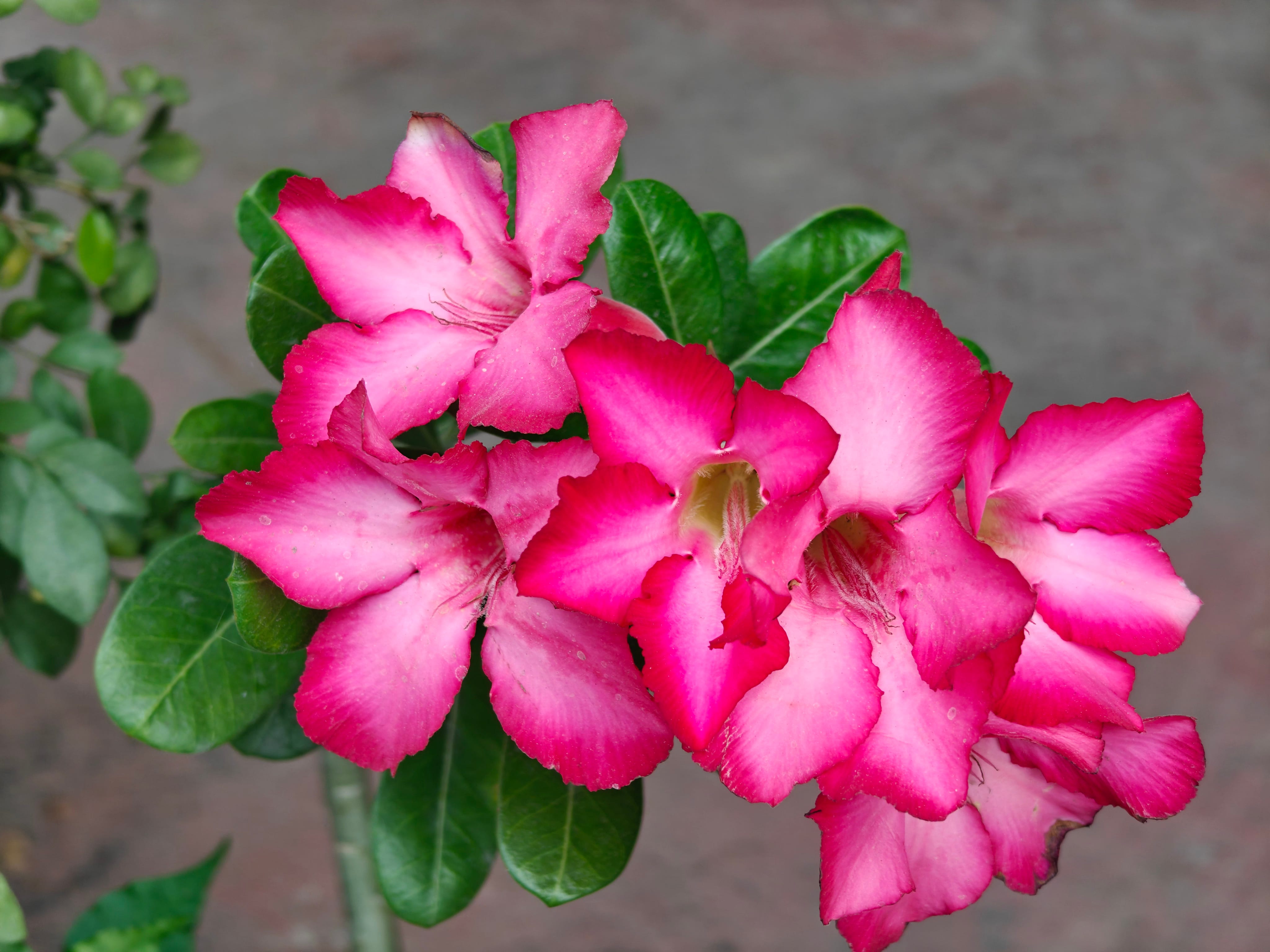
fallen frangipane flower
At least I’m not at a complete standstill; I’m still moving, still going through the motions of the day. And I did get out this week for a small bike ride up the river, about a 30km round trip. But I found I couldn’t get it together to travel from here to Bangkok to see an old friend. The planning and the doing both felt too enormous. The idea made me anxious.
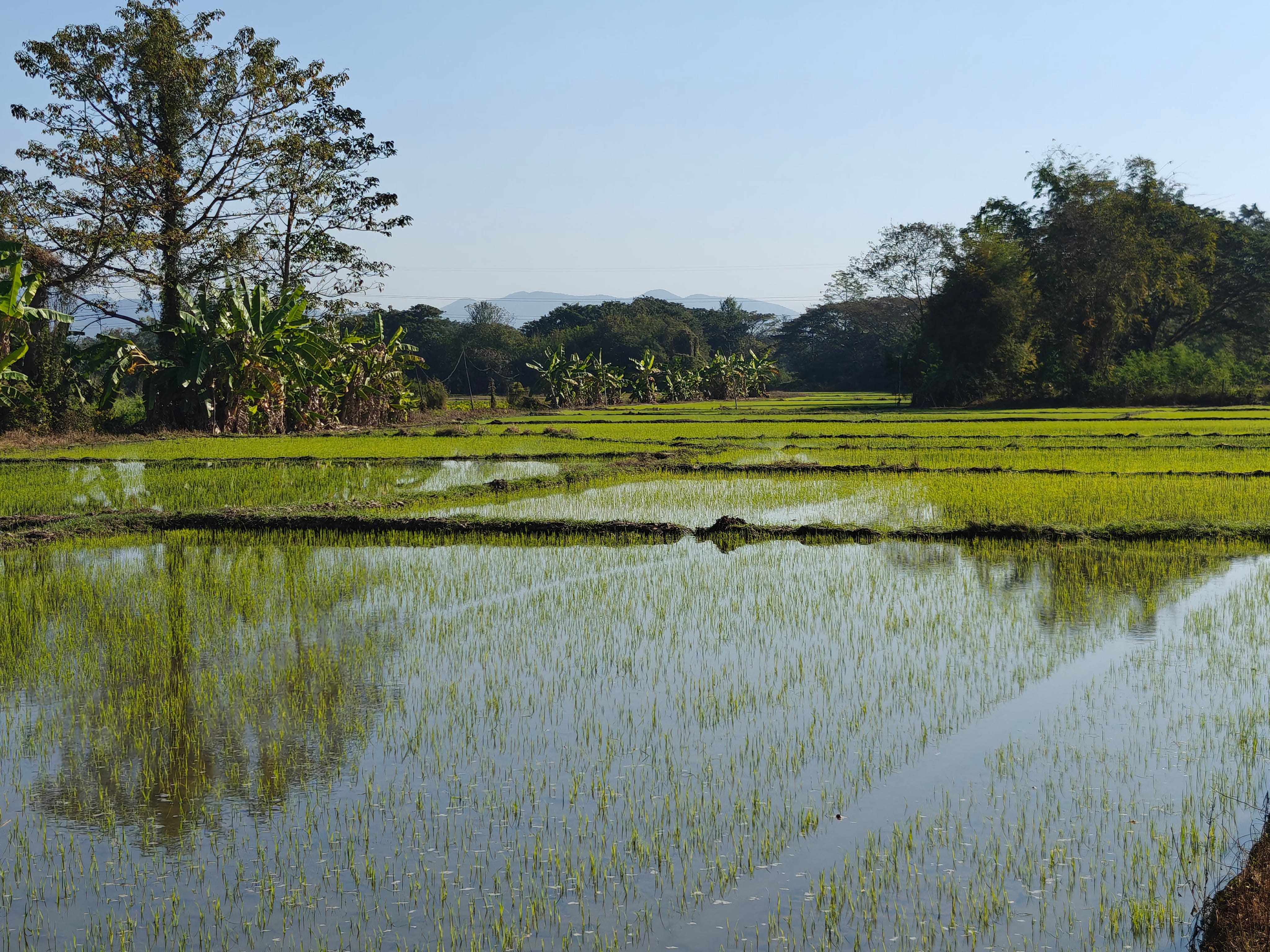
landscape with young rice, north of Chiang Mai
Still, I need rid myself of this flatness, to resist it or push through it. One strategy perhaps is to make a conscious effort to find the beauty or the quirkiness, or the interest, in small or specific things. As a way of trying to reboot myself, in the last couple of days I’ve been stopping to photograph flowers and small streetside scenes.


Whenever I’m here the one weekly thing I try to never miss is the Friday market, the one that used to be called Talat Jin Haw or the Muslim market, and is now referred to as the Yunnan Market. Thinking about how to counteract my flatness as I walked to the market this morning, I promised myself to slow right down and to remember to pause and look for details.
As always, I wanted to start the day with a bowl of mohinga from the woman who is at the market every Friday and has been for over twenty years. She’s Thai, speaks not a word of Burmese I’m told, but her mohinga is excellent. It transports me to Burma, to morning mohinga in Rangoon and elsewhere. It’s a steadying aromatic treat of subtle fish broth over fine rice noodles, with chunks of tender banana stem and onion floating in it. I squeeze on lime juice, scatter on a drift of chile powder and a splash of fish sauce, and then crumble a crisp Burmese bean cracker over it for contrast. The result is perfection in a bowl
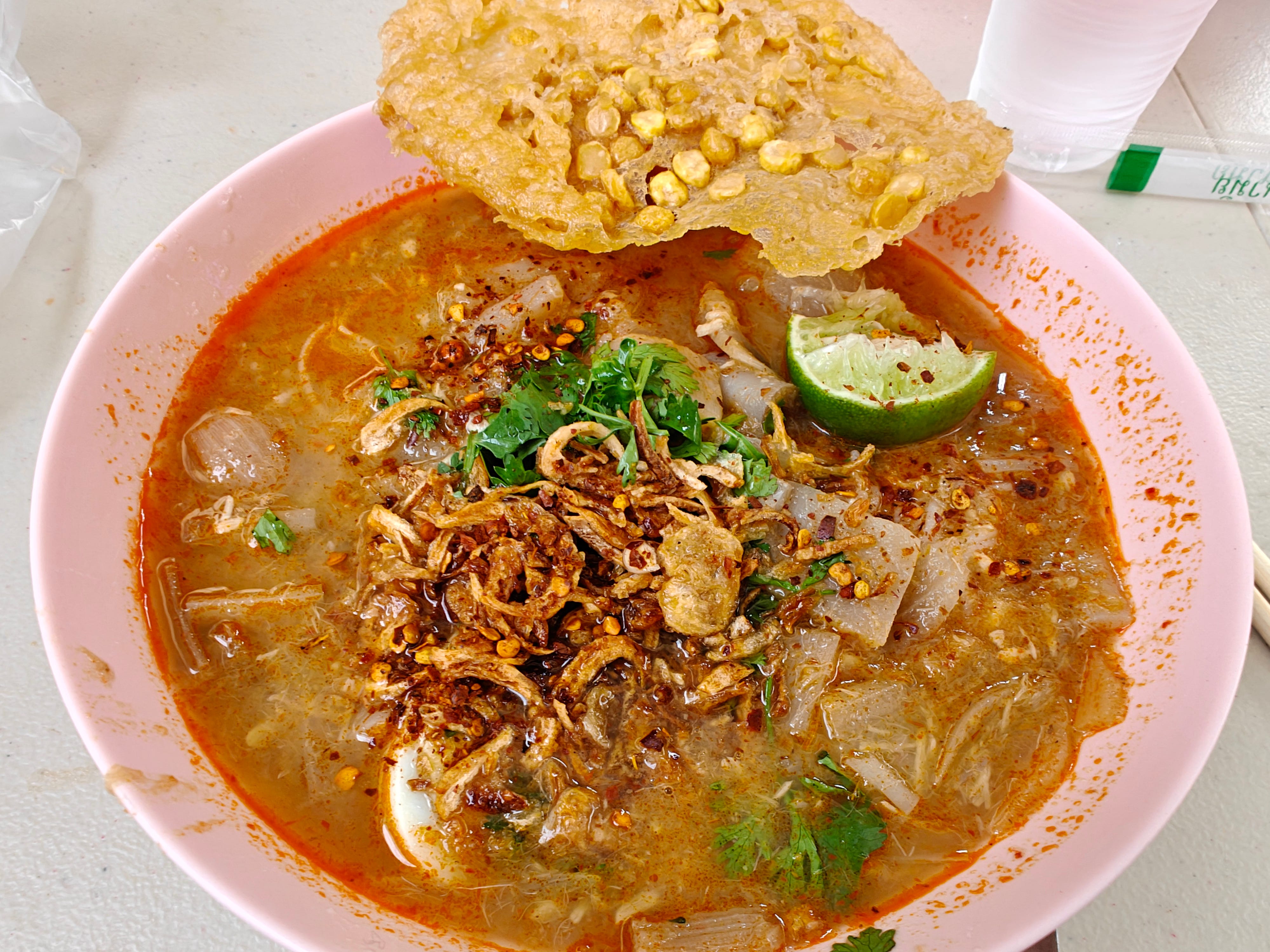
the bowl of mohinga, with the bean cracker still to be broken up and sprinkled on
Most people queue up to get their mohinga “sai tung,” in a plastic bag, so they can take it away to eat at home or where they work. But there are always a few who perch on stools at a small table and eat right there, as I do
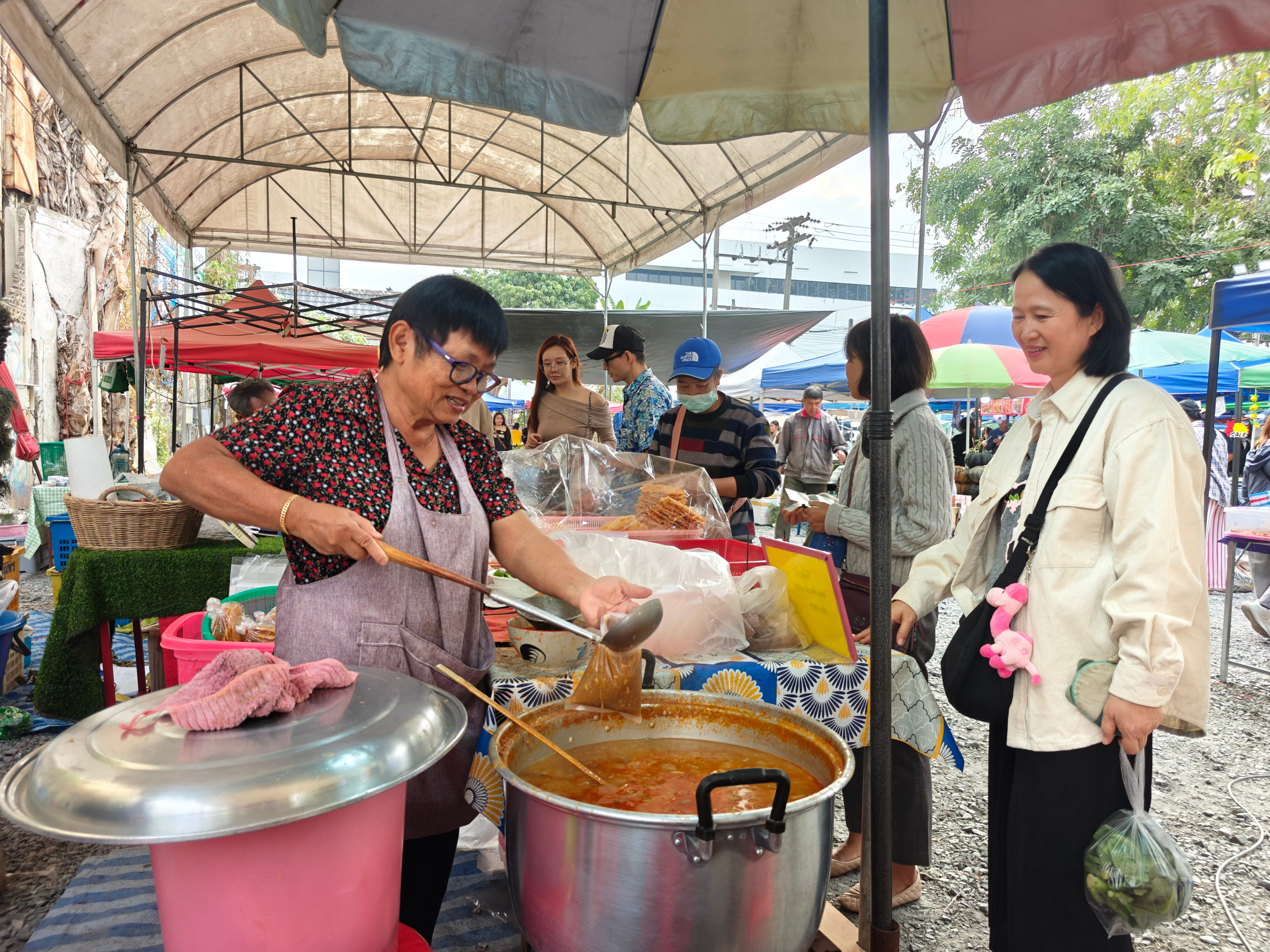
mohinga maker serving a customer who is getting it sai tung
The mohinga this morning was reviving. And so was the conversation I had with a Burmese man in his thirties who was also at the table eating mohinga. He told me he’d left Burma two years earlier, was opposed to the military coup there, and had managed to get Thai residence papers, so he could work legally here. He’s doing all right, working at a hotel. But he doesn’t have a Burmese passport. He’d been refused one, as an opponent of the regime. He’s trying to learn Japanese, working on plans to move elsewhere, however he manages that. I heard no tone of complaint from him.
A few minutes later I found myself in conversation with another stranger, who turned out to be a Burmese academic who lives in Oxford but this term is teaching at Chiang Mai University. The military coup in Burma – now five years old - and the subsequent civil war have generated terrible suffering, refugees, and desperation. She and I talked about the academics and others who have fled Burma and are having to live hand to mouth in exile, and about the IDP’s (internally displaced people) near the border, many of them Karen or other non-Bamar people, who are suffering from lack of everything, from rice to clothing.
Those two conversations sharpen my thinking, make me wake up. Who am I to settle for this flatness of being? Yes I am carrying deep grief, sorrowing for the loss of my lovely Tashi. But he’d reproach me for indulging in grief, for not having the energy to appreciate all that is before me: the human stories, the complexities being lived out by the people I see on the street
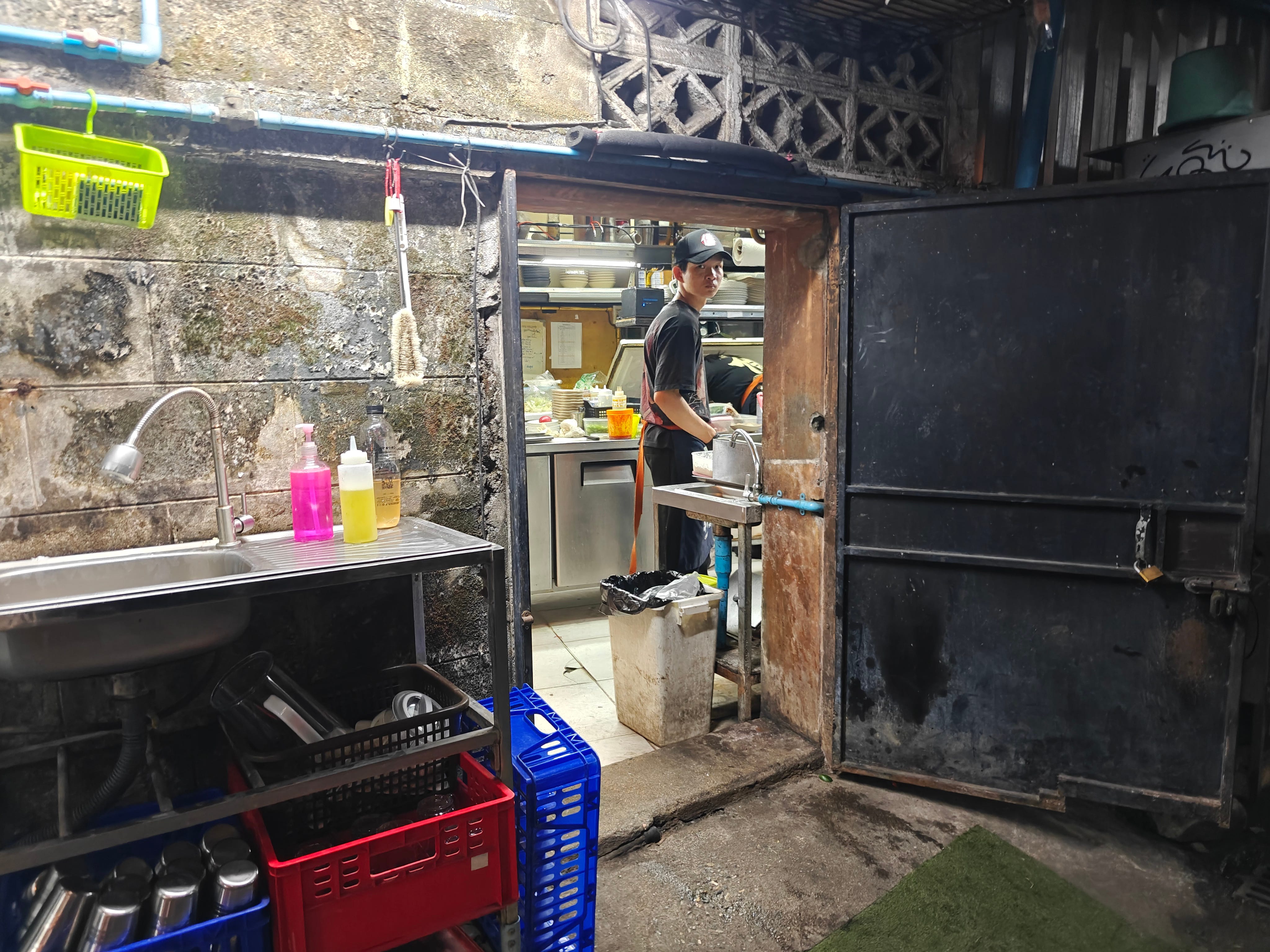
late night glimpse of a kitchen worker still at it
Many people here live on minimum wage or less and work long hours. They carry other griefs and hurts too, of course. As with people everywhere in the world, those are largely hidden. We can guess at their existence, but we don’t know details.
These reminders of the struggles and sufferings of others, both visible and invisible, are good kick in the pants. If I stay flattened, attending to my own bleakness rather than paying attention to the humans and the human landscape around me, I cut myself off from life. I lose track of my connection to others.
My obligation, it seems to me, is to summon my curiosity and find the energy to stay alert, stay open, stay noticing. And in all that to find some humour and lightness. I’m fed and sheltered, I have dear friends; what on earth is there to complain about, really? So let’s get on with it
The next new moon, February 16-17, is the Lunar New Year; the last new moon rose five days ago. I’m now thinking of this lunar month, the last of the year, as a time to get myself re-energised, so I’m ready for the Year of the Horse.
KITCHEN EXPLORATIONS: learning laab from a pro
I’m eating out here in Chiang Mai, rather than cooking. It’s a pleasure to spend a few weeks not stocking a larder, but instead buying only fresh fruit and vegetables, and prepared foods from markets and street stalls. Chiang Mai is a spectacular place for street eats and small eateries, and for fresh produce of all kinds. I have less than three more weeks to luxuriate in it all, before practicalities reimpose themselves. Yes, those practicalities of home are a fun ongoing challenge. But the break has been great.
The other day, thanks to my friend Nattha, who lives in Toronto but is at the moment in Thailand, I was taken to meet a man named Charan Chaiyawong who specializes in Northern Thai laab. Sometimes spelled laap, or larb, it’s a dish of very finely chopped meat that is blended with toasted finely ground spices (an array of about 12 or more) and some blood or broth, depending on the meat and the maker. The traditional version in northern Thailand is eaten raw. Yes, really. The word for raw laab is laab dip. Beef or pork are the most common. Laab dip is served with fried garlic on top and eaten with a pile of fresh herbs and greens, and with sticky rice
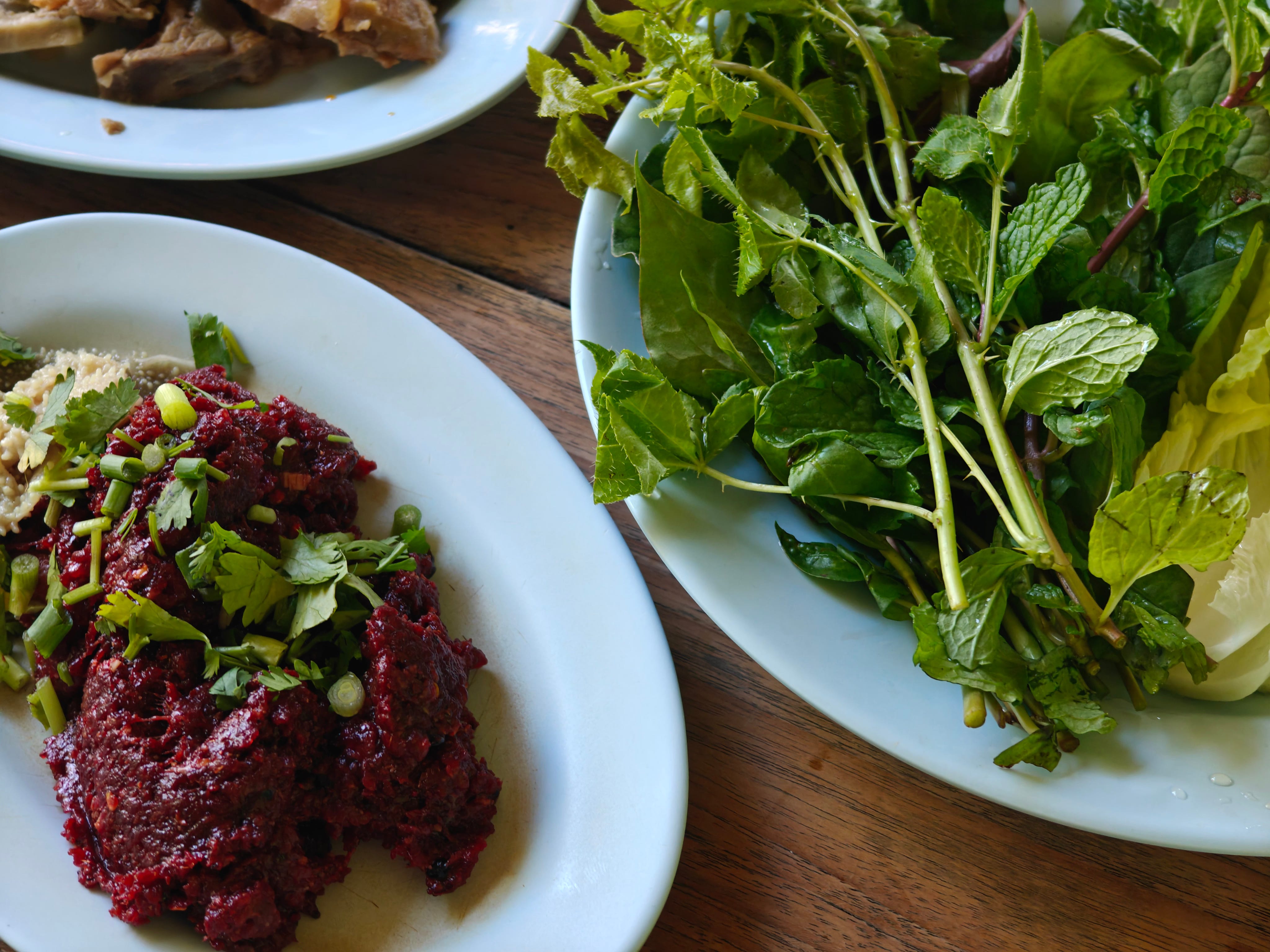
beef laab dip, with piled herbs
We ate our way through a mound of beef laab, picking up a leaf of one of the herbs and some sticky rice with each mouthful. The texture of the meat was remarkable, both pasty and firm, a little sticky, a little elastic. And the flavours were subtle and delicious
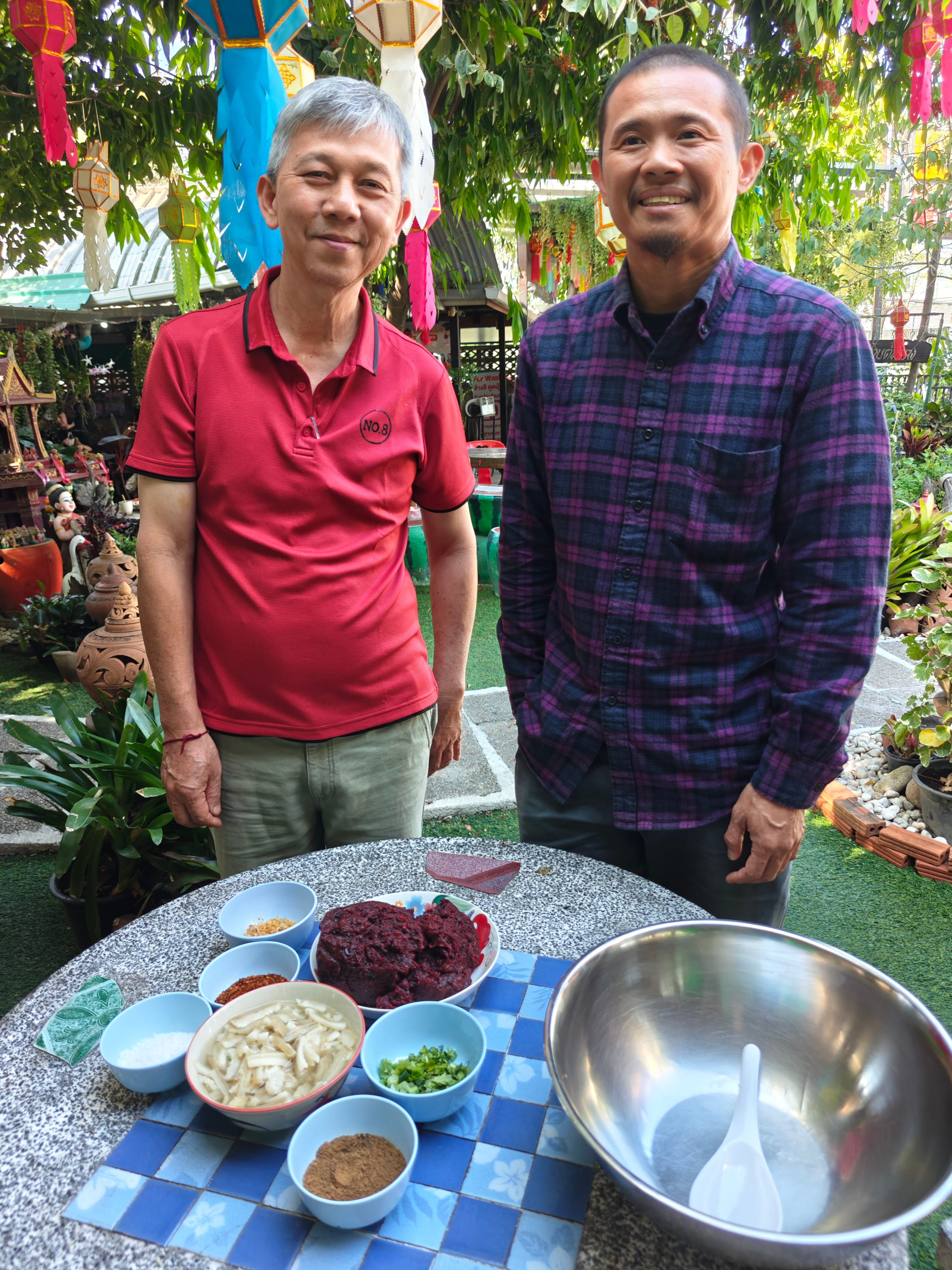
portrait of two meat experts: Charan Chaiyawong and BBQ pitmaster Terdsak Gamgulna at Laab Tonyang Restaurant near Chiang Mai
After we’d eaten our host showed us how to mix pork laab. The spices, powdered chile, and salt were briskly stirred into a warm broth with some boiled pork skin until they had fully dissolved. Then the mass of finely chopped meat and blood was added and massaged with a wide spoon for over five vigorous minutes until everything was beautifully blended
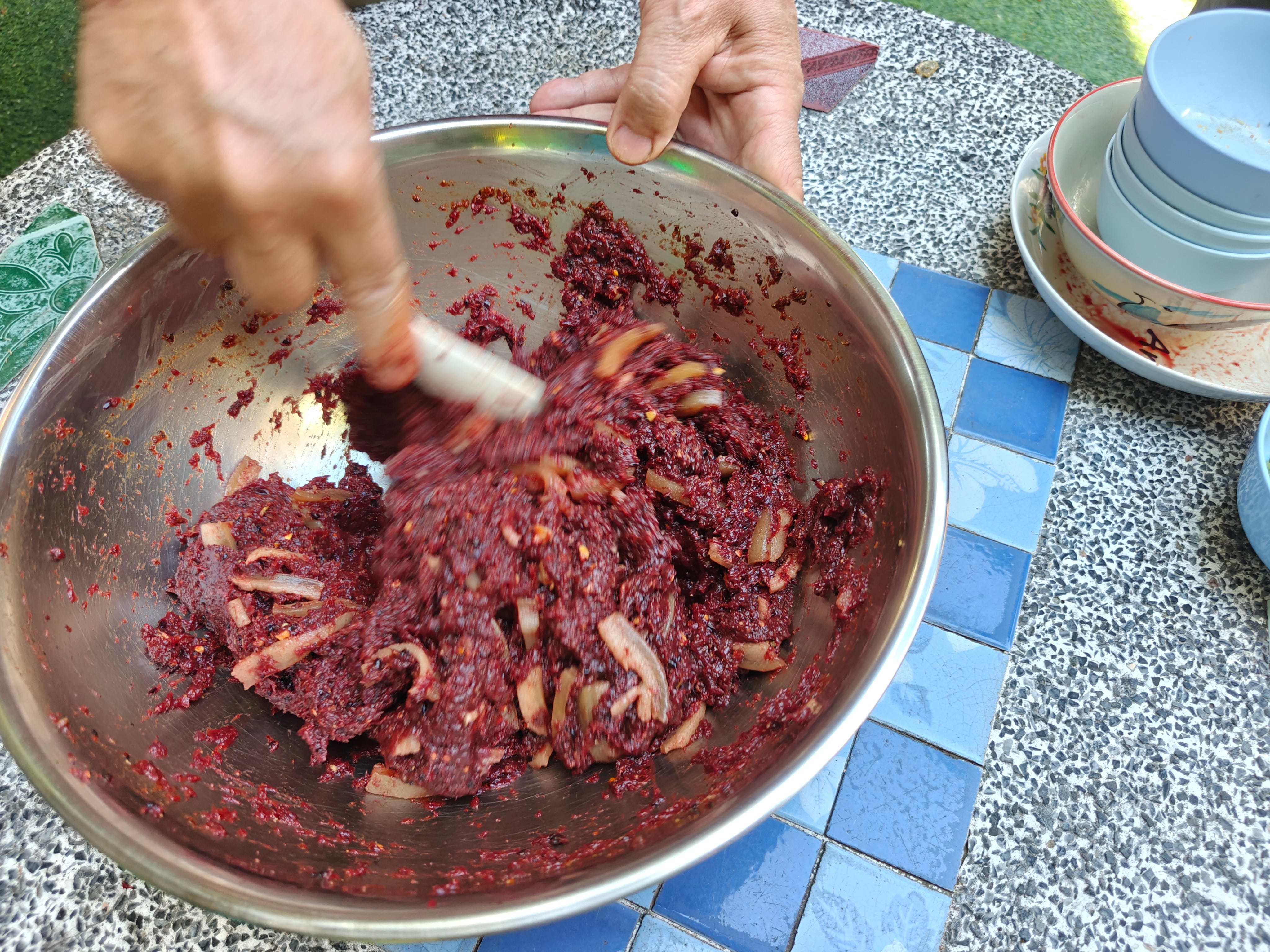
blending pork laab dip; notice the pieces of pork skin
Laab is traditionally a special dish. In earlier days fresh meat would have been a rare treat for a special time, say when an animal was killed to feed a crowd at a wedding or other occasion. Now there are laab competitions held in northern Thailand around Thai new year (mid-April) and teams from all over compete.
I like the idea that the tradition is honoured. And that the meat is treated with care and respect. It must be very fresh, kept cool, and minced until very fine using two knives in a kind of drum roll technique. That same double-knife technique is used here to make coarser “ordinary” minced meat, say for a sausage stuffing or meatballs. It produces a very different texture from a meat grinder.
People who have come on my trips to Northern Thailand have had a chance to try working with two long sharp knives. (You slice your meat and then start chopping briskly with the two knives, rattattat.) It’s a good challenge, and very satisfying. You can then take that chopped meat and make sausages (recipes in Hot Sour Salty Sweet) or one of several meat dishes in my Burma book…
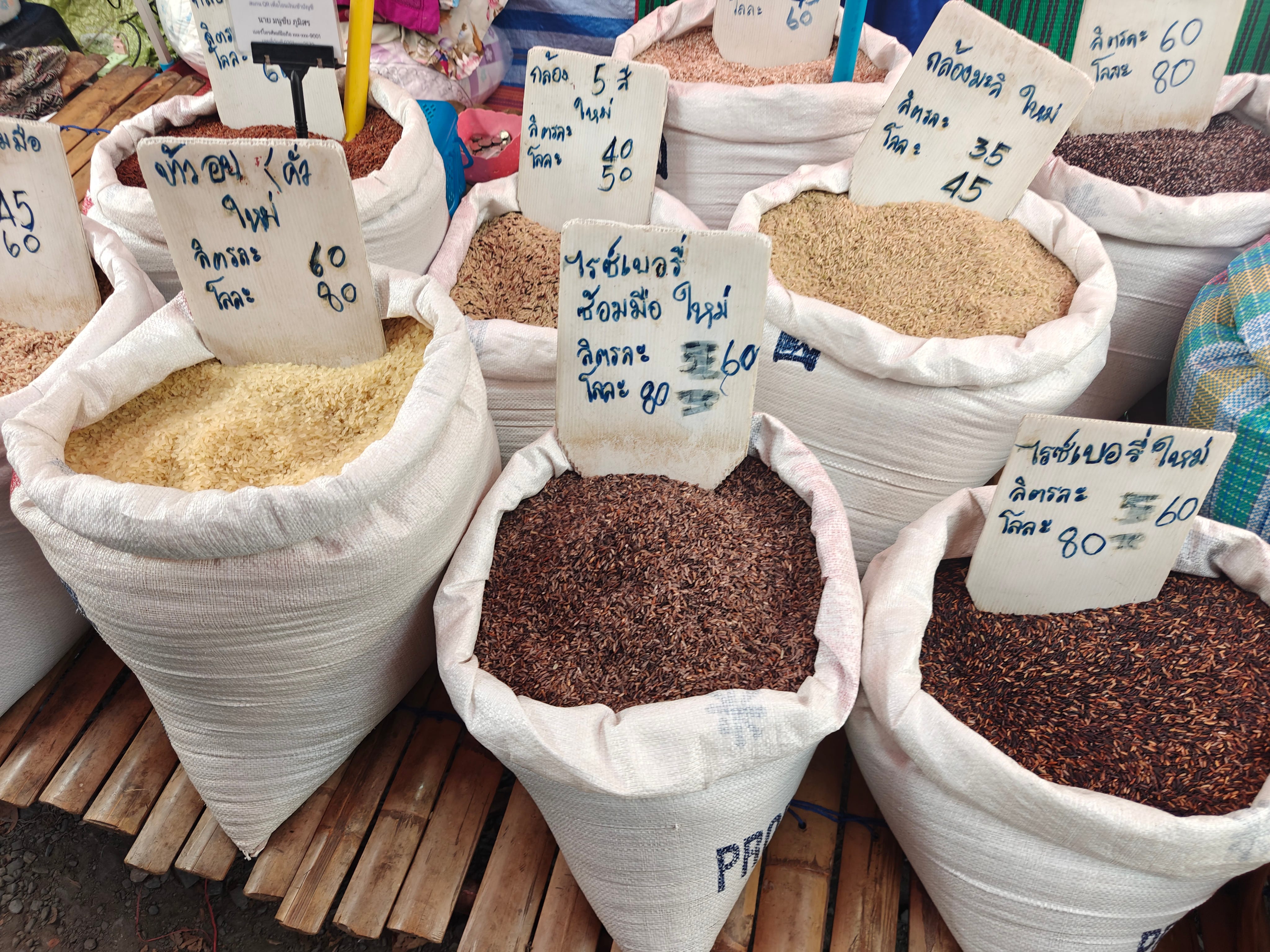
rice landscape: many mountain rices being sold at the Yunnan market on Fridays
You're righ! You're right! You're right! We have to live! And what and how you write about is how it's done.
Thanks for this, Naomi—thoughtful (full of thinking) as always but wrapped in that amazingly colorful quilt of Chiang Mai. I should have gone, i never shall, but you take me right into the feeding, feeling heart of it.