
The summer solstice and St Jean-Baptiste day (June 24) both mark the end of spring and the turn into summer. It’s also the pivot back towards shorter days.
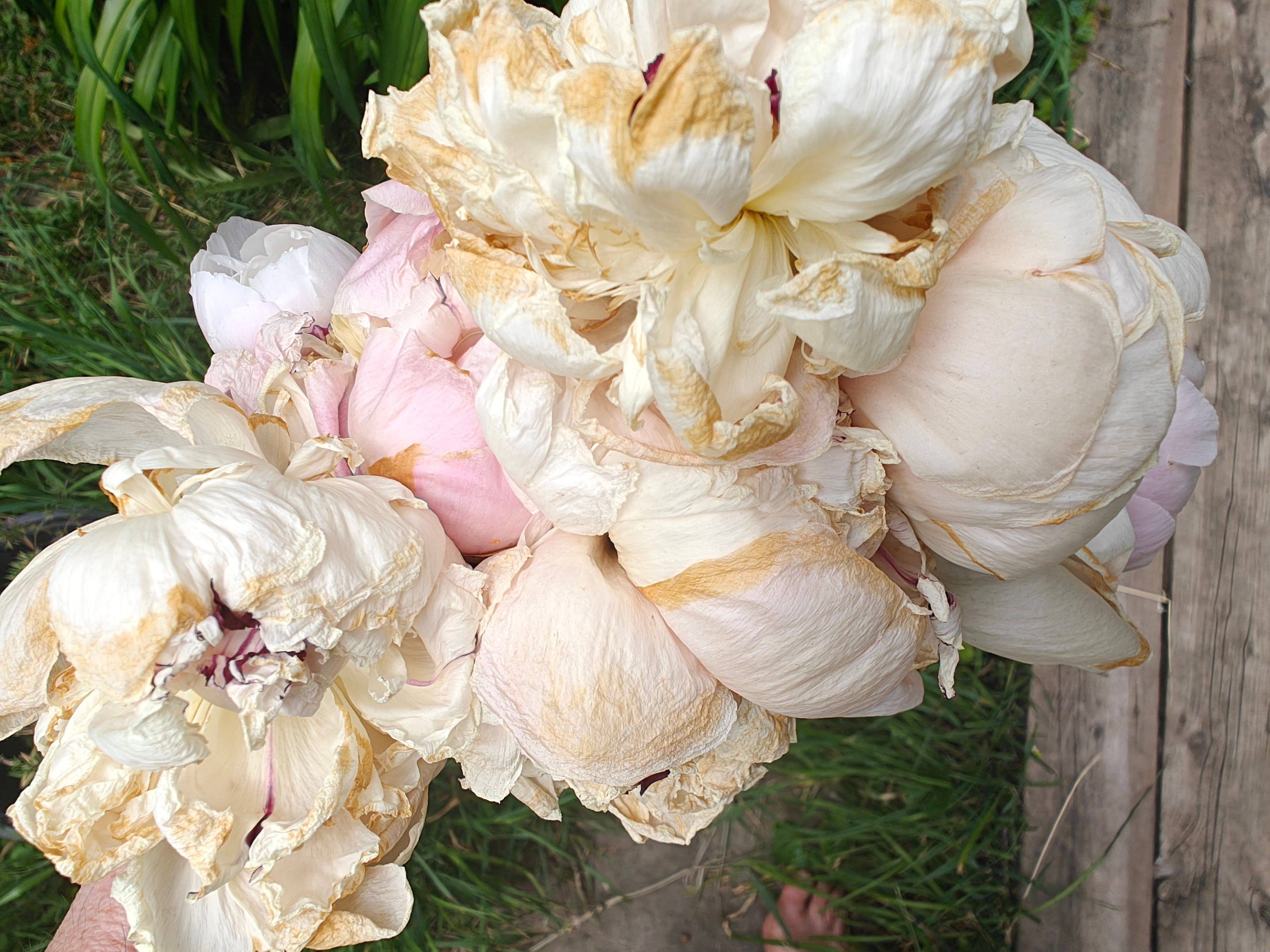
the end of spring marks the end of peonies here, so lovely as they fade…
Starting last Saturday we had four and a half days of soupy humid heat here in Toronto. It was a chance to get reacquainted with my lightest airiest clothes (a couple of simple loose cotton dresses) and to remember how to walk more slowly, or else cycle, to navigate the heat.
And then suddenly today the heat “cracked” as a friend said, with a little rain, then more, and much cooler temperatures. Gone the dresses; I’m back in cotton pants and long-sleeved tops.
This human flexibility, this preparedness for change, is part of living in this climate, with its abrupt shifts that can disconcert.
It’s even more important that the plant world be flexible and adaptable to shifts in weather and climate, for our staple foods come from plants: rice, wheat, corn, sorghum, millet, rye, buckwheat. We depend on them.
Monoculture makes crops vulnerable to extremes of weather and to pests and infestations, and thus monoculture makes us all vulnerable. Mother Nature is non-standard, varied and variable. Varied genetics help us survive variable growing conditions: swings in temperature, sudden rain, uncomfortable dry spells. In traditional agriculture, farmers grow several varieties of their staple food (grain or starch) in order to hedge their bets. Each year some varieties will do better than others. In a wet year these will flourish and those do badly; in a dry year the pattern will be reversed. This is sustainable agriculture.
It seems strange to me that although we know in general that resilience improves chances of survival, the dominant agricultural system, commodity agriculture, depends on monoculture. It’s like an annual gamble, propped up by agricultural supply companies that sell pesticides and petroleum-based chemical fertilizers to farmers who engage in a constant battle against Mother Nature’s variability.
I’m not telling you anything new, here. But I guess I’m still in rant mode, about the stupidity and venality and lack of social conscience of many of those in power.
It seems appropriate to be thinking about momentous things at the solstice, a momentous time of year. And we have an overdose of momentousness happening in the wider world. Wild bombings, declarations of war, designed to distract us from other unsavory and damaging actions and behaviours (the theft of benefits from the poor, the corruption of the rich, etc).
Powerful people, elected with the help of big money, most of them authoritarian in temperament, are making terrible decisions to bomb or starve people, to strip away rights, to undermine the rule of law, to take money from the poor to enrich the wealthy. It’s tempting to fall into completely negative thinking along the lines of: what can one person do?
Last Friday I took a small step to respond to my rage at all this by going to a Women in Black demonstration in Toronto. Every two weeks a large group of (mostly) women stand at the corner of Bloor and Yonge streets on Friday afternoon holding signs protesting the genocide in Gaza. We stood with posters held high as the Friday afternoon rush hour traffic moved past us. Cars and trucks honked, drivers and cyclist made the V for victory sign or waved and smiled. Not all of them. But a good proportion. It was heartening.
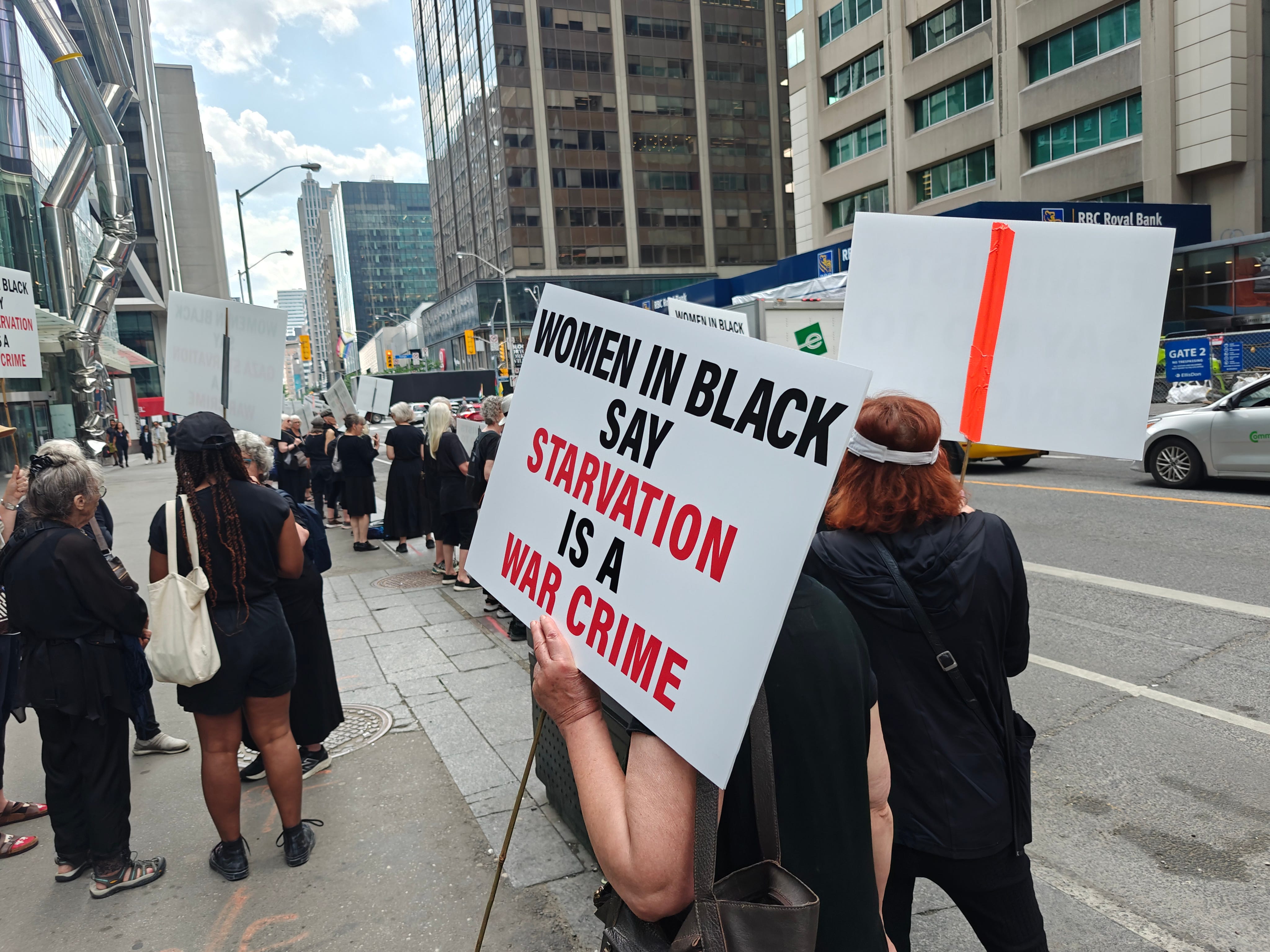
a small glimpse of the Women in Black demo
Will this change anything? Not on its own. But it’s part of a larger collection of actions and communications.
My small time at the demo was a good reminder that each of us has the power to do something. We can make our feelings known in whatever way. Each of us is a grain of sand. We add up. Some of us are louder and perhaps more listened to, but most of us can participate as part of a mass. We all have the possibility of acting, in ways large and small. If we give up before we start, what good does that do?
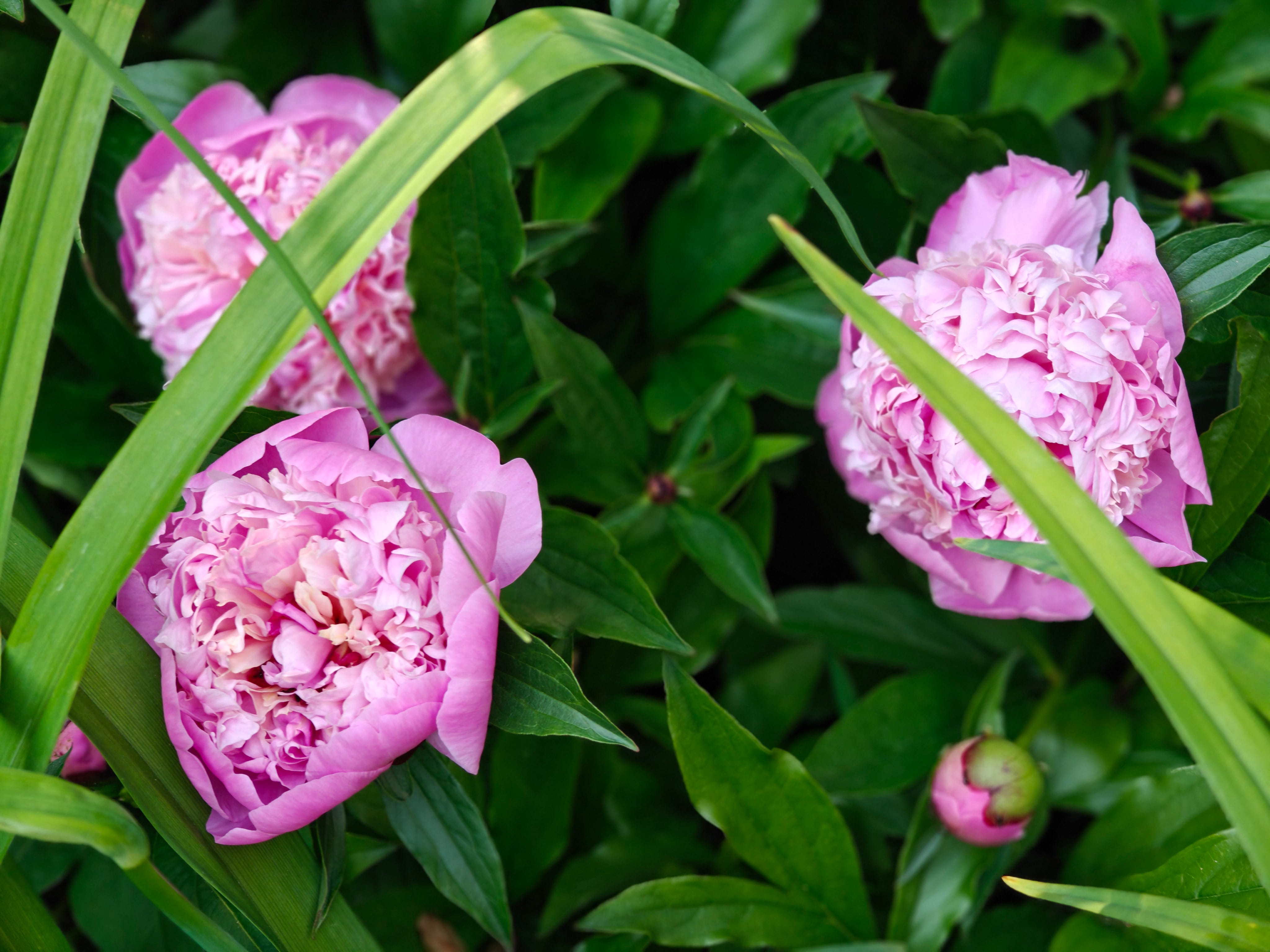
before they faded…a reminder from late spring
KITCHEN EXPLORATIONS: berries everywhere
Speaking of change and the turn of seasons, what’s happening now in the farmers markets and in my tiny approximate garden? After the underground treasures that sustain us through May and June - rhubarb and asparagus – we hit berry season. The full moon in June is known here as the strawberry moon, a time of long days and sweet abundance. Strawberries take centre stage as the asparagus says good-bye.
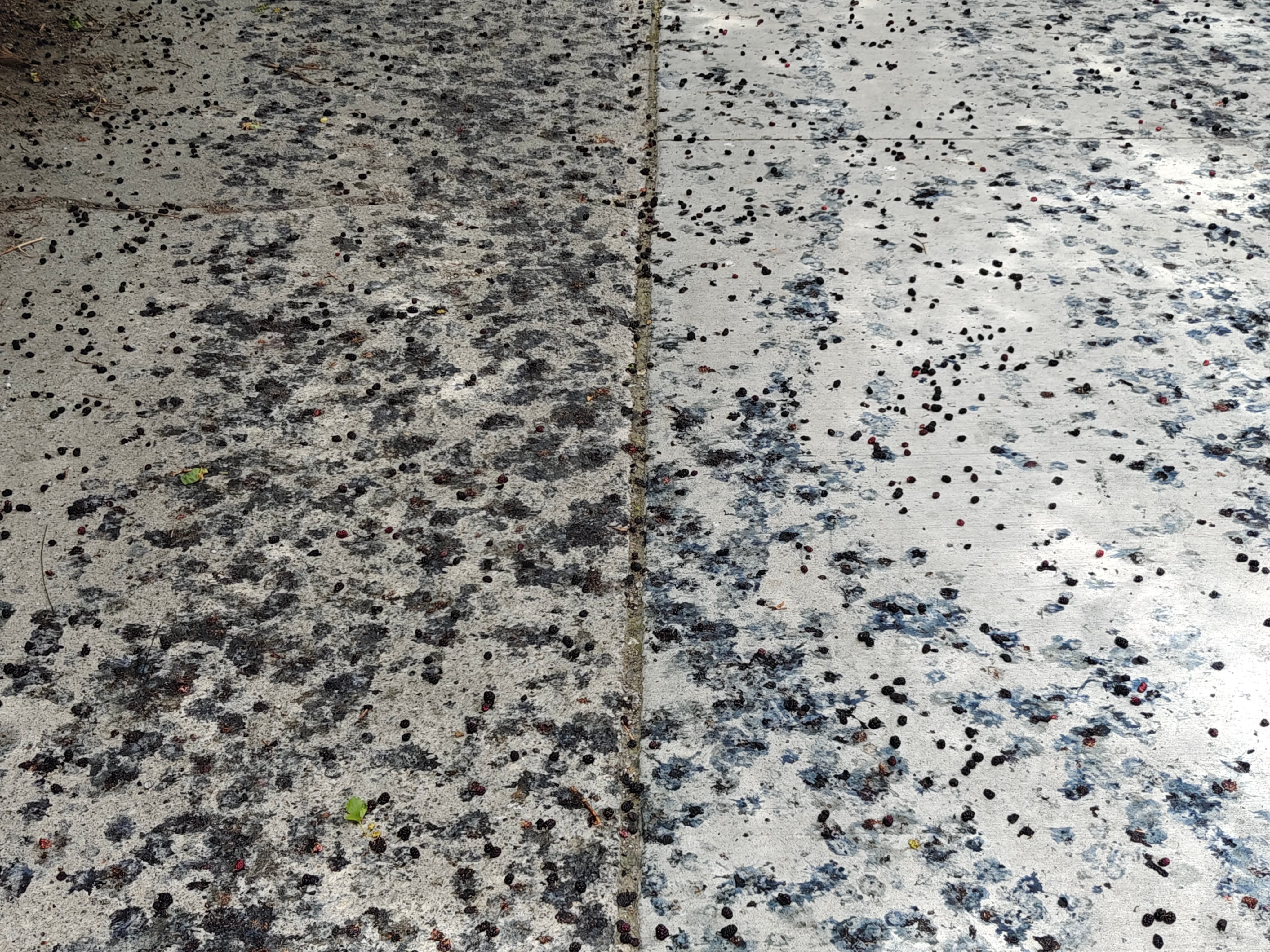
a mulberry stained walkway in my neighbourhood
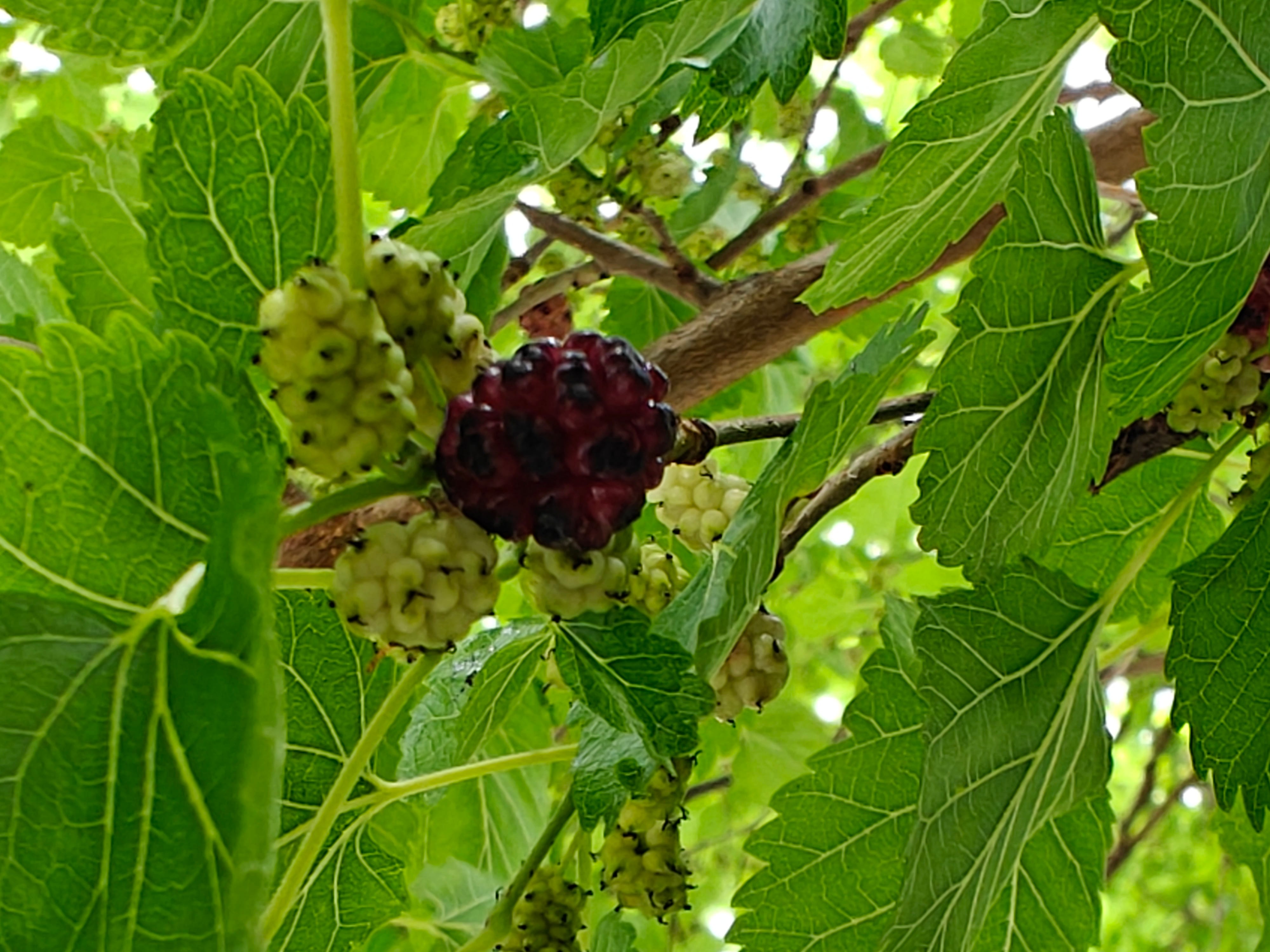
a ripe mulberry with some unripe berries alongside; there will be mulberries for weeks
Out in the downtown neighbourhoods here mulberries are falling off the trees, staining the ground a purple-black, and waiting for passers-by to reach for a taste. There are also low bushes laden with ripe service berries along the sidewalks and in local parks. Service berries look a little like Saskatoons, have less flavour, but still a mild sweetness. Very worth sampling! The red currants on the small bush in my patch of garden are turning a bright and cheerful red, like a test for colour-blindness in the midst of the glowing green around them.
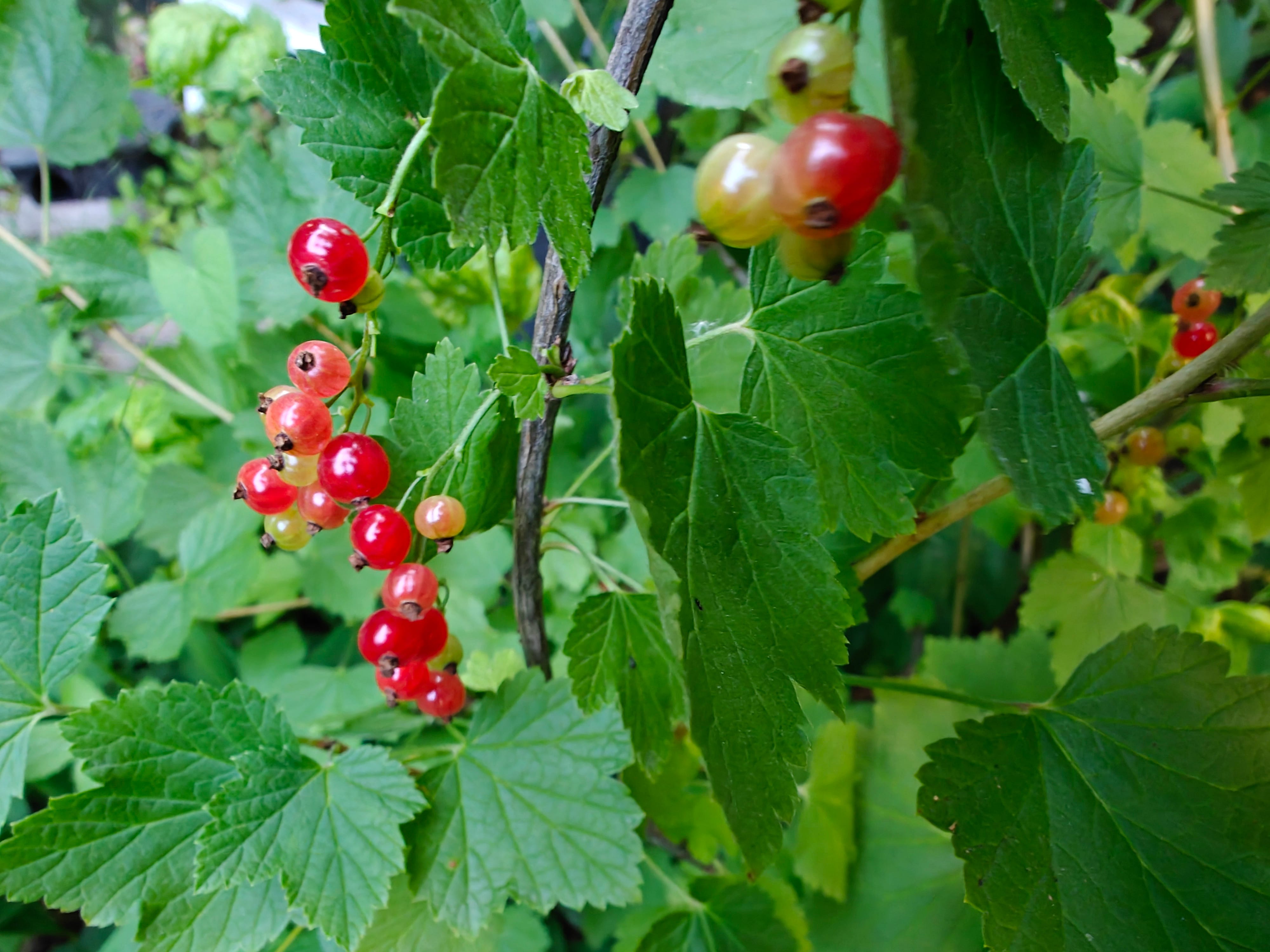
my small red currant bush producing intense colour
We don’t get full stomachs from picking a few mulberries from a tree as we walk by, but the urge to reach for them is irresistible. It must come from deep genetics, an ancestral imperative to grab the moment. Berries are such a fleeting pleasure.
I’ve mostly been doing quick stir-fries these days, improvising with little or no meat and plenty of greens. One of my most successful suppers was whole wheat wide ribbon pasta topped with a greens-heavy sauce. It fed three of us with some leftovers.
I made the sauce in a cast-iron skillet: ¼ pound of bacon chopped small and cooked a little to release its fat, before I added lots of minced garlic, cumin seeds, and then chopped fennel from the farmer’s market. A little water to soften it all and then later on a generous scoop of ramp (aka wild garlic) pesto made by a friend. I added a load of chopped spinach and stirred to incorporate it and get it fully cooked. So simple. And so satisfying on the pasta.
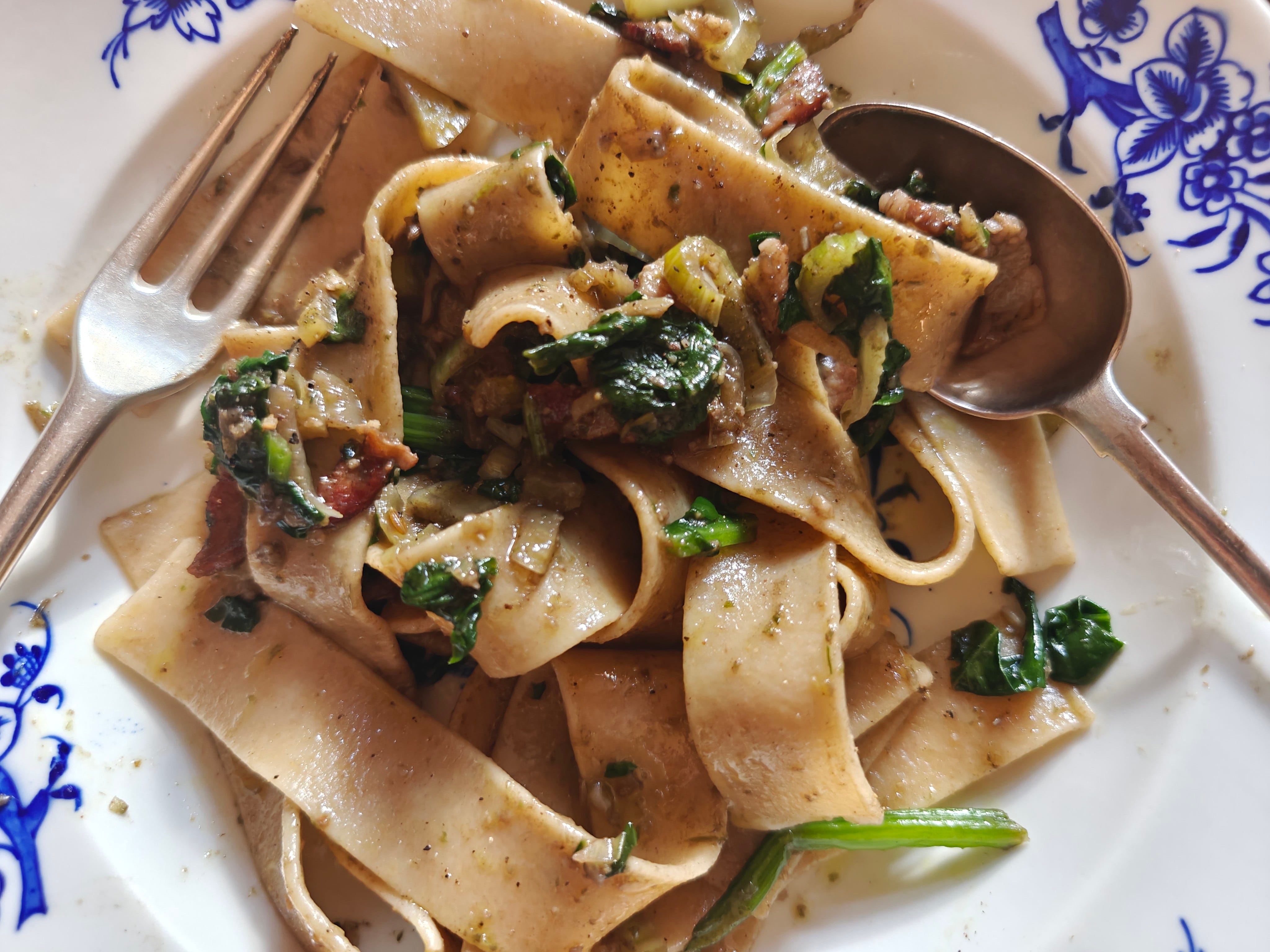
simple greens with a touch of bacon, to dress wide whole grain pasta ribbons
A large green salad dressed with a kefir-enriched vinaigrette (olive oil, kefir, a touch of Spanish wine vinegar, salt) gave a nice fresh tart-acid balance to the meal.
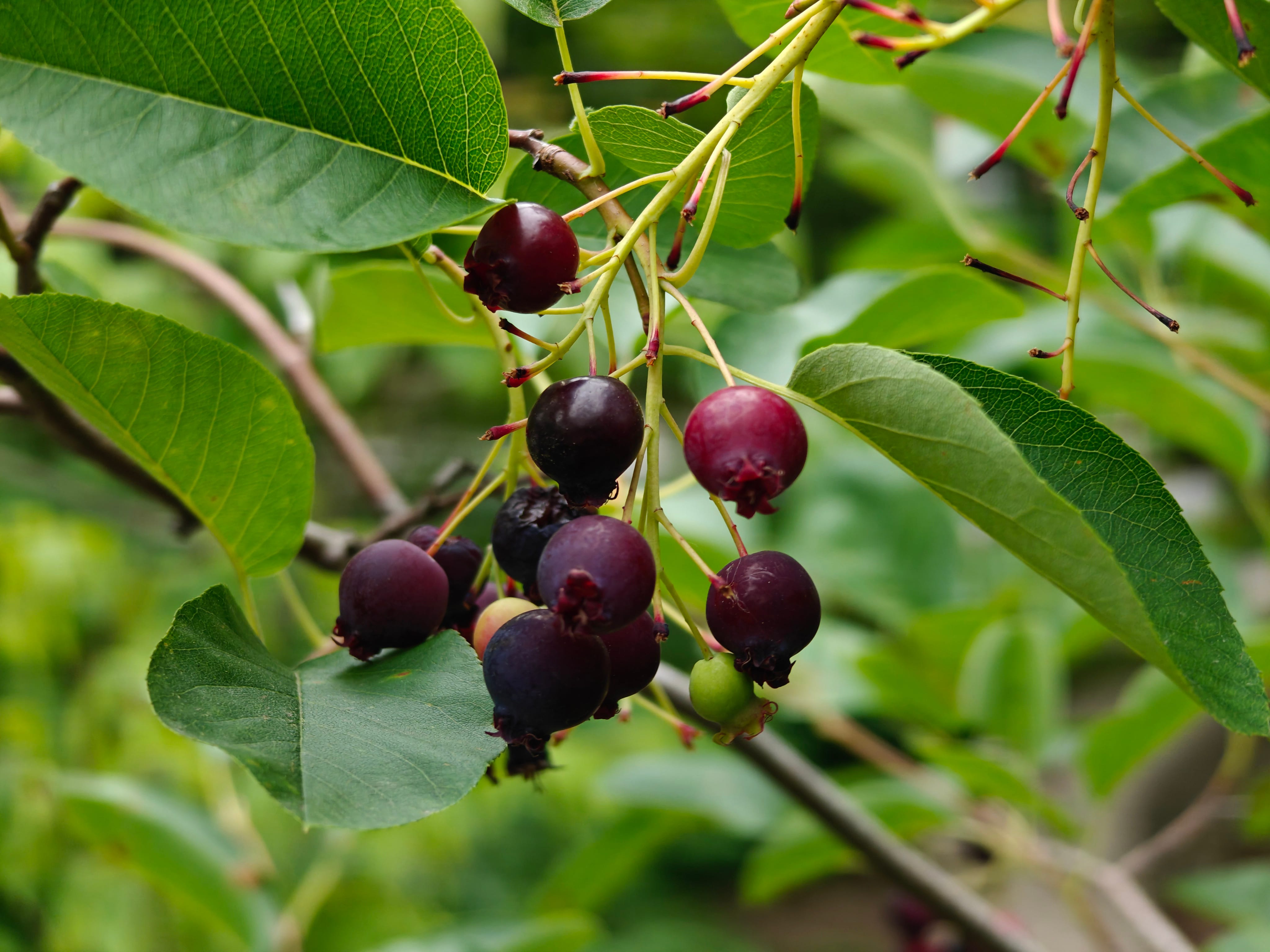
service berries at a local park in the Annex, Toronto
Thank you for protesting. We need more people to wake up and do it in the US.
I LOVE mulberries but I've never seen them (neither the trees nor the berries for sale) in the US. I suppose people decided a long time ago that the trees are too messy, and the berries are too fragile for our commodity food system.
I haven't seen them in France either, and there's not even a separate word for them in French. They use the word mûre (blackberry) for the fruit, even though it comes from a tree not a bramble, and is in a completely different family (Moraceae for the mulberry, Rosaceae for the blackberry). The rare people who know it exists use "mûre de mûrier" (blackberry from the blackberry tree) for the mulberry and "mûre de ronce" (blackberry from the vine) for the true blackberry.
I love this, Nom: “This human flexibility, this preparedness for change, is part of living in this climate, with its abrupt shifts that can disconcert.”
Also, my gran’s driveway in Lahore was always stained purple like that during shahtoot season. And again, during jamun season. Maybe that’s why I associate the colour purple / magenta with her x