
Every year at this time as we get desperate for spring to arrive, our expectations create the possibility of disappointment. It happened through this last week when we had fresh snow fall on three different days. I try to stay calm and un-needy about the arrival of spring. But the fact is we ARE needy, longing for the balm of mild temperatures, sunshine, signs of green and growth and early blossoms. This week the leaf buds are fattening slowly on the trees, but they’re still just bumps, theoretical possibilities, distant promises.
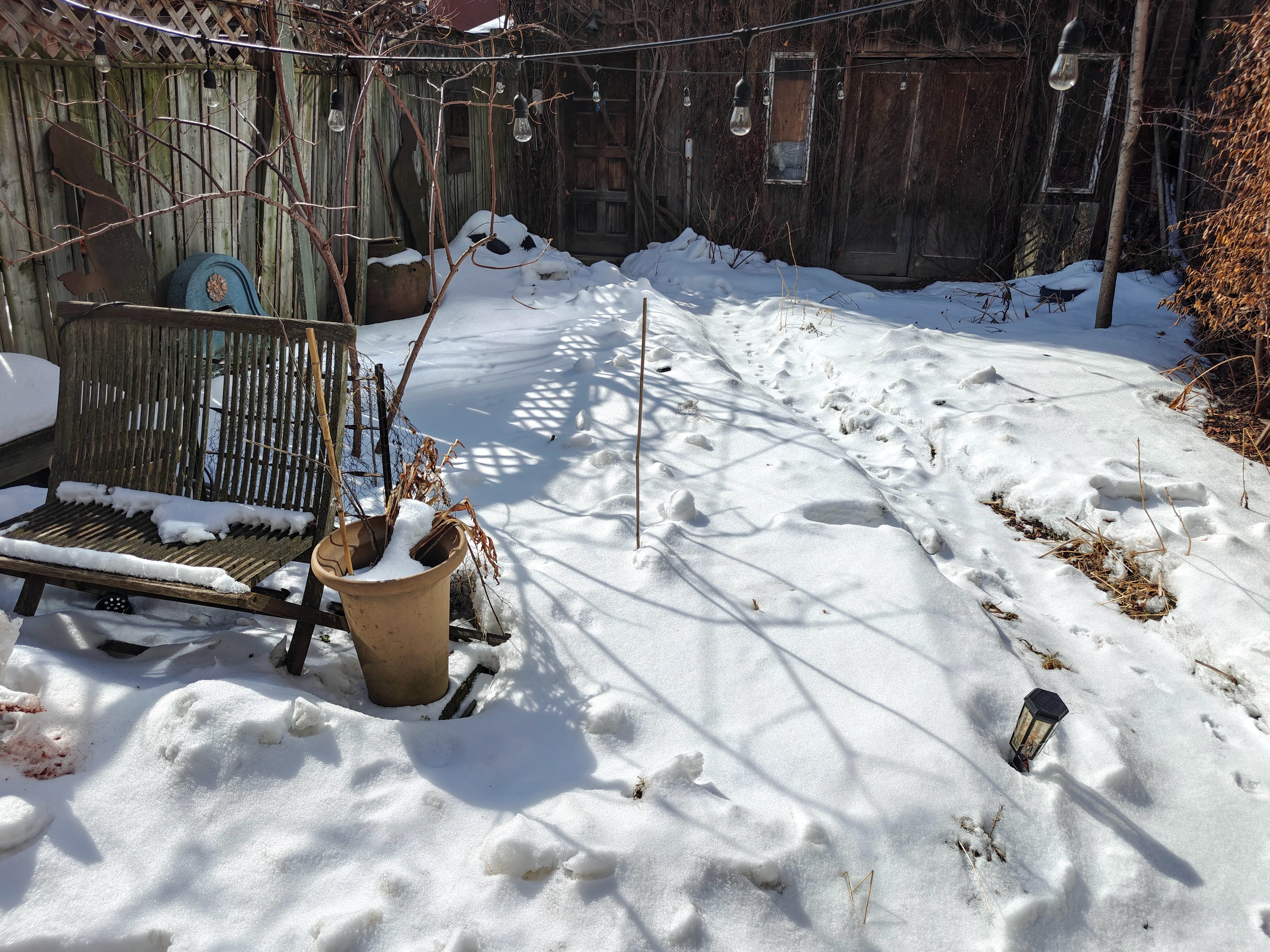
snowy back yard, with sharp shadows and signs of melting
The annual cycle of changing light, as the sun gradually moves further north in these months of late winter and early spring, is always thrilling, but also entangled with memories of other springtimes, other seasons of hope or fear. Hope is positive, but also implies uncertainty about whether the wished-for thing will happen. And fear is the flip side of that: a dread that a possible bad thing will occur.
[An aside: Along with many others, I’ve been dreading the possibility that all this talk of negotiation with Iran was a smokescreen that was designed to lead to war. And so it has turned out this morning. I’m enraged and distressed that huge numbers of people will suffer for the satisfaction of the orange bully in DC. And I’m also angry that the Prime Minister of Canada spoke in support of the illegal bombings and other acts of war of today. He should be ashamed and embarrassed.]
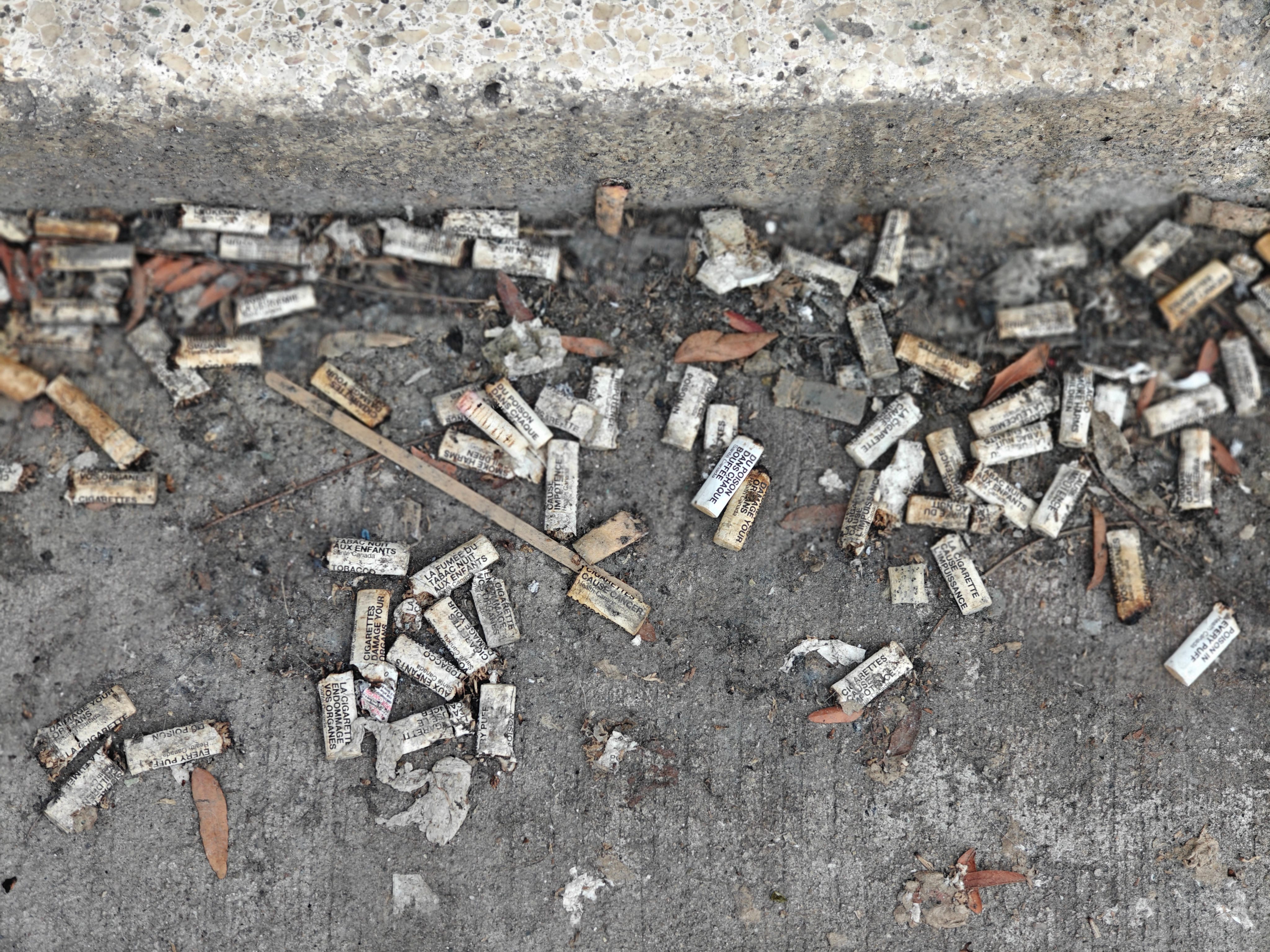
cigarette butts by a doorway on Bloor Street; each is printed with a health warning
At this time last year the suffering I was aware of was more personal. We were near the end of Tashi’s six-week course of radiation, prescribed when his brain tumour became active again. Every weekday we’d drive the short few blocks to the hospital, anxious to be on time for his radiation appointment and then we’d take the elevator down to the basement. There I’d wait with him until he was called, then read a book while he was wheeled away to have radiation beamed onto his head.
In those endless weeks of snow and cold, getting to and fro was very difficult. Tashi could manage walking the short distance to the curb and easing himself into the car, but he needed a wheelchair at the hospital. He was so exhausted from the radiation. And yet he joked, we joked together, we gossiped, and when we got back from the appointments in late morning we’d watch TaskMaster or QI on his laptop as distraction.
Friends would come by, Tashi would chat on the phone to his brother or to friends, we’d have people over for supper, or dropping by at other times to say hi. That whole concentration of friends and visitors, calls, and notes, was a wonderfully intense and sustaining web of energy that carried us along all last year.
I wondered whether there’d be a falling away of people after Tashi died in mid-November and after the holidays were over. I wondered how we’d all reconfigure ourselves in the new year.
Now I’ve returned home from five weeks away, a bit unsure about how to move forward, how to be, in this changed house, this changed landscape. I had wondered at Christmas if I’d hear from the lovely collection of Tashi’s friends who’d become part of my life. And while I was away I worried about them too. How were they coping?
It turns out that we’re still very connected. Since I’ve been back many of them have reached out about plans and/or have come by for supper. I’ve learned that through the winter they’ve also been keeping in touch and watching out for each other. It’s lovely to see, and a relief. It’s an example of how to be. They’re not running away from the intensities and pain of last year but instead integrating it all as they move forward. These (mostly) thirty-somethings have wisdom and lived experience of love and grief beyond their years.
Other friends of mine have also been in warm touch with me, checking in, figuring out when we can meet for a walk (yes, even in the cold), a meal, a coffee, and conversation. I feel lucky to be so embraced in their understanding. It’s not that we’re always talking about Tashi or grief or feelings, but all of that is an acknowledged backdrop to our lives, not a walled-off territory. And it will continue to be.
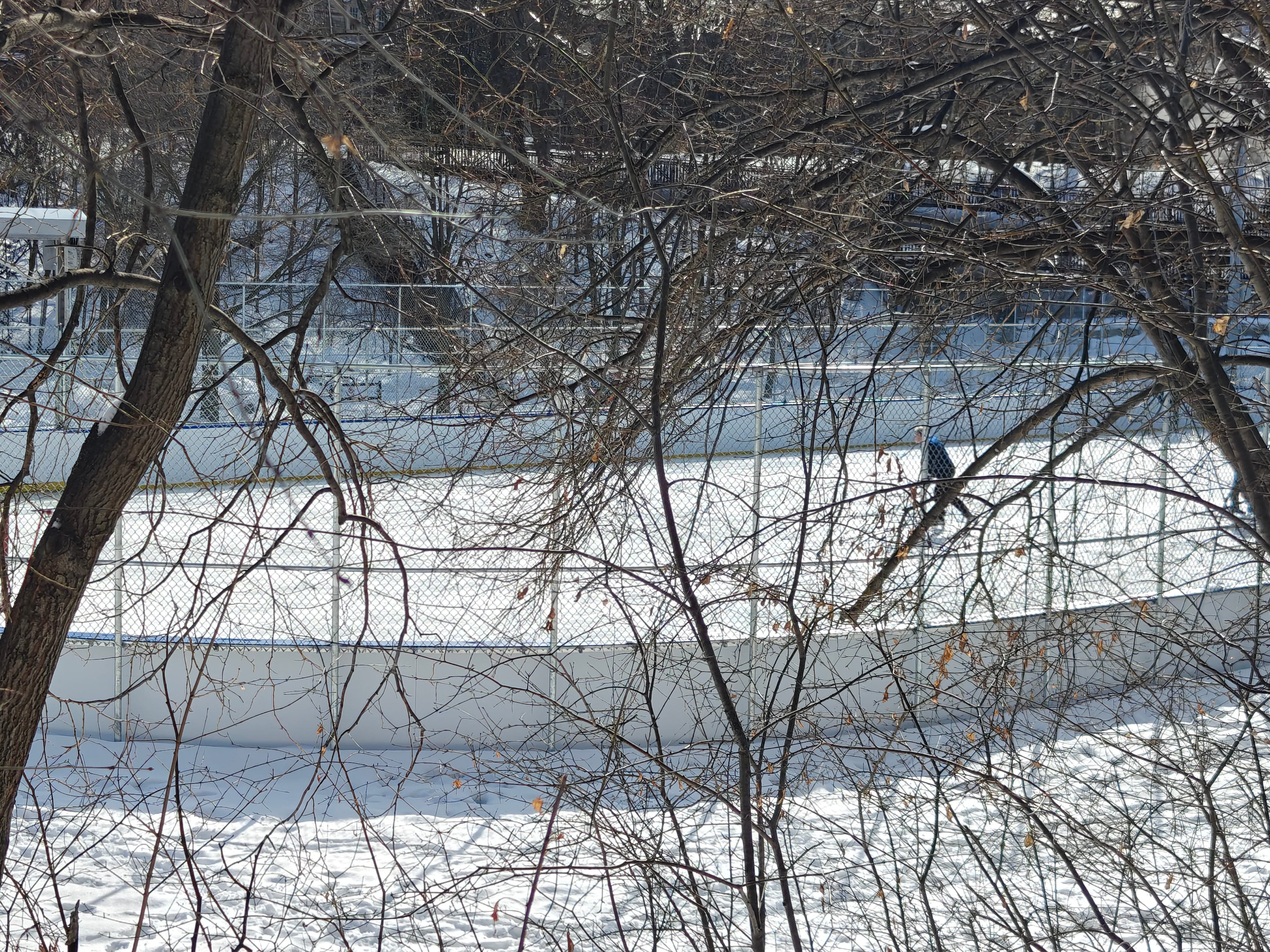
a glimpse of the hockey rink at Ramsden Park, as I walked to a meet-up with friends
This week for the first time in over a year I felt the impulse to bake. I was due later that day to a gathering of friends, an informal potluck, and instead of bringing cheese or pate, I could imagine committing to baking something. I decided to make an olive oil cake, loosely following the easy recipe in my Miracle of Salt book. I decided to double the recipe (one cake to take to the potluck and the other for home), and I needed to make some substitutions: Instead of the brined roasted ground walnuts of the recipe I chopped some store-bought roasted salted pistachios; and instead of chopped preserved lemon I used the liquid from a jar of Seville orange marmalade that I made last year. Half the batter baked in a loaf pan, as the recipe asked, and half in a cast-iron skillet. (The recipe is below, in Kitchen Explorations.)
I loved the feeling of freedom I felt while making those cakes. It was as if a weight of responsibility, debilitating inhibiting responsibility, had lifted itself off my shoulders and mind. Why? How? The passage of time perhaps. Maybe also I’m somehow better able to disregard normal expectations? There was no anxiety about the outcome. Of course I cut a small slice off both versions of the cake, to check it. But I wasn’t worried about it.
Today at Wychwood Market I found myself telling the little story of this week’s cake(s) to a chef friend of Tashi’s, a lovely guy who moved to Toronto last summer and is figuring out what comes next. He was one of the Tashi visitor contingent all summer and fall. As it turned out, my story resonated with him because he’d had a parallel experience. He told me that at Christmas he’d realised he no longer enjoyed cooking. Cooking had always brought him joy, but suddenly it was gone. An absence.
Then about eight weeks later he decided to try making fesanjun, a Persian dish he had no experience with. The experience was a real pleasure. And today, he said, he’d started to think about doing a braise of some kind for dinner tomorrow. Slowly slowly life and lightness were returning.
I told him about my strategy for trying to avoid “should” and “ought to” right now. I am trying to cook or bake or do anything else only if it’s something I feel I really want to do. There’s no energy for forcing things against the grain. We agreed that part of the trick to staying light (when cooking, but it applies elsewhere too) is to avoid the weight of expectations, our own or those of others.
My job now is to leave myself room to rediscover joy and lightness as I recover from the heavinesses of last year. The grief is heavy, but I’m slowly developing the muscles and the reflexes to carry it with more ease. And for all of us who grieve, as those muscles come, so does an ability to retrieve pleasure and lightness in other things: baking, painting, writing, political activism, cooking for ourselves and for others…
KITCHEN EXPLORATIONS including chilled mandarin segments, a recipe for olive oil cake, and poached pears
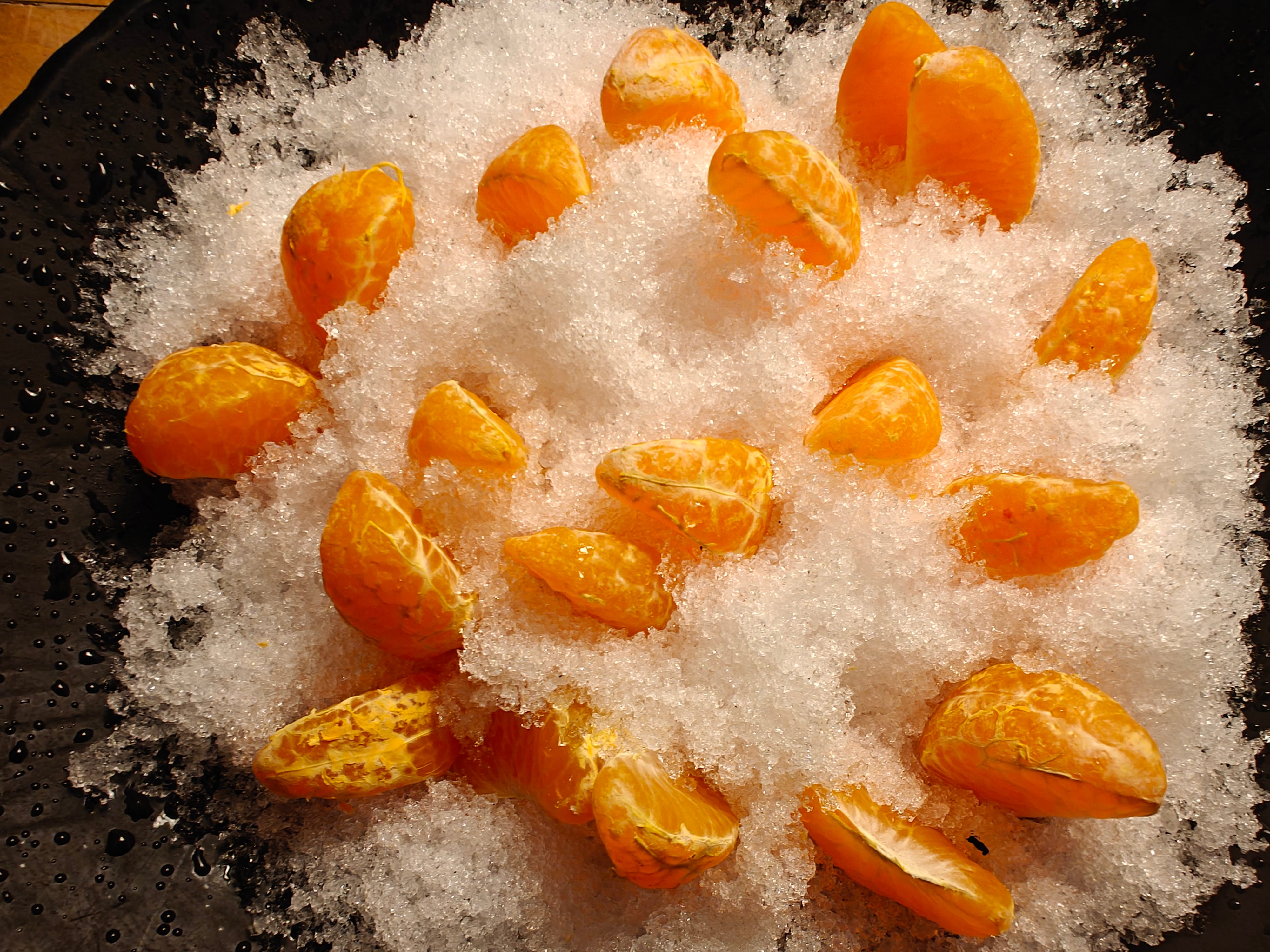
I came across a photo on Instagram recently that showed mandarin orange segments in snow. The writer (who was it?) explained something she’d learned from MFK Fisher’s writing: that if you dry the segments in a warm place, say on a rack over a radiator, so the fine skin dries out to paper thin, and then you place them in snow, they taste extra sweet. I did that today (scraped snow from the back yard into a bowl), and yes they become very sweet and juicy. They’re also pretty splashes of warm colour in the snow, and a consolatory delicious set of bites in this extended cold and snowy winter.
The olive oil cake recipe is simple, as I said above. The oven is preheated to 350F/175C. Oil a standard (8 by 4 inch/20 by 10 cm) bread tin and line the bottom with parchment paper; or instead oil an 8-inch/20 cm diameter cast-iron skillet. (If you wish to double the recipe, as I did, double all ingredients except the baking powder, which should go only from 2 to 3 teaspoons).

the skillet cake version that I kept for the house
In one bowl mix together 1 cup whole grain wheat flour (I used Maris Widgeon from Dawnthebaker; Red Fife or another non-bread flour is fine) or instead unbleached all-purpose flour, with 1 cup/200 grams turbinado sugar; ½ cup/50 grams finely chopped brined walnuts (I substituted chopped salted pistachios), 2 teaspoons baking powder, and a pinch of fine sea salt. In another bowl whisk together ½ cup/120 ml plain whole milk yogurt, 3 large eggs, and 2 to 3 tablespoons tart marmalade liquid or finely chopped preserved lemons.
Add the liquids to the dried and stir well to blend and moisten all ingredients. Then stir in ½ cup/120 ml extra-virgin olive oil until completely incorporated. It will seem unlikely that it can blend in, but don’t worry, it will. Pour the mixture into the greased pan and bake in the centre of the oven until done, 50 to 55 minutes (10 minutes less if using a cast-iron frying pan rather than a loaf pan). Stick a skewer or fine knife blade into the centre of the cake; it should come out clean.
Let stand for half an hour or more to cool before slicing. You can lift it out of the loaf pan onto a plate, or ease it out of the skillet, once it has cooled.
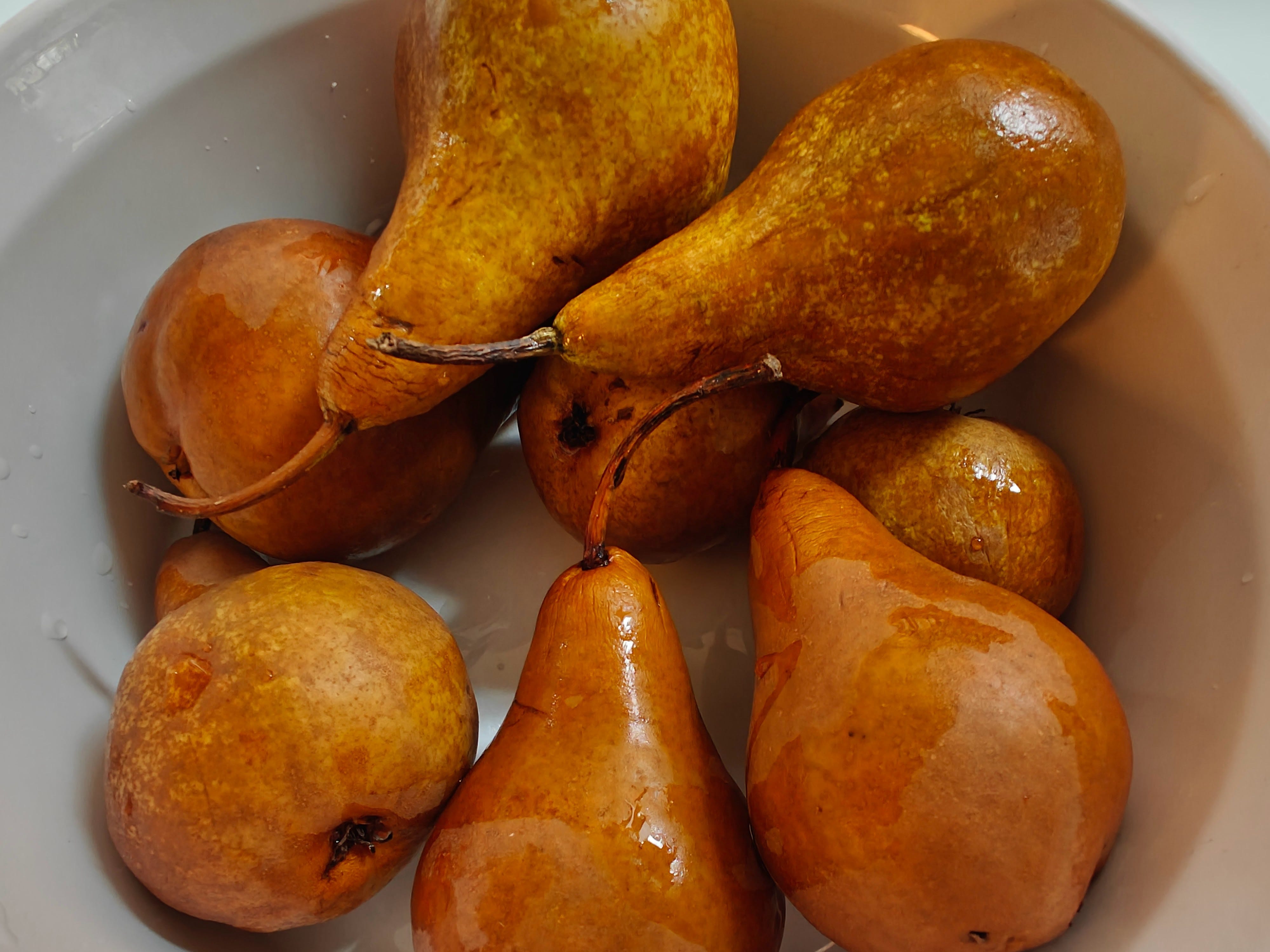
and poached pears: When I had the impulse to make the cake, I had first imagined including some poached pears eitheer in the cake, or as a topping. I’d bought pears from Milan of Bizjak Fruits at Wychwood Market. They were hard after months in storage, but I imagined they’d ripen into some flavour after a few days, or perhaps be even better if I poached them. I heated a little water, stirred some sugar into it, along with cardamom seeds and some powdered cloves, then added slender long wedges of pear, unpeeled. They simmered awhile, then sat cooling in the spiced thin syrup. In the end I didn’t include them in the cakes. I thought they’d make the flavours too complicated. But they are delicious eaten with a dollop or two of yogurt or kefir (or ice cream, as a friend pointed out). Yesterday I had them for breakfast, along with two modest slices of the cake. A great combo with coffee.


pears in their poaching liquid; breakfast bowl of pear, kefir, and cake wedges
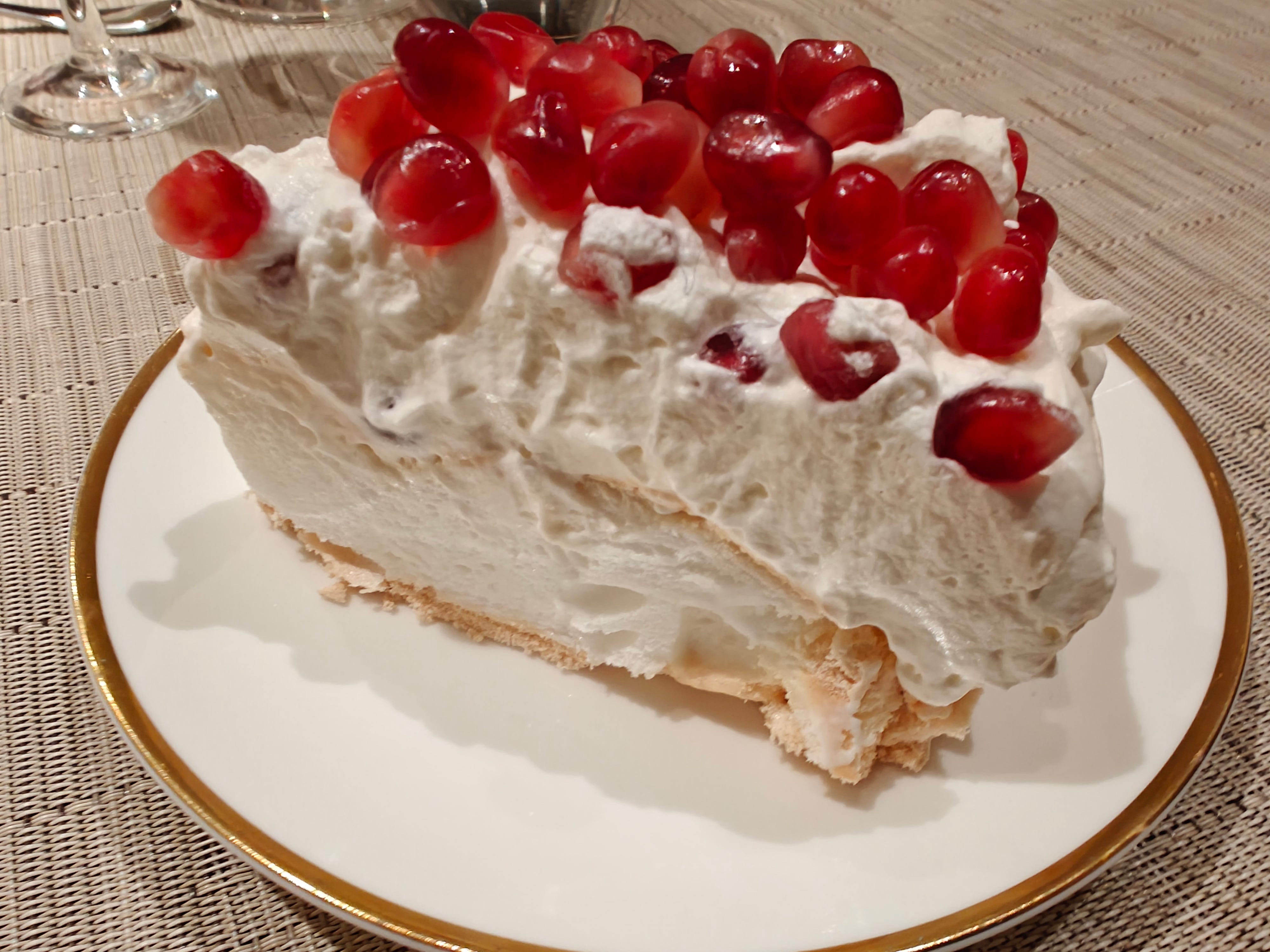
Finally: Last week I had dinner at Jennifer McLagan’s place. She is a brilliant cook and her books are rich with insight, clear excellent recipes, and loads of information. For dessert she made a pavlova topped with pomegranate seeds. Here’s the slice I ate with pleasure!
Dear Naomi. I read your aside carefully. I value your writing enormously, even when we see the world differently. But I want to gently say that for some of us, this is not an aside.
As I write this, I am sitting in a bomb shelter with my 90-year-old mother. When ballistic missiles are aimed at where you live, geopolitics becomes immediate. It is no longer theoretical, nor symbolic, nor about personalities in Washington or Ottawa.
You may see reckless escalation. From where I sit, I also see a regime that has openly vowed for decades to wipe me off the map and has armed those who act on that vow. Those realities coexist.
I do not celebrate war. I dread it. I fear suffering - on all sides. But I also cannot reduce what is happening to the will of one “orange bully,” as if the threats we live under are imaginary or incidental.
You once wrote about shared sacred time - how the new moon depends on human eyes. We are looking at the same moon, but from very different shelters.
I continue to read you with respect. I hope we can hold complexity without flattening each other’s lived realities.
Yes! When in doubt, bake cake! And yr right, of course you are, it's absolutely essential to carry on talking about someone you've lost. It's full of trip-wires, naturally, but that's just how it is.