
This last week saw the May full moon, on May 11-12. It’s a huge date in the Buddhist calendar, a celebration of Buddha’s birth and his enlightenment. I was in Lhasa during Vesak in May 1986. People were out picnicking in the park around the base of the Potala. There was a lightness in the air, a festive vibe. The political situation had eased a bit: China had begun to issue permits for travel in Tibet and had loosened restrictions on the practice of Buddhism.
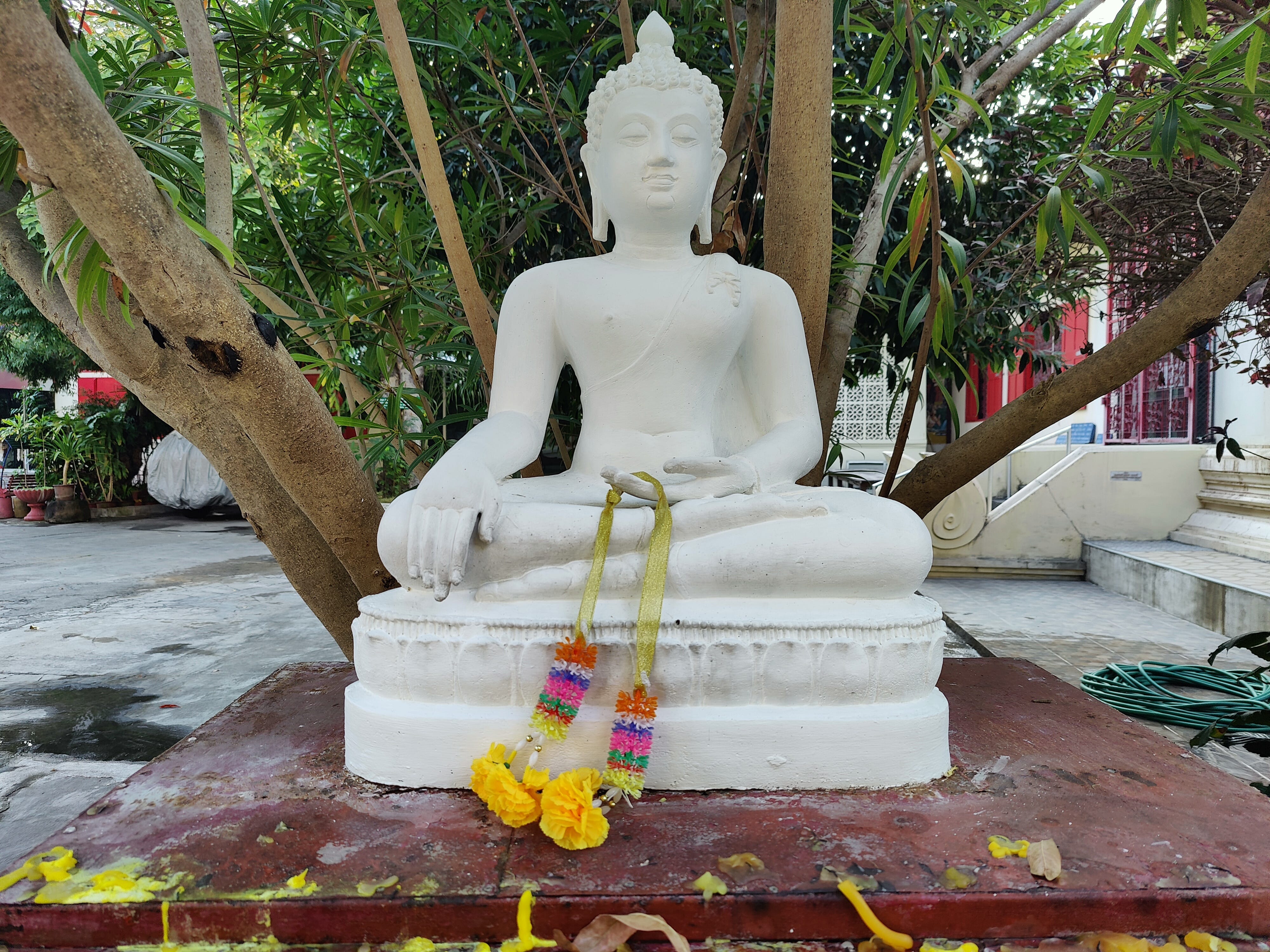
Buddha statue at a temple in Chiang Mai
I’d just returned to Lhasa from a trip west to Mount Kailash, a mountain sacred to Buddhists and others. My ex and I had made the long trip out there and back in a stripped-down Toyota Landcruiser with three other travellers. We’d hoped to do the parikrama, the circumambulation of the mountain that’s been performed by pilgrims for centuries. But the snow was still too deep; we were too early in the season. Instead we’d just been able to walk up to a ridge that gave us a spectacular view of the sacred landscape.
My time in Lhasa in May 1986 ended with a long overland trip, by bus and train and more bus, to Kashgar in western Xinjiang. From there we bicycled into Pakistan’s Hunza Valley. The following year we were able to return to Tibet and to make the pilgrimage around Mount Kailash. But after that there was a nineteen year gap, until the spring of 2006, before I went back to Lhasa to do research for Beyond the Great Wall.
As I’ve been thinking about these travels in Tibet and Xinjiang this week, wondering if I’ll ever be ready to write about them, I’ve been reminded of just how often I travel in my mind’s eye. When I wash dishes, or walk to the market, or really any time, I find myself piecing together memories of people and events from other places. I try to connect ideas and events, history and geography, a kind of active reconstructing that can give a different perspective on both the past and the present.
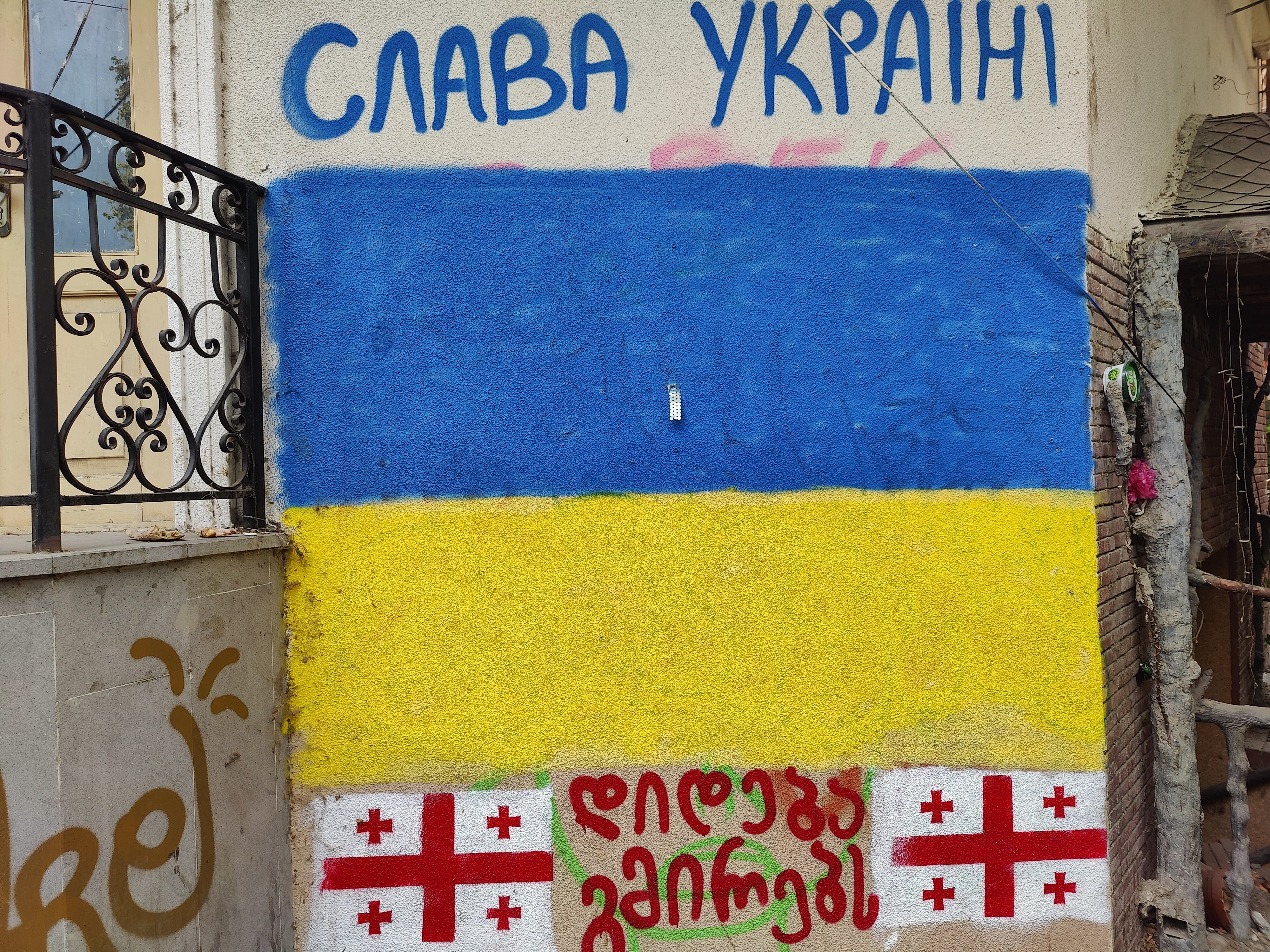
street graffiti art in Tbilisi, following the invasion of Ukraine by Russia
Now as I write this, another nineteen years after my last time in Tibet, I’m back there again, but only in my mind’s eye…
NOTE: The present reality in Tibet and Xinjiang has shifted. In the last ten to fifteen years the Chinese government has shut down most outsiders’ access to Xinjiang and has imprisoned many Uyghur people. I read reports that in Tibet, as in other minority people areas in China, there’s performance of local culture for tourists, both domestic and foreign, but little to no autonomy or freedom of speech.
KITCHEN EXPLORATIONS – Burma to Italy
Last week I made a version of one of my favourite recipes from my Burma book, a ginger-garlic-chile marinated chicken dish that I learned from the Kachin sisters whom I met in Rangoon long ago.
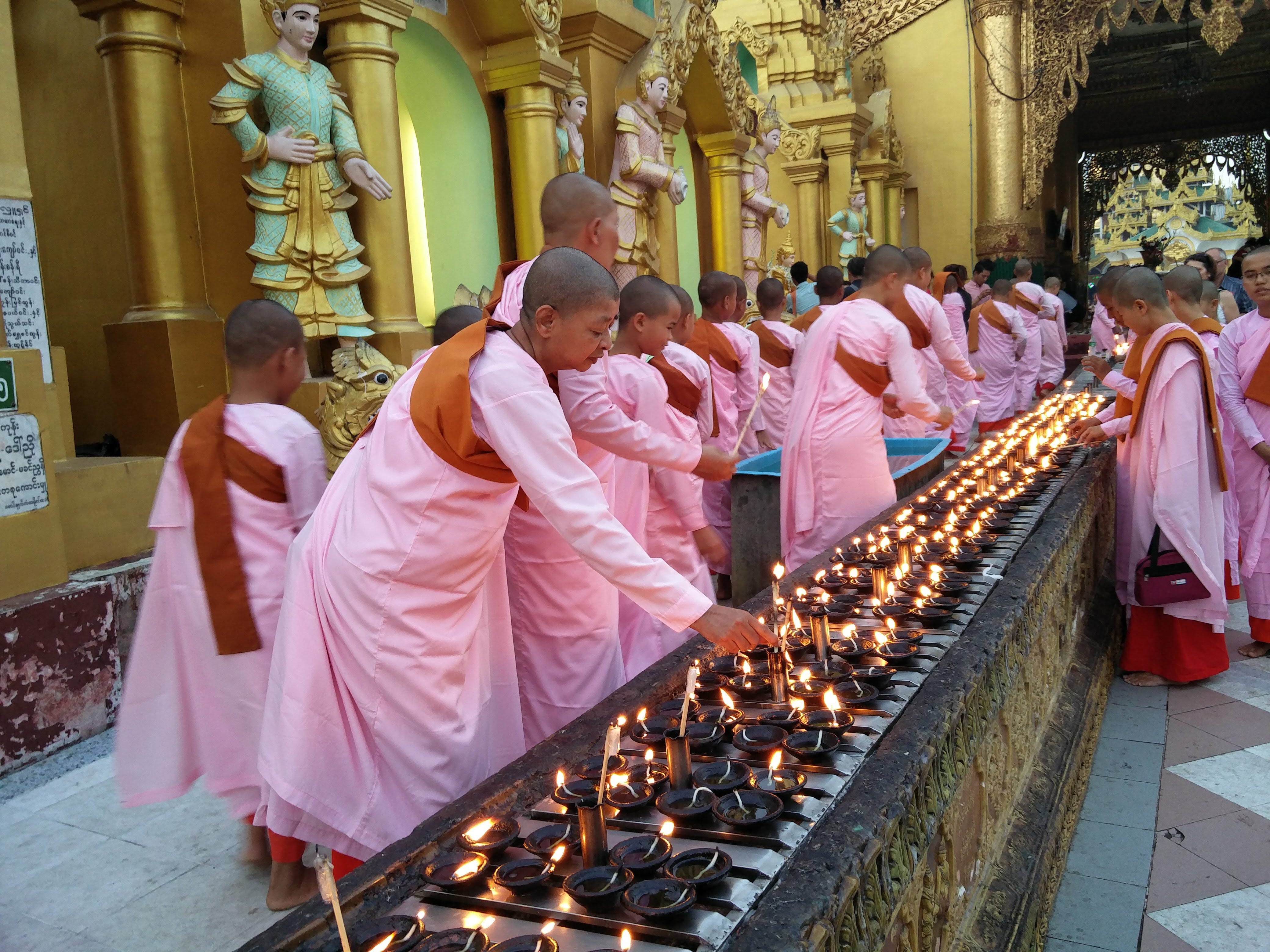
nuns lighting oil lamps at Shwedagon, in Rangoon
Chicken legs or chicken thighs, (or more traditionally, chopped up pieces of a whole chicken) are marinated in a mix of chopped garlic, ginger, and chiles that is pounded to a rough paste with salt. You can use a mortar or a food processor. The chicken is traditionally placed in a bowl which goes in a steamer over a pot of water that is heated on a stove-top or over a fire. It emerges moist and succulent this way. But with an oven available I find it easier to cook the chicken on a rimmed baking sheet in the oven at 400F/200C for about half an hour. I often serve it cut off the bone and sliced. It’s great with plain rice, a cooked vegetable dish or two, and one or more condiments. Leftovers make excellent sandwiches.
The bonus to buying chicken with skin on and bone in is double: extra flavour and lushness from the skin, and bones that can be used to make a broth once the meal is over.
Yesterday I used the broth from last week’s Kachin chicken, about 4 cups in all, that I had stashed in the freezer, to make a risotto using brown carnaroli. The rice has wonderful flavour. It does of course take longer to cook than polished rice, but it’s not finicky. I allow about an hour and fifteen minutes to get it tender and ready to eat.
The broth had a hint of heat from the chiles and ginger that had flavoured the chicken, but was not at all seasoned. I lengthened it with a little water, added a pinch of salt and a dash of fish sauce, and kept it at a low simmer in a wide pot, ready to be added to the rice as needed.
I started the risotto in my heavy Staub casserole by heating some olive oil, flavoured with several cloves of garlic, over medium heat. I rinsed the rice, about 300 grams of it (about 2/3 pound) then added it to the pan and let it cook awhile. I stirred the rice to make sure it wasn’t trying to stick, then added some hot broth scooped from the pot. (As with regular risotto, each time the broth is almost fully absorbed, you add another scoop of hot broth to the rice and give it a brief stir.)
Meantime I’d washed a bunch of mustard greens and chopped off and minced the bottom four inches/10 cm of the stems. Those went into the rice when I added the second batch of hot broth. (I’ve learned to let the rice cook quite vigorously in those early stages, three-quarters covered. I find with brown rice that it needs to get treated a little roughly early on so that the bran coating softens enough that the flavoured broth can be absorbed.) After about half an hour I lowered the heat a little and added the rest of the mustard greens, coarsely chopped. You could instead use coarsely chopped spinach, as I often do.
When the rice had softened a lot but was still not ready, at about one hour from the start of cooking, I added about 3 tablespoons of salted butter, in small pats. Then I stirred in a generous ½ cup of dry white wine and tossed in some buckwheat sprouts (I could instead have used pea tendrils). About 5 minutes later I added a generous ¾ cup grated parmesan and folded it in, then turned off the heat, and closed the lid. It’s a good idea to let the rice sit for five or ten minutes to finish absorbing liquid and to firm up.
The whole globe-spanning idea that ingredients that begin as elements in a meal anchored in a southeast Asian culinary tradition can then go on to contribute to a Mediterranean dish is exciting to me. Often as I cook I am reminded of other places and people, of history and of the passage of time. It’s one of the great joys of cooking.
Does this happen to you?
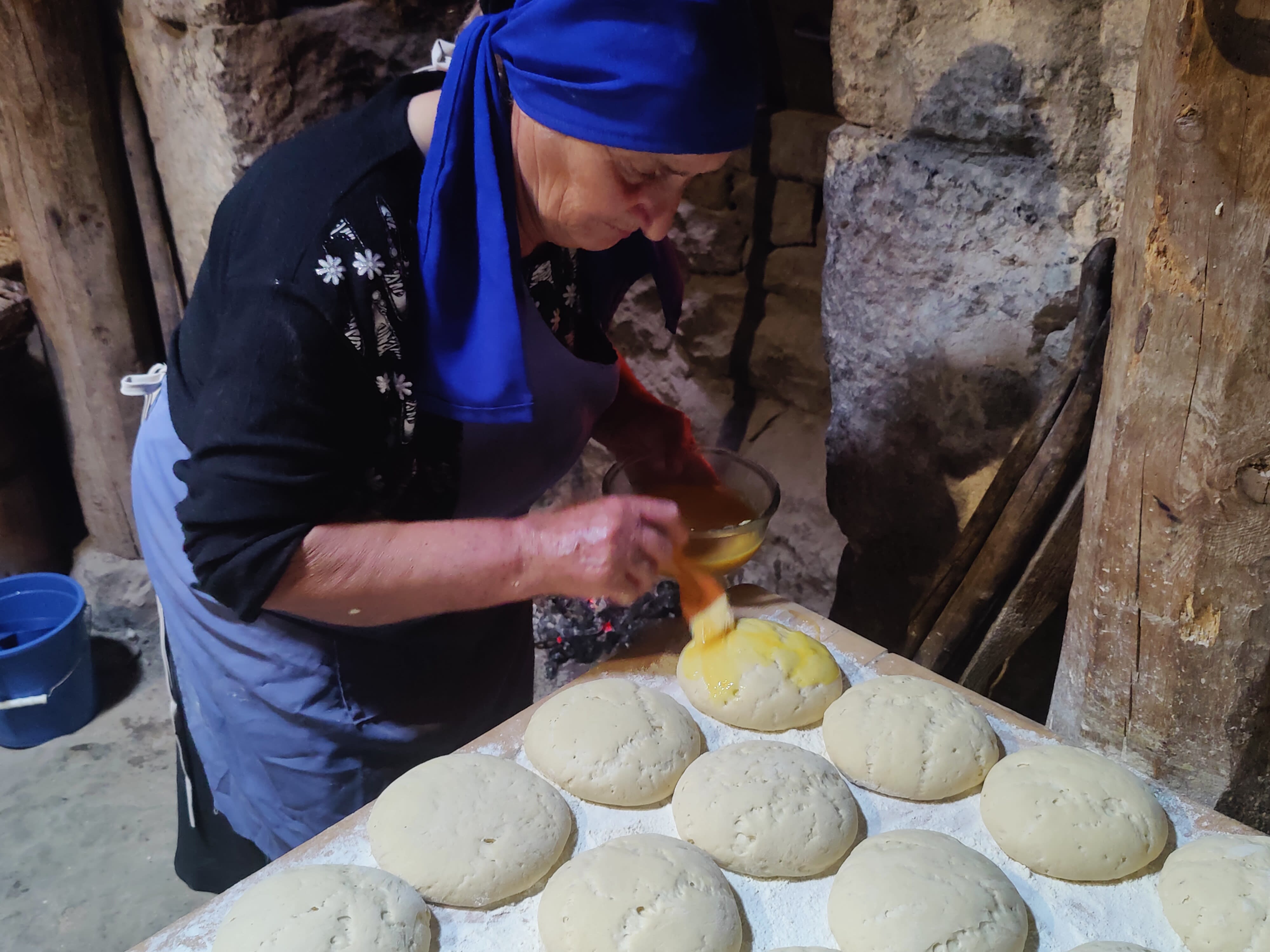
eggwashing farmhouse breads, in southern Georgia
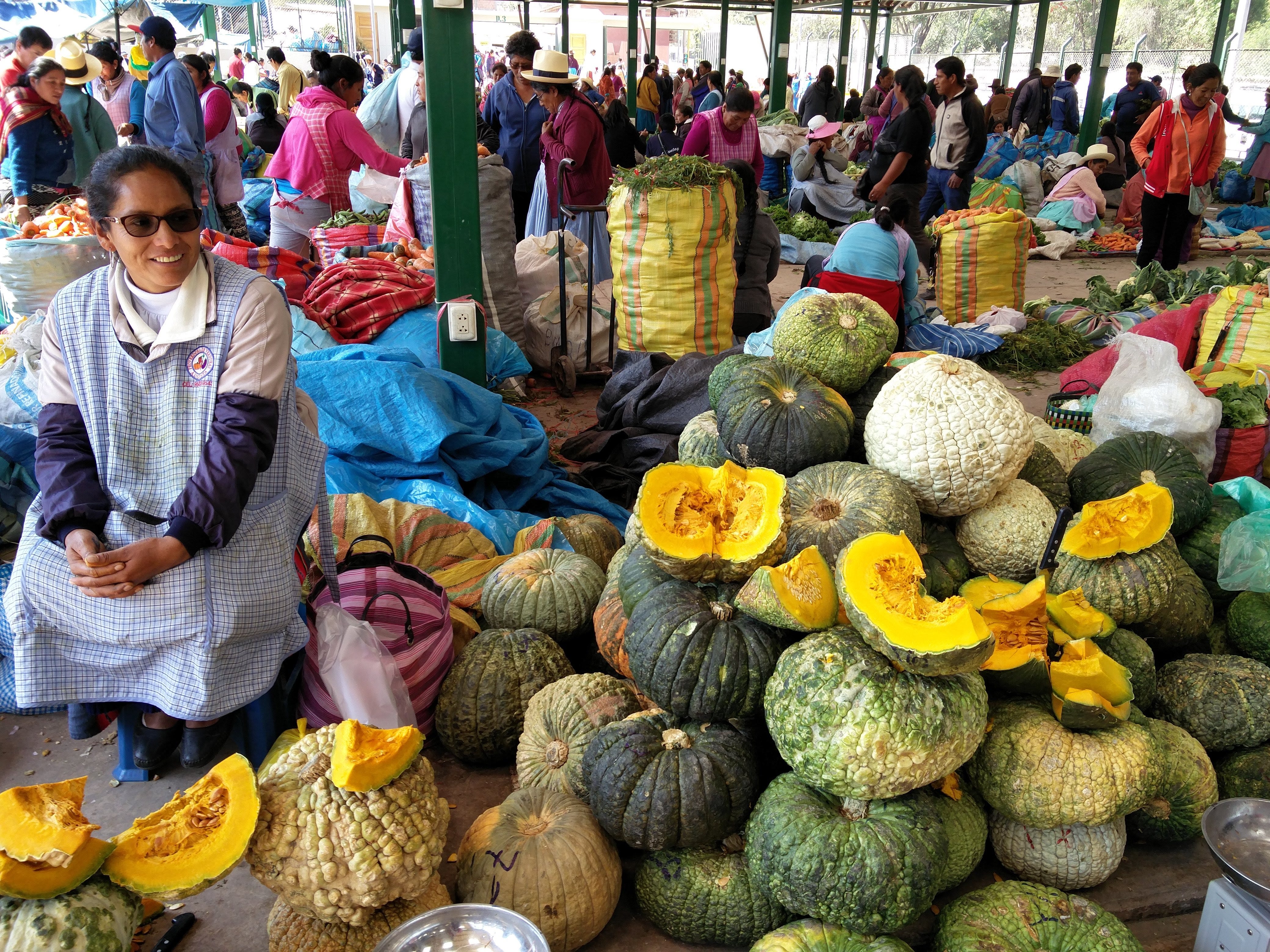
Urubamba market (Peru: origina place of potatoes, chiles, tomatoes, peanuts…)
You've written so many spectacular books. It distresses me that so few people even know about them. Flatbreads and Flavors and Hot Sour Salty Sweet and Seductions of Rice and Mangoes and Curry Leaves, and of course Burma, Persia, and Salt all do what you are describing. And Home Baking. Books published since then are almost redundant. Thanks, Naomi!