
The thick globs of snow falling past my window yesterday were looking a bit indecisive: are we going to turn into rain before we hit the ground? Or stay white and lacy?
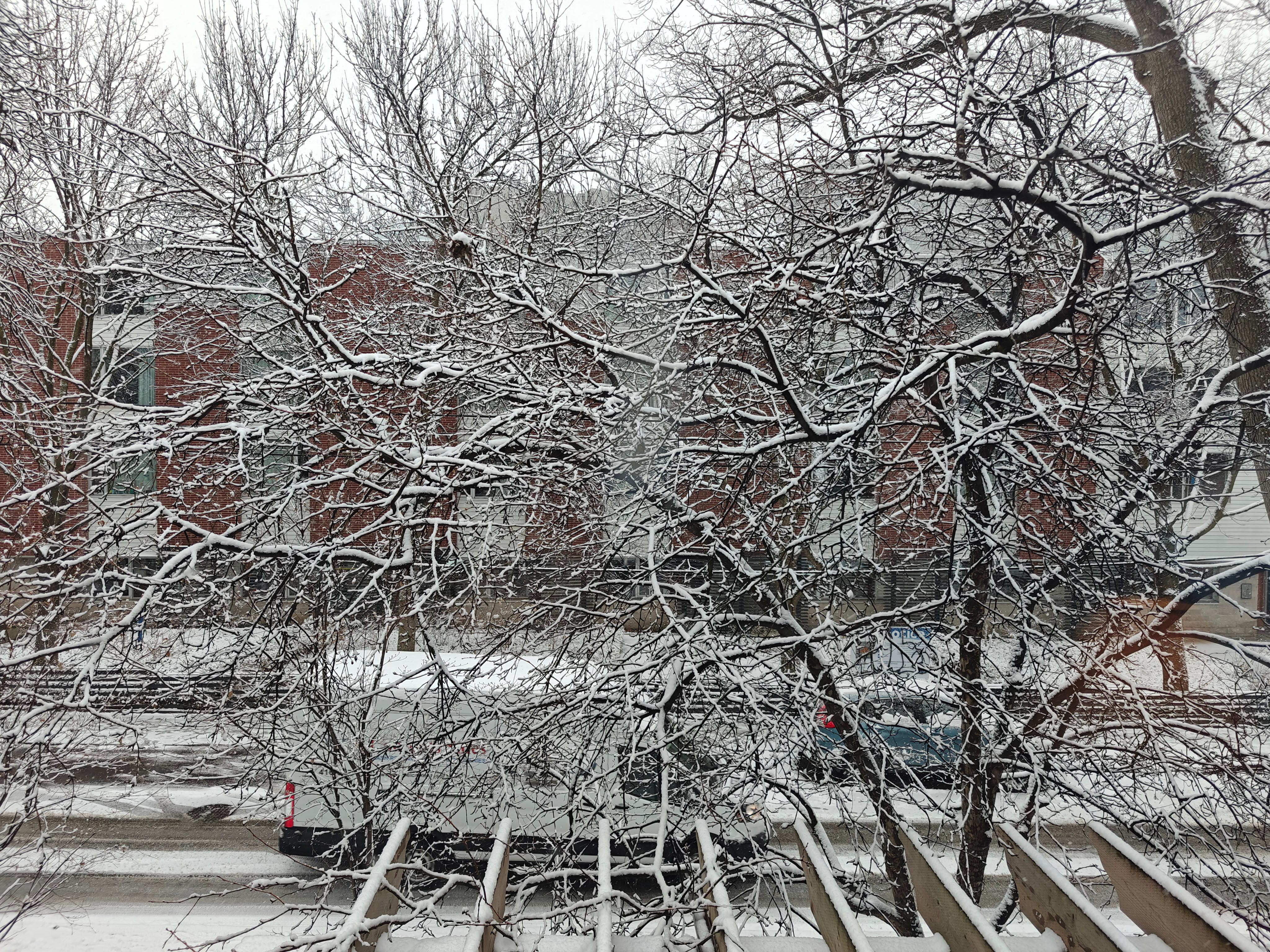
yesterday morning’s view out my window
March has been playing its usual unsettling game of snakes and ladders: two days of warmth and people out in t-shirts, then clouds and rain and umbrellas, then a hard frost and heavy coats and mittens, then those fat spring snowflakes tumbling down followed by some melting snow later yesterday, and today bright cold with frozen crunchy snowmelt underfoot.
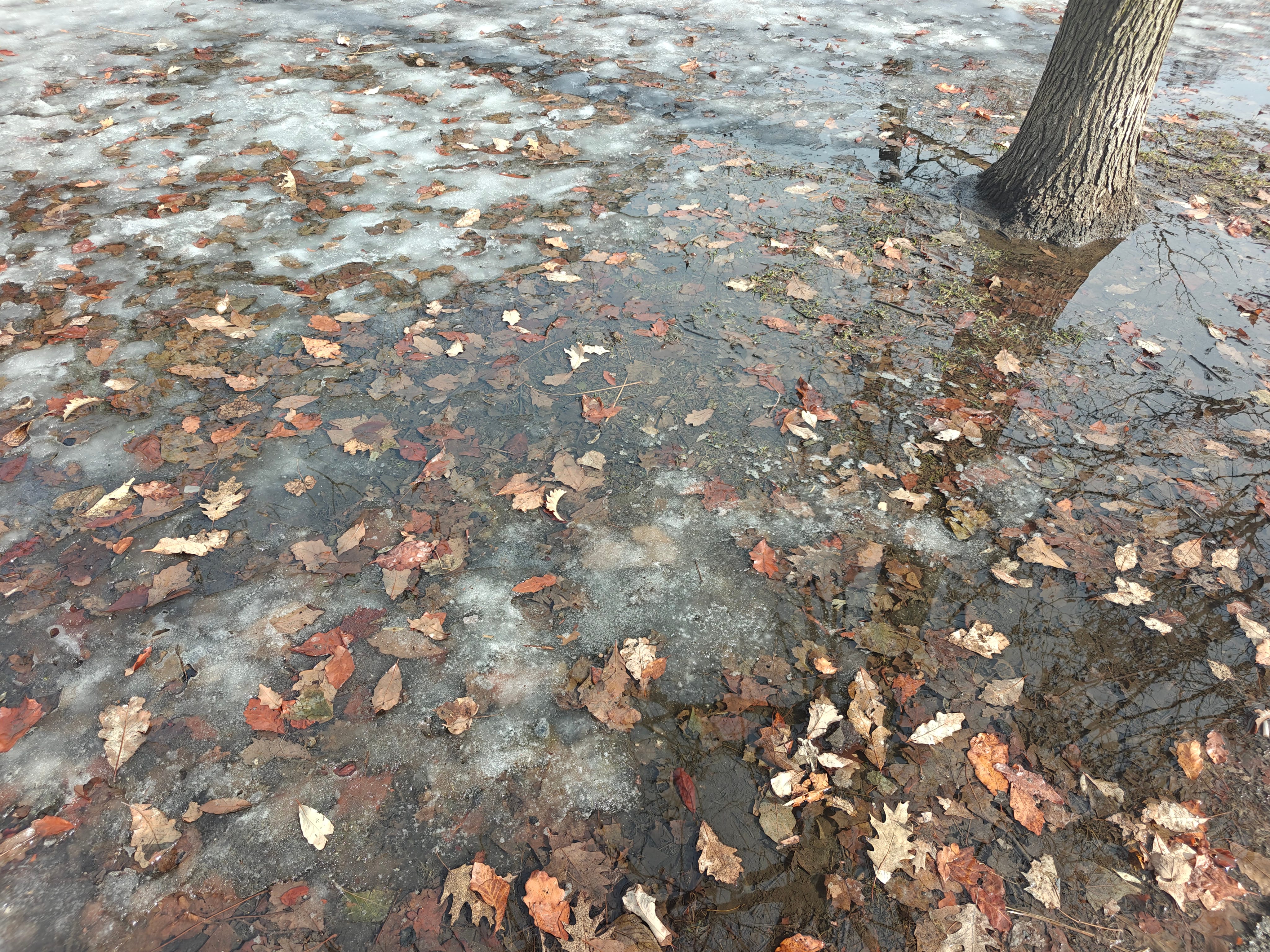
reflections in meltwater, ice, and last year’s leaves, earlier this week
It’s exactly four months (one-third of a year) since November 14, the day Tashi died.
And exactly two weeks ago the US and Israel started a barbaric war against Iran, murdering civilians and destroying their treasured past and their present. No-one seems prepared to try to stop this madness. It’s as if, once launched, a war has a right to exist.
I need to start a file called “rants” where I dump my paragraphs of distress and rage and frustration. For that’s what comes out first when I sit down to write here on Substack. And then finally I come to a solid place that I want to inhabit and explore here.
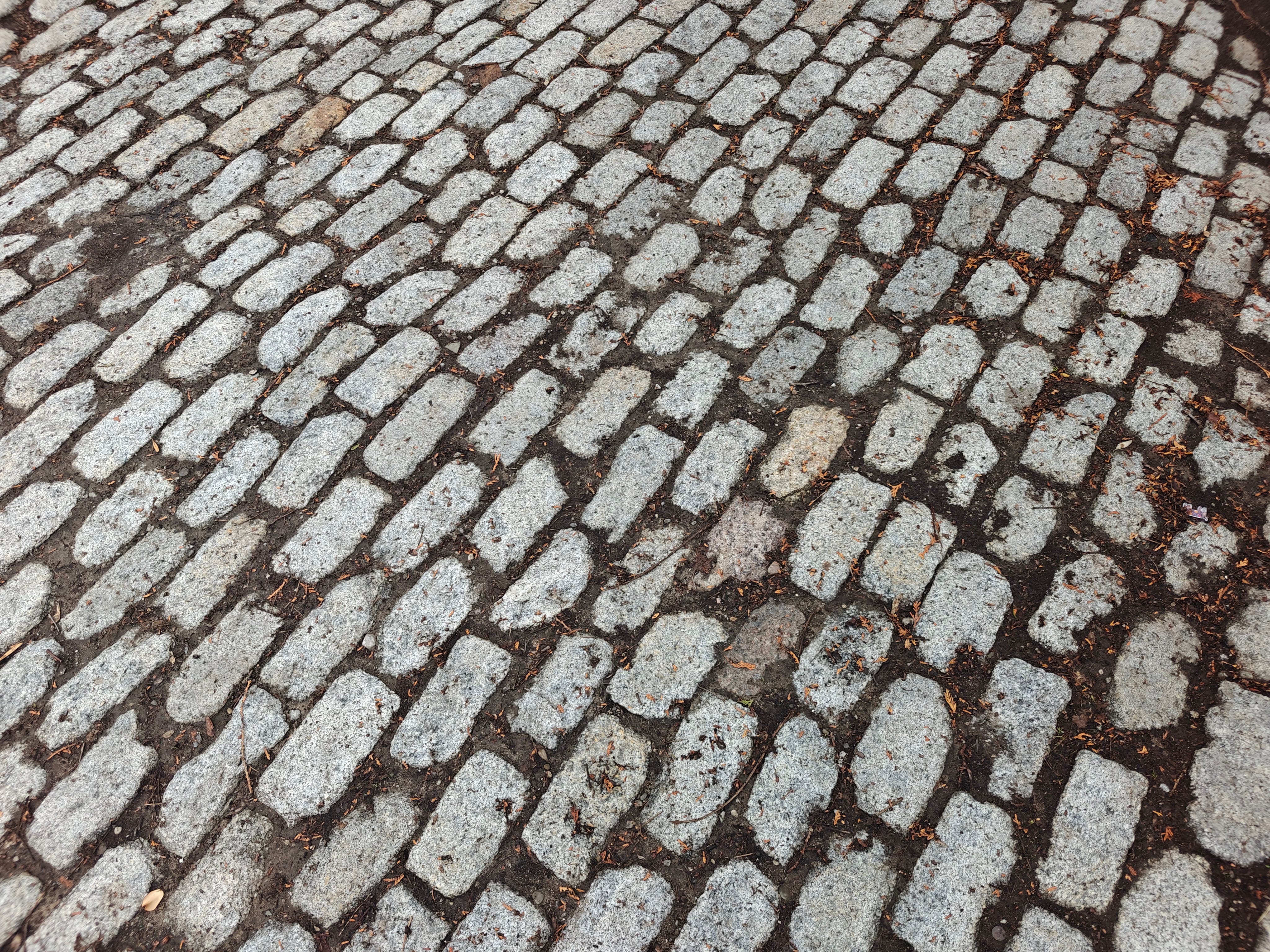
local undulations: cobbled front yard
This week I’ve been thinking about the moments when I forget that Tashi is gone and I for a milli-second have an impulse to tell him about a random encounter, or imagine the look on his face when he hears a piece of news. They’re followed instantly by a sink of the heart and the gut, a quick sharp letdown. No, he’s gone. It’s a kind of death by a thousand cuts situation, unpredictable cuts inflicted when reality and my reflexive thoughts are out of synch.
Perhaps there will always be these moments. Perhaps it’s impossible to truly absorb the painful truth. And that may be a measure of how deeply we connect to our most beloveds. They are built into our bones and muscles. Their image, their living presence, stays imprinted in our subconscious, or somewhere just as deep.
The veil of subtext, of a sense of hidden possibility, and of a kind of unreality, is sometimes very disorienting. Sometimes I feel as if I’m looking at the world through distorted glasses. It seems askew and unreliable. I have the sense that maybe there’s something lurking just out of sight around the corner. Perhaps it comes from my knowing there’s an essential missing, but without my having truly integrated that reality. It’s like having a kind of blurry double vision.
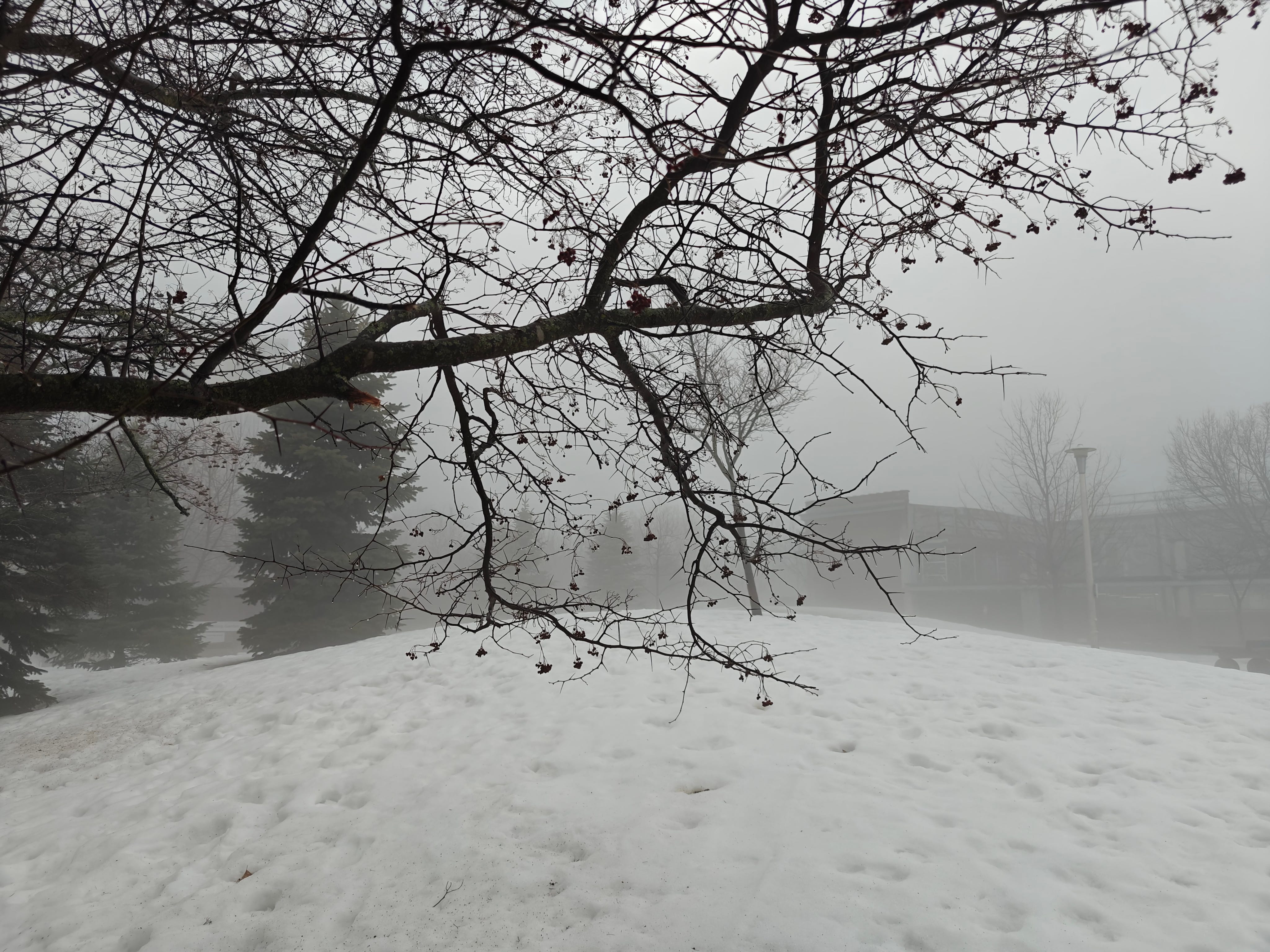
I used to see double when I was a child, whenever I was tired. I’d had a couple of eye operations before I turned two, to correct my strabismus. Usually my eyes stayed in focus without my making any special effort. But if I’d been out in bright sunshine or had had a long day, they’d slide into a double image. It was kind of restful, I realise now, as I think about it. I’d retreat into a sort of vagueness. Perhaps I’d get a vacant look on my face. I don’t know. My mother would usually notice immediately that my eyes had gone out and from across the room she’d signal to me to pull them back into focus.
The temptation with this loss of Tashi is to let things blur, without trying to pull myself back into focus. I’ve done some of that, for sure. It can be restful. But I don’t want to retreat into passivity and inaction. I want instead to retrieve energy and lightness. Even if that’s going to be only intermittently successful, it’s worth the effort. The return of longer days will help me get there, as will fresh leaves on the trees and growth in the gardens. Being out in the world, moving and breathing and noticing, that’s what’s life-giving, that’s what can help me find fresh focus and lightness.
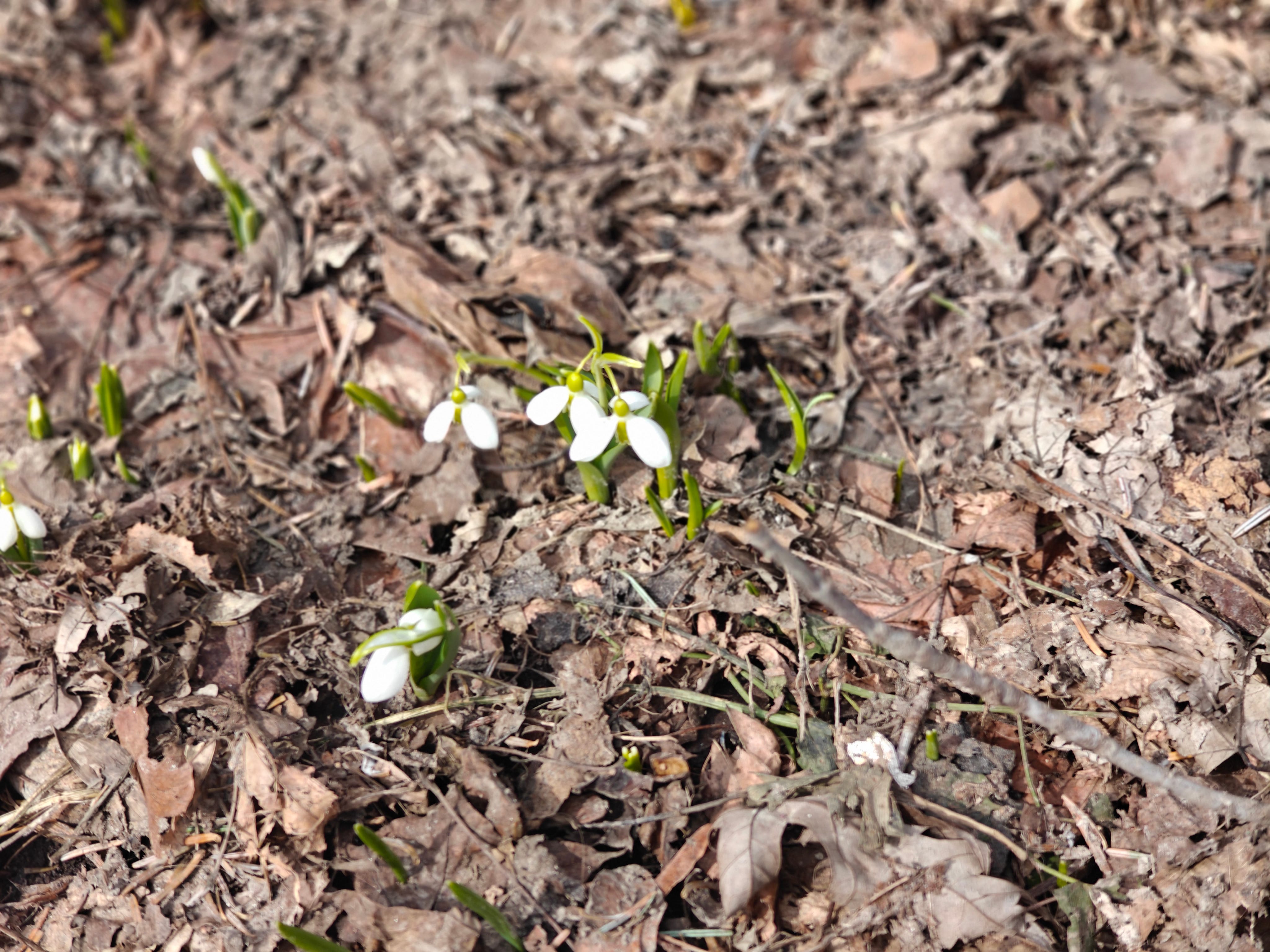
if the snowdrops can push their way up through dried leaves and debris…
When I got back from Thailand nearly four weeks ago I couldn’t face dealing with practicalities, including my accumulated mail, for over a week. Among the bills and statements was a card that had been mailed in New York City just after Christmas but hadn’t arrived until mid-January. In it was a kind letter expressing love and condolences for the loss of Tashi. I was very touched but found myself unable to reply to it until today, when it suddenly felt easy. Who knows how these things work? It seems like pathways forward become clear in odd and unpredictable ways. Perhaps some never do. We’ll see. (For example, the clarity I need to access in order to do my 2025 taxes has not yet manifested!)
But at least I’ve been working on plans for ImmerseThrough trips to Georgia (in late September of this year) and northern Thailand (January 2027). In the last few weeks I’ve been talking with my friend and colleague Tamar, who lives in Tbilisi about this fall’s trip. We’d like to include a few days across the border in Armenia, as well as generous time in Georgia. (All of this may be a pipe dream if the warmongers keep pursuing their murderous goals.)
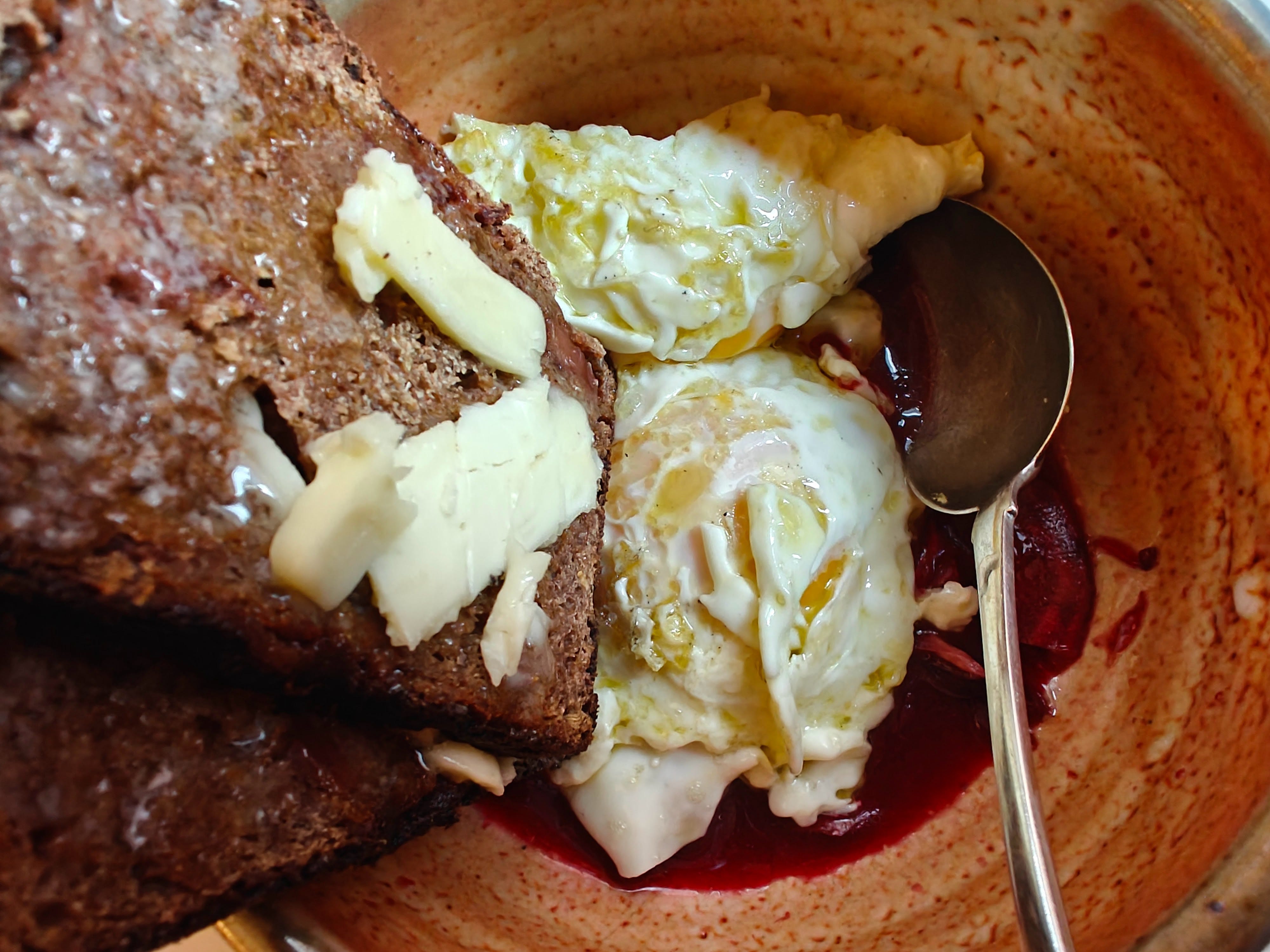
fried eggs with leftovers (in this case grated beet salad) plus generously buttered toasted rye bread, is a heart-warming encouraging way to start the day
Next week, with the new moon, we come to the end of Ramadan. Nou-Roz is a few days later, on March 20. Unlike Ramadan or Easter, it’s set by the solar calendar rather than the lunar calendar. It’s the Iranian/Persian/Zoroastrian New Year celebration of the return of the sun, that falls on the first day of (northern hemisphere) spring. How wonderful if the war could wind down at Nou-Roz.
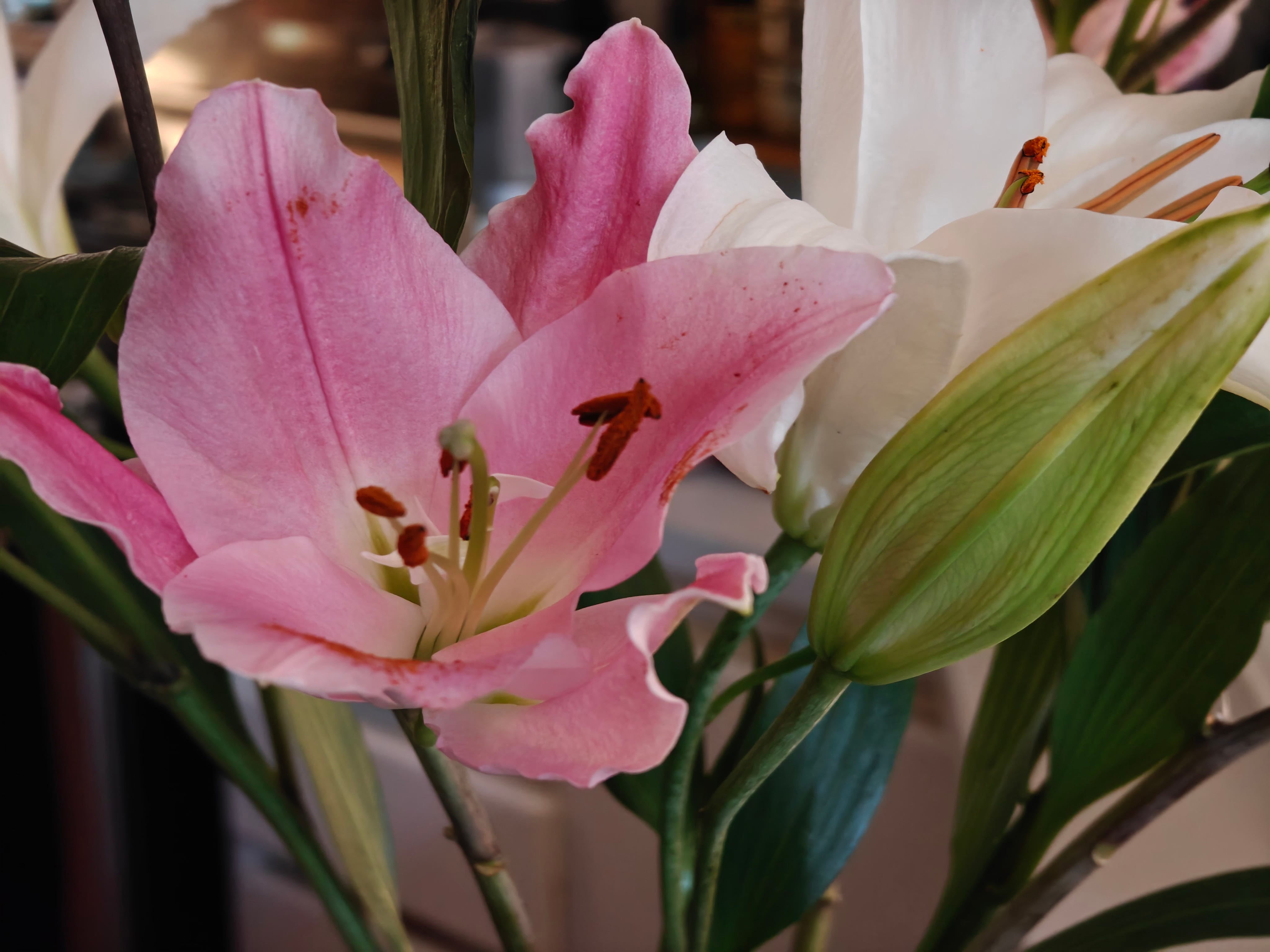
lilies from St Lawrence Market, brought by a dear friend
KITCHEN EXPLORATIONS - halibut, celery root, oven roasting, and Pi Day
The other day, with two well-loved friends here for supper, I cooked halibut, two thick pieces totalling about 550 grams (just over a pound) that I’d bought frozen from Fisherfolk at Wychwood Market. (They bring it in from Nova Scotia.) I’m always worried that I’ll not do fish justice. Over-cooking is the big risk. I defrosted it in the fridge during the day and then brought it to room temperature just before cooking.
I wanted to try using diluted miso as a cooking medium. I dissolved a heaping tablespoon , perhaps a bit more, of shiro (pale/”sweet” miso) in about ¾ cup (175 ml) warm water. I cooked a little minced ginger and minced shallot in a cast-iron skillet over moderate heat (in a splash of olive oil). Once they had softened I lowered the heat. When I added the miso liquid it sizzled slightly as it flowed to cover the whole surface thinly. The halibut pieces went in flesh side down for just over a minute. Then I flipped them and they cooked skin side down, with the lid on so they could steam a bit, for another nearly four minutes.
I served the fish with a drizzle of the cooking liquid on top. The halibut slid into beautiful flakes and it was not overwhelmed by the miso. Whew! I failed to take any photos. Sorry.
The rest of the meal included a dal (a mix of urad and masur/red dal) cooked earlier in the day for over an hour until soft, then tempered with spices and chopped cauliflower ooked in oil. There was also a lightly dressed salad of roasted celery root and chopped radicchio.
We’re lucky to have Ontario-grown celery root (celeriac is the other name for this large bumpy vegetable) still available (it doesn’t seem suffer much in storage). Celeriac needs to be peeled (a potato peeler works well, or a small sharp knife) before being sliced. I slice it fairly thinly, cut the slices crosswise so they aren’t too big, toss them with olive oil, sprinkle on fish sauce, and then roast them on a baking sheet until tender. Celeriac takes a while to soften, always a bit longer than I expect (allow 45 minutes to an hour at 400 F/200 C).
Then what? I can imagine you asking. I like to combine its sweetness with some bitter. That could be chopped dandelion stir-fried with a little garlic, cumin, mustard seed, and perhaps some minced chile if you’d like extra heat. Local farmed dandelion, a classic spring green, is now available here, so that’s a good choice.
Another possibility is chopped raw radicchio or endive. (I found some imported radicchio from Mexico last week; I’m avoiding US produce these days). The radicchio-celery root combination calls for a well-seasoned (salty enough) dressing with a bit of a tart edge, say yogurt, cider vinegar, and a little olive oil, or instead tahini diluted with warm water, plus some pomegranate molasses. With the latter dressing you could use a good soy sauce for part of your seasoning.
It’s true that most root vegetables lend themselves to being cooked in the oven, from beets and carrots to potatoes. It seems useful to talk about them now, because we’re still mostly in the “hunger gap season” with root vegetables plus cabbage our main source of vegetables.
I slice potatoes (peeled if the peel is thick), drizzle them with olive oil , sprinkle on salt, and put them into a 400 F/200 C oven until tender and touched with brown (usually about 45 minutes; it depends on the variety of the potato and the thickness of the slices). Carrots, scraped clean, get the same treatment except that I usually slice them lengthwise into batons. Beets go in whole and unpeeled, on a baking sheet and sheltered under aluminum foil so they don’t dry out.
And finally today is “Pi Day” (if you write your dates American-style, with the month first, it’s 3.14.). I forgot about it this year and never even thought to try making a pie.
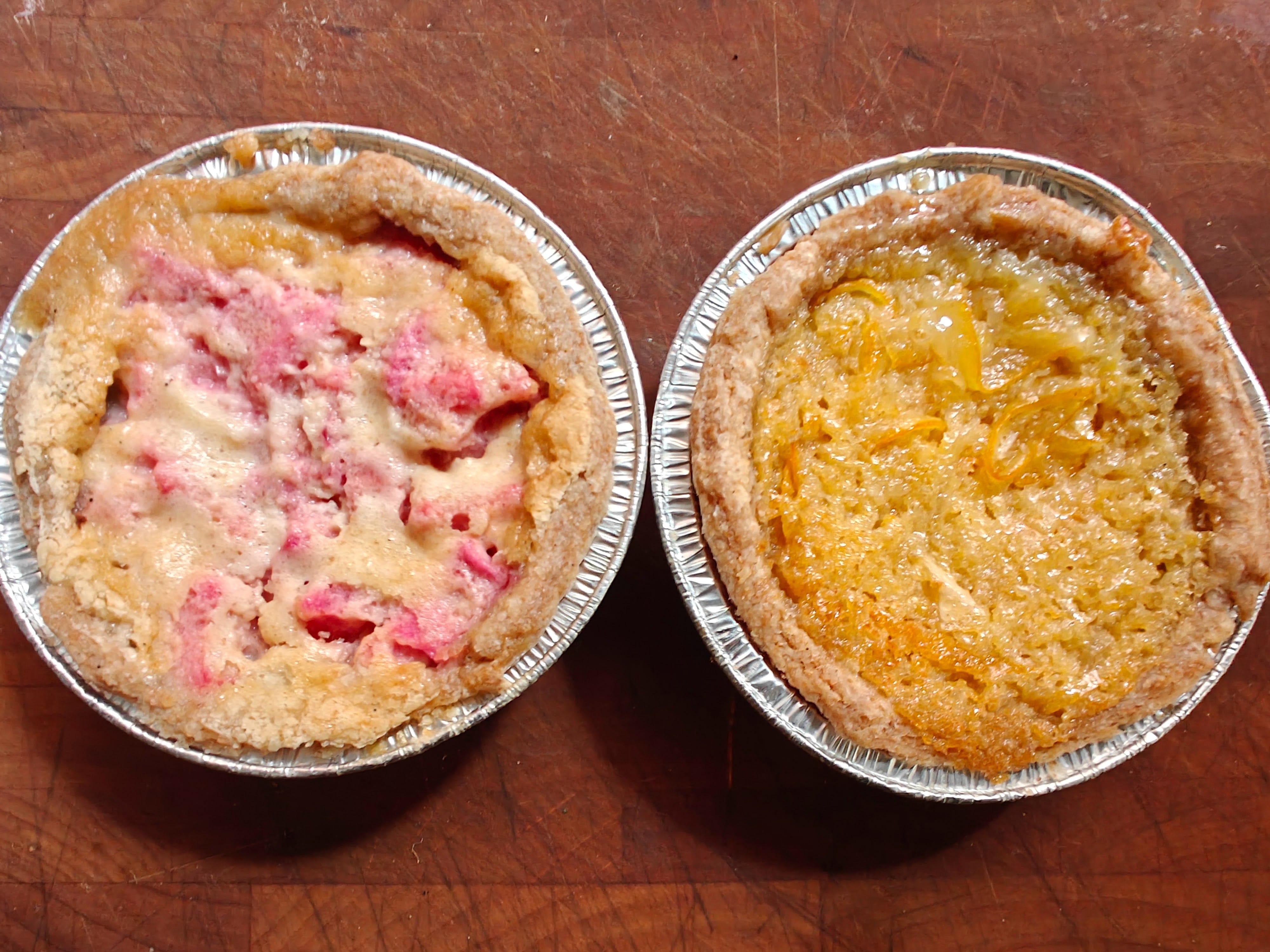
here’s a glimpse of two small pies, tartlets, made by Dawnthebaker, both of them genius: rhubarb cardamom custard, and Shaker lemon
Reading this, it feels like you’re sitting at my kitchen table (or on my kitchen porch), as we chatter away—so much to talk about, so much to share, wise woman.
Now I know that I’m not the only person who thinks about telling my mother about some daily event and then realizes I haven’t been able to do that for 23 years now. It means that she’s still there in my mind and I hope she will never leave.
That rhubarb pie looks like heaven! My grandmother made rhubarb-custard pies and rhubarb-custard is used as a topping for a yeast coffee cake here in Bavaria—but the cardamon is not added and the yeast base isn’t quite as buttery as a pie crust. My mouth is watering and rhubarb hasn’t reached our markets yet.