
I’ve been having trouble getting things done recently. Perhaps it’s because of the clear skies and mild temperatures we had until late Monday. They were oddly (and pleasurably) disorienting at this time of year.

a tough survivor: rose on my street today
On Saturday I drove north of Toronto to stay overnight with friends in Grey County. It was a wonderful drive. Usually November gives us dull skies and a fair amount of rain and chill, so we don’t notice shape and shadow, and colours are muted. But last weekend the clarity of the light was extraordinary.
I’ve driven that route a lot over the years, but somehow this time, perhaps because of the light, it felt entirely new to me. I was carrying thoughts of Tashi, that’s a constant. I was imagining talking with him about the amazing light and the different feel of things. It’s his birthday this Friday.
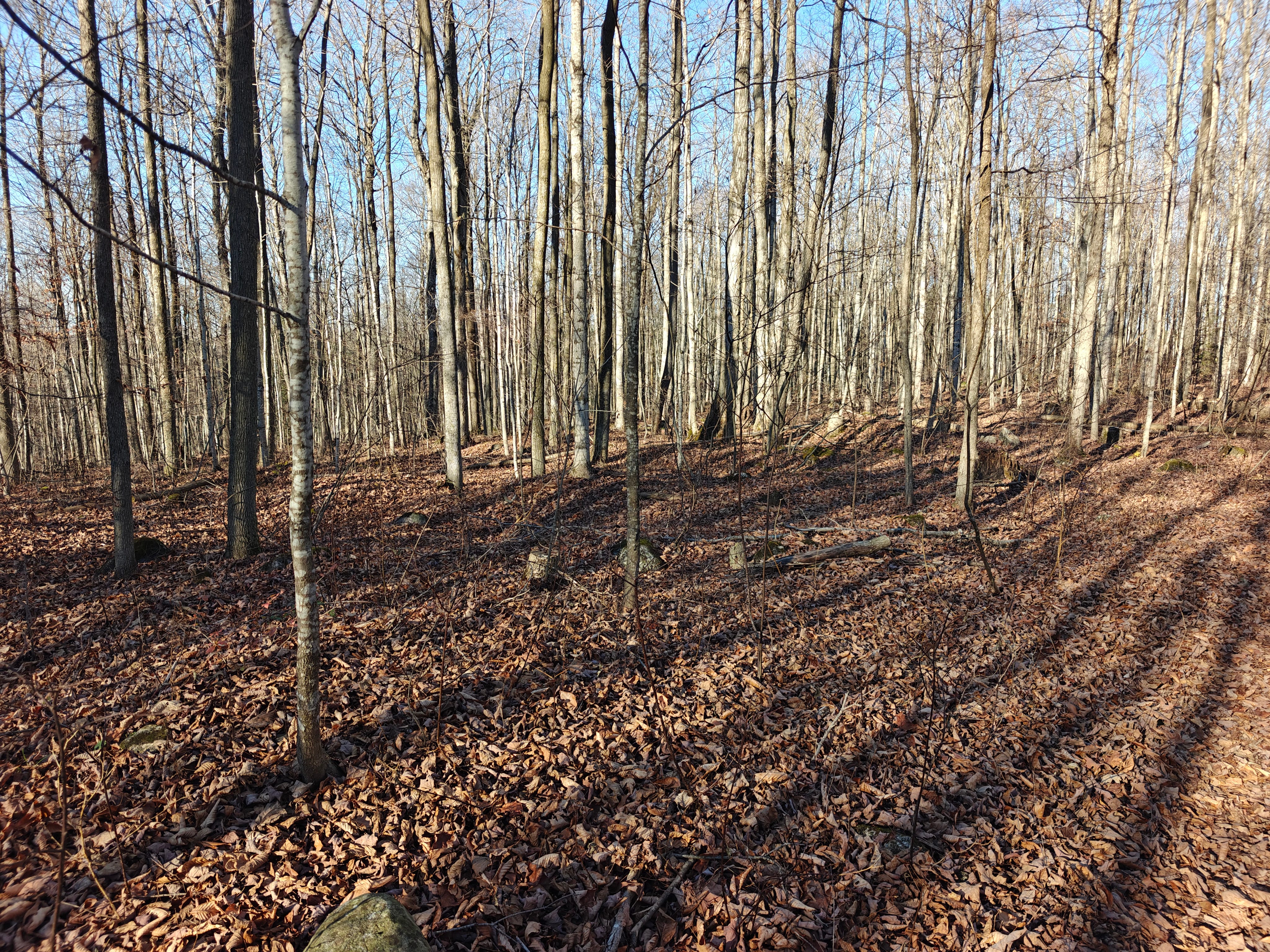
sharp north-south shadows
I kept noticing the shadows cast by individual trees, and the way objects, from grazing cattle to barns and houses, were outlined in light. The November sun is low in the sky, even at noon, so shadows are aligned north south, rather than the east-west of summertime. And that changes how everything looks. Driving southward on a concession road on Sunday, I headed up a rise with an open field leading to the crest of the hill. Several bare deciduous trees near the crest were black silhouettes against the blue sky, their shadows on the ground a mirror image. Stunning. It felt like a lithograph, oddly flat and formal in composition.
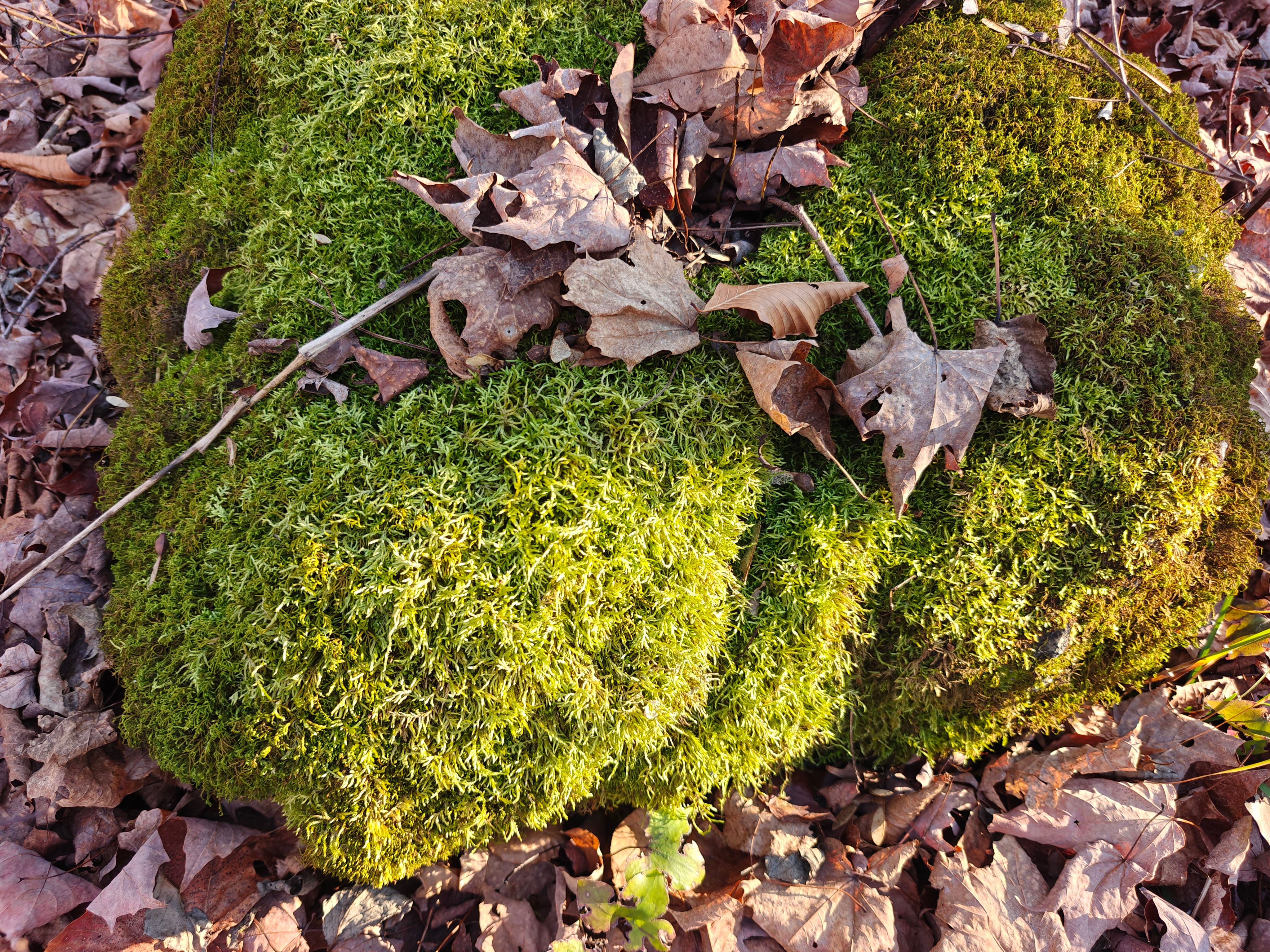
forest colour and decay
Usually this kind of impression that the landscape is unreal comes with certain days in springtime, when the light is just-so. This late-November wonder was disorienting as well as delicious.
Yesterday was a true full moon day, with brilliant light and sharp cold. Today is the same. Our mild spell is over. These are first frost days in many places. I brought my pot of lemongrass in last night, and am feeling grateful to the self I was last night for thinking to do it and following through.
Do you ever do that? Address thoughts to your earlier self?

full moon in Toronto last night
Up in Grey County on Saturday night the luminous moon, not quite yet full, created sharp shadows when I walked out to the outhouse before going to bed. The familiar Cat Stevens song came to mind. And despite the moonlight’s competition, the clear sky was spangled with stars and planets, vast and mysterious. In the city we’ve lost access to that vision of immensity.
A PLACE TO VISIT: Recently I read about the Mont-Megantic Dark Sky Reserve near and around Lac Megantic in Quebec’s Eastern Townships, where lighting at night is deliberately restricted, so that the night sky is visible. People now travel there to experience it, as they might visit wildlife parks or other kinds of nature reserves.
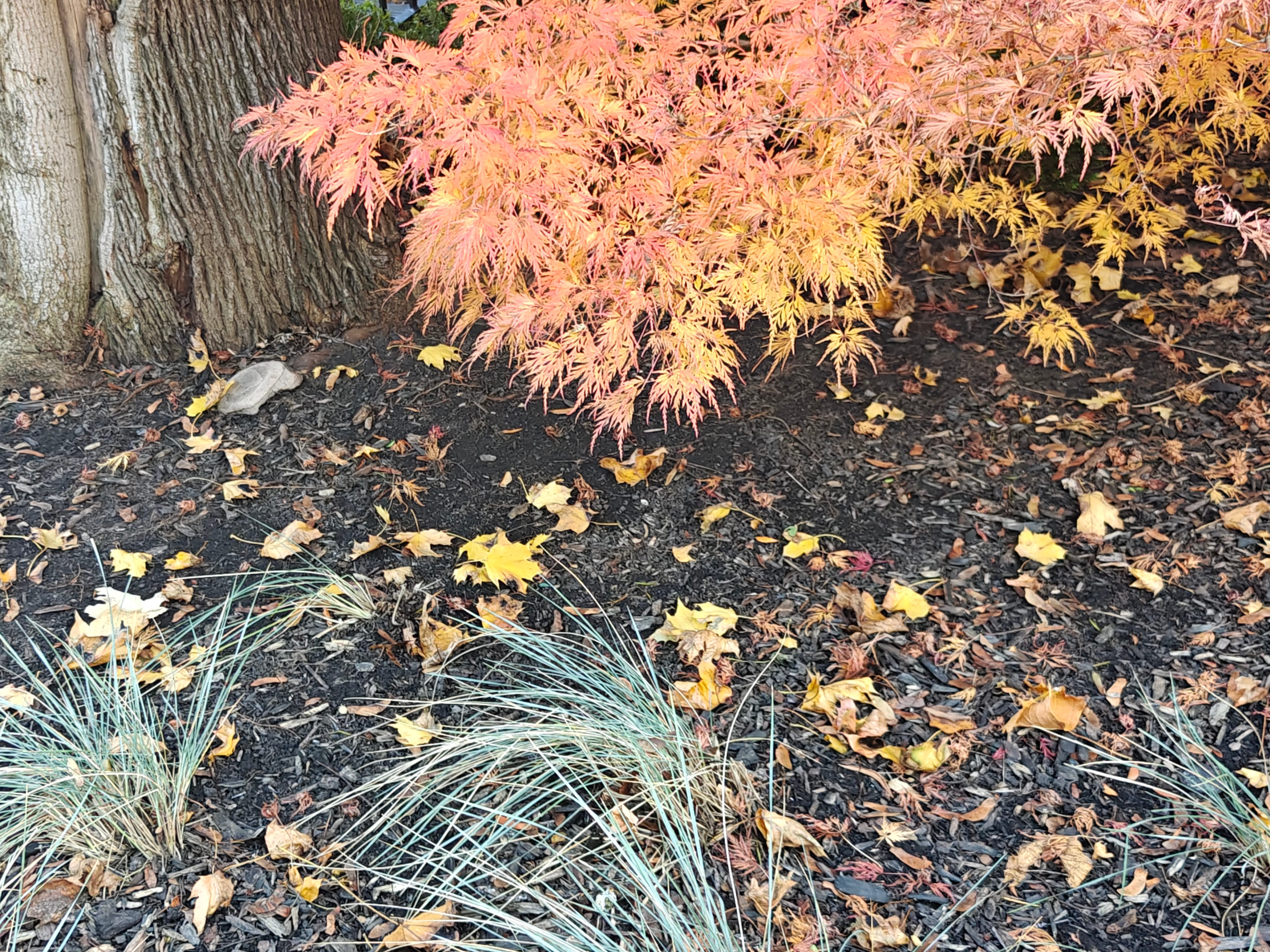
loveliness in the city
KITCHEN THOUGHTS
Last week I wrote about the pleasure and ease of boiling up a large batch of dried fava beans to produce a huge load of bean puree. Dried favas were a new discovery for me. I’ve used that first large stash in the fridge in various ways through the week: On several mornings it was a base for my fried eggs, perhaps mixed with a little tomato sauce, or another time enriched with a dollop of tahini. One day I reheated it, added fried garlic and olive oil, sizzled a few spices in it, and added chopped tomato too, then put it out as a side sauce for supper.
Since that post I’ve had comments and suggestions and reminders from people about fava beans. Nancy Harmon Jenkins (of @From the Kitchen Porch) reminded me that in Puglia long ago she and I had eaten a cooked fava puree served with bitter greens. Ken Fornataro of @Cultures Group wrote to tell me he grew on maccu, usually with onions and fennel seeds. I had to look the word up. I learned that maccu is the name in Sicily of a thick soup of cooked (usually dried) favas, simply flavoured, and eaten as a staple, and also of pureed cooked favas.
Most cultures have a version of a similar daily sustaining staple in the gruel or porridge category. For me growing up it was porridge, most often oatmeal porridge, made by my mother in the double boiler each morning and cooked without too much water so that it had some substance, and was not watery and thin. The special version of porridge that she made only occasionally was Red River cereal. (Why only occasionally? I wonder. Was it more expensive, or did it take extra time?) It’s a combo of cracked wheat, rye, and flax seed that originated in Canada about a century ago and is now being made by a mill in Arva Ontario. It’s cooked like porridge and has a wonderful grain flavour, especially when sprinkled with a little brown sugar and eaten with a little good whole milk or cream. (But for my Scottish-born grandfather oatmeal porridge should be eaten with salt and a large pat of butter; no sugar, no milk.)
Thoughts of maccu and porridge led me to think about the sustainable staple dishes I’ve encountered in various culinary cultures. They’re most often soupy easy dishes of grain or legumes, or a combo. Maccu and oatmeal porridge are examples, as is congee. I’ve eaten many versions of rice congee in China, Japan, and elsewhere. But when I was working on my Beyond the Great Wall book I came across millet congee in Outer Mongolia.
Coming home and recipe testing after travels always taught me a lot. When I played around with millet I gained a much better understanding of the way starches in legumes and grains help them change structure and texture when they’re cooked in water. I loved the texture and flavour when I first tested the congee I had learned in Inner Mongolia. I put the leftovers away in the fridge and next morning discovered that they’d congealed into a solid block. What a gift to the cook. I imagine cooks over the centuries who have taken advantage of this characteristic and figured out they could treat cooked millet as a solid dough, easy to fry or bake with other flavours.
Like millet congee, maccu/fava soup, can solidify into a firm paste and then be sliced and fried. The same is true of polenta. When corn came to Italy (and other parts of the Old World including Spain, Romania, and parts of Turkey and Georgia), it was milled and then cooked in much the same way as the millet that it replaced: simmered in water, and topped or blended with simple ingredients, or sometimes instead left to cool and solidify, then sliced and fried or baked.


a late tomato from Wychwood Market; a pink glass of prosecco with friends in Grey County
KITCHEN EXPLORATIONS
Now that cold weather has arrived, it’s a good time to turn the corner into winter vegetables and oven-roasting. On Monday there were only three of us for supper. I had small white potatoes, some radicchio, a pointed green cabbage, some beautiful vigorous spinach, and two smallish roots/bulbs of celeriac, all from Wychwood market. There were also two beautiful lamb shoulder chops.
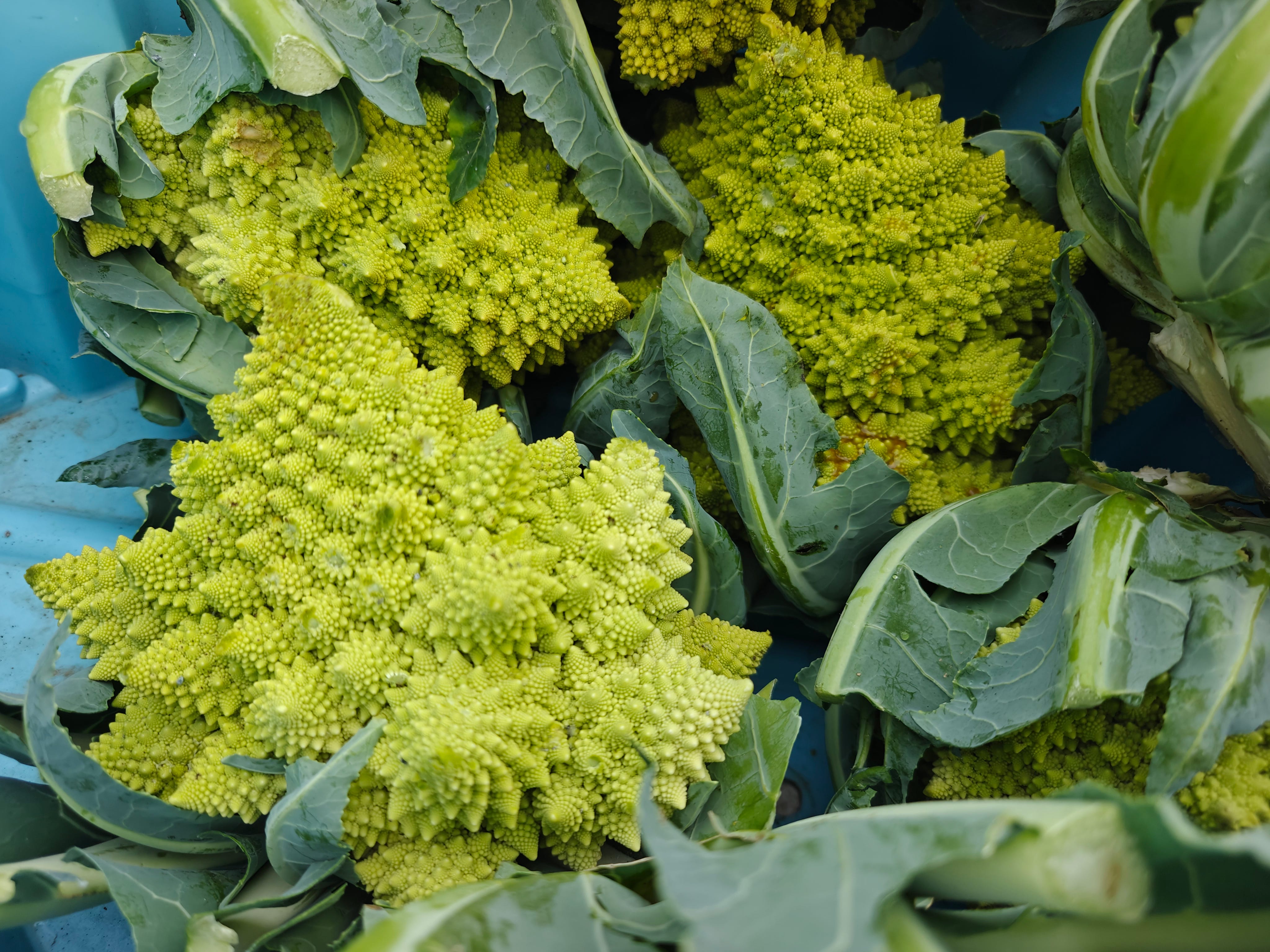
this is so gorgeous I need to put it here to celebrate the season
I boiled the potatoes in salted water with several sprigs of mint from the garden (last survivors), then once they’d cooled, I stripped off their skins and chopped them roughly, sprinkled on several pats of butter plus a little olive oil, and set them aside.
I sliced half the cabbage into narrow wedges. The celery roots needed washing, trimming, and peeling, then I sliced them thinly. They and the cabbage went onto a baking sheet, with drizzles of olive oil and fish sauce, and then into a 375F oven to roast for about half an hour. I tossed a serrano chile in with them, to heat up and soften. Once they were done I cut the cabbage with scissors and put it out in a small bowl, a delicate and tender pile that needed no additions.
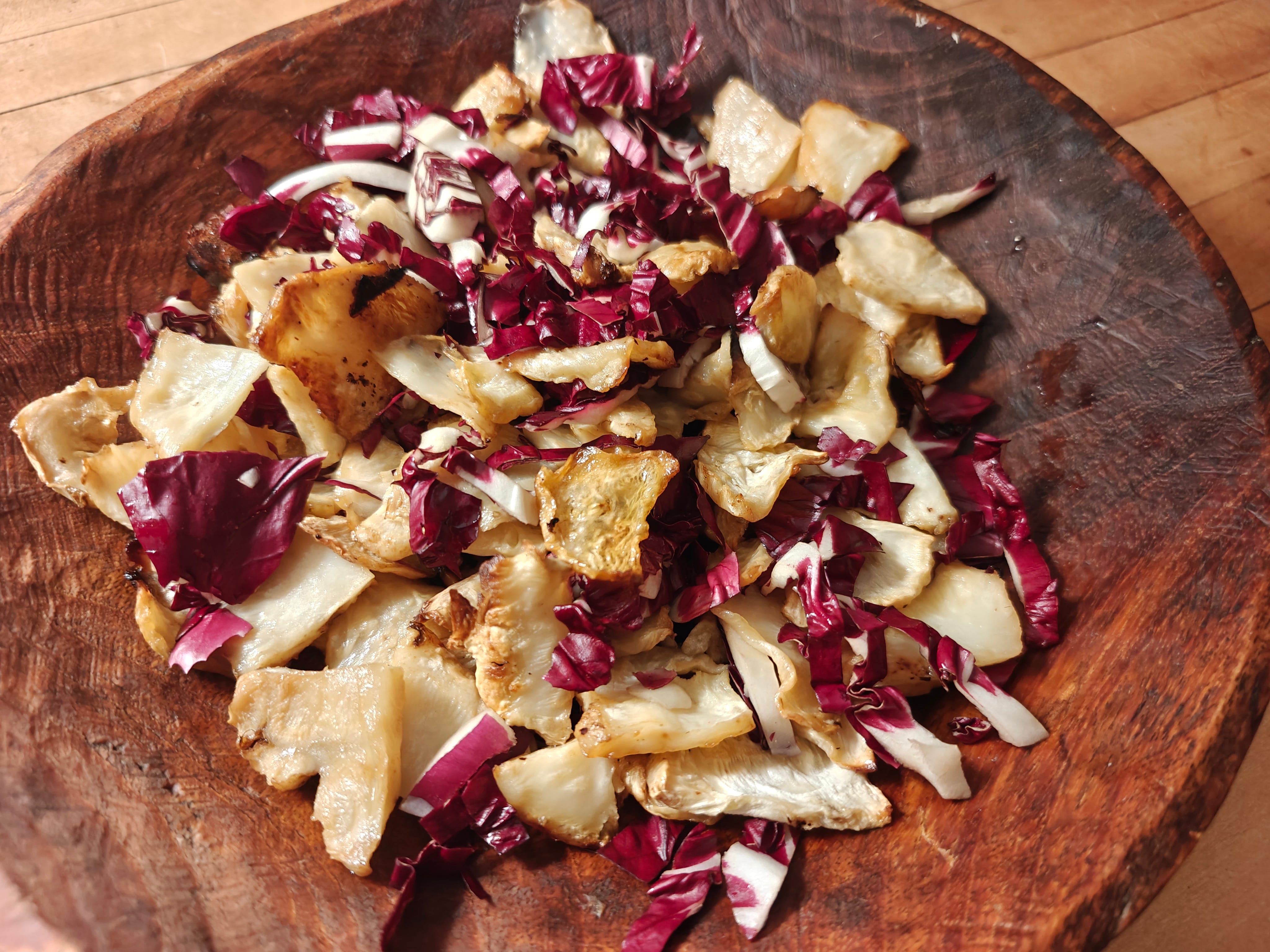
celeriac-radicchio salad
The celery slices, now nicely tender, went into another bowl, to which I added chopped radicchio, plus a little olive oil, brown rice vinegar, and salt, to make a winter-ish salad. I love the combo of radicchio bitter with the sweet of cooked celery root.
The lamb, marinated ahead in fish sauce and pomegranate molasses went on the charcoal grill as the celery slices finished cooking. Grilling doesn’t take long.
While the meat sat resting, I cooked well-washed spinach in a lightly oiled pan over medium-high heat, sprinkling it with a little salt and turning it over and over to expose it all to the hot pan until it wilted down to a bright green pile. Once I’d pressed all the water out, I chopped the pile fairly finely and added it to the potatoes, along with the serrano chile, finely chopped. The pile of green and white was a very pretty. I dressed the mixture with a splashes of soy sauce and brown rice vinegar, plus some salt, and a little more olive oil. The chile gave each mouthful a warming hit.
All that was needed was to slice the lamb and we were ready…


this morning the leftover potato-spinach combo was an ideal base for my fried egg; I reheated the potato in hot oil in the cast-iron skillet to get rid of its fridge-chill, and fried the egg in a little butter alongside.
NOTE ON SERVING SIZE: In the last six months or more I have been making myself two fried eggs in the morning, rather than my usual one. I love the way egg yolks moisten and flavour the leftovers I put them on. But the ration of two eggs daily feels excessive, a little heavy. So I’m back to putting a single fried egg on top. And today the combo was especially delicious, perhaps because (I admit) I enriched it with a sprinkling of leftover grated parmesan. Luxe!
NOTE ON LEFTOVERS: Sometimes when I open the fridge to see how things are, I am dismayed because there are too many small containers of leftovers. My usual way of keeping the problem manageable is to eat leftovers in the morning, with an egg or two on top. I usually get to that morning meal around 10 am and don’t bother with a noontime meal/lunch. And then of course I often stream leftovers into the evening meal by re-purposing them in some way. It’s always a challenge, and sometimes it leads to creative interesting results.

Toronto neighbourhood loveliness
Happy full moon, sending hugs for Friday
Beauté, fortitude and deliciousness. Merci beaucoup.