
I left Toronto last Tuesday, the day of the Autumn Equinox. Tears came as I sat in charmless Terminal 3, deep feelings of loss stirring and moving my core. Tashi’s absence, the reality of it, comes back to me intensely at times, wherever I am, and I ache and I weep, and then the wave recedes. It’s an unpredictable and somehow reassuring part of my days
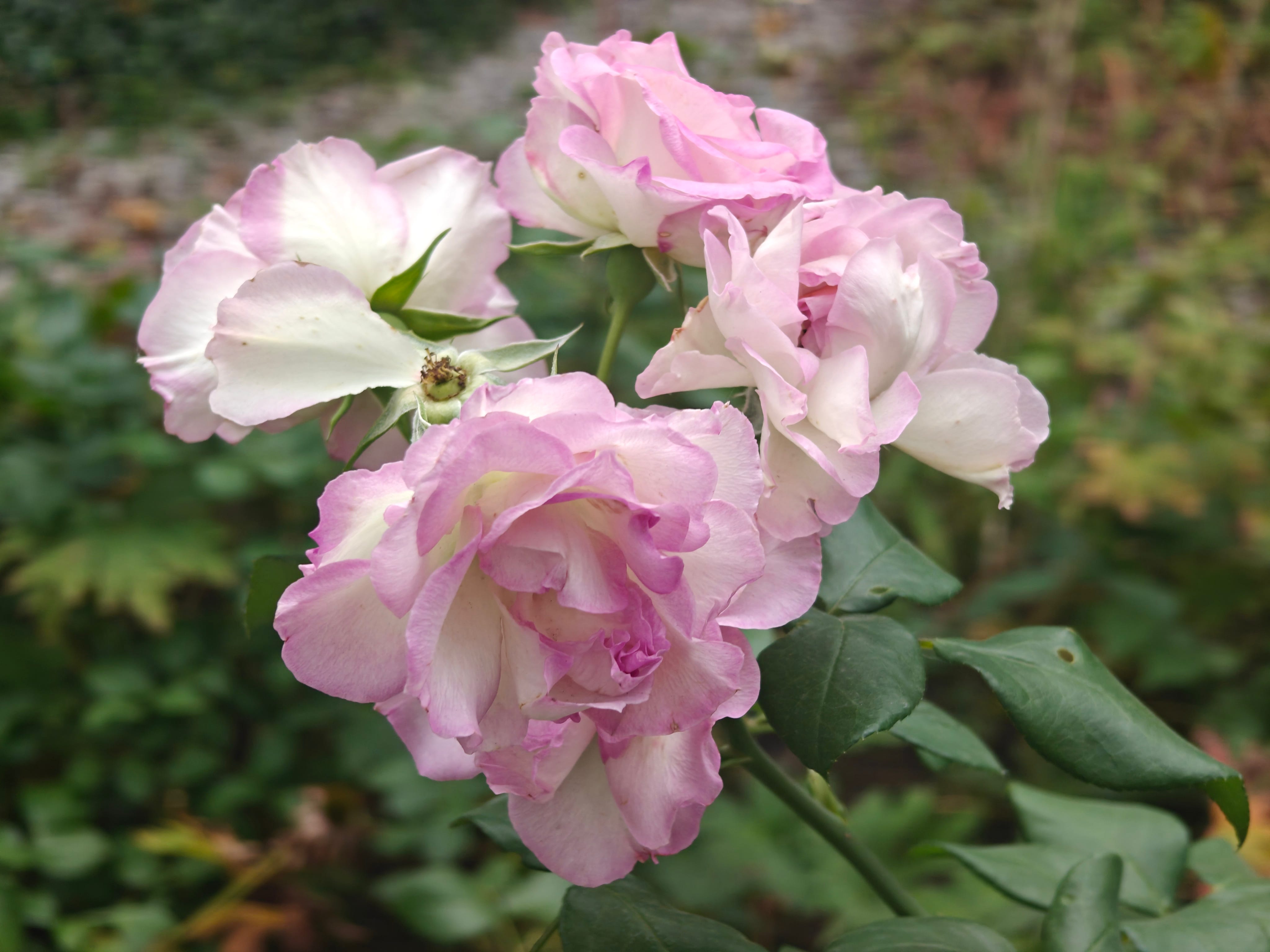
late roses at a neighbour’s on Henry Street, the day I left town
We crossed into autumn soon after we took off. A few hours into the flight, after I’d had a short sleep, an unfamiliar lightness and detachment arrived, a feeling that I haven’t really had since before Covid. The patterns of pre-occupation and the habitual anxieties that I hadn’t fully realised I was carrying had fallen away. I felt weightless and strangely, delightfully, unmoored. It was like a special version of what I think of as “traveler’s freedom.”
Traveler’s privilege, the chance to exit one life or one place and head for another, is precious. Shaking off routines and embedded patterns of thought leaves room for new ideas and perspectives. It can be scary or disorienting too. But this time I am reveling in it.
These days traveler’s freedom can get watered down by the possibility of connecting to people all over the planet, no matter where we are, with a few taps on a keyboard. I am happy to be able to send emails and messages, but I try to avoid phone calls while I’m gone because I like the distance and lightness I get from being cut off. It helps me see with fresh eyes.
The arrival of the fat full moon last Friday was a magic time in a small way. Tamar and I had done errands in Deserteri Market (shopping for our ajika-making session with the ImmerseThrough group this week) and then walked to the Fabrika, a funky hotel and art hub created from the transformation of a Soviet-era clothing factory. The first two years we did the ImmerseThrough tour the group stayed at the Fabrika. It was not quite as comfortable as some people needed, so we now stay elsewhere. But I still have a soft spot for the place and its vibe.


quirky signage in the Old City; notice the Russian language street sign, now a rarity; and streetside found art assemblage near the Fabrika
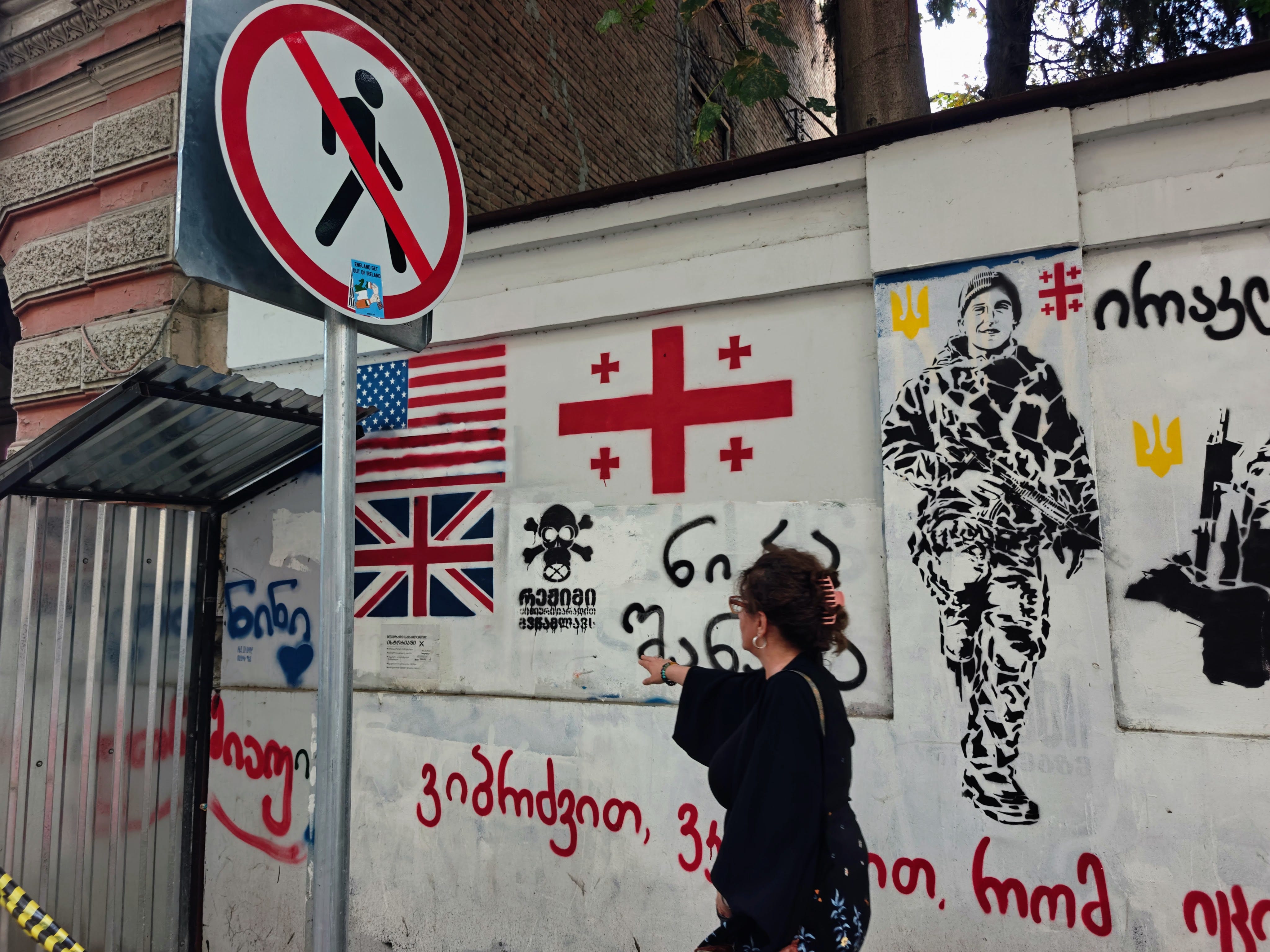
a graffiti wall in Tbilisi, protesting Russia, the use of gas against protesters, and more
From there we took a Bolt (the Georgian version of Uber) back to the old city and then walked in the dusk up very steep lanes past balconied old houses to the ruined Ateshga, the Zoroastrian fire temple that was long ago built here, presumably by people from Iran/Persia, perhaps merchants. The Ateshga is a reminder of the layers of people and belief that underpin the history of the region. And it’s just one of the many Zoroastrian temples we know existed for centuries in the larger Persian-influenced region, from the ruins at Ani on the Turkish-Armenian border, to Baku and beyond, as well as in Yazd and other places in Iran. Most of them pre-dated the arrival of Christianity and Islam.
Over the years Tamar and I have tried a number of times to see the Ateshga, but the door has always been locked. This time our knock was answered. The temple is off the front balcony of a private house. It’s a single space, not grand, its arched brick dome long gone; it’s now protected from the elements by a fabric roof covering. I couldn’t see where the fire might have been located, the fire that is kept burning perpetually in Zoroastrian temples, though there was a deep well-like place which perhaps held the oil used for the fire?
I spent a good part of yesterday exploring the old city, photographing and admiring its textures and loveliness. Much of it is in terrible shape, needing repair and love. The overhanging balconies that make living spaces so welcoming, the multiple staircases, some of them metal spirals, are gorgeous sights, and often saddening in their state of disrepair. The big money that comes sloshing into Georgia these days doesn’t seem interested in renovation or restoration but instead in building new and shiny hotels, commercial spaces, etc. It feels tragic, this loss of history and beauty and texture.


FOOD TALK with talk of tomatoes, ground walnuts, and breakfast options
I’m not in a kitchen this week. Once we start eating out and traveling with the ImmerseThrough crew I’ll have more meals and details to talk about.
In the meantime I’d like to mention the wonder of tomatoes on this side of the world. Georgians dress tomatoes, or mixed tomato and cucumber salads, with salt and sunflower oil. The best version of sunflower oil is Kakhetian (from Kakheti in eastern Georgia), which is made from pressing sunflower seeds that have been toasted, so that the oil has a haunting light toasted flavour. Ground walnuts are another frequent ingredient in Georgian salads, finely ground. If you’re making a vinaigrette for a tomato or a cooked green bean salad, try including ground walnuts or ground hazelnuts to enrich it. Before you begin, make sure the nuts are fresh; taste them critically!


tomato and cucumber salad with a little onion , walnut-infused dressing, at Cafe Dante; walnuts for sale at Deserteri Market
This morning I had breakfast at Dante Café, a charming quirky space up a steep flight of stairs. I like sitting out on the covered balcony. I can work here or just read or let my mind drift. My breakfast was huge. It included two fried eggs, Imeretian-style khachapuri (from the Imereti region; you’ll find many recipes for it, including in the Flatbreads book), a cooked spinach “salad” with ground walnuts in the dressing, preserved plums in a sweet syrup, butter, and black tea. Oh, and some plain “puri” (bread) too. Impossible to finish it all.


Cafe Dante pleasures: Imeretian breakfast; a lovely place to work
Bon voyage.