
I like to think that every time I cook there’s success: I’m engaging with food, being attentive, and trying my best. I’ve written before about the fear of failure some people feel when they start cooking. It’s such a disabling thing, fear of failure. I am helped by not being a perfectionist. I’d rather feel relaxed about outcomes than stressed about “perfection” - what is that anyway?
Of course I can feel disappointed at the way a dish turns out. It may be not what I had imagined, it may taste merely OK rather than terrific.
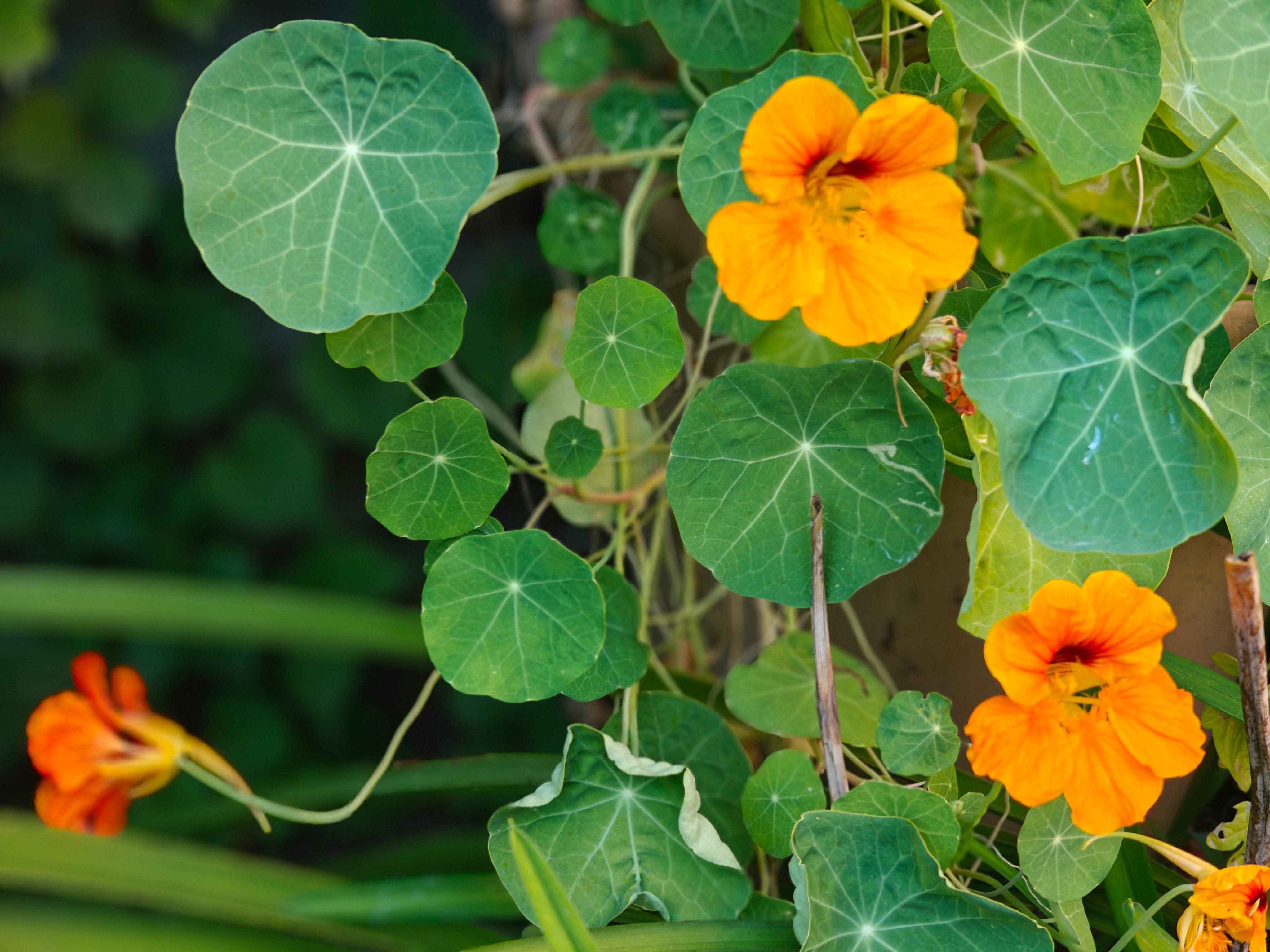
The nasturtiums have survived a brief cold spell and are still going strong, bright and beautiful.
The only time I come close to producing something inedible is when I’m trying to figure out a technique or an ingredient that’s new to me. The most outrageous (in terms of the number of fails) example was long ago, while I was working on a recipe for teff injera for the Flatbread book. In the end I had fourteen fails before I produced an edible passable teff injera. It was painful, this series of discarded injera attempts, but also very interesting because I learned from each effort. And it taught me that perseverance and failure are valuable tools for the cook.
Now for a recent story about imperfection: As some of you know, I’ve been making myself one or two fried eggs in the morning, not every day, but frequently. I most often eat them over leftovers, especially in the colder months. In this season of pleasurable abundance they’re a treat over chopped tomato. I’m very practiced at frying eggs, and I enjoy the different outcomes day to day, because I am not trying to make perfect replicas, but instead to make them relaxedly. Until recently I’ve rarely had a broken yolk
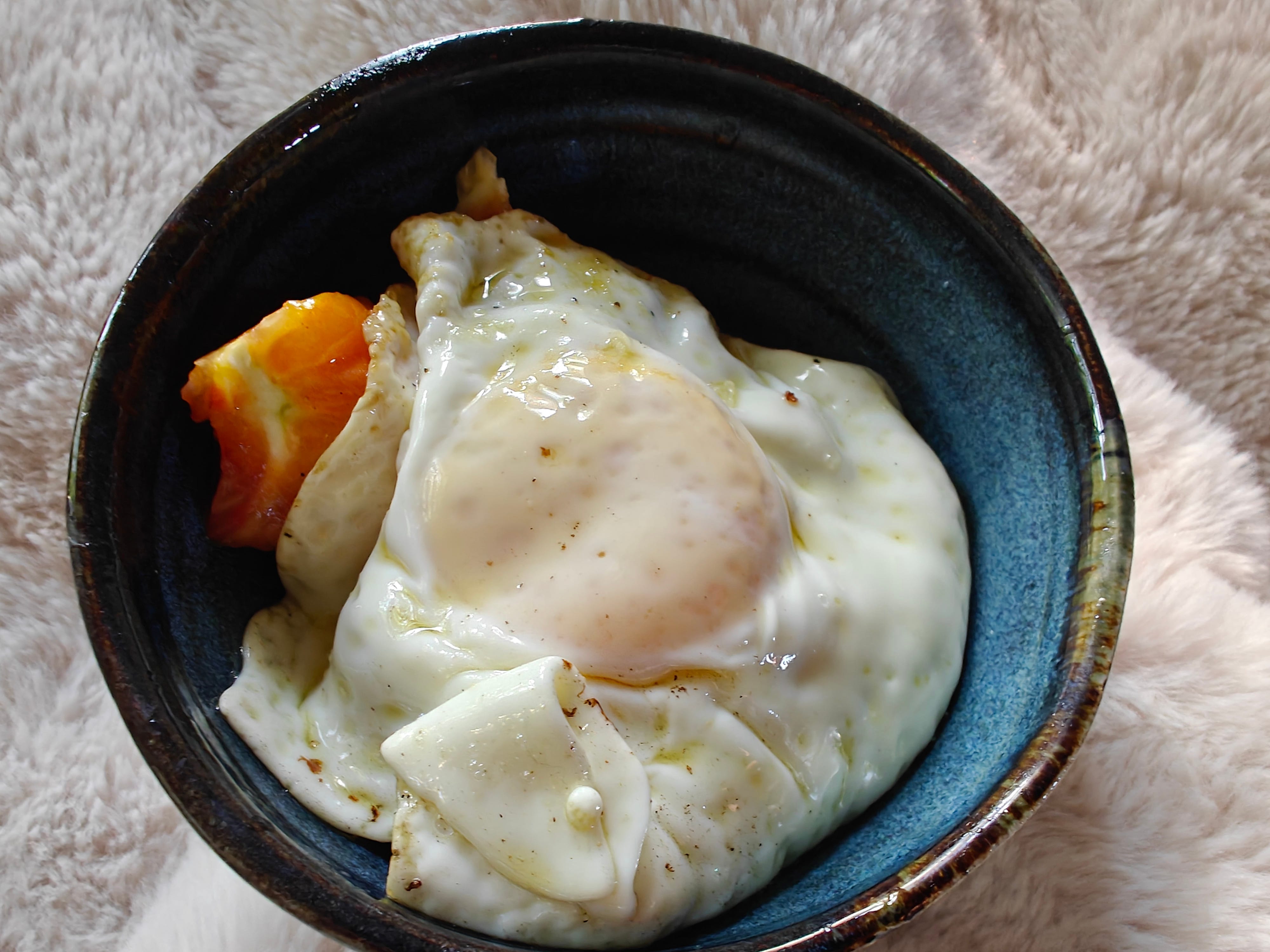
A recent simple single egg over tomato, unbroken, with supple white
I use a cast-iron skillet that starts over medium heat, add olive oil once it’s warmed a bit, swirl it, then break my egg or eggs into the pan. I sprinkle on flake salt and occasionally a little sansho powder, lower the heat slightly to protect against overly tough whites, then once the clear of the whites has mostly turned opaque white, I lift each egg and gently flip it over to finish cooking that way.
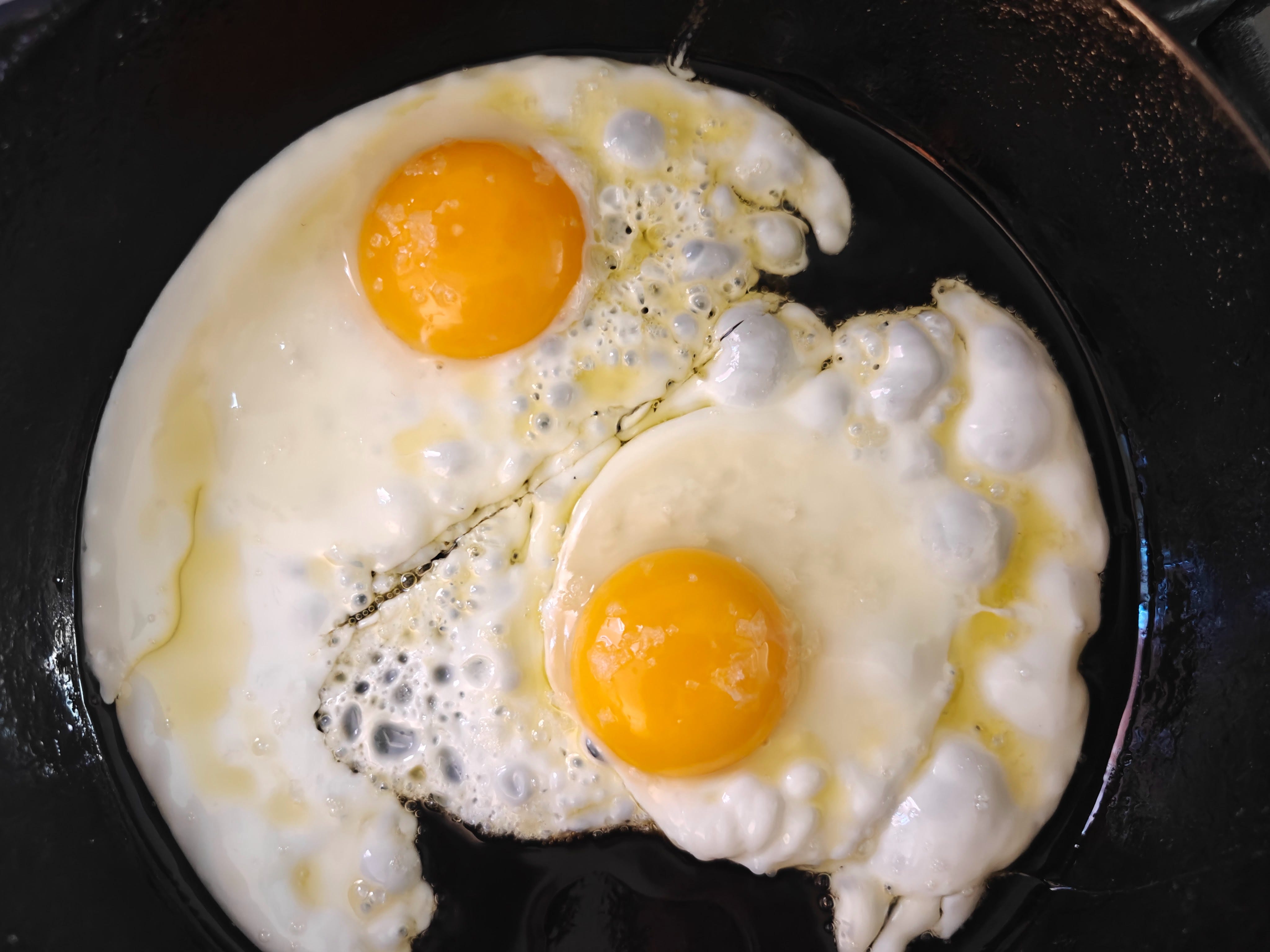
My two fried eggs this morning, pre-flip. Both of them had small splits at the edge of the yolk when I turned them; the result is in the next photo.
Another less-than-minute and I can lift them out and onto my bowl of leftovers or tomato or whatever.
This summer I’ve been buying eggs from a different farmer, and recently I’ve frequently had small breaks in the yolks. It looks to me as if the whites are less strong, more watery. They break where the yolk meets the white. When I asked the farmer I bought them from what he thought might be happening, he asked which size of eggs I’d been buying. Always extra large or jumbo. (I enjoy having a chance at getting a double yolk, so I like this size.) “Those are from the oldest hens, he said, and so it’s probably a weakness in the whites.”
I like these large eggs, and I will go on buying them, because now it’s become a challenge: can I avoid breaking them? I haven’t figured out a reliable technique so far. And broken or not they are delicious and beautiful
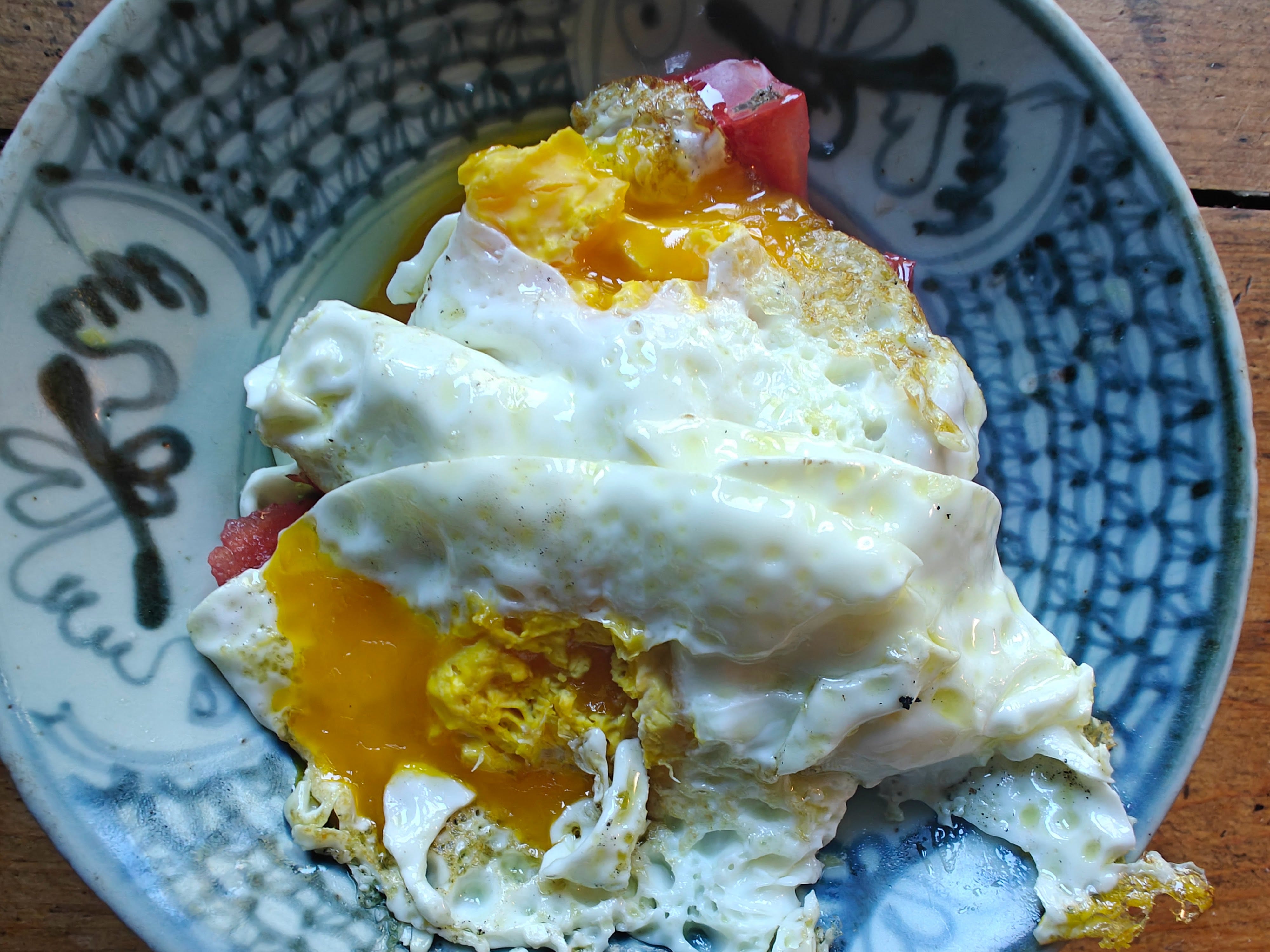
Today’s eggs, both broken once they’d been turned over…and still so delicious over a large chopped local tomato
This seemingly trivial egg experience is a reminder that daily cooking patterns can teach us a lot. Small shifts become visible to us when we’re very familiar with an ingredient or a technique. I had never thought about the strength of the proteins in whites. I know they’re useful in baking, those proteins, but I’d never thought about the age of hens affecting anything but the size of eggs.
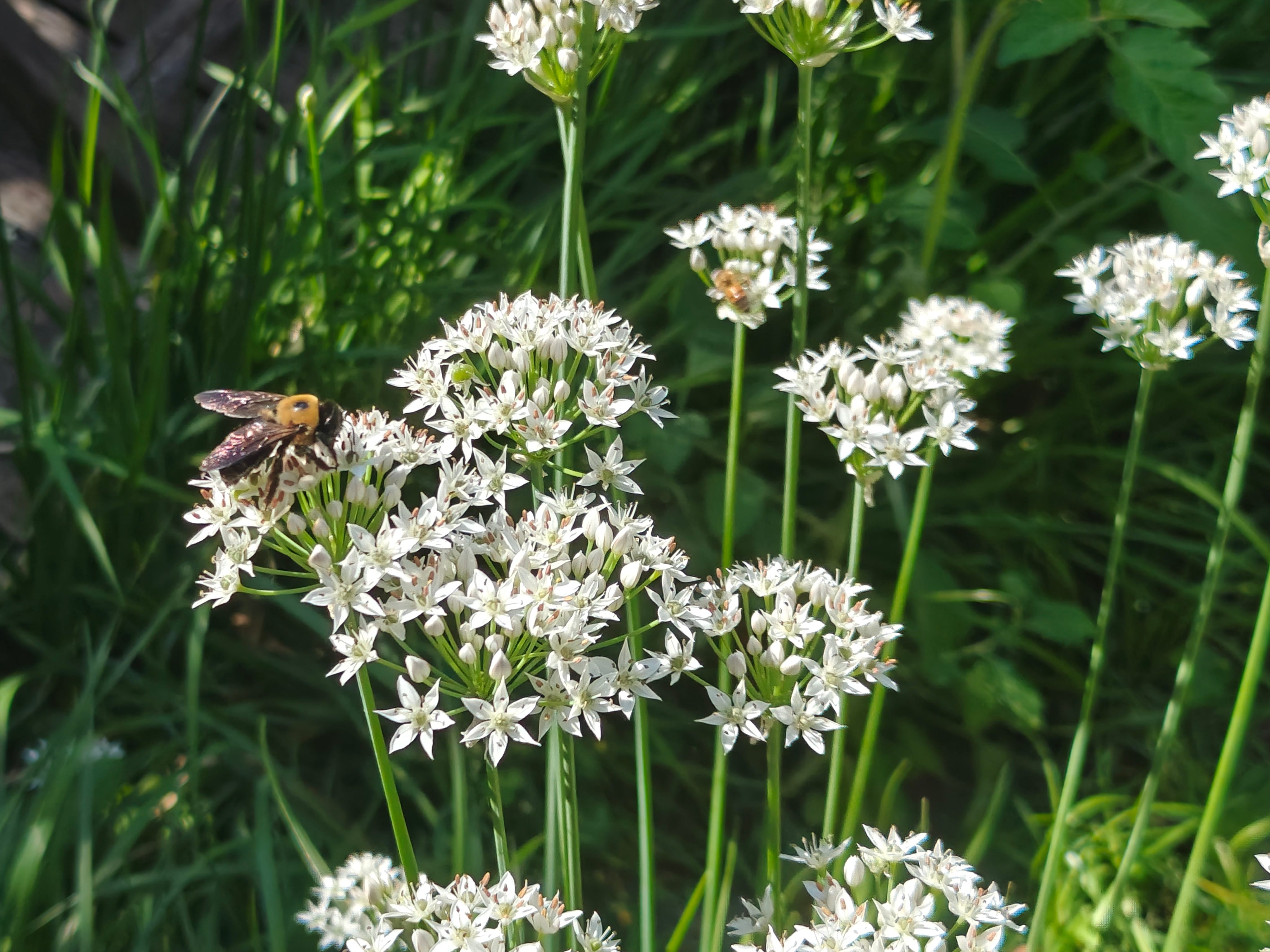
Speaking of persistance: the pollen gathering is intense these days. The flowers on my garlic chives are a big draw, as are the still-blooming phlox.
KITCHEN EXPLORATIONS: TART PLUMS & A RECIPE FOR DAMSON JAM
It’s damson season…or I should say damson season came and went last week. Damsons are tart plums, bluish purple, oblong (almost egg-shaped), and tart-tasting. The word damson derives from the name Damascus, shortened to Damascene and eventually damson. The plums grow well in England and in Canada, but they’re not a popular cash crop, so they can be difficult to find in markets and shops
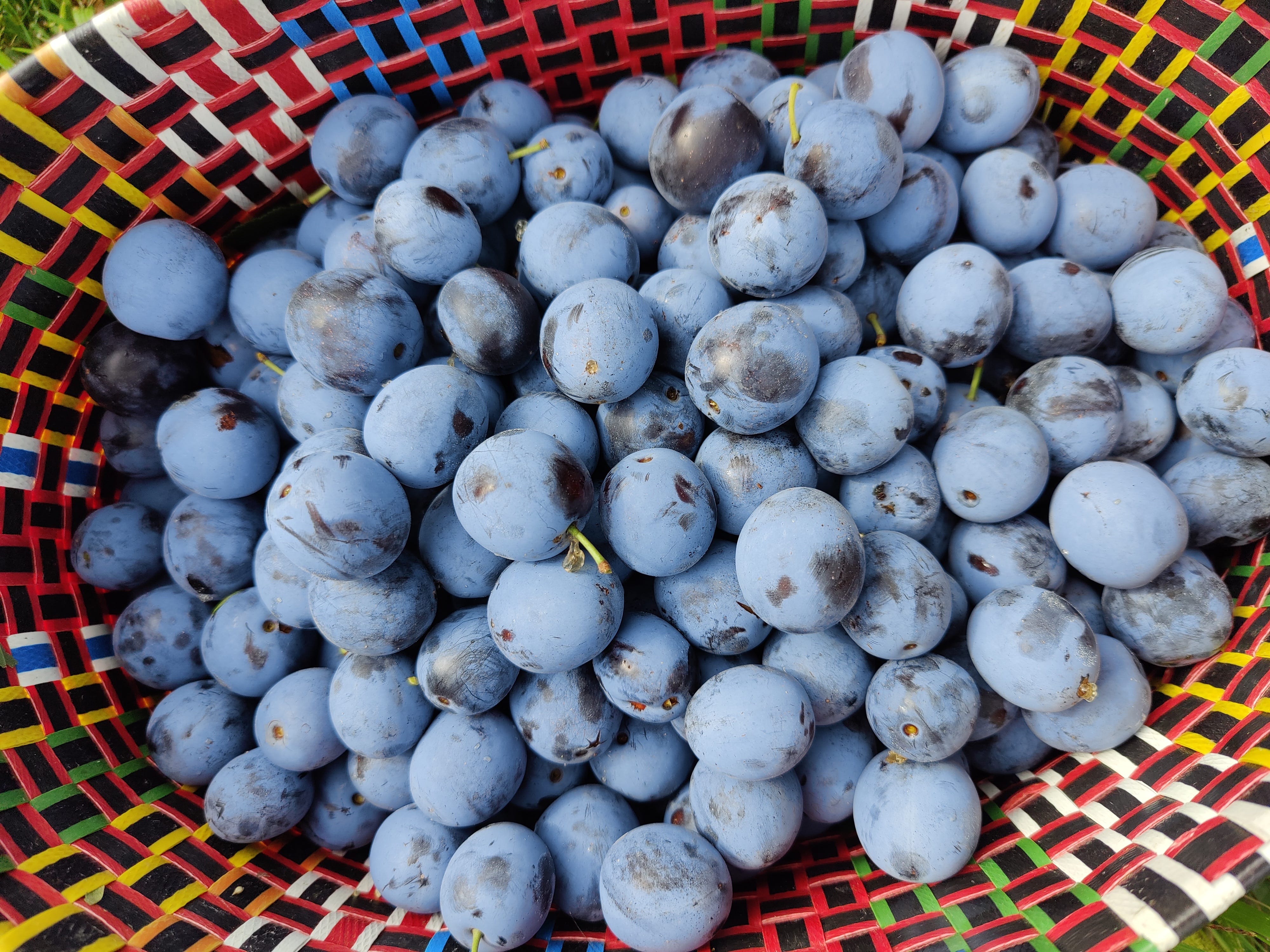
.
I learned from a farmer long ago that the root stock of many of the plum trees planted in the nineteenth and early twentieth century by settlers in Prince Edward County (along Lake Ontario east of Toronto) was damson. Onto the root stock they grafted sweeter and more popular plums. In one of the very cold winters in the 1940’s during the second war, a lot of the grafted trees died, leaving the hardy damson root stock, which then grew into trees.
Nearly ten years ago, when asked about damson plums by my friend Dawnthebaker, a grower in Niagara, Milan of Bizjak Farms, said he had a few damson trees, planted a few years earlier as an experiment, that we were welcome to come and pick. We picked from four or five small trees and were happy to have enough damsons for a load of jam. We went back almost every year after that, unless Milan told us the harvest was meagre. Then 2022 there was an extraordinary bumper crop. The trees were heavily laden with purple ovals crowded together along the branches. We never got past the first tree, now so tall we needed a ladder to pick the upper branches. We drove off with huge flats of damsons, purple treasure, a few for me, and most for Dawn who made jam to use in the sweet baking that she sells at her bakery (Evelyn’s Crackers) and at several farmers’ markets, as well as to sell in jars.


the plums are so beautiful, on the tree and off. The last shot is the boxes of fruit plus the ladders we used in 2022
This year we didn’t go picking. Instead Dawn bought already-harvested damsons from Milan and gave a basket of them to me. I had to look at the damson jam recipe in my HomeBaking book to remind myself of proportions. I weighed the fruit in the basket and discovered I had almost exactly three pounds, the amount the recipe was based on.
The recipe in HomeBaking came from my trying to replicate my mother’s damson jam, my favourite of the jams she made each year. Here it is, a little sweet, a little tart.
3 pounds of damson plums
1 cup/250 ml water
2 ½ cups/550 grams sugar
Juice of 1 lemon (about 2 tablespoons/25 to 30ml)
Makes 5 to 6 cups/1.2 to 1.4 litres of jam
You’ll need a large pot, a large bowl, a colander, a long-handled wooden spoon, 6 one-cup/250 ml or 3 two-cup/500ml glass jars with tops and rings so they can be sealed, 2 small to medium metal spoons, and a funnel if available.
Rinse off the fruit, discard any stems, then put the plums in a large pot. I like to prick the plums with a fork, but it’s not necessary. Add the water and bring to a boil. Lower the heat to maintain a low boil, half-covered, and cook for about half an hour, or until very softened and breaking up. Use your spoon to break up the fruit even more. Add the sugar, stir it in, and cook for another ten minutes. Add the lemon juice, stir, and remove the pot from the heat.
I like to sterilize the jars and lids in the oven while I’m picking out the pits. Fill the jars halfway with hot water, put them on a tray or baking sheet, along with their lids and rims, and place it on a rack in the middle of a 220F/100C oven.
Place a colander over a large bowl and pour in the fruit and liquid. Pick out the pits and discard them; I find this is easiest using two small metal spoons. It may seem like a tedious task, but with a small batch like this it doesn’t take very long at all.
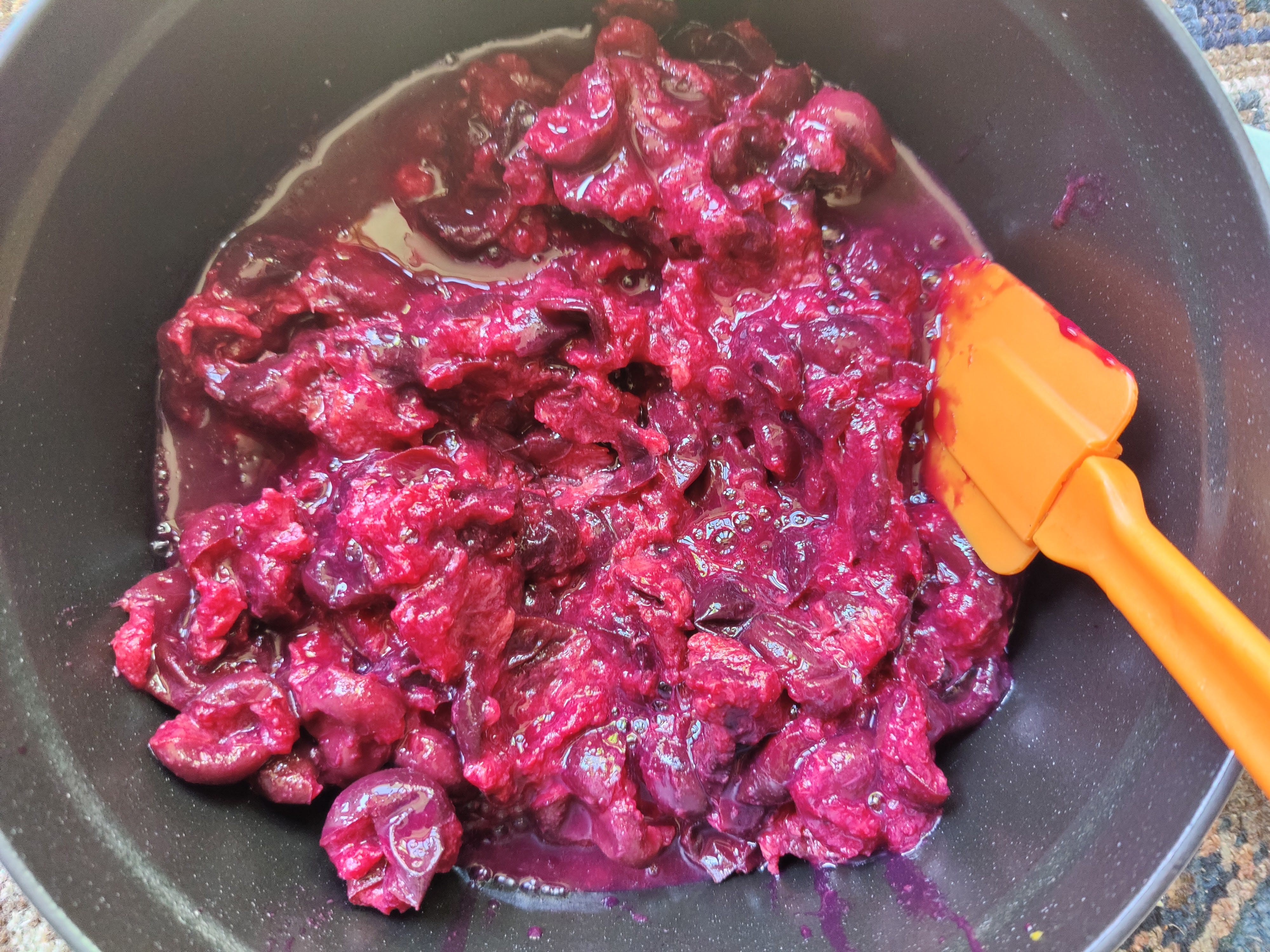
mashed fruit in the colander as I search for pits
Use your wooden spoon to press the fruit through the colander. You’ll catch a few more pits as you do… Discard all the pits.
Once you’ve pressed the fruit and liquid through into the bowl, pour it back into the pot, and bring to a simmer over medium heat, stirring to make sure it doesn’t stick and to blend it all together. I like to let it simmer for a couple of minutes.
Remove from the heat. Take the tray with your jars out of the oven. Empty the water out of the jars and put them back on the tray (it’s useful for catching any drips and for transporting the jars of jam once they’re filled). Use a cup to scoop up jam and pour it into your sterilised jars; this is easier if you have a funnel, but manageable without a funnel. (You’ll need to use a rubber spatula to encourage the last of the jam out of the pot.)
Wipe the jars clean with a damp cloth, place the lids on the jars, and screw on the rings loosely. You’ll hear a small pop from each in the next while as they seal closed. Then you can tighten the rims. Label the jars with contents and the date. Store in a cool place out of the sun, flavour treasure for the winter that lies ahead. If you have a partially filled jar, then use that one first, and store it in the refrigerator as you would an opened jar of jam.
Use the jam on buttered toast, or to make a jam tart, or add a splotch of it to ice cream as it finishes in an ice cream maker. Jars of damson jam make excellent presents for people who love tart-sweet fruit.
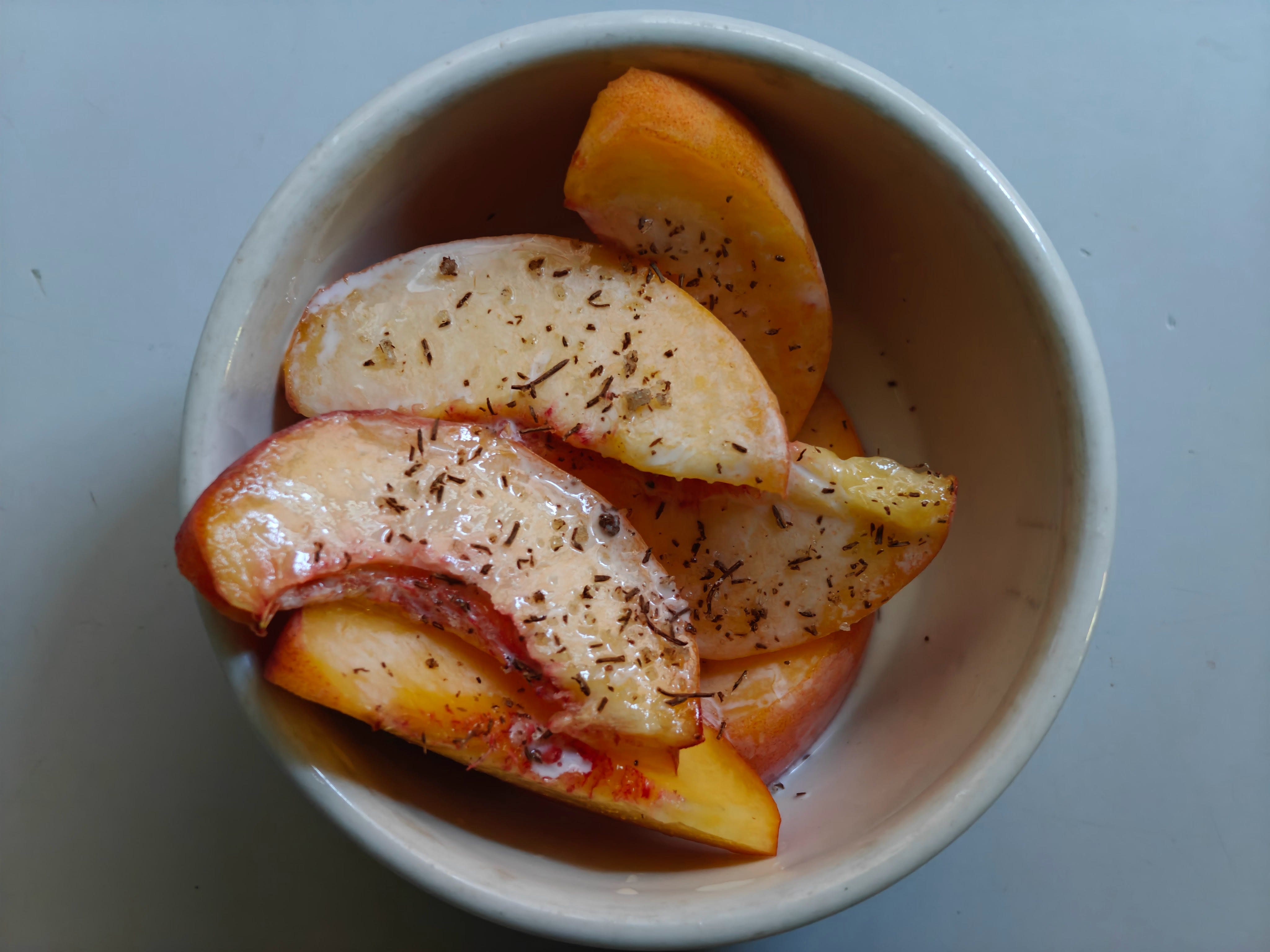
As we say farewell to peach season: I had a conversation this week about my SALT book with Jeremy Cherfas of Eat this Podcast (he puts out a newsletter too, full of helpful links about food history and food questions). So that morning, to mark the day, I had an early pre-breakfast treat of sliced peach sprinkled with spruce-tip salt. Wonderful. I find I use flavoured salts only in this kind of way, over a single ingredient, so they have a clear role to play.
A long time ago, and far, far away...I was a youngish bride with friends over for dinner. I must have been very distracted because I forgot to put the baking powder in a cranberry coffee cake. When i shated by disapointment that id hadnt raised, my friends who were French said, perhaps generously, that they thought I'd made a clafouti. At that time I'd never heard of a clafouti. It was a lesson in both perspective and how to help your hostess save face. Now, if a recipe doesn't "turn out" like it's supposed to, I shift my perspective on it to see if it has any merit or if it just didn't meet my expectations. I also really do all I can to avoid waste.
Damsons!? That's amazing! I wonder if they grow in Quebec! I really enjoyed reading this!
My failures always happen when I'm making a recipe from a recipe that I KNOW isn't going to work and that sounds outrageous, but I think, "They must know something I don't know." Then I make it and into the bin it goes. ha. Learning to trust the gut is a lifelong education. Thanks for the lovely post! xo