
This time last year I made a road trip from Toronto to Maine to visit my dear friend Nancy Harmon Jenkins, who lives in Camden and writes a terrific substack called From the Kitchen Porch. The drive is just over 1000 km/625 miles, an easy day and a half.
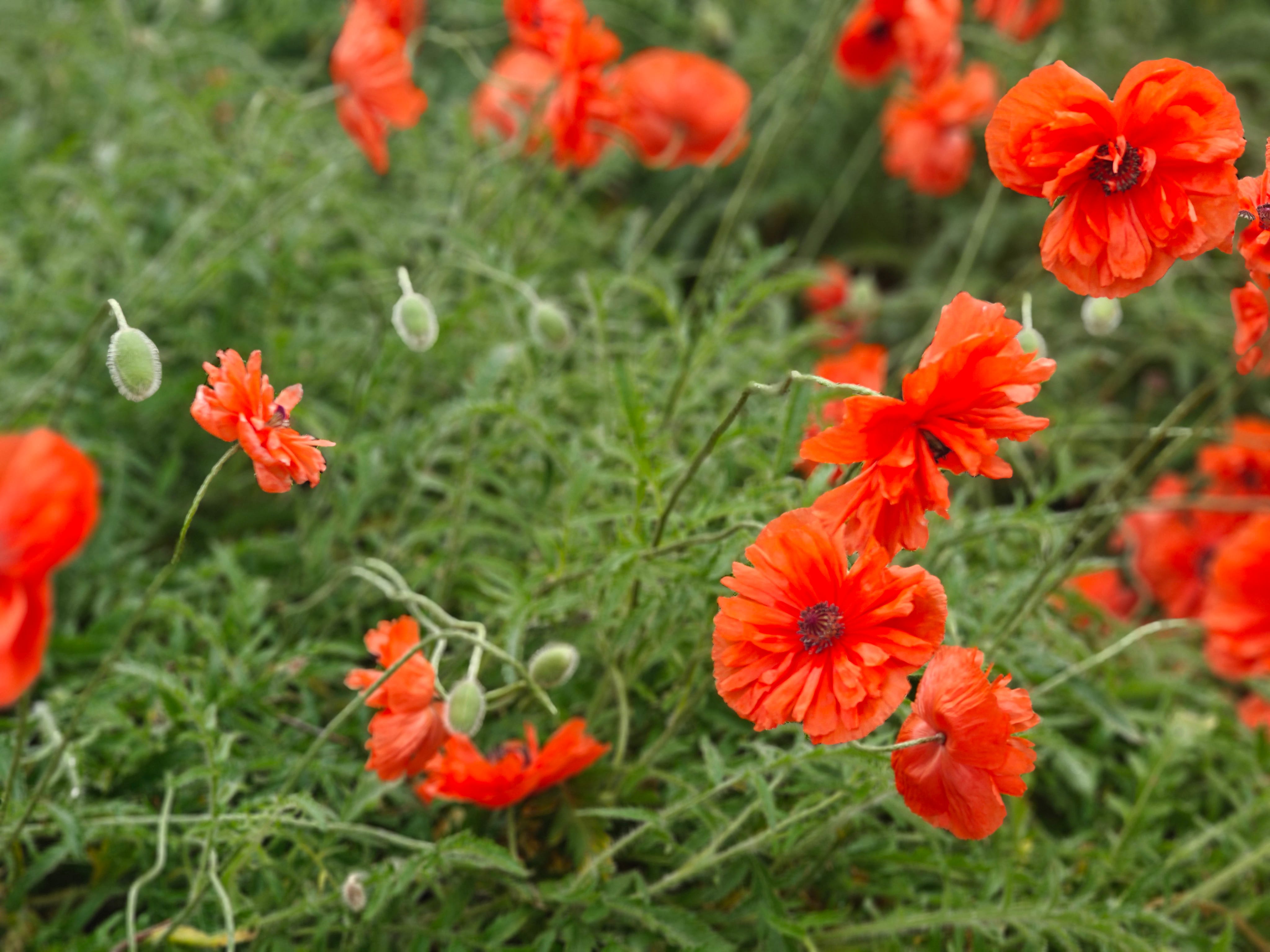
brilliant early June poppies in Toronto’s Annex neighbourhood
After driving past Montreal to Sherbrooke, I headed due east through Cookshire-Eaton and La Patrie to Woburn. The small border crossing at Coburn Gore is a few miles further on. I stayed on the Quebec side overnight, eating supper at a small restaurant in the nearby village of Piopolis, founded in the 1870’s by mercenaries who had fought for the Pope during the Italian reunification. It’s a peaceful and beautiful corner of Quebec.
The next day I crossed into the States and followed the narrow road that wiggled down towards the coast through tiny hamlets, past truck repair places and small houses tucked into the forest, eventually landing in Camden, with its lovely harbour and summer prosperity. I found Nancy sitting on her porch, her garden aglow with early blossoms and every shade of green.
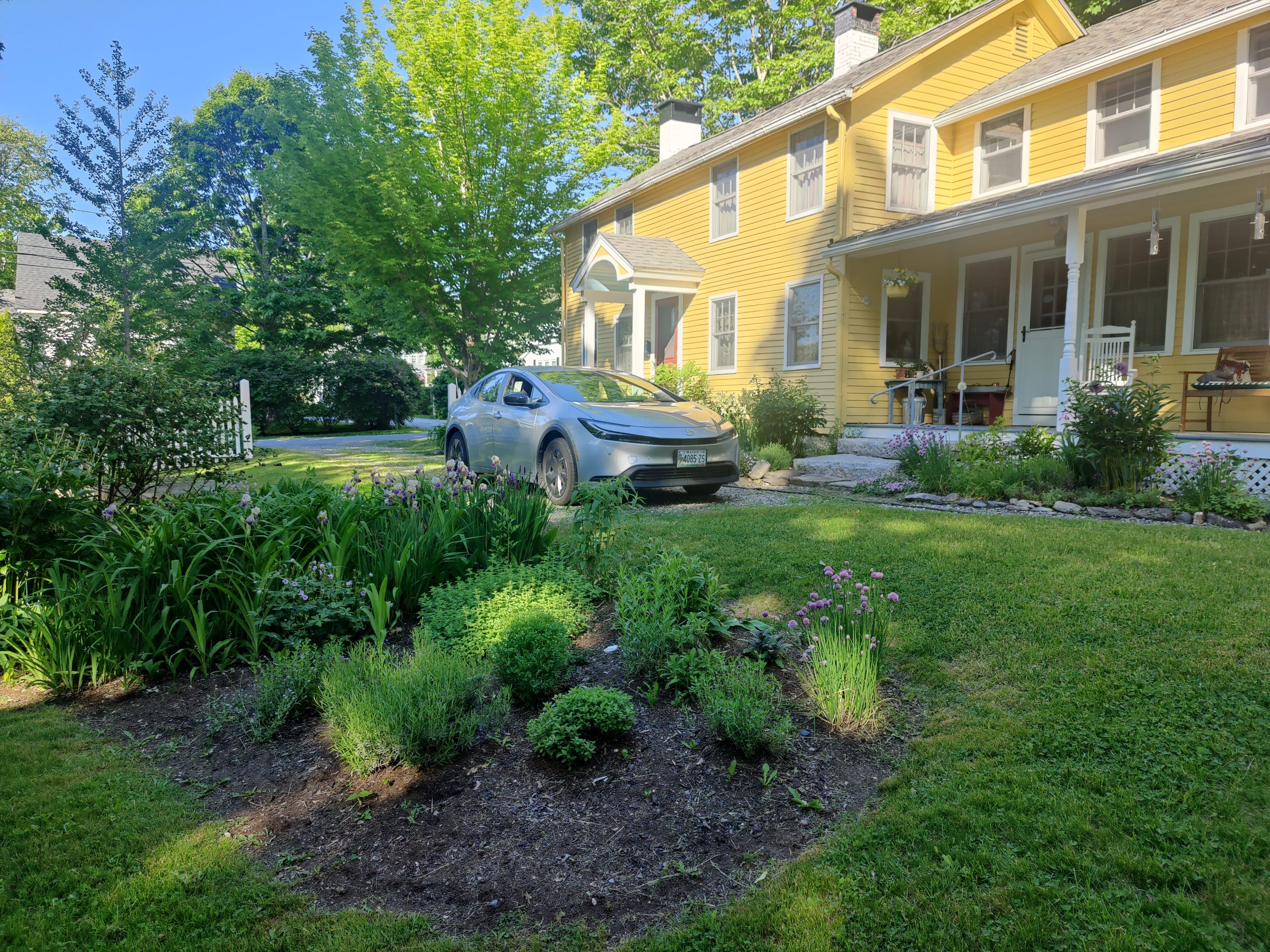
Nancy’s porch and garden
Nancy and I had not seen each other since our salt- and olives-focused time in Italy in October 2018 when I was in the early stages of research for my Salt book. We had first spent a week in Sicily, an essential part of the salt geography of the Mediterranean: Since at least the time of the Phoenicians, the salt produced in the evaporation ponds of Trapani on the northwest coast has been used to preserve a rich harvest of fish, especially the catches of tuna and anchovy. From there we flew to Rome and then drove to the Cortona area to join a crew of friends. We were all there to harvest the olives growing on the farm that Nancy and her children have owned for over fifty years. We also did a lot of relaxed cooking and eating
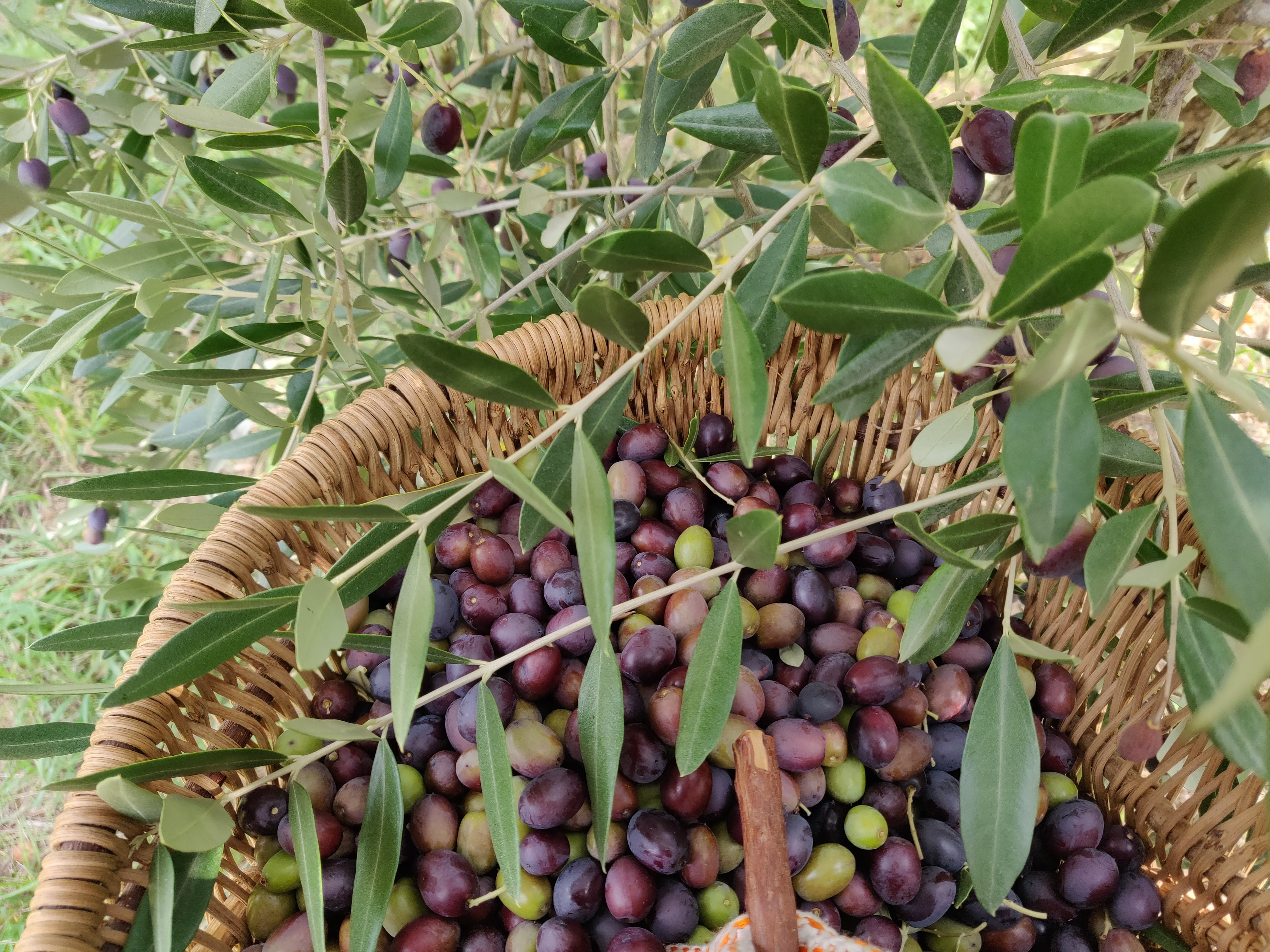
olives in the basket I wore at my waist for picking into
Last year’s solo drive to Maine was a time for reflection about those earlier travels and much more. I stayed in Camden for three perfect days of lobster and other excellent eating. I had the luxury of leisurely wide-ranging conversations with Nancy and with others, including artist Barbara Sullivan, whom I hadn’t seen since I’d last been to the Kneading Conference in Skowhegan, and Sara Jenkins, Nancy’s daughter, who has a delicious restaurant called Nina June in nearby Rockport.
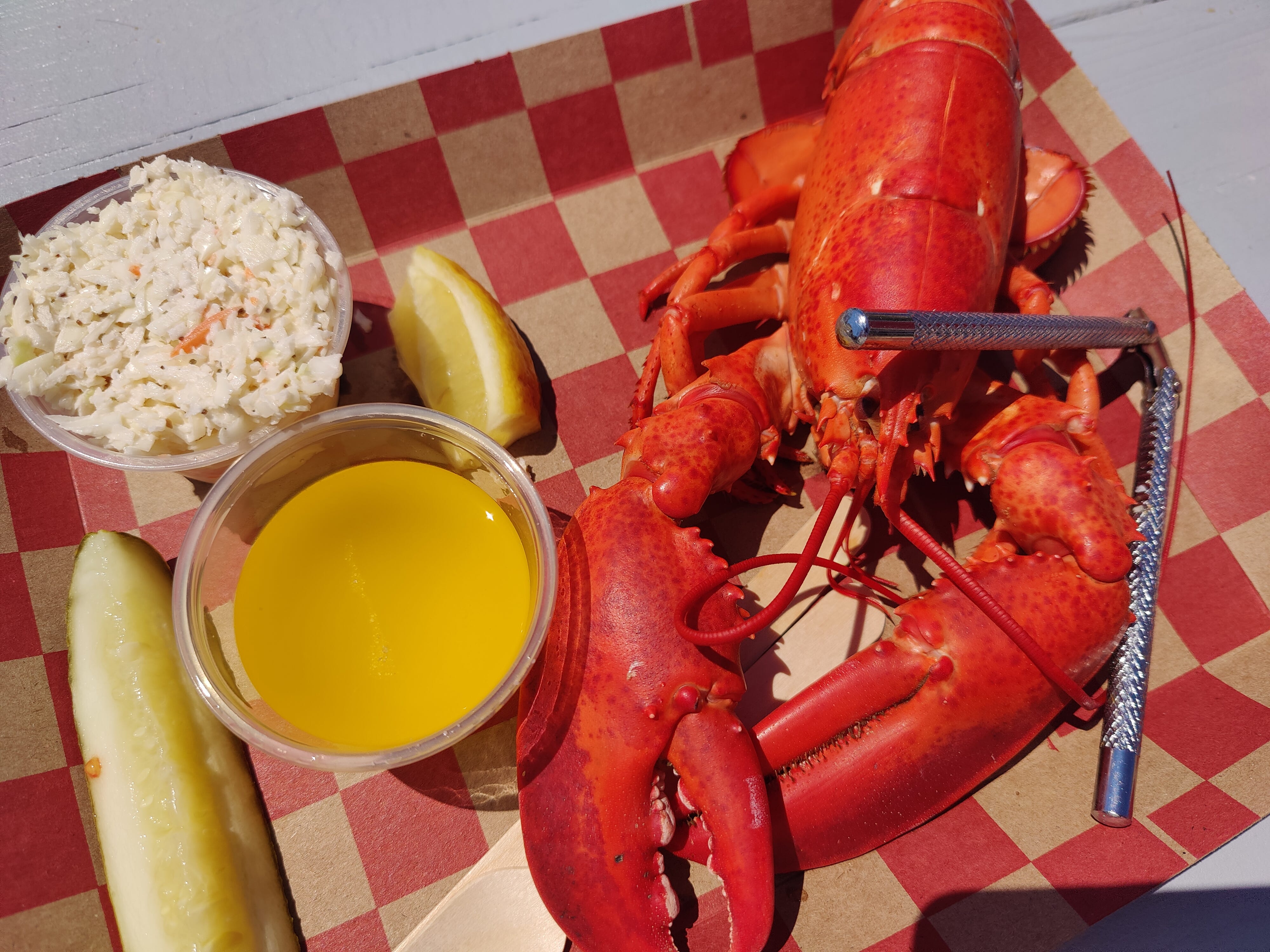
lobster at McLoon’s in South Thomaston, on the day I arrived
I look back on that Maine trip with gratitude. I was lucky to have been able to go.
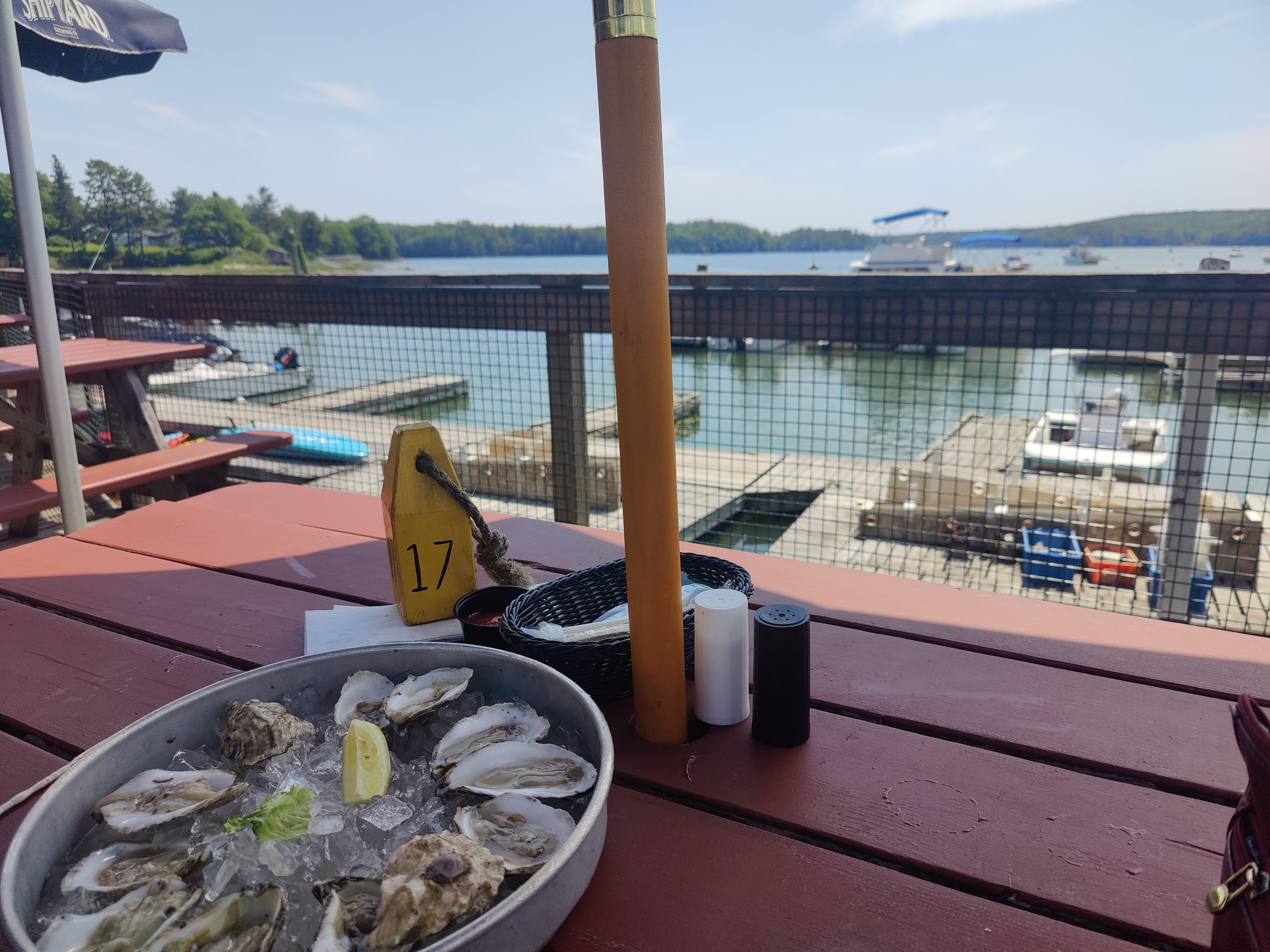
oysters by the Damariscotta River
Now things have changed: As of this year I have decided to avoid the US, even though there are people in various parts of the States whom I’d love to see again.
It’s a personal boycott. Not that my vote, my little trickle of money, or my rejection of the USian news makes a difference. But it feels necessary to turn my back on the US. I’ve cancelled my NYTimes subscription, and am relying on the Guardian, CBC, and BBC, imperfect as they can be, plus some journalists and writers I trust.
I don’t want to have my head colonised by thinking about the US and the destructive amorality that’s in charge in the big-money, dystopian, anti-democratic, anti-immigrant, misogynist racist world of current US-ian politics.
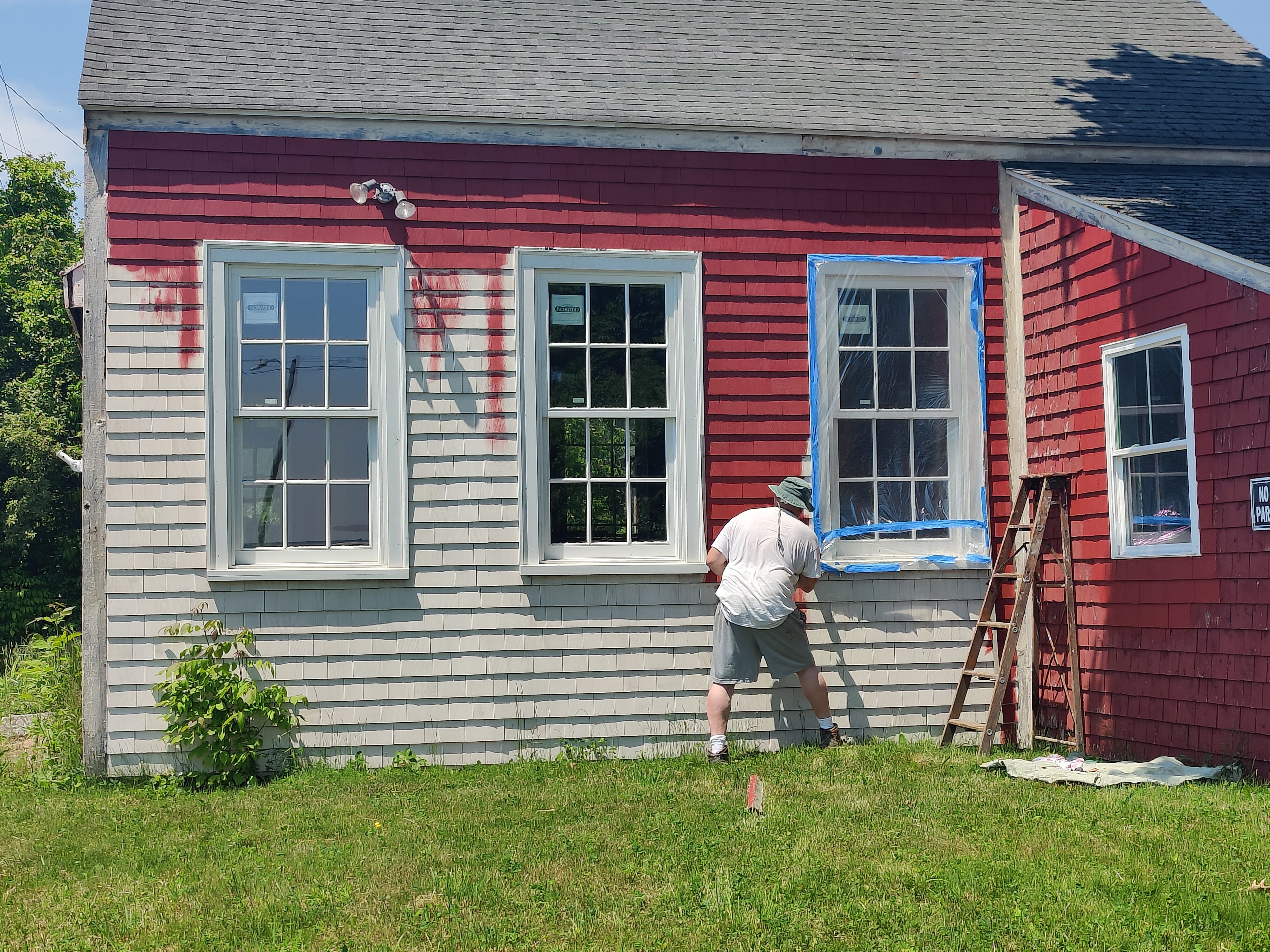
local house maintenance, northern Maine
The deafening blasts of noise and ugliness that come gusting out of our southern neighbour endanger us. They waste our mental and emotional energy and keep us from paying attention to our local affairs or to the rest of the world. There’s also a smoke and mirrors quality to the wildly shifting events in the US. It feels as if we’re all being played, by the broligarchs, and by a lot of amoral others who do not have the best interests of ordinary people at heart. Our distress and outrage unmoor us. Even more, we risk losing a confident sense of truth and falsehood as we’re buffeted by the tsunami of lies, half-truths, and spin that fills the US media.
For now, I send fond thoughts to friends in the US, and hope that their country pulls itself back from the dangers towards which it is rushing at a swift pace.
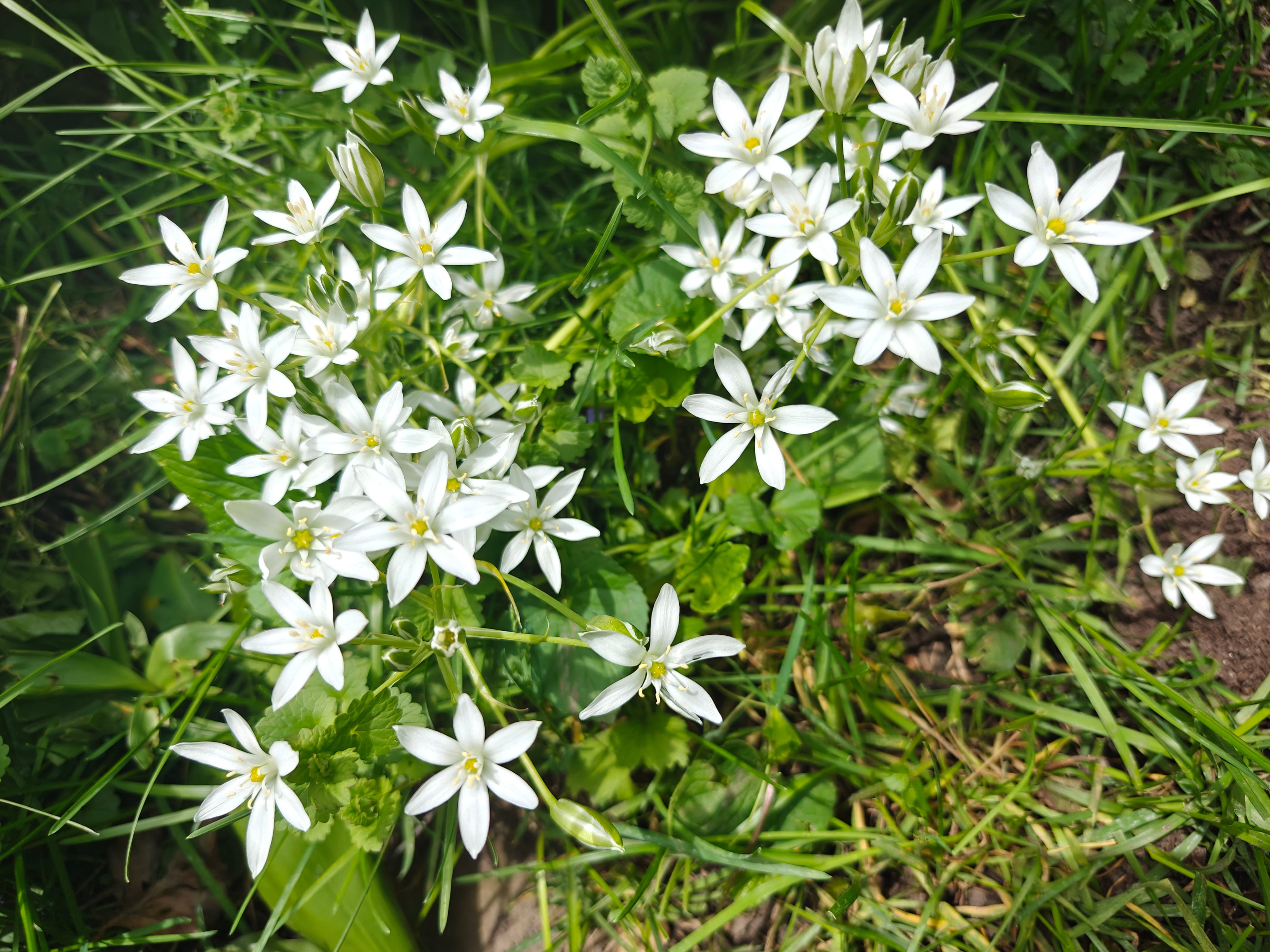
the beauty of this growing season (star of Bethlehem blooms in my garden this week)
On the food front, I am trying to avoid US-ian foods and products. In this season it’s very possible to find locally produced meat, dairy, and vegetables, and fruit too. For olive oil, rice, citrus, etc. we can choose foods from Mexico, Europe, Africa, Central and South America, and Asia (some of which unfortunately are shipped to Canada via the US).
KITCHEN EXPLORATIONS: hibiscus drinks
The other day I had the pleasure of speaking with Ozoz Sokoh about her newly published cookbook, called Chop Chop that takes us into the fascinating, layered world of Nigerian food. I’d spent a lot of time deep-diving into the book to prepare for our conversation, and was really struck by the creative ways that Nigerian cooks work with grains and beans, and the wonderful spice blends.
There are lively doses of acid in the cuisine too. One source is hibiscus (often referred to as hibiscus flowers, they’re actually the calyxes/calyces, but I’ll go on referring to them as hibiscus flowers). They’re a very dark pink-red in colour and are sold dried in Caribbean and other shops here in Toronto. In the Caribbean, they are generally known as flor de Jamaica. In other places hibiscus is called roselle. I buy mine from a Peruvian shop called Vida in Toronto’s Kensington Market and store them in a tall glass jar. I use them to make a concentrated hibiscus juice that I keep in jars in the fridge. I often drink it in the morning, diluted with plenty of hot water and lightly sweetened with maple syrup. It’s an alternative to my morning hot lemon drink.
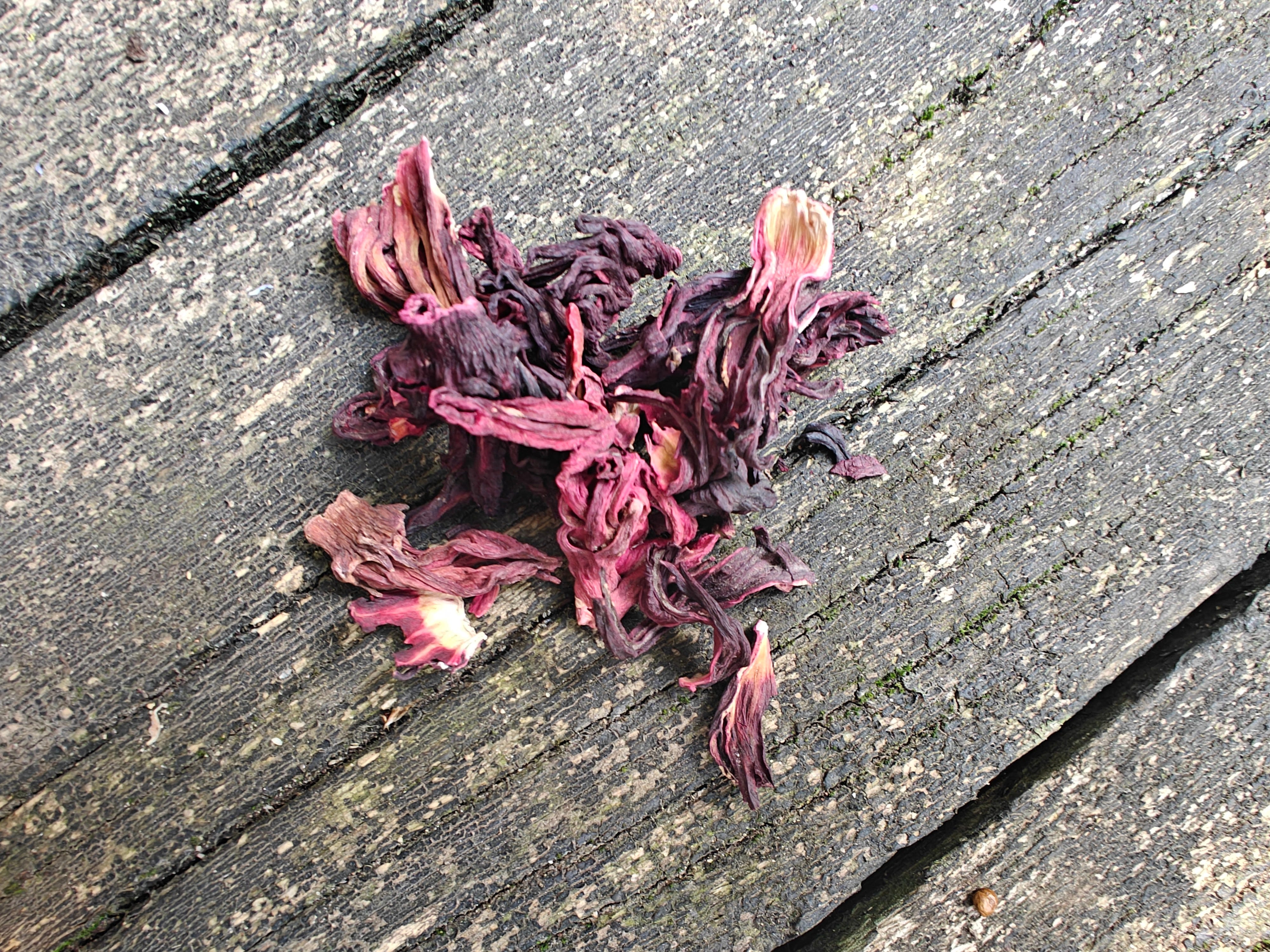
a handful of dried hibiscus flowers (aka calyces)
In the drinks section of Chop Chop there are instructions for making a hibiscus drink, which is called Zobo in Nigeria. I first met a version of this at a wedding in Senegal, where it was called bissap and was flavoured with sugar and ginger. In Ozoz’s Nigerian version, the flowers steep in lots of water overnight along with slices of fresh or dried ginger and a few cloves. The next day it all boils for about ten minutes, before being strained. The whole process results in a deep red velvet-coloured liquid, with a lovely acidity.
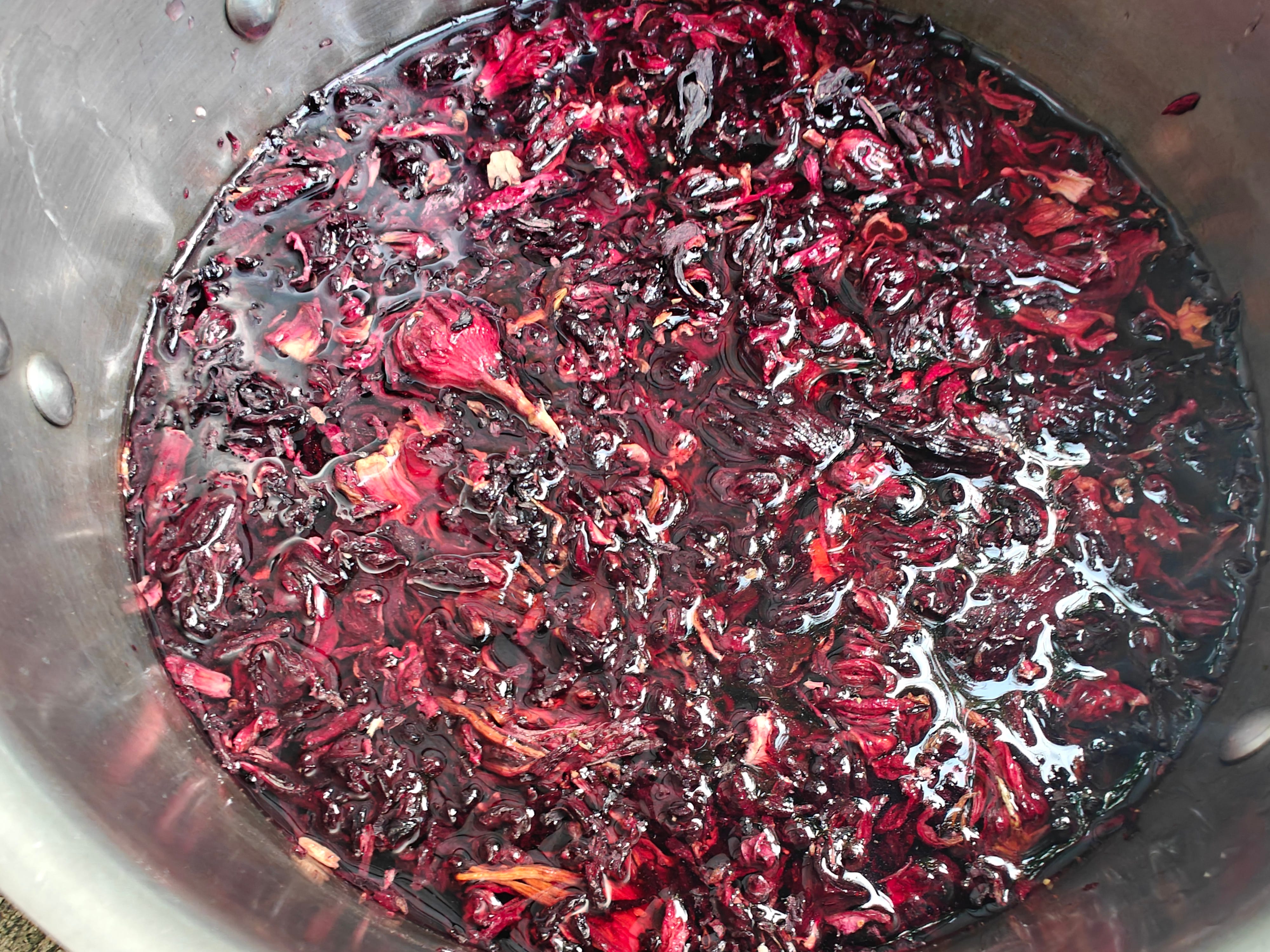
hibiscus flowers soaking in a pot
Until now I had always boiled the flowers first, then left them to steep overnight. Ozoz assures me, having tried it both ways, that steeping first before boiling produces better flavour and a more beautiful colour.
I’ll bow to her experience and change my ways!
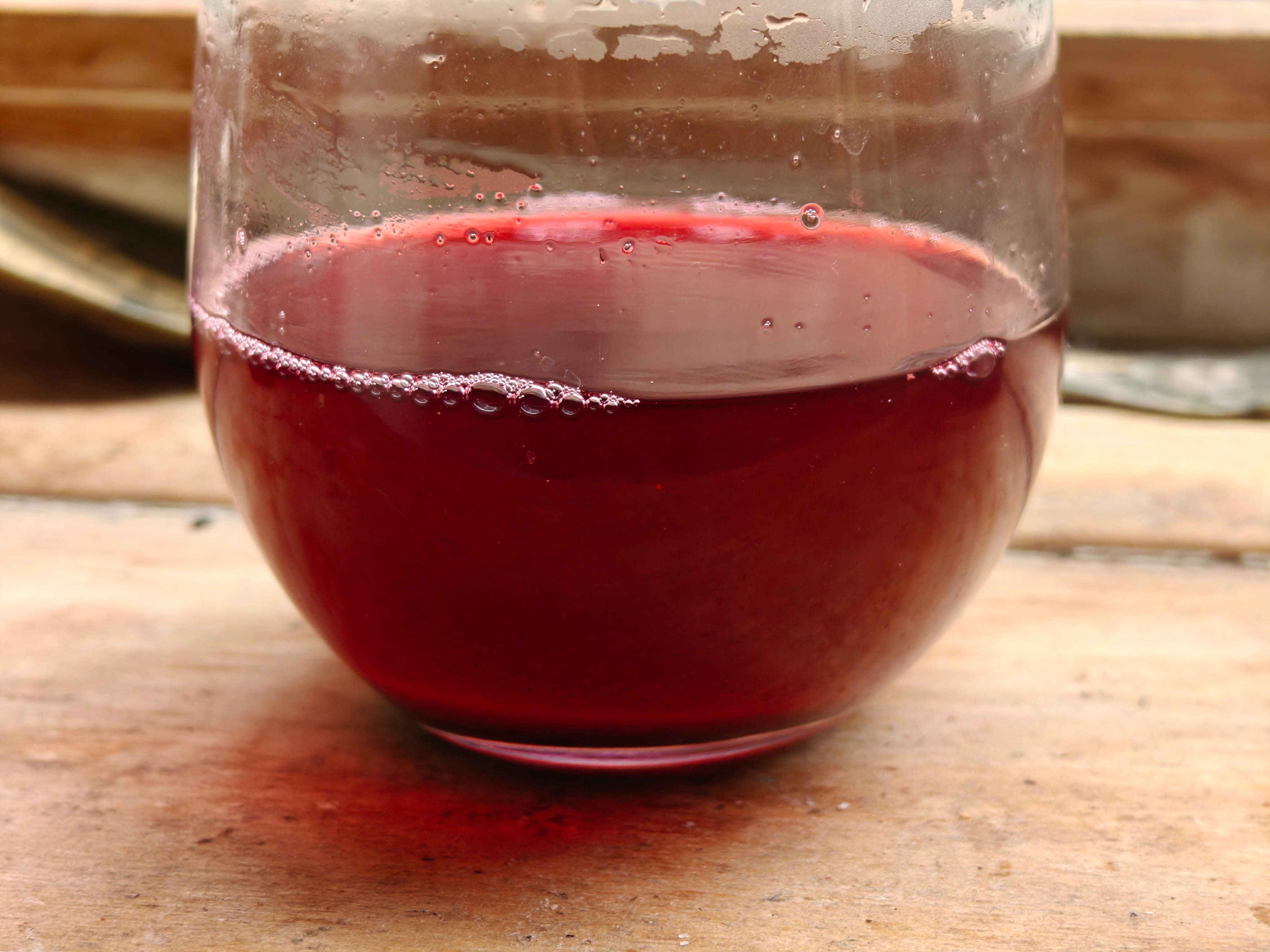
freshly made hibiscus concentrate, soaked before boiling!
Your piece within a piece on your feelings regarding the US was just 'dead-on' for me. Thank you.
I particularly liked the words-paraphrasing here, 'I don't want my mind & thoughts to be colonized by what is going on in the US'.
I read your thoughts then an assessment by a reputed American writer in a what I used to assess as a quality magazine-on the first 100 days of Trump-I'm left with this overriding feeling, the Americans are whitewashing all this with their heads in the sand. Then again, they voted him in twice.
Agree with your post 100% Naomi. I went to California for a trip focused around Tourism Australia last week because it was all about Australia and I think that’s as close as I could get, but I have a good friend there and I didn’t want to miss an opportunity to see her. While I was there, all I ran into were Americans telling me how much they despised Trump. Of course I was in California, a True Blue State. I too have many American friends, and I feel for them, trapped in the frightening reality of a political situation too few of them saw coming.