
I took a break last week, as June turned to July and we said good-bye to the strawberry full moon…
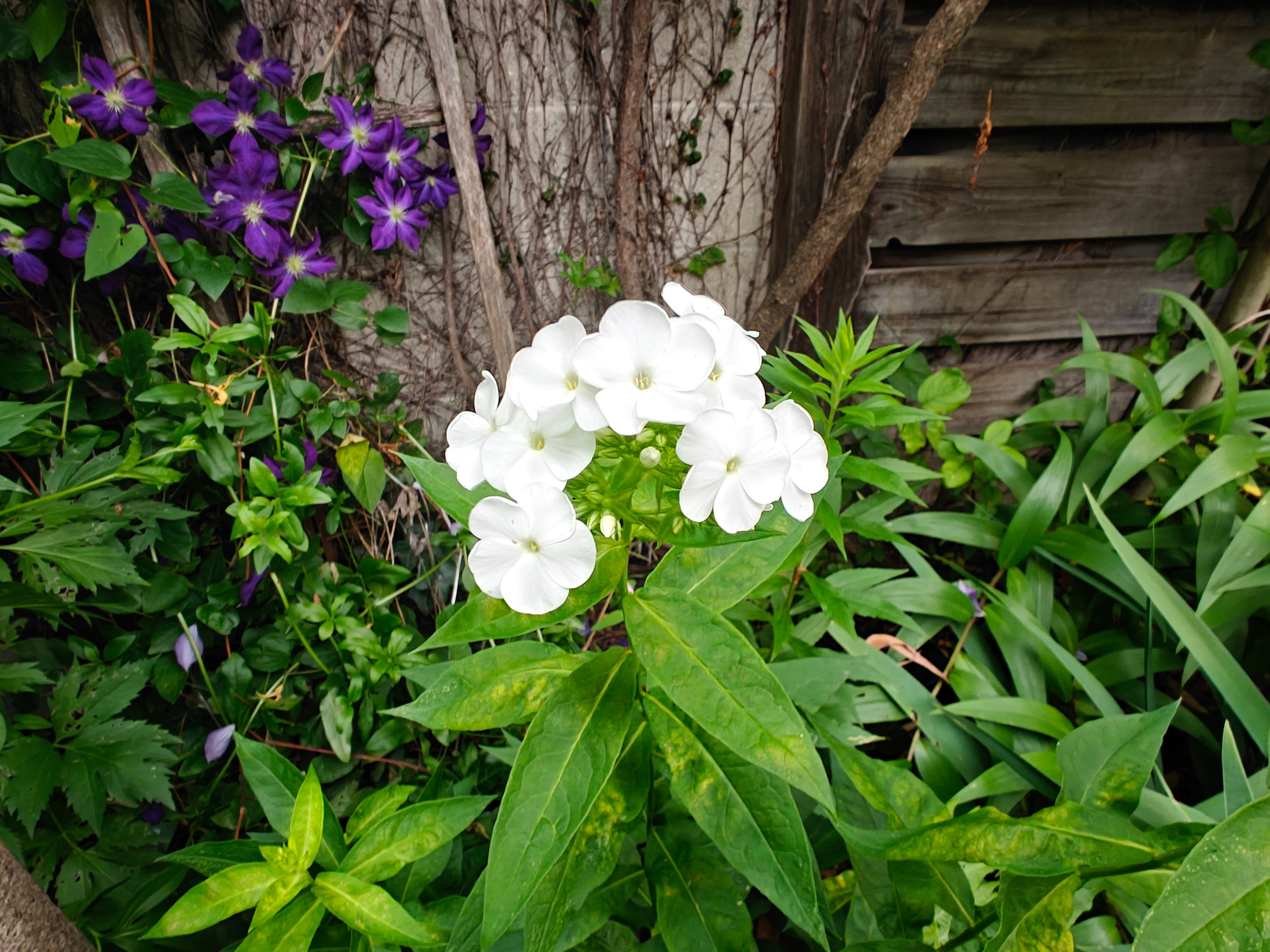
newly opened phlox blooming white, aromatic in the evening, with Jackmanii clematis behind
Though our evenings are still long and soft, glowing to the northwest well after nine as the sky darkens to deep blue, we can already feel that we’re heading back to the darker side of the year. This yin and yang at an annual scale, and then our daily pattern of light and dark, are fundamental rhythms, as essential and familiar as our heartbeat or the ins and outs of our breath.
Within those reliable alternations we create many patterns over our lifetimes as we learn and grow: We pursue education and strive at work in many forms, we meet new people and engage with old friends, we cook familiar dishes and explore ingredients and possibilities we hadn’t known of until recently, we read books and enlarge and enrich our idea of the world. There’s a resilience in this process of dynamic adaptation. It gives us a few tools for dealing with change and loss, but we’re not really prepared for shocking change and catastrophic loss.
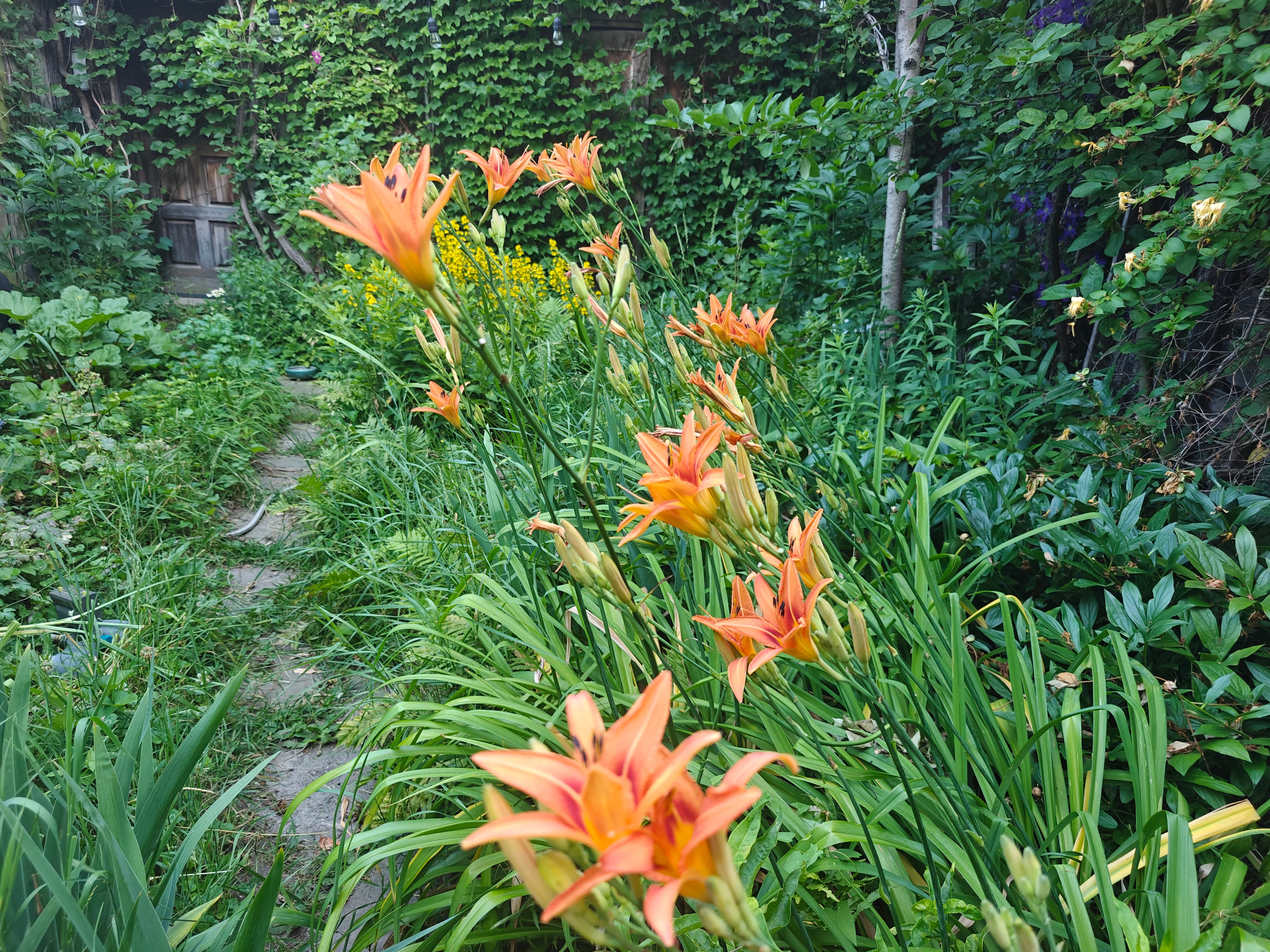
the day lilies are like an honour guard, crowding against anyone walking along the path
I’ve been pre-occupied for a long time by thoughts about grief and the stress of change and loss. We face these things in our personal lives and now we’re looking at them in a world-wide context. We’ve been warned for years about the coming environmental catastrophe. But now it’s staring us in the face. Each year recently we’ve seen catastrophic climate-change evidence: heat waves, floods, huge fires and smoke-laden air, water shortages. Change and loss are knocking at the door. When patterns shift course, we’re forced to adapt, and it’s often painful. Our institutions are not very adaptable, nor is our built environment. The least well-off among us are the most vulnerable.
As the US-dominated old order crashes and burns, we don’t know what will come next. I hope things will improve for many as the global south finds more autonomy. But meantime the senile Caligula (Francesca Albanese’s label), using the US military and US-dominated financial institutions, is capable of wreaking even more havoc.
It’s like being on an airplane in a violent storm. We are shaken, lifted, dropped suddenly. Will we come through it safely? It feels increasingly unlikely. There’s no certainty.

in a crowded streetcar earlier in the week I saw this woman, with her injury boot (maybe a snapped achilles?) and her flashy fashionable boot on the other foot. Nearby there was a nearly 90 year old woman with a cane who needed help, a tall man with a walker who was very shaky on his feet, and a disabled older woman who needed help getting on and off. It was a reminder that injury and disability, the “not-normal” happens to all of us
With no control over the larger picture, I try to take solace and find my footing in the immediate, as I often do here on Substack. That means engaging with the details of daily life, from random encounters on the street to conversations with friends, from the beauties of the garden as it grows, blooms, and dies back, to small details in my kitchen explorations. I’m grateful to have enough curiosity about things large and small that every day feels fresh.
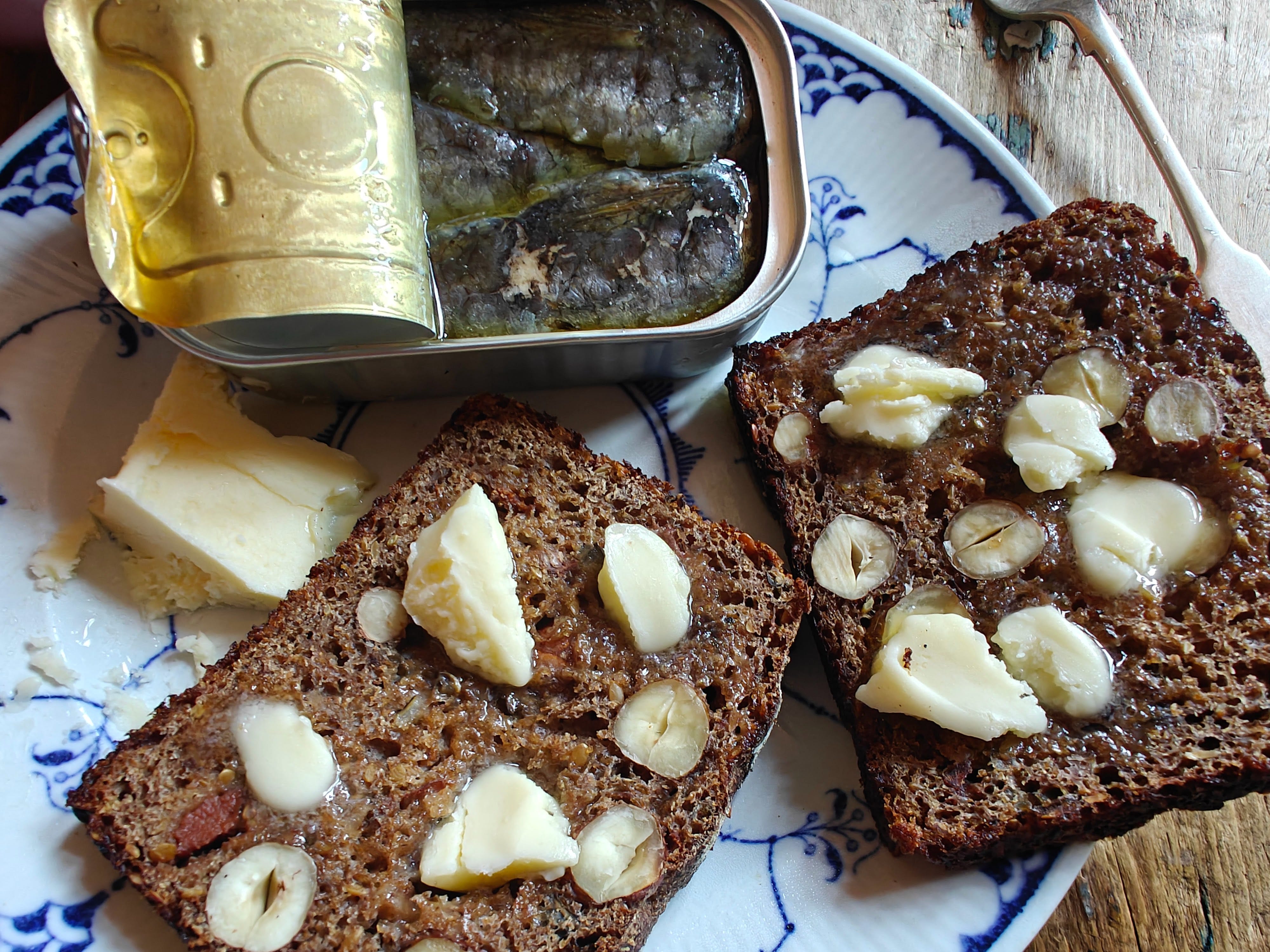
a perfect lunch last week: toasted rye from Dawnthebaker (Evelyn’s Crackers) with butter and sardines, eaten in the shade
KITCHEN EXPLORATIONS with talk of currants red and black; potato salad made with stir-fried vegetables; sesame-dressed vegetables
In the last two weeks I’ve picked the red currants from my small bush, in two or three passes. I found myself eating them in hand, like that, gorgeous colour and lively flavour. I tried eating them with an old raw milk cheddar from Quebec – wonderful. So then I tried them with Mountain Oak, an aged gouda from Ontario – also an excellent match.


red currants with Mountain Oak; and the spectacular combo of mango sorbet with red currants
The black currants need even more careful picking than the red ones. The delicately stemmed little clusters have six to eight berries each, of which the first two or three are perfectly ripe, then come two or three reddish halfway ripe ones, then one or two translucent berries, pale ivory with veining that makes them look like miniature gooseberry cousins. It can’t be profitable to pick a bush over three or four times. So how to commercial growers manage? Fresh berries are labour, however you look at it. But what a reward! I will do another pick tomorrow.


black currants up close: leaf, stem cluster in all stages of ripeness; a picked bowlful. If you’re making cucumber pickles, a leaf or two in the jar will keep your cucumbers crunchy
Meantime I combined the first two picks of black currants in a small pot with a splash of water and a little sugar and simmered them until they burst and thickened. Each mouthful is tart and funky and wonderful. I keep the jar in the fridge and take a taste every once in a while, on its own or smeared on a little toast.
The chiles on one plant (I’ve lost the label so I can’t tell you the kind – too small for cayennes) are ready, green and rather small. They have good heat. I’ve been mincing one or two to include in cooked vegetables. The other day I stir-fried snow peas from the farmers market, after pulling off their strings and chopping them crosswise. They went into the wok after I’d softened some sliced onions in hot oil flavoured with mustard seed and fennel. A minced green chile went in too. And then the whole combo got turned out of the wok into a mass of cooked peeled and coarsely chopped new potatoes. I added torn basil leaves and chopped garlic scapes, uncooked, They give a good crunch and a green garlic hit of flavour too. A generous splash of cider vinegar and an extra glug of olive oil, plus an adjustment of salt, and the dish was done. Leftovers were a perfect bed for my fried eggs the next morning.
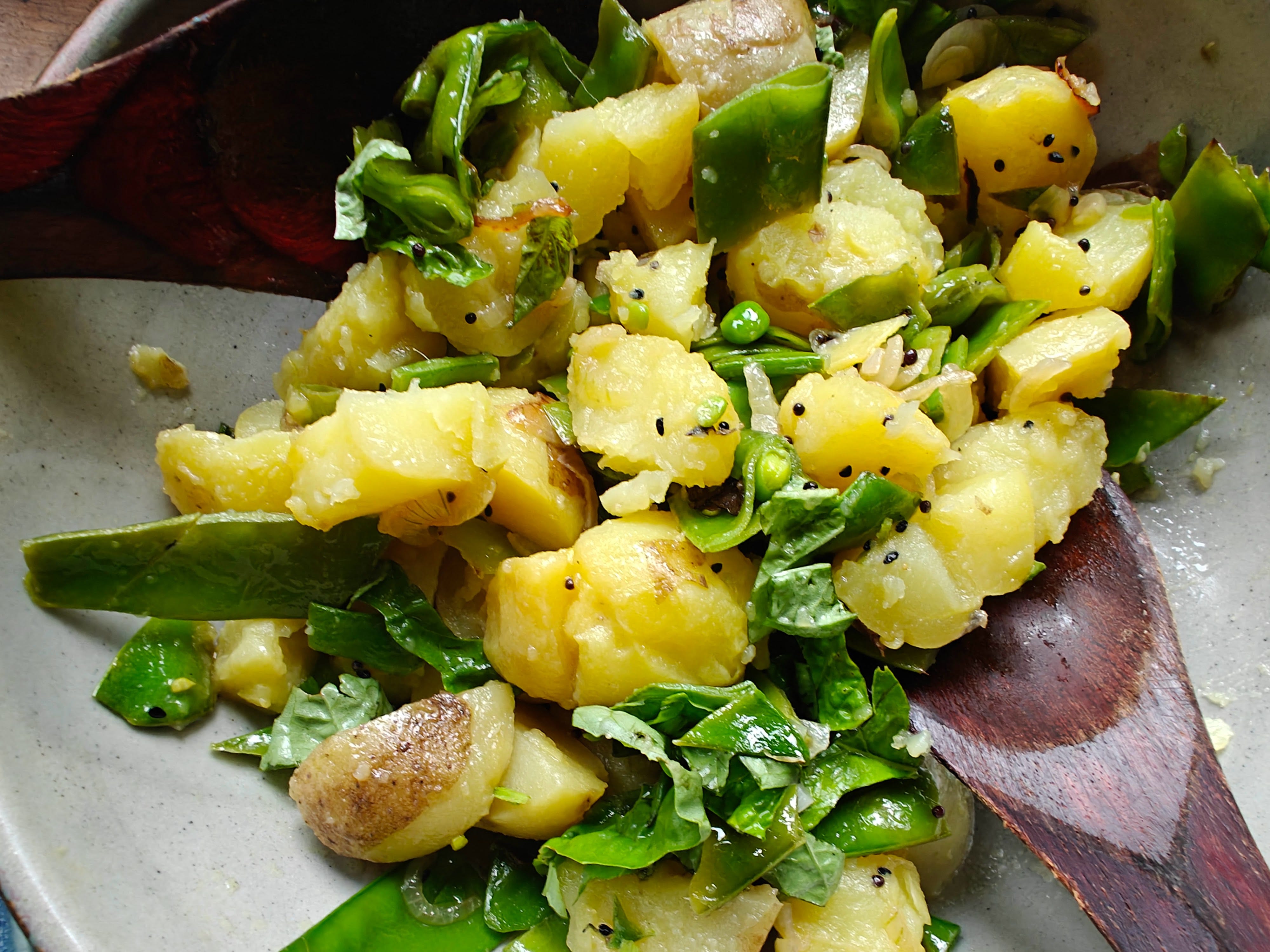
potato “salad” dressed with stir-fried snow peas etc
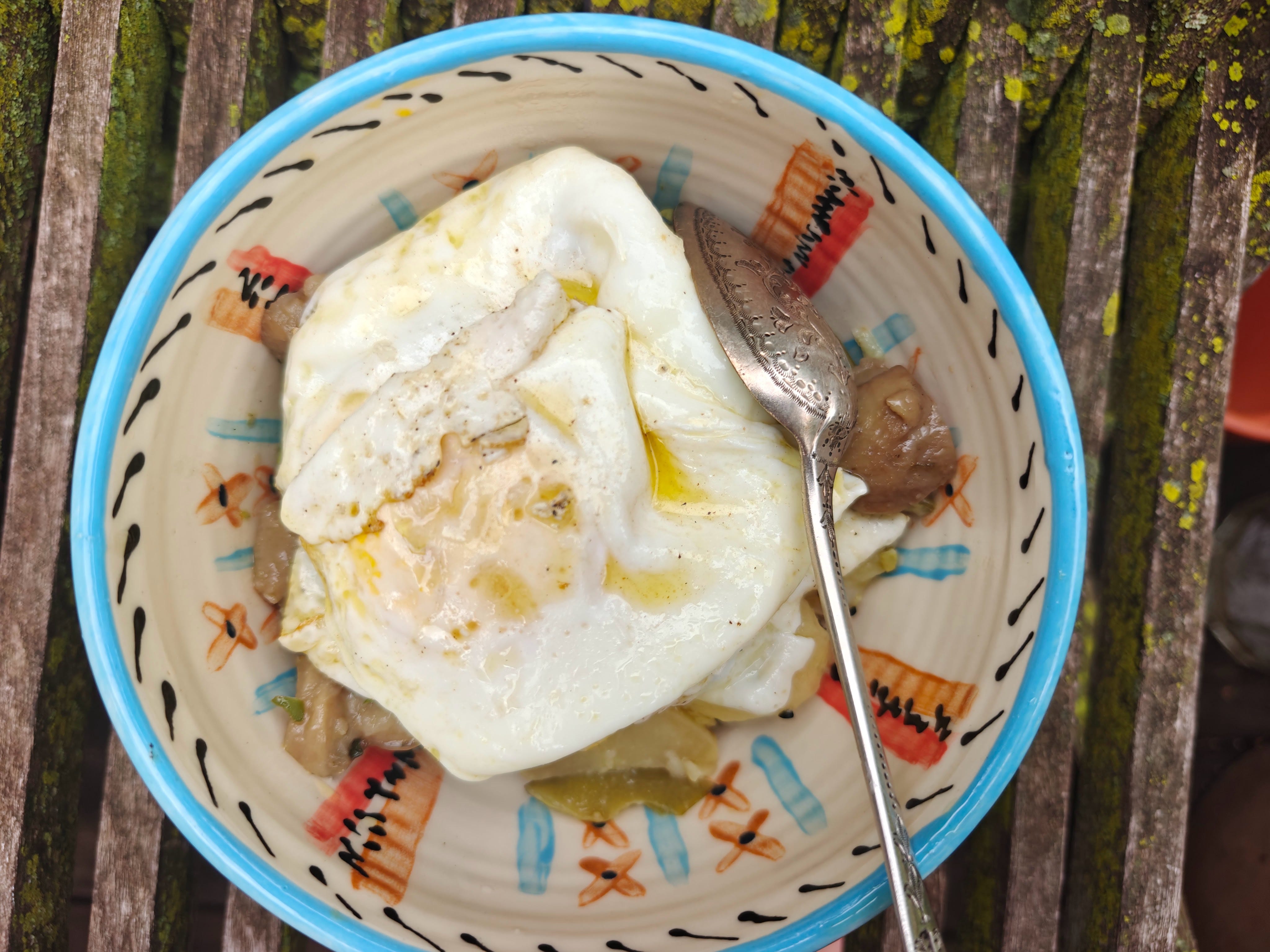
eggs over leftover potatoes, with a little leftover lettuce too
Another recent pleasure has been a a sesame-dressed vegetable dish that you can serve like a fresh pickle. My friend Gord, whose cucumber recipe guided the Japanese pickled cucumber recipe in my Miracle of Salt book, brought over one version of it. And later I made another, which I’ve kept in the fridge for a few days, bringing it out as a side-dish/extra flavor with our evening meal. It’s a variant of the sesame seed flavoured dishes called goma-ae in Japan. Proportions are to taste. I used a combination of asparagus and broccolini. Gord had used spinach and asparagus. I’d like to try young carrots next, perhaps paired with broccolini or even with barely blanched radicchio.
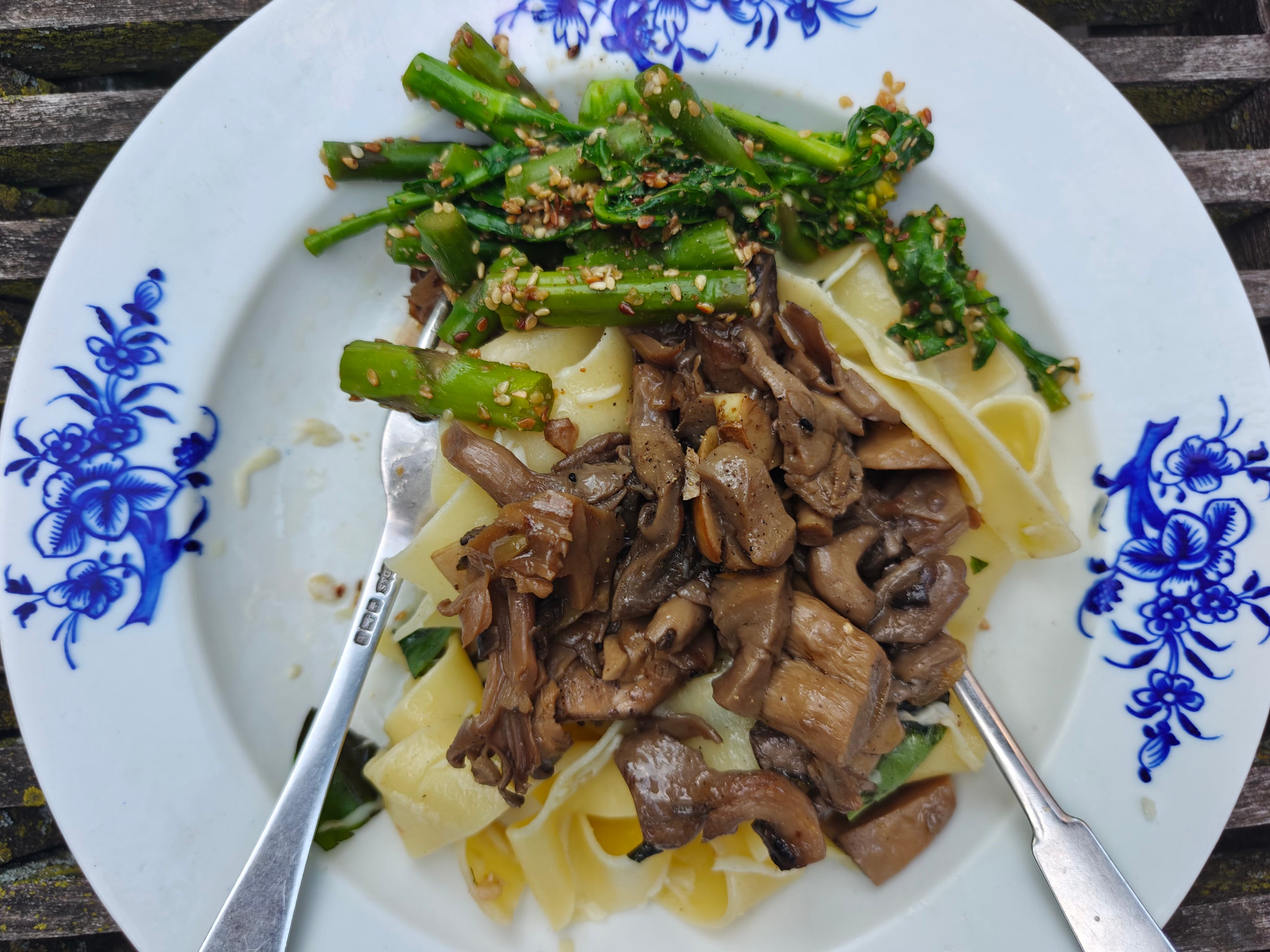
sesame-dressed veg (Gord’s version) as a side with egg noodles topped with a sauce of slow-simmered mixed mushrooms
I chopped the broccolini into one-inch lengths, and the asparagus about the same. I brought a small pot of salted water to a boil and dropped in the thicker broccolini stems, and almost a minute later the florets. After another forty five seconds or so I scooped them all out with a spider and set them in a bowl to cool. Most advice is to add ice cubes to cool the veg and stop the cooking. I think that spoils the flavour. I repeated the parboiling with asparagus, starting with the thicker ends and adding the tips a little later. Again about a minute or a little more was all that was needed.
While they cool you can toast sesame seeds (about ¼ cup) in a dry skillet over medium heat until aromatic and turning colour. Keep shaking the pan so they don’t burn. Place them in a suribachi (Japanese mortar) or another mortar and grind them. It doesn’t matter if some of them remain whole, but you want most of them broken. Turn them out into a bowl, add about one tablespoon soy sauce and one teaspoon of sugar. Stir and then taste. You may want a little more soy or sugar. I like to add a generous squeeze of lemon juice or lime juice. You could include a little miso… Pour the sesame dressing over the vegetables and stir well to coat them. Let stand for an hour or more. Refrigerate if the wait will be any longer. Serve at room temperature.

summer in Toronto, with shady places to sit and read or sip a lemonade; this is Sonndr, at the corner of Dundas West and Shaw
Love reading everything you write, Naomi—the focus is perfect for the times, it's impossible to take in the bigger picture at present, for so many reasons. The food you cook is delicious and do-able! xx
I'd love to come spend the day cooking and eating with you! Do you ever make sardine paste? I fell in love with the stuff in Lisbon in 2010, and I haven't been able to recreate the experience.