
We’re in full hard early winter here in Toronto. After yesterday’s snow and freezing rain that made streets slushy and soaked our boots, the skies cleared, and the temperature dropped. We now have bright winter sunshine on icy surfaces all over the city
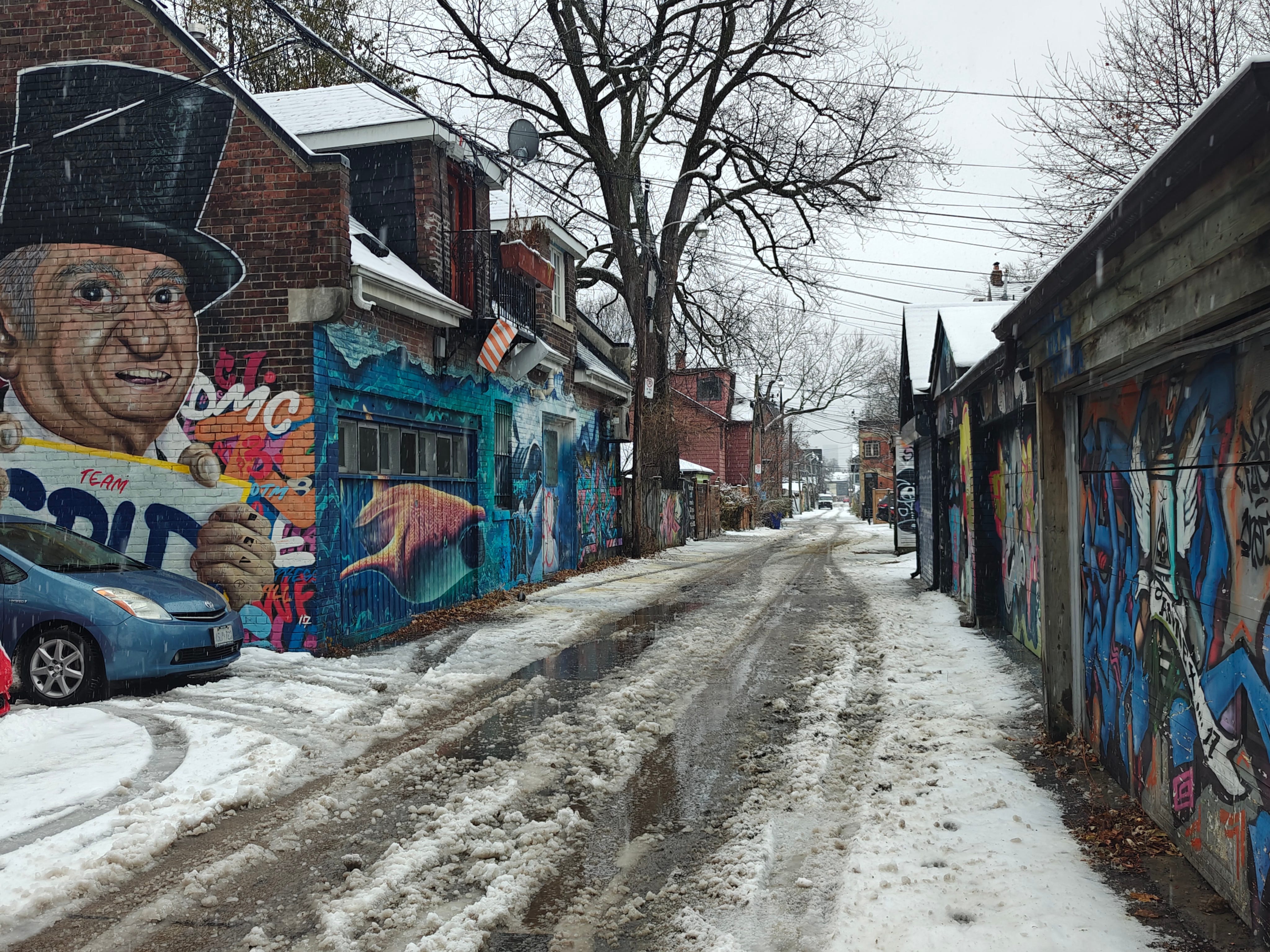
slushy back lane this week, behind Brunswick Avenue, Toronto
My recent time in hospitals with Tashi, first at Toronto Western and then in the palliative care ward at Princess Margaret, was painful, yes, and also intense, wonderfully human, rich with feelings and care. The hard work and thoughtfulness of nurses and other front-line care staff goes on day and night. But unless we’re there to see it, it’s easy to forget that parallel universe. And the stress and anxiety of patients and their loved ones is also an ongoing complicated landscape that is mostly hidden from us
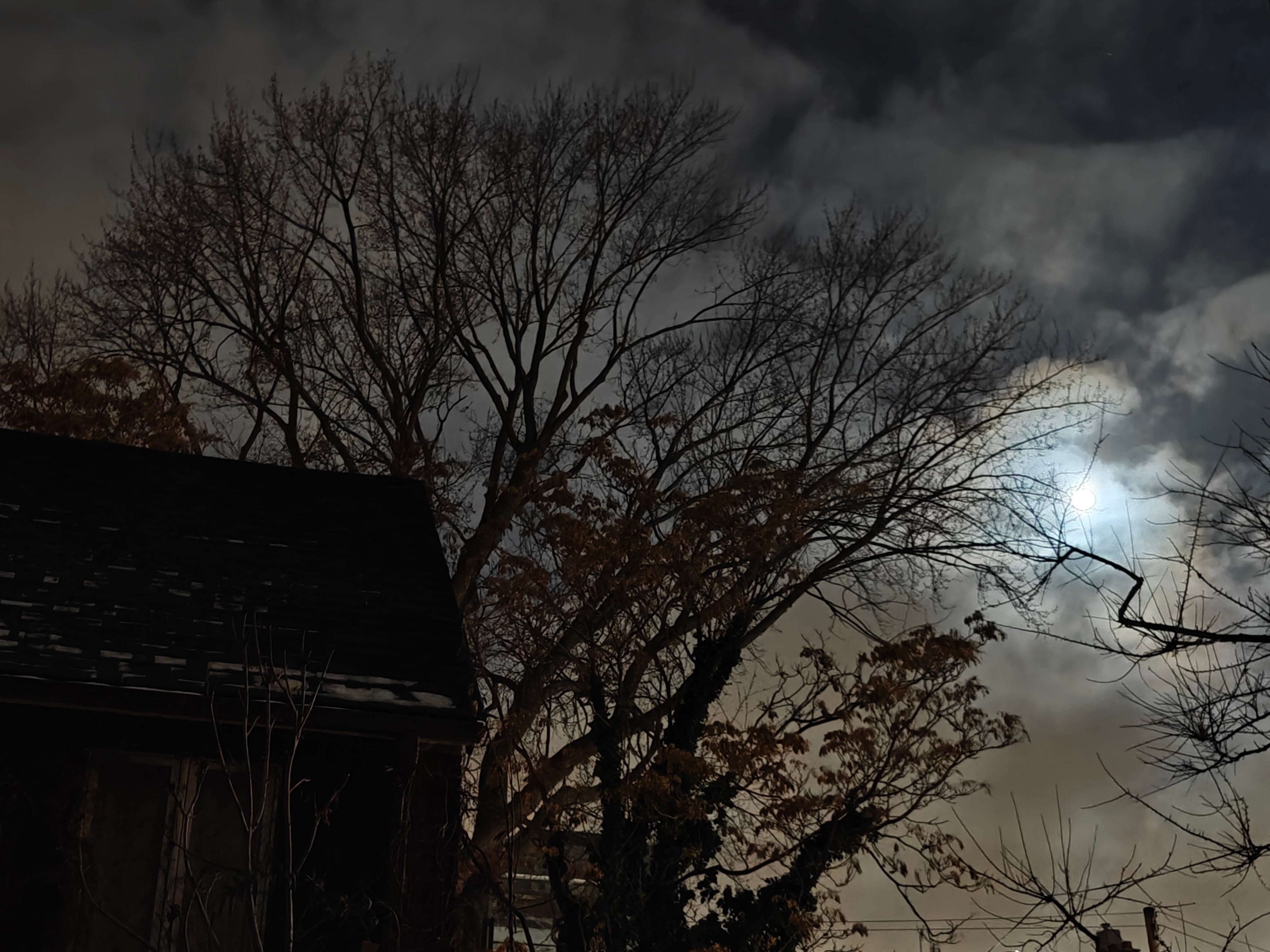
December full moon, setting before dawn last week
The truth is that wherever we are we are surrounded by people whose inner landscapes are individual. We don’t know what is going on for them on a particular day or in a particular place. In the same way, people passing me in the street these days can’t know how I’m feeling; sometimes I myself barely know.
I’m still trying to find my footing, metaphorically, in this new world where I no longer carry anxiety and dread about Tashi. Instead he’s present in his absence. I am distracted, tend to lose mittens and to lose track of time. I am reluctant to make future commitments to people and find myself taking refuge from commitment by reading novels.
Earlier, in October, I was reading literature, three books on the Booker Prize shortlist: Kiran Desai’s marvellous The Loneliness of Sonia and Sunny, Susan Choi’s intense unforgettable Flashlight, and the Booker winner, Flesh by Richard Szalay, which is brilliantly written and left me feeling alienated. They all came from the Toronto Public Library.


But now, after Tashi’s death and the intensities of those weeks, I have been working my way through the last six or seven books in the Billy Boyle series by James R Benn. They’re transporting, and a great escape. Instead of doing household chores or writing the letters I owe, I flee into Billy’s wartime escapades. Only my commitment to myself to write here on Substack every week has pulled me away from the comfortable nook that well-told stories provide.
The other pleasure that is slowly growing on me, is retrieving a sense of adventure in the kitchen. I mentioned this possibility in last week’s post. Since then I have made mincemeat, free-styling on the basis of my recipe in HomeBaking, plus the recipes in a 1947 book by Mrs Arthur Webb called Preserving, and Dorothy Hartley’s mincemeat entry in her Food in England.
It was liberating to realise that mincemeat is really a matter of combining sweet preserved/dried fruits with tartness (usually from various forms of citrus) plus a little liquid and perhaps sugar, all of it preserved in a thin coating of fat from suet. I began with chopped apple, about a pound/500 grams of it, as well as the same weight of organic sultanas and of plain raisins. Other ingredients included a (2 cup) jar of Seville orange marmalade; 2 large organic lemons, chopped in the food processor, plus the juice of two more lemons; about ½ cup/125 ml syrup left over from when I candied peel last year; about the same amount of strong black tea and of rye whiskey; and about 2 cups of sugar. The last ingredient to go in was the beef suet, 250 grams/half pound; luckily Sanagan’s in Kensington Market sells it in frozen packages, already chopped into tiny pieces. The ingredients all sat together mixed in a large bowl overnight. The next day I spread them onto a roasting pan and put it, loosely covered, into a 225F/105C oven for two hours, then removed the loose cover for the last hour. That was the plan.
Forgetfulness intervened. I went out, leaving the uncovered pan in the oven for an extra three hours. Blame my distracted state. Miraculously - a confirmation that mincemeat is difficult to mess up - the mixture was fine, still moist, and very delicious. I ended with nearly 3 litres/US quarts of mincemeat. Some I’ll give away, and some will go into mince tarts
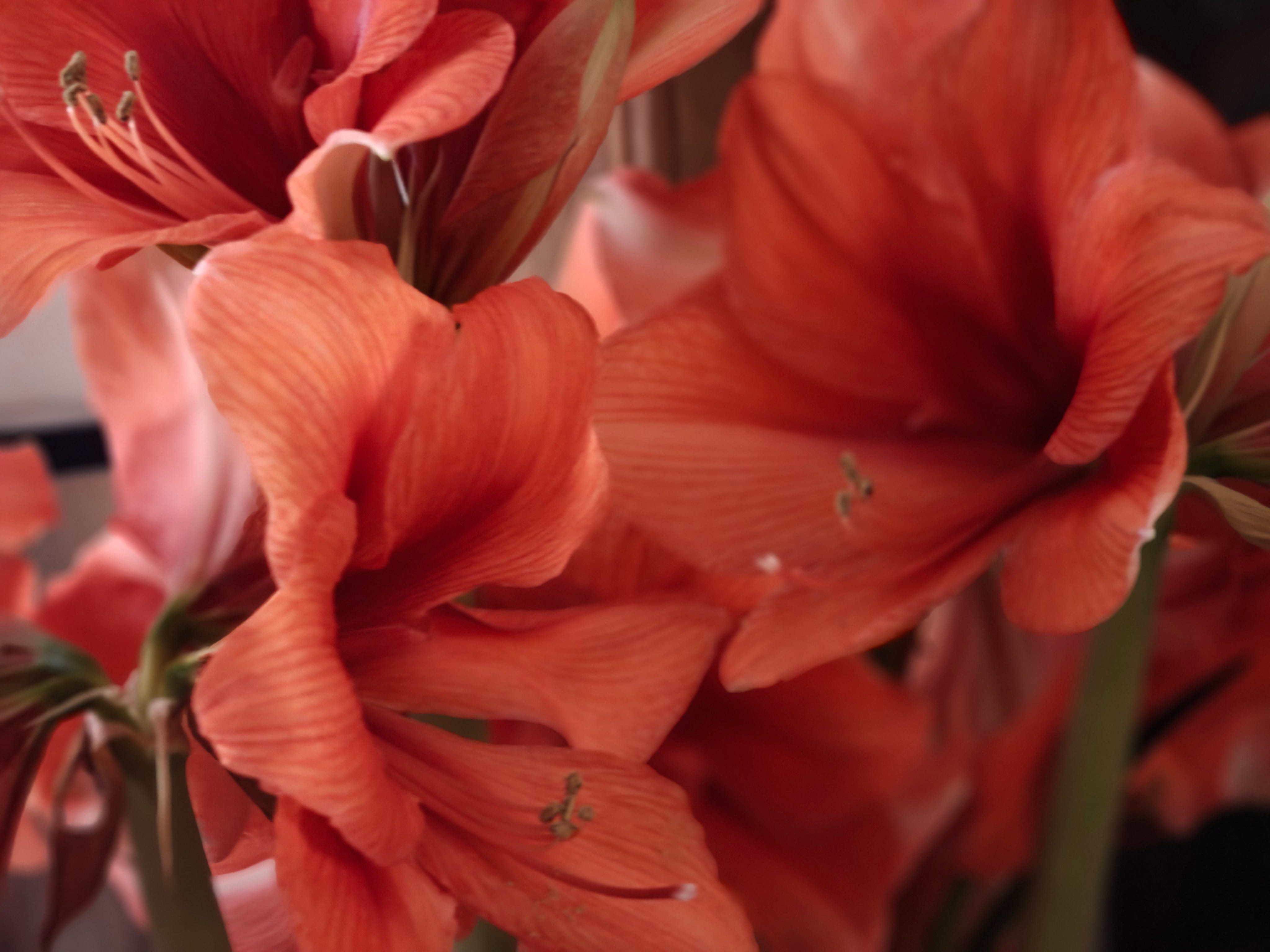
close-up; I am very grateful for all the flowers people brought to the house after Tashi died; the loveliness continues with this huge pot of amaryllis from Mika at The Good Egg
PASTRY RETURNS TO MY KITCHEN
I came to pastry-making when I was working on HomeBaking nearly 25 years ago. Until then I’d been intimidated by it, having bought into the myth that “cool hands” were an innate gift that only some lucky people had. These superstitions can keep us from trying. They did that to me. But as I embarked on learning how to be comfortable with home-style pastry-making I settled into the pleasure of it. If we avoid the trap of perfectionism, pastry-making can be casual and relaxed.
As I was reading through my HomeBaking book last weekend, thinking about possible Christmas baking ideas, I came upon the recipe for Leekie Pie, in the savoury tarts section. I had a large handful of leeks from the farmers’ market that were looking a little tired and crying out to be used. Ambition stirred.
But it’s been ages since I last made pastry. For the last couple of years I’ve been cooking supper, yes, with care and attention, improvising most nights. Sweets and desserts, cookies, cakes, tarts, have come mostly from Evelyns Wholegrain Baking, the business of my brilliant friend Dawnthebaker.
I know I can rely on the recipes in HomeBaking but of course I often riff off them, as I did in this case: I substituted whole grain pastry flour for the paler all-purpose or pastry flour in the recipe.
I made the pastry in the morning and left it in the fridge until late afternoon. A friend came by as it was time to roll it out and assemble the tart. We chatted as I worked. I felt a little self-conscious with her there, because my fingers were a bit clumsy, unused to handling pastry. I rolled out the dough for the bottom crust and laid it onto the greased pie plate, easing it in without a problem. The mix of lightly cooked chopped leek plus chopped bacon looked appealingly fresh and green a I mounded it onto the crust. But rolling out the top crust and trying to drape it over the leeks was more challenging. It cracked in a couple of places and needed mending. The mends looked a bit crude, but there was no point worrying. I pressed my thumb all around the edge to seal it, and then for good measure also pressed all around with a fork.
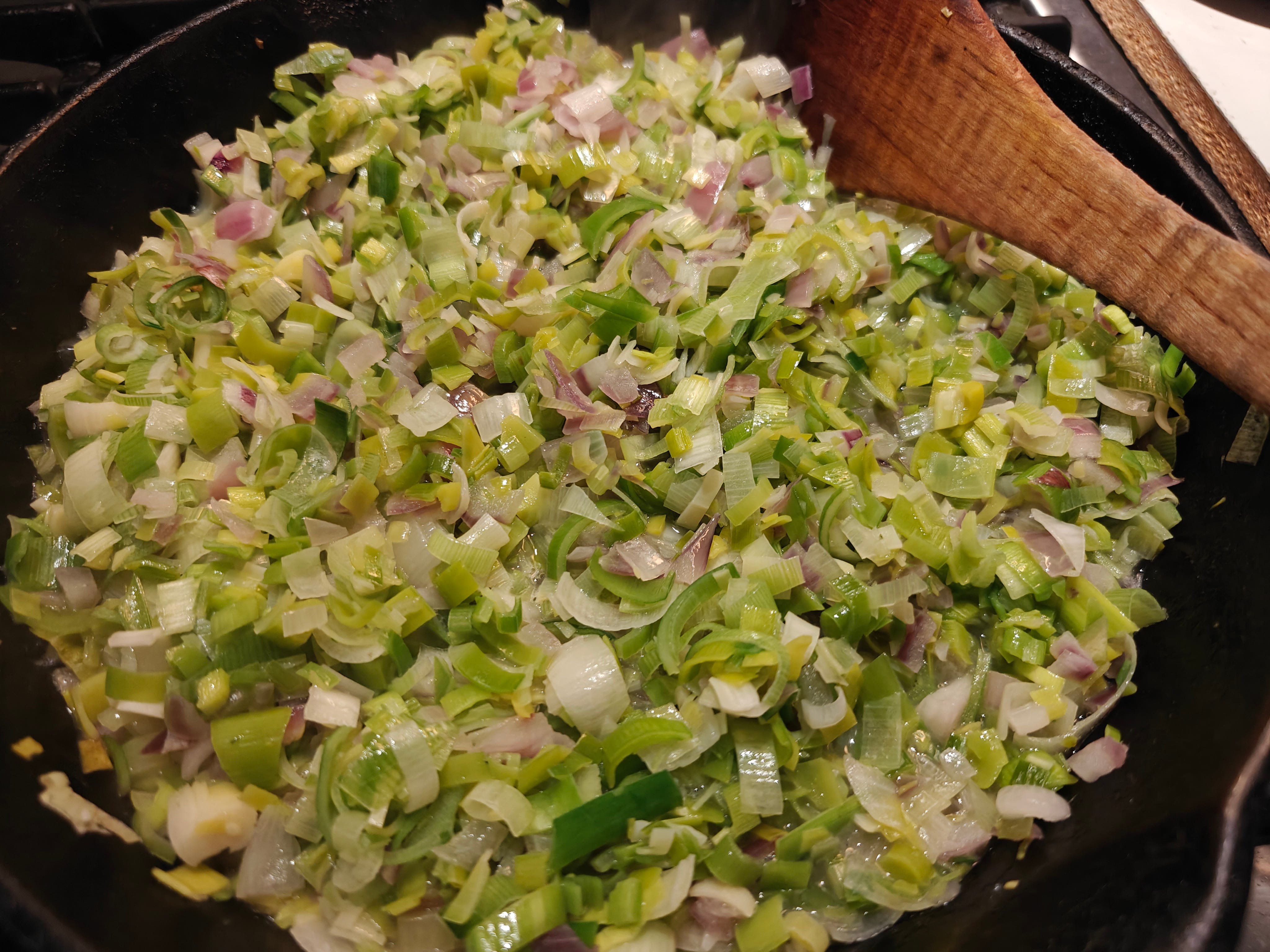
chopped leeks with a little chopped red onion, pre-cooking before going into the pie
The final step before the pie goes into the oven is cutting a large square hole in the centre of the top crust. When the pie is almost done, you carefully pour a whisked mixture of egg and whole milk into the hole and put the pie back in to finish. The custard mixture seeps through the chopped leek, flavouring it and holding it together as it sets. But when I took the tart out, though the pastry was well browned, the filling still looked wet rather than set. Oh no!
I’d forgotten that you need to let the tart sit for a short while once it comes out, to set completely. We were hungry, so we ate it a little soon, when it was hot and steaming. Delicious. The leftover slice I had the next day was even better, firm, and succulent, a perfect blend of leek and crust.
My confidence has returned. I feel ready to make small mince tarts. I have some Maris-Widgeon flour freshly milled by Dawnthebaker, who suggests topping the tartlets with a little frangipane…
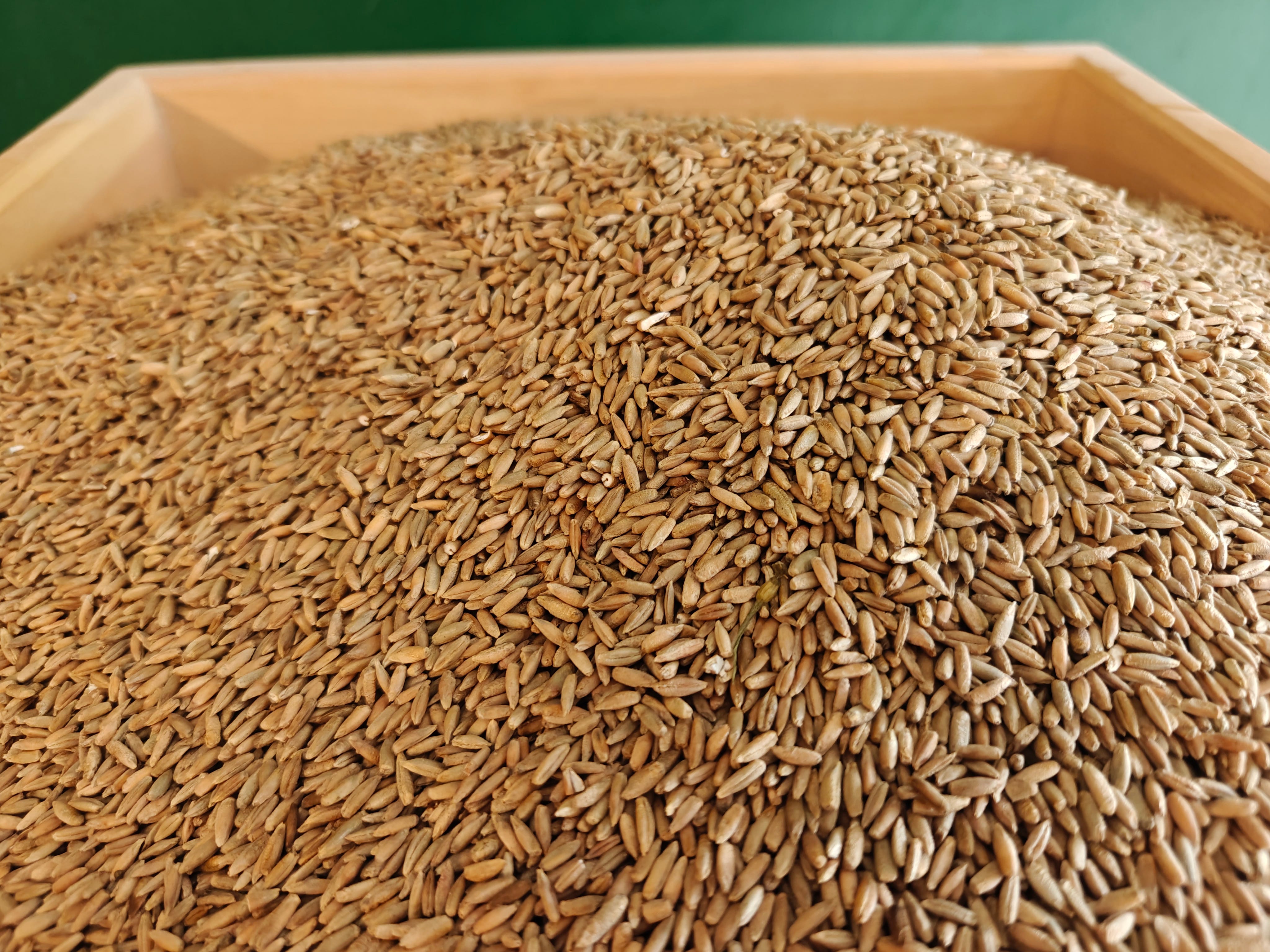
Ontario-grown wheat in Dawn’s mill, awaiting transformation
I am happy that you take time to do things you like. I didn’t know about preparing mincemeat that way using the oven. When I met people of Quebec Eastern Township for my cookbook of that region I found recipes made with or without meat. I chose a recipe including beef cook priorly and suet and the cooking of the mincemeat with all the ingredients finished on the stove. I keep a nice souvenir of you recommending Food in England which I truly savoured the reading and learning.
So glad to see you're busy at work, Naomi. Also busy reading. Another Booker book I recommend highly, an almost winner (short list), is Andrew Miller's The Land in Winter. We who live in the north country don't always understand the harshness of winter when it strikes those who aren't used to it, like the fabulously drawn characters in this novel.