
It felt sudden, the arrival of St Brigid’s Day on February 1, along with the fat full moon. And five days later, here in Chiang Mai the waning moon was a luminous flattened persimmon as she rose, glowing soft orange-pink through the thick warm air.
I had a long café conversation yesterday afternoon with a dear thoughtful friend from Burma/Myanmar who now lives in Chiang Mai, where it’s safer for her teenage son. (After the military coup of February 1 2021, the army was grabbing tall strong boys from school and forcing them into the army, so she and her son moved here.) We talked about many things, including love and loss, meditation and attentiveness. As with the conversation I had had days earlier with another friend here, speaking of deep emotions and memories was somehow cleansing and left me lighter. It’s as if feelings of grief and sorrow accumulate for days without my knowing, and then certain moments or conversations bring them out, allow them to bloom and flow, carried by tears.
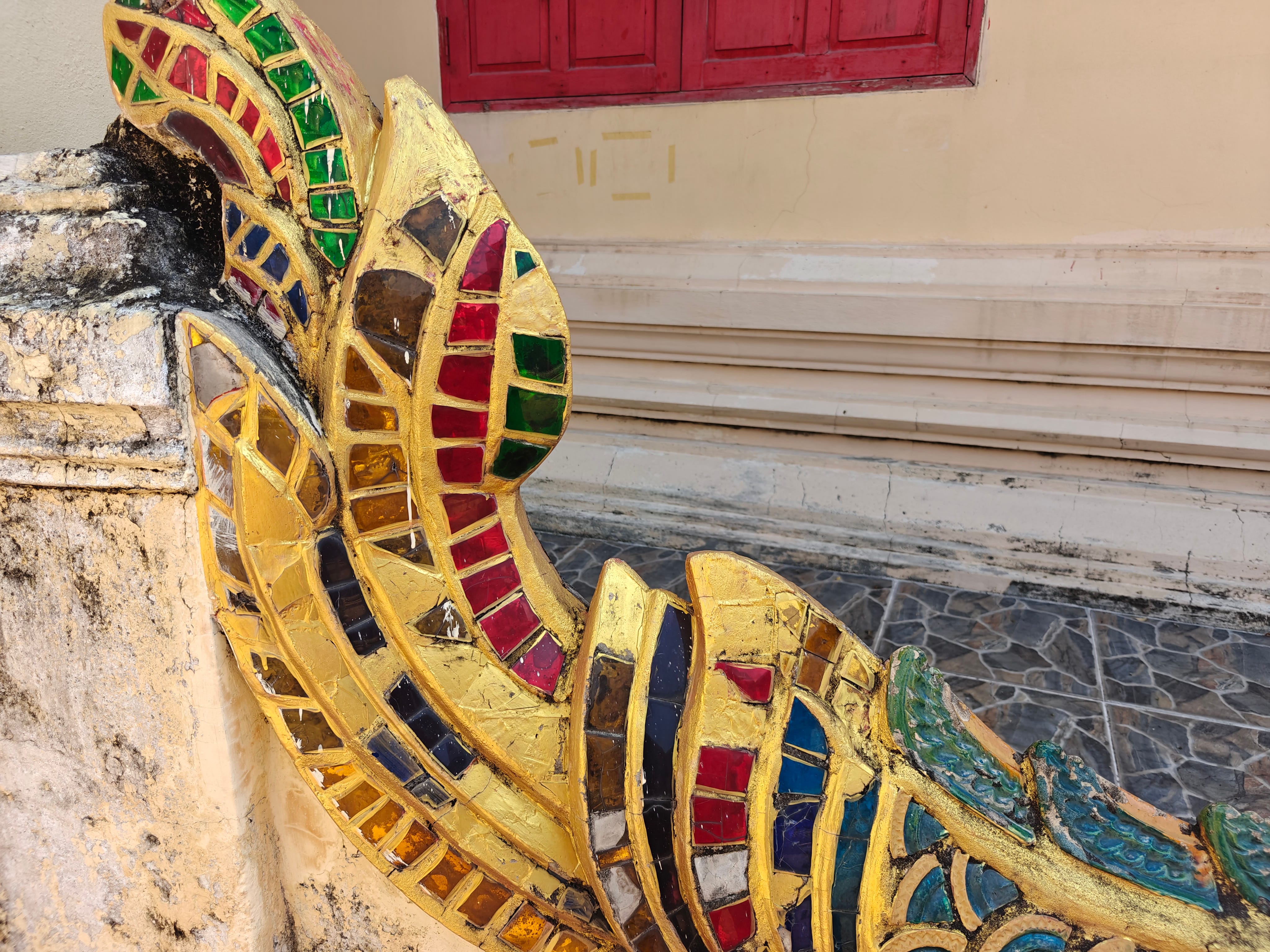
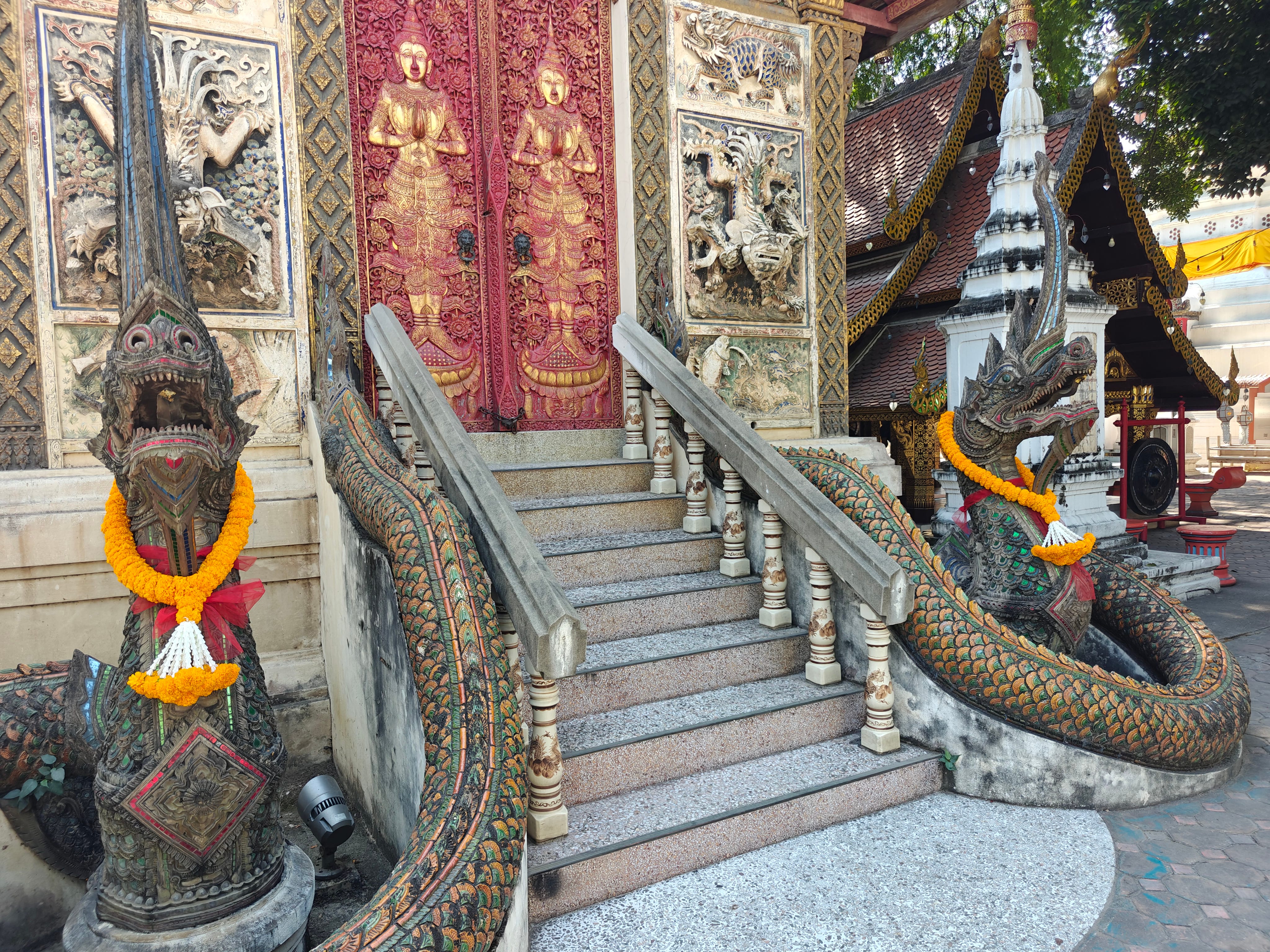
detail of a water dragon at the entrance to Wat Saen Fang
My time here in Chiang Mai is nearly over; I fly out on February 9. As the days of my last week here unfold, I’m a bit stuck in a familiar state: an over-awareness of the finiteness of things. For example, I know that today is my last time this year at the Friday market eating mohinga; yesterday was my last time eating morning jok (rice soup) at Jok Chang Moei; etc. This way of thinking places a weight on otherwise light and pleasurable experiences and drains them of some of their energy. Does this happen to you?
Because it’s been a fact of life for me, I find myself urging friends who are making travel plans and who have the time, to stay longer in whatever place they’re going. It’s a way of postponing that end-of-stay awareness. There’s nothing more enticing and freeing than an open expanse of days. A short time limit constrains thinking, makes us aware of the end of the trip almost from the start. And as many others have written before, more eloquently than I can, the valuable thing in life is expanded thinking, wider horizons, more openness to unexpected possibilities.
The other related travel strategy that I (perhaps irritatingly) urge on friends is to refrain from making too many plans or locking themselves into a tight schedule when they travel. I get it that if good restaurants are your thing, then reservations need to be made in advance. And ditto for theatre tickets etc. But I love having big open spaces, days without plans, so that some serendipitous side trip can suddenly take shape, or an invitation to a spontaneous event can be accepted with ease.
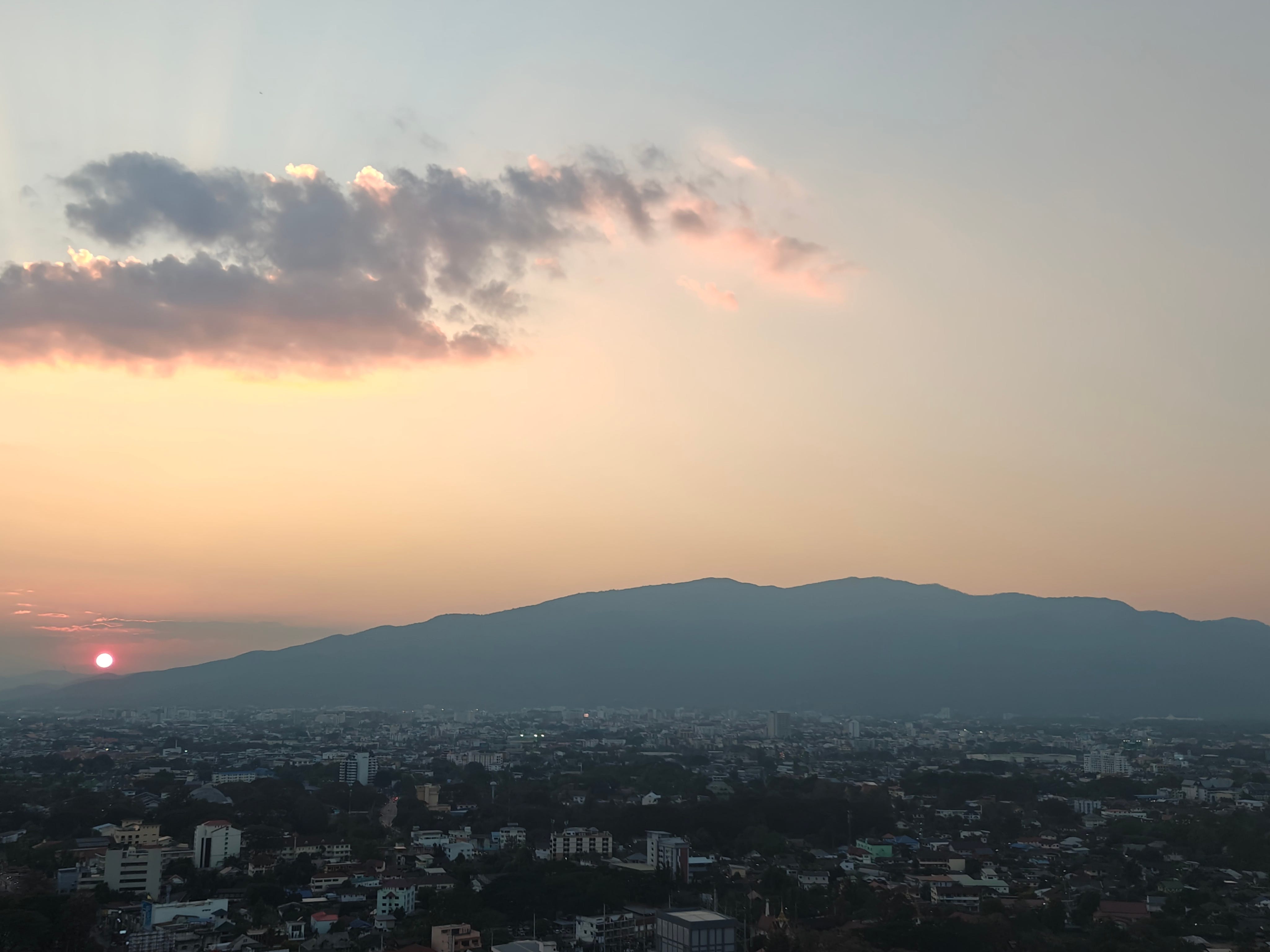
view of Doi Sutep at sunset from atop a highrise where a friend lives
I admit that I operate in much the same way when I’m home in Toronto. There’s a basic skeleton of commitments, my monthly Sacred Harp singings for example, but most events, from dinners or drop-ins with friends at home or out, to movies, daytime walks, and other meetups, are last minute plans or improvisations.
A complex schedule feels confining to me. I prefer not to feel that the dance steps of the week are pre-set. I am fine with commitment. In fact I have a dread of not coming through on commitments. Perhaps that’s why I don’t want to be locked into a detailed schedule?
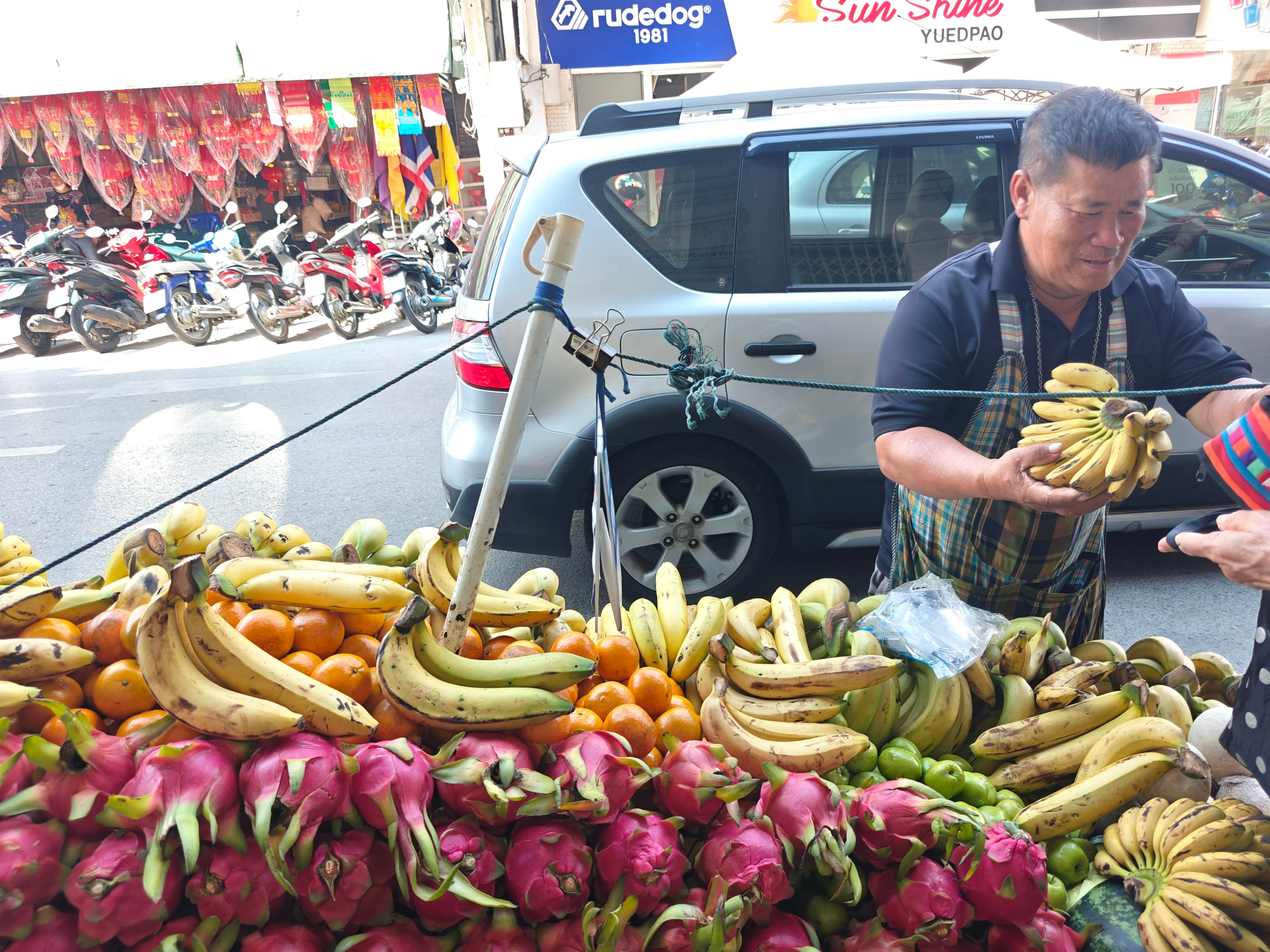
streetside mobile fruit vendor; there are bags of limes hanging underneath his cart
KITCHEN EXPLORATIONS – SOME TASTES OF CHIANG MAI
A wide variety of people live in and near Chiang Mai. As I’ve mentioned before, the region has become a centre for people who have left the precarities and dangers of Burma. Those people may be Bamar, but many are non-Bamar Burmese citizens from a variety of regions and diverse ethnic groups, including Kachin, Pa-O, Karen, Danu, Shan, Tai Yuan, Lisu, and more. And then apart from northern Thais, there are Thais from many parts of the country, and there are Thai citizens of a many ethnicities, among them Shan, Lisu, Tai Lu, Lahu, Akha, Hmong, Tai Lao, Chinese, and more. There is also a good number of people from outside southeast Asia living here who are studying, teaching, doing business, living as digital nomads, or retired.


pea eggplants (left); halal goat and beef (right) at Yunnan Market today
The wide range of market foods, street eats, and restaurant offerings in Chiang Mai reflects this diversity. Here’s a small sampler from this last week:
Last Friday I went to a special dinner cooked by an Akha chef who is launching herself with help from Andy Ricker’s test kitchen in the old city. The food was very interesting, a blend of mountain ingredients and techniques with some Thai influences. The mountain rice was wonderful, a real treat.
I especially loved her version of potatoes, her peanut nam prik, and her pork laab. The potatoes were silky smooth (like the proverbial baby’s bum). She said that after she boils the potatoes and peels them she pounds them in a mortar for a long time, with a little oil, salt, fried garlic, coriander leaves, and a touch of water; they were spectacular. I’m looking forward to trying this at home. I’ll need to try different varieties of potato to optimize the texture.
Nam prik is an intense small sauce to be scooped up with fresh or steamed vegetables, a side sauce of a kind. The Akha peanut version had white sesame in it and some eggplant and garlic. In the pork laab (see my Substack two weeks ago for a description of how it’s chopped) the meat was combined with chopped green onions, herbs, some garlic I think, and chopped red chiles (perhaps they were dried?), and then pressed into a flat rectangle, wrapped in banana leaves, and grilled. It was like the Thai category of wrapped grilled chopped foods called “ep”.


nam prik tua with veg accompaniments on the left; pork laab on the right
For lunch Saturday I went to Khao Soy Islam, my favourite of the Muslim khao soy restaurants down the street from the big mosque near Thapae Road. This time I tried their fish khao soy. Wonderful.
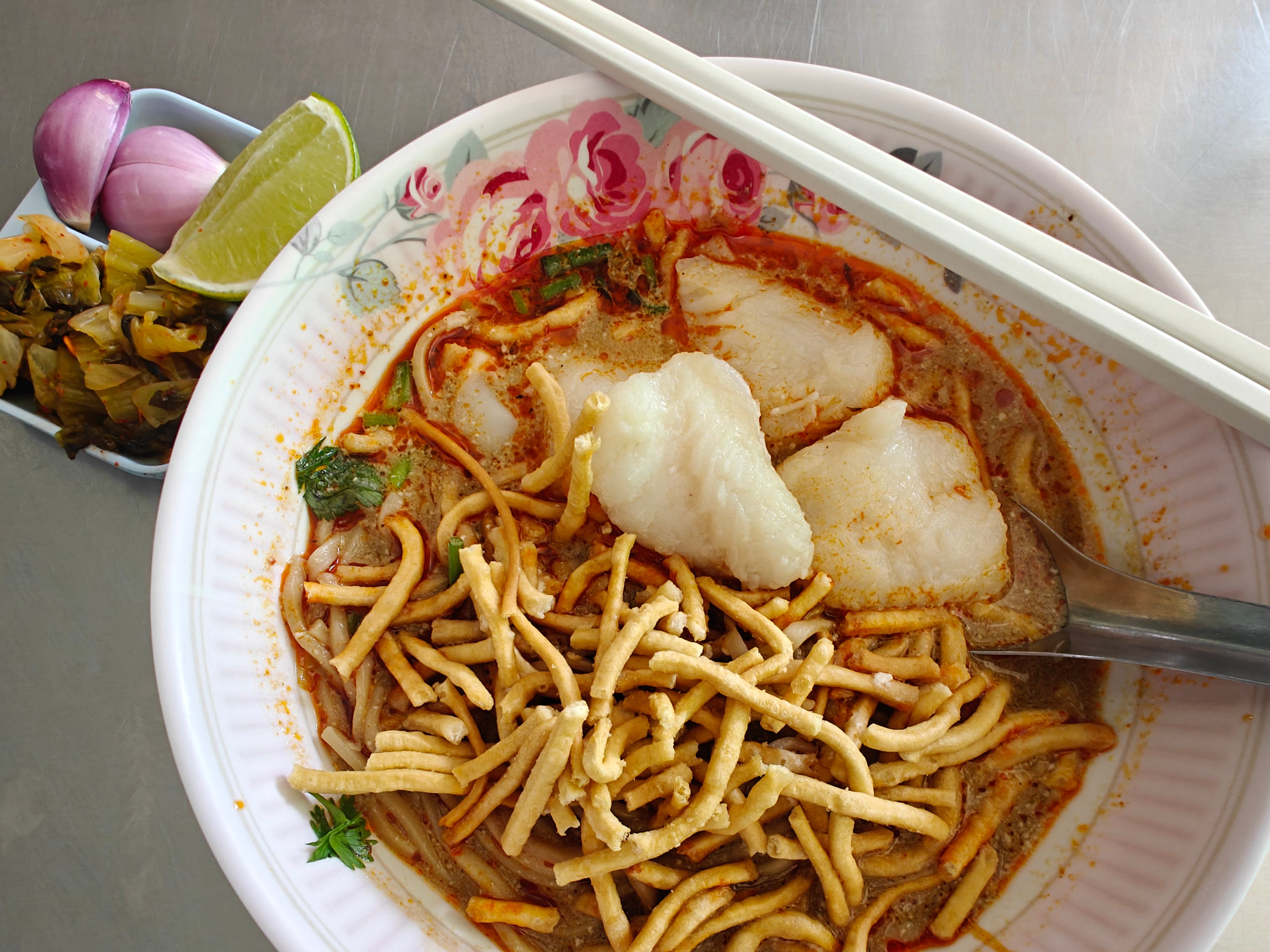
fish khao soy before being flavoured with lime juice & pickles and stirred together
A friend named Zafar flew in from Delhi for a short visit. (You can find him on Substack as The Traveller, The Recipe Collector, and The Chef.) On Monday we went for lunch to Toy Roszab, an Isaan restaurant, unpretentious and excellent. The charcoal grill is out front. You order, then walk in, find a table, and help yourself to water, ice if you want, raw greens such as herbs, chopped long beans, cabbage and lettuce leaves, etc, a plate, and utensils. Your order arrives quickly: sticky rice, grilled chicken wings, cut in pieces, slices of grilled pork in a salad, sour pork, som tam (there are a number of options for this classic green papaya salad), and more. I like to get there by 12.30 or 1 pm. They close in mid-afternoon.
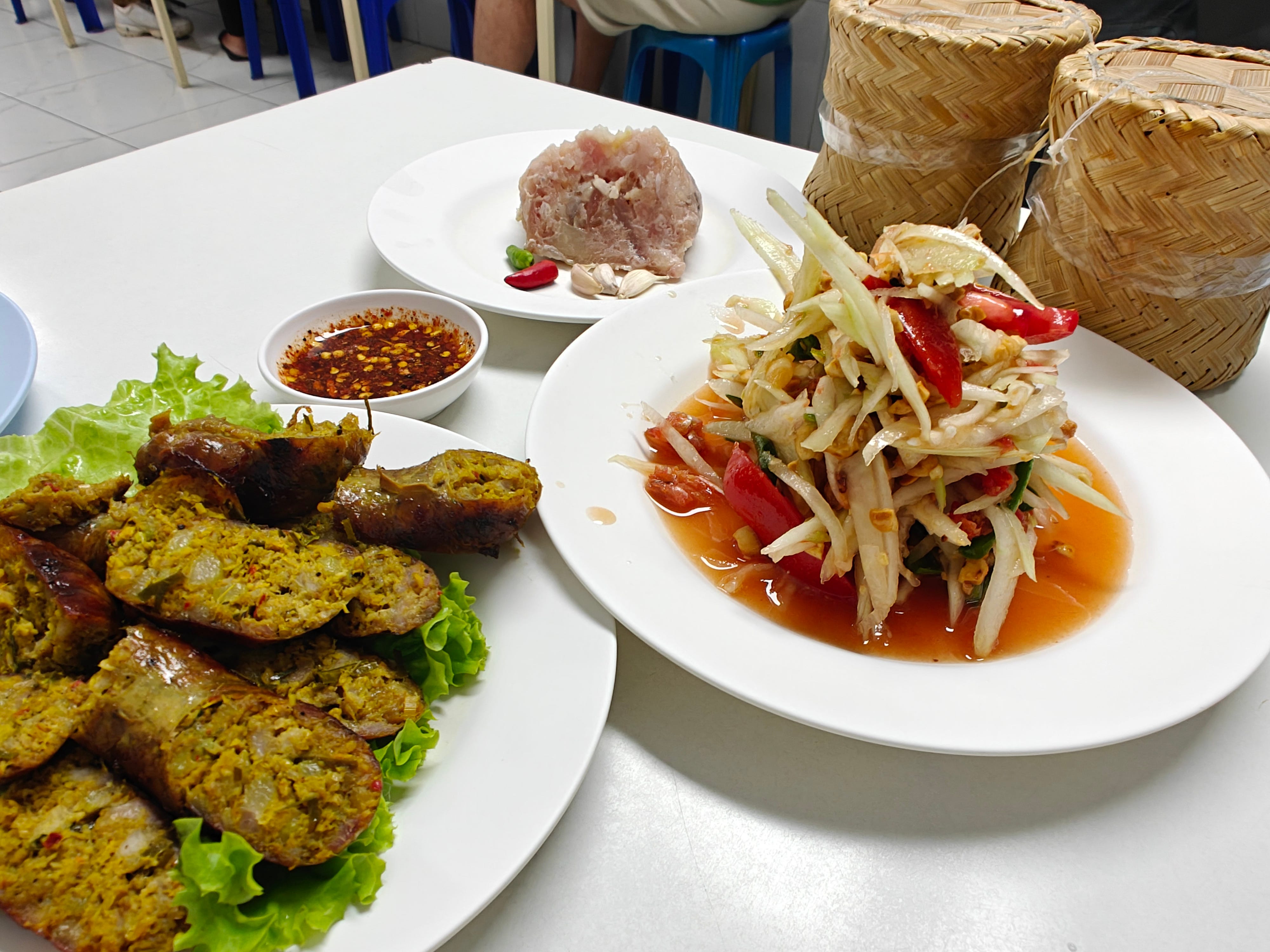
at Toy: grilled sai oua (north Thai herbed sausage), som tam, moo som (sour pork), sticky rice
The next evening we were at Huen Penh, a lovely classic North Thai restaurant in the old city, open only in the evenings. Zafar had come on an ImmerseThrough trip with Fern and me two years ago and wanted to go back to Huen Penh again; he remembered it with fondness. Their versions of North Thai classics are elegant and thoughtful. I love the pomelo salad (yam som-o), the pork nam prik, the eggplant salad with ground pork, the deep-fried cubes of moo som (sour pork) which I hadn’t seen on the menu before, and the delicate banana flour soup/curry.


at Huen Penh: deep-fried cubes of sour pork; eggplant salad with eggs on the side
At lunch on Wednesday we went to eat Burmese food at the Zinme Tea House near Wat Kaet. We ordered salads (thoke): laphet thoke, potato thoke, and a lush noodle thoke with a side of clear soup. The clear tea is a serve-yourself bottomless cup. There’s a peaceful garden in back that’s a wonderful oasis from the bustle of the city. Highly recommended. I still haven’t tried their mohinga. Perhaps I’ll go back tomorrow. They’re open from early morning until 4 pm.


laphet thoke (tealeaf salad), left; noodle thoke with broth
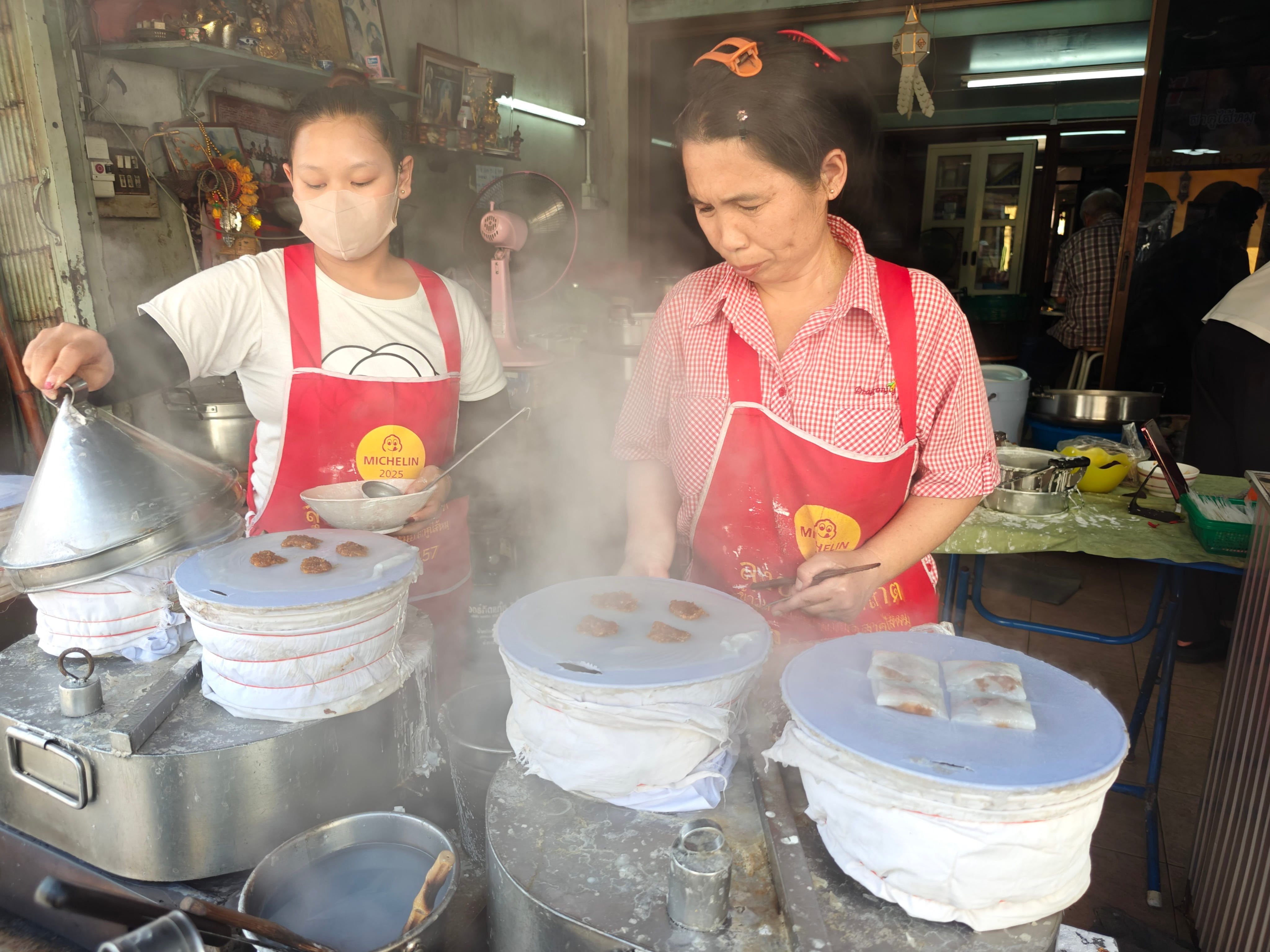
Nearby is a longstanding streetside kitchen that makes a rice noodle sweet called khao giap pak moh. Rice batter is spread thinly in a cotton cloth that’s stretched tightly over boiling water. Then dollops of salt-sweet filling are dropped onto it and the lid put on to hold the steam in. The result is a set of square rice ravioli-looking treats, lightly sweet and salty, and oh so tender. You need to buy plenty, for they’re very more-ish.
There was a final meal slot that night, before Zafar’s departure next morning. We went at about 6, before sunset, to the kanom jiin woman under the overhang at Warorot Market. She sets up just after 5 pm, serving four or five different choices of sauce/curry over the fine fermented rice noodles called kanom jiin. On each table are piles of different options to add to your bowl: shredded cabbage; beansprouts; pickled cabbage; many herbs; pork crackling in small bags; hard boiled eggs; powdered dried red chile; fish sauce. All are included in the price except the cracklings and the eggs. It’s a wonderful light meal, intense and yet also refreshing because of the raw ingredients.
Afterwards we walked back up Chang Moei Road to my condo, where we sat gazing out an open door at the rising moon, snacking as we sipped red wine made by Fern’s husband in Barossa, and treasuring the pleasure of being together.
Dear Naomi,
I read Cleansing Tears, Wide Horizons slowly - not because it is long and rich, but because it asks to be read at the pace of moonrise.
I hesitate to praise your narrative too directly, because I never want admiration to feel like comparison.
You write with air in the sentences. In you words, even a stall carries atmosphere, not just ingredients.
The over-awareness of finiteness can drain colour - and yet, paradoxically, it sharpens attention.
Your travel philosophy - open days, few plans, wide thinking - feels almost like a culinary principle. Leave space in the bowl for herbs not yet named.
And the image of conversation as cleansing - grief blooming and flowing - touches me.
Thank you for writing with such steadiness and light.
Naomi, I'm constantly learning from you and [as you know since my culinary school days in 2002] and always thirst for more. My last trip to Paris was so fluid and because of that found and created new friendships. And I learn how graceful you are with loss. Thank you for sharing.