
Many people here in Canada are just recovering from Thanksgiving feasting (always the second Monday of October). Canadian Thanksgiving usually comes around during Sukkot and before Diwali, as the leaves are turning, the sun is still warm, but there’s a chill in the evenings that’s a promise of the cold temperatures to come
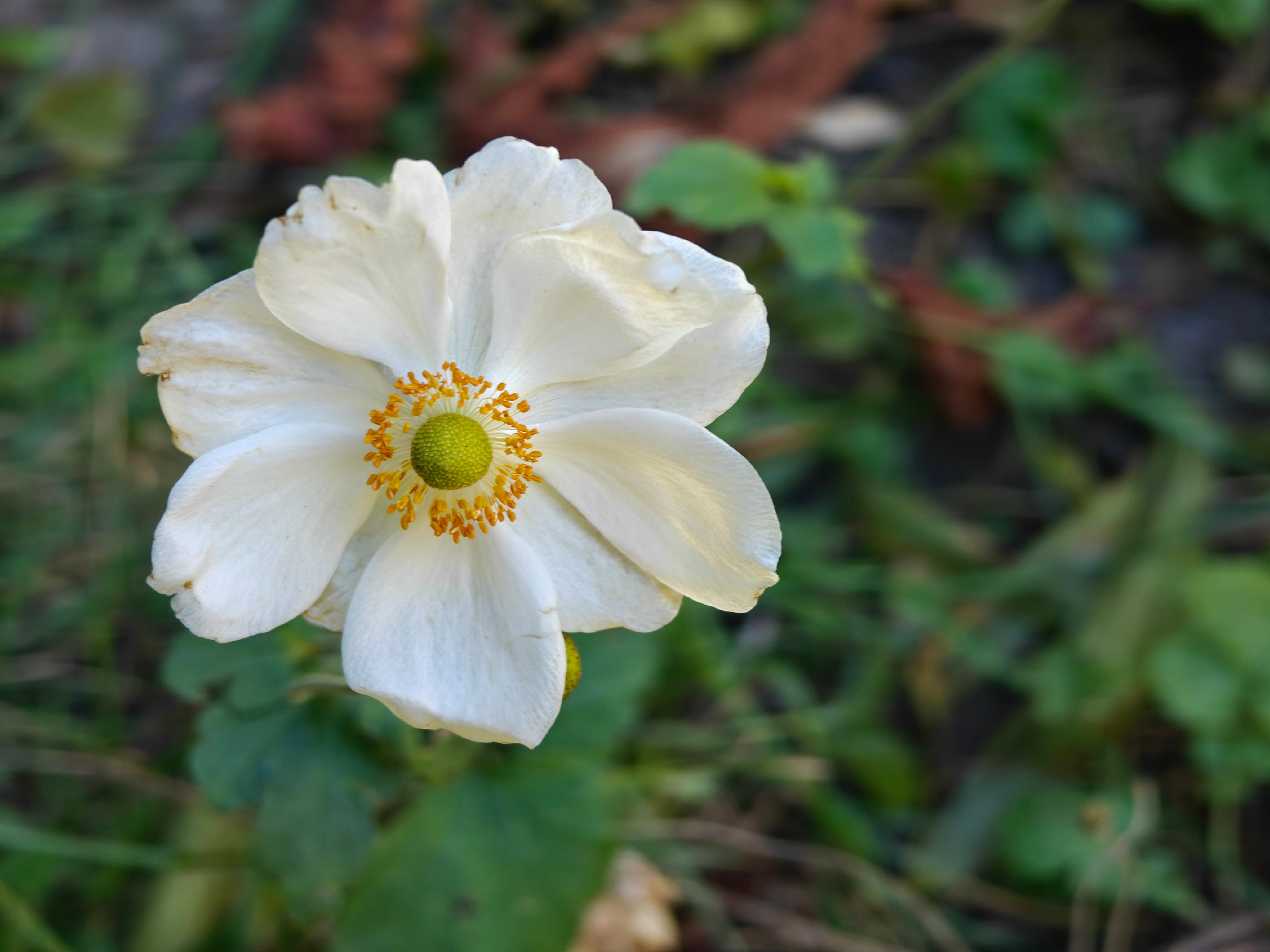
a delicate anemone blossom in the garden today
The markets are very full, tempting us. There’s a lot to be thankful for and a lot of people to thank in person or in our imaginations as we stock up on the last of the season’s fragile fresh fruits, tomatoes, greens, and more: the farmers, seed savers, and soil scientists, the bakers, dairy folk, and cheese-makers, the farm hands, field workers, and fruit pickers, and those who make tofu and noodles and many other basic foods.


sea buckthorn berries at Wychwood Market; small family tofu factory, Kensington Market; Italian cauliflower at Wychwood
We bring the impulse to celebrate and consume to the Thanksgiving meal. A traditional Thanksgiving feast includes turkey with stuffing (also known as “dressing”) and gravy, some kind of sweet vegetable (squash or sweet potato), cranberry sauce, and often a green vegetable too.
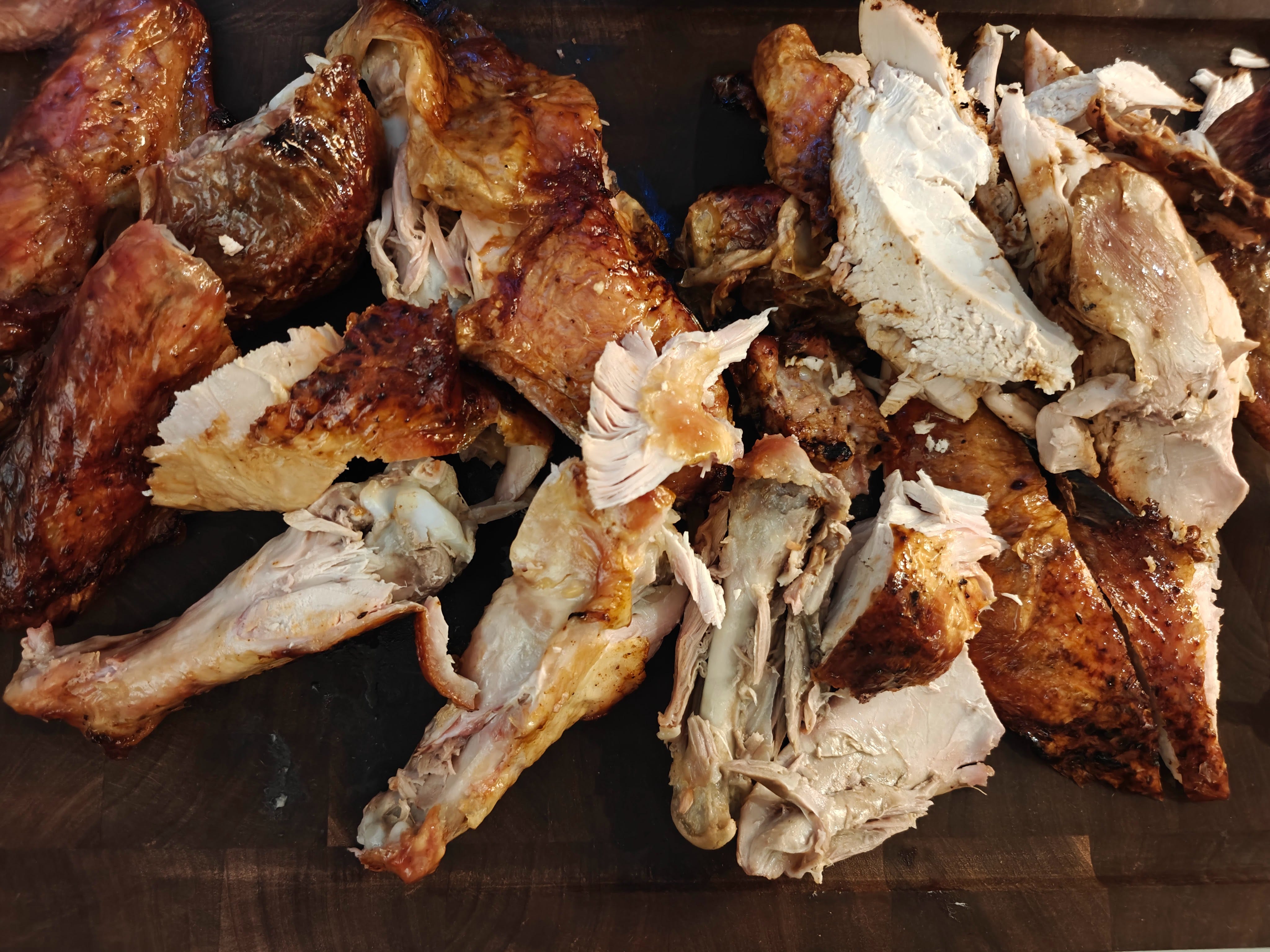
perfectly roasted and carved turkey at Monday’s feast
This year dear friends generously brought the essentials to my house: a freshly roasted turkey, still hot from the oven, plus gravy and dressing, and a mashed squash dish. There was also a mild Bengali chutney made with cranberries and a delicate vegetable couscous. Other friends brought squash with pecans and herbs and a quick vegetable stir-fry, some excellent cheese, plus two pies, one pumpkin and one pecan, and two cakes: a honey cake and a chocolate one. I contributed the eggplant and tomato simmer that I described here last week, plus grilled red peppers, peeled and chopped into a pretty pile.


grilled long sweet red peppers need to be stripped of their skin and their core of seeds: debris on the right and the long strips of pepper on the left, to be cut into smaller pieces
We were a happy crew, grateful for each other’s friendship, at ease as we feasted.
I also roasted a chicken to have on hand for those who prefer it. I don’t love turkey, and I’m not alone in this. I eat it gratefully (preferably the dark meat) if I’m served with it. But given a choice….
All of which brings me to chicken and chickens. Roast chicken used to be a treat, a dish of celebration. Perhaps thirty years ago, or more, chicken became relatively cheap (due to factory farming? I don’t know), and it started to be sold in bits: wings, or thighs, or drumsticks, or boneless breasts. It moved from high status feast day food to weekday eating, though boneless chicken breasts are still accorded some status and are viewed as neutral safe food to serve at wedding and large dinners. (I don’t understand why, but perhaps pale meat and the absence of bones make them attractive to people). Whole chickens, small ones, are sold as rotisserie chickens.
But for many home cooks cooking a whole chicken doesn’t seem to be an attractive option. Perhaps a whole bird is too much of a commitment, too time-consuming for a regular dinner, and yet at the same time not special enough for a feast.
I thought I’d write here about some basic whole-chicken options, as a reminder of the rich possibilities. A whole bird is a lot less expensive than chicken breasts or legs. Start by looking for a non-factory-farm bird. You’ll find them at some butcher shops and at farmers markets, where they’re often larger than the small birds sold in grocery stores. Yes, they’ll cost more per pound, but not a lot more. They’ll have much more flavour and provide better nutrition. And you can get several meals from them, not just because of leftovers, but because you can easily make broth from the bones of roast chicken, which you can then use to make risotto or noodle soup.
Slow-cooked chicken in a pot: A farmer named Ayse sold me a nearly five pound (2-plus kg) bird last month that had been a laying hen. I don’t remember the breed. She advised slow-cooking it, saying “Heat some spices in oil or butter in a large casserole, turn the chicken in the oil for a while, then add water, put on the lid, and cook at a low temperature in the oven.”
I used about ¼ cup/125 ml olive oil in my heavy cast-iron Staub pot over medium high heat, and added mustard seed, whole cumin, turmeric, lovage seed, black peppercorns, and a couple of dried chiles. When the mustard seed had popped I lowered the heat to medium and added about 2 inches of ginger, peeled and minced, and 3 or 4 large garlic cloves, chopped. A minute or so later I added the defrosted room temperature chicken and turned it in the pot for a few minutes, exposing all sides to the flavoured oil. The oven was preheated to 300F/150C.
I turned the bird breast side down and added water to half cover it. (Next time I think I’ll add several bay leaves at this stage.) In went as many potatoes as would fit, roughly peeled and coarsely chopped and about 1 tablespoon of salt. When the water came to a boil, I put the lid on and moved the pot into the oven. After an hour I took the pot out, turned the bird breast side up (the breast had darkened from contact with the hot surface of the bottom of the pot), and then it went back into the oven with the lid on.
About two hours later I had tender chicken falling off the bone and cooked potatoes in loads of succulent broth. It was really the chicken equivalent of beef stew in many ways. Leftovers reheated beautifully; I served them over rice.
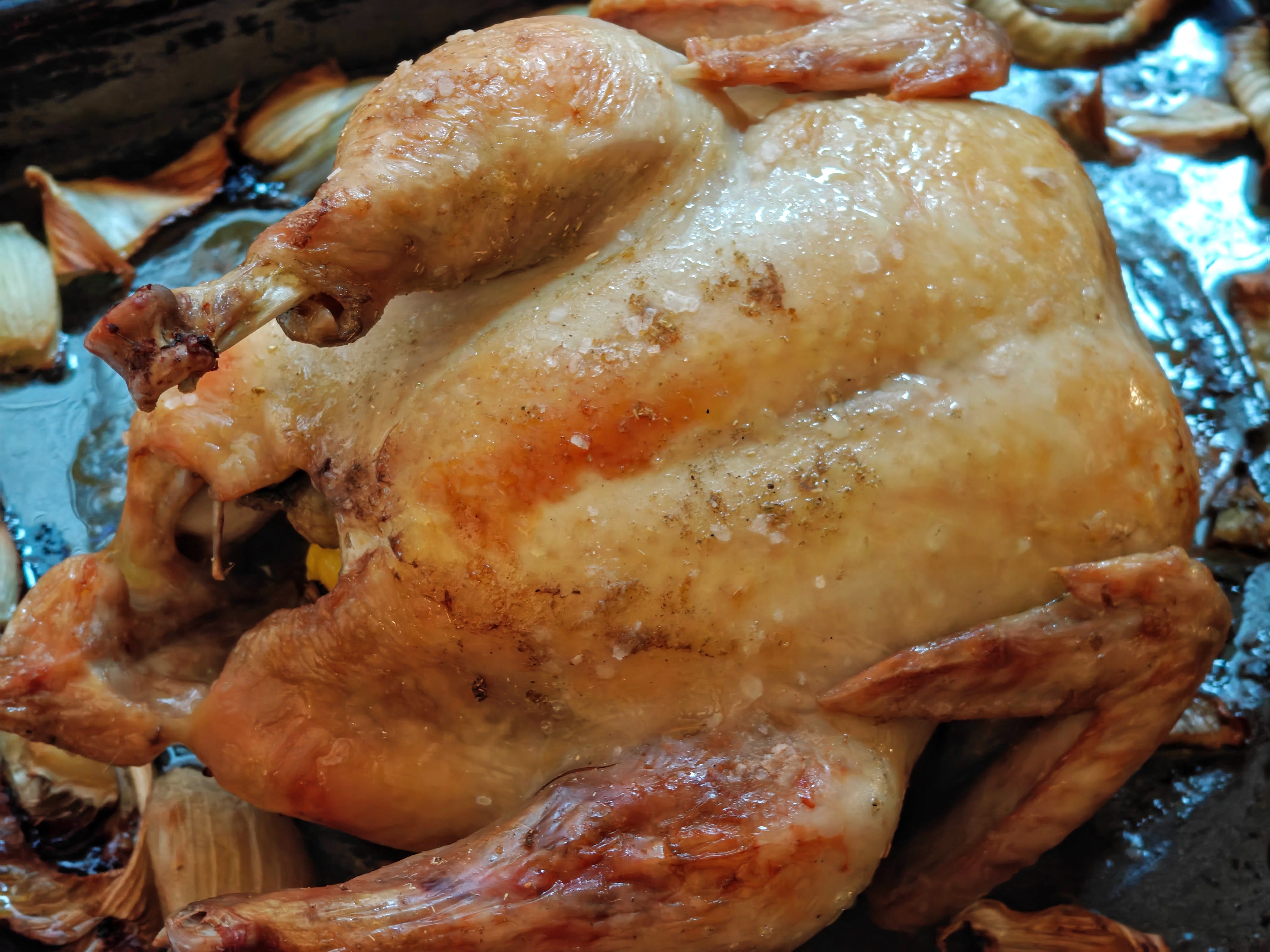
my Thanksgiving roast chicken, with two chopped onions and a large fennel roasted alongside
Simple roast chicken: Roast chicken is even easier. Preheat the oven to 410F/200C or so. Place the bird on a rimmed baking sheet or in a roasting pan brush it with olive oil and rub it all over with salt. Cover loosely with a cotton cloth or plastic wrap and let stand for half an hour. Insert a lemon cut in half into the interior and place the bird breast side down on the pan. Around it scatter chopped potatoes, or onion, or another firm vegetable (chopped fennel is another good option) and put the pan in the oven to start roasting. After about 20 minutes, turn the bird over so it’s breast side up and then continue roasting. After the first hour of roasting I usually turn the heat down to 385F/195C or so. A five pound (just over 2 kg) chicken roasted at high heat like this is done in about one and a half hours. (If you’re in doubt about doneness, check with a thermometer where the thigh meat is thickest: it should read 165F/75C or higher.) I let it sit for fifteen minutes or more before carving it.
Leftover roast chicken: I like chopping it up to make a salad, mixed with chopped leaf lettuce or arugula, and perhaps dressed Thai style (fish sauce, chiles, fresh herbs) or else with a light sesame oil and lemon juice vinaigrette and salt. Or use it to make excellent sandwiches.
Broth from chicken bones: Put the carcass and any bones from the table in a large pot and add water to just cover. Bring to a boil, then cook half covered at a low boil for a couple of hours. You can include extra flavours, for example several sticks of lemongrass or some bay leaves, a chopped onion…or not, as you wish. I store the broth in jars in the fridge. Or freeze it in plastic containers, labelled. Then it’s on hand any time I want to make risotto or a version of chicken noodle soup
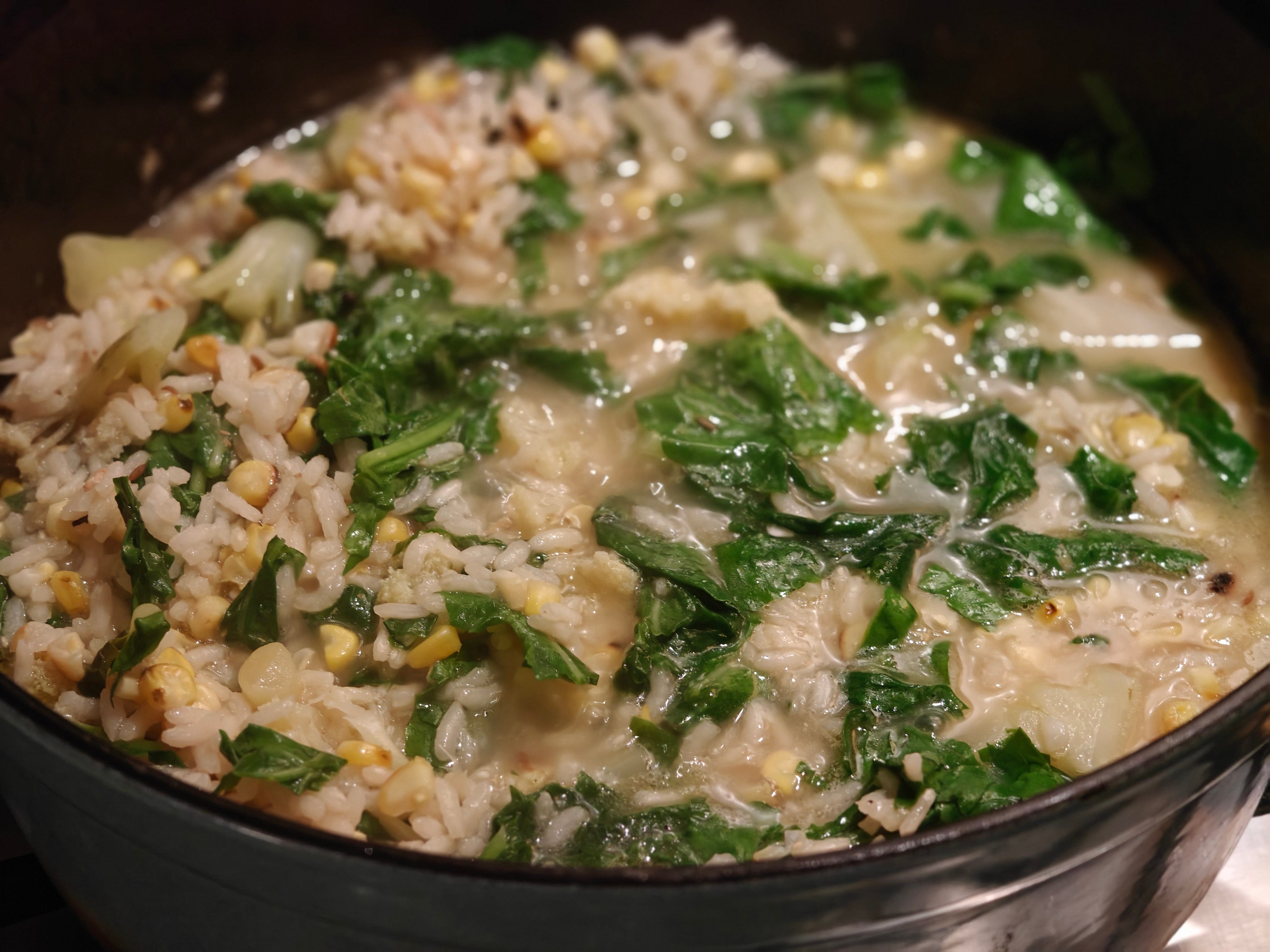
risotto made with the Thanksgiving chicken broth, with corn kernels, a little cauliflower, and spinach (added late on in the cooking); plus some butter and freshly grated parmesan
TIME TO MAKE SHIO KOJI
The end of the season for local fresh fruits and vegetables always makes my food preserving reflexes twitch. Sometimes they activate, but often they don’t. This year I did make damson jam, but that was really all, until this weekend.
I ran out of shio koji a while ago, and writing about it as part of the recipe I posted here two weeks ago (beef stew), reminded me that I needed to make a fresh batch.
Though I’ve been getting by for a short while by using a store-bought bottle of “liquid shio koji” I didn’t want to head into winter with no shio koji in the house. As I wrote last week, there are many other sources of umami: fish sauce, pounded anchovies, well-made soy sauce, and more. But shio koji is such a flavour boost when I marinate meat or grill vegetables that I don’t like to be without it.
The first step in making shio koji is to buy a stash of rice koji (rice that’s been cooked, inoculated with aspergillus spores, and then dried so it can be stored). I headed to Sanko, the nearest Japanese grocery store, which stores it in the freezer in small and large bags. I also bought a bag of Japanese rice, polished rather than brown rice.
There’s a quick version of shio koji that you can make from rice koji, salt, and water, but I prefer making the slow-fermented paste that I learned from the friend of a friend when I was staying with her on the Noto Peninsula in Japan. The three ingredients are white (polished) Japanese rice, rice koji (purchased from a Japanese grocery store or online), and fine (non-iodised) sea salt, in a proportion of 8:5:3 measured by volume (before cooking the rice). Then you need a fourth ingredient – patience - as the mixture ferments in jars set in a warm place (around 72 F /22 Celsius) for about a month.
The full shio koji recipe is in my Miracle of Salt book. If that’s not available, write me a note and I’ll send it. The rice is soaked in water for 4 or more hours then drained. It steams (in a cheesecloth-lined steamer over boiling water) until tender. The rice needs to cool to around 50C/120F before being thoroughly mixed with the salt and shio koji (a hotter temperature would kill the aspergillus). The mixture then goes into clean glass jars to ferment, with the lid on. The salt draws moisture out of the rice, moistening and activating the koji. Sometimes I find I need to sprinkle on a little extra water if the mixture hasn’t turned moist in four or five days. It’s ready in 4 to 6 weeks, sweet-tasting and flavour-giving.
A CELEBRATORY TREAT: FRESH OYSTERS AT THE FARMERS MARKET
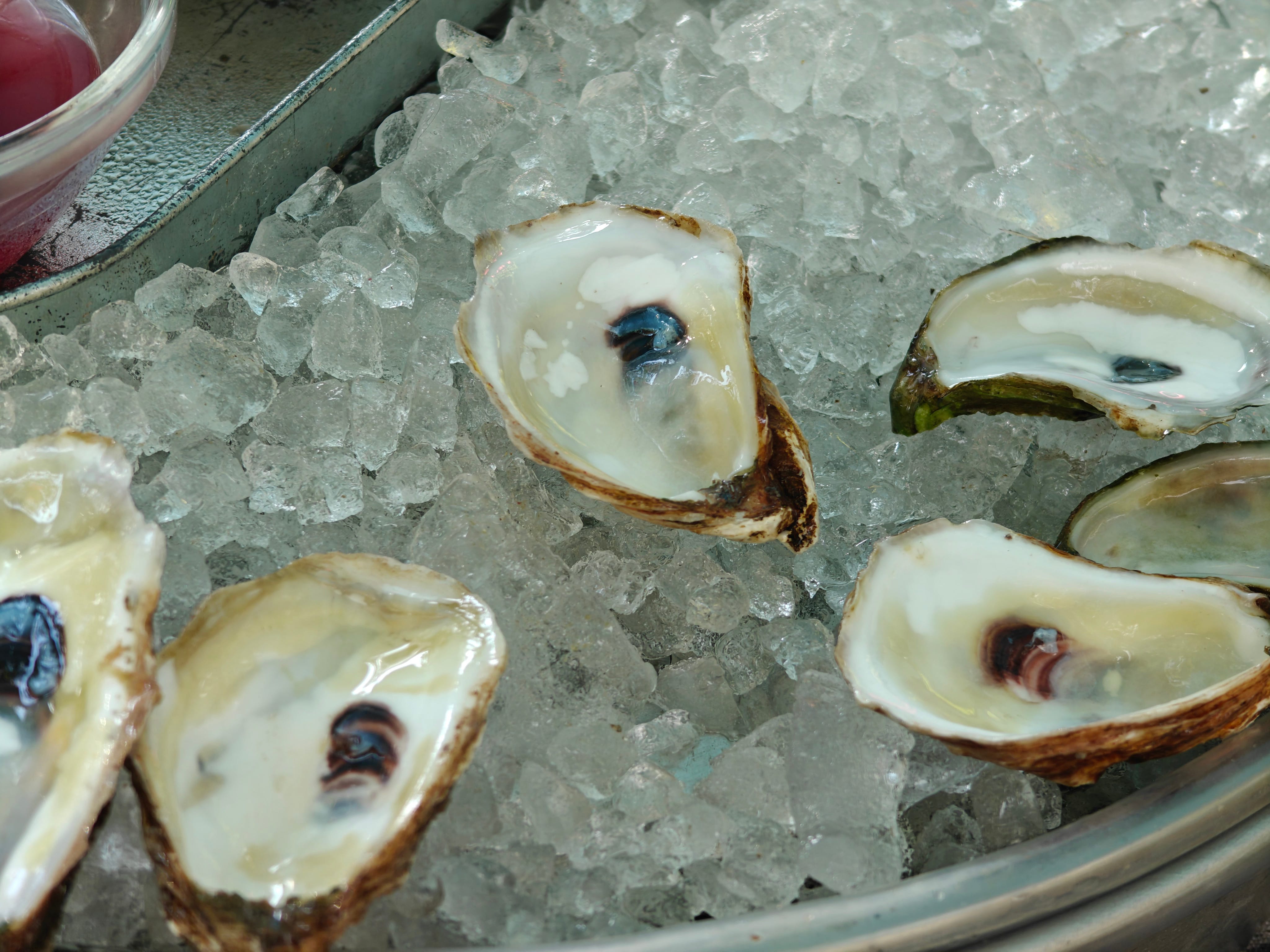
At Trinity-Bellwoods Market earlier this week there were oysters on offer. The sun was shining and why not indulge? So I sat down and asked for an east Coast half dozen, made of two each of three different oysters, two from New Brunswick and one from Prince Edward Island. They were distinctly different in taste, but all were refreshingly crisp with different degrees of brininess. Here are my empties:
CELEBRATING TOMATOES’ LOVELY LONG SEASON
The volunteer tomato plants in my garden are still optimistically producing flowers. And at the markets I keep buying large beautiful heirloom tomatoes to have chopped for breakfast, drizzled with olive oil, sprinkled with salt, and topped with a fried egg or two. Each week could be the end of this feasting, but until that day arrives…


tomato in bloom in mid-October; my stash of heirloom tomatoes from the market; breakfast of tomatoes and a fried egg over leftover fusilli
I'm really intrigued by your shio koji. I definitely want to learn more about its uses, and try to make some -- a kitchen project that is right up my alley. The roasting of chickens happens often hereabouts. I avoid "factory farmed" chicken, which I've seen sold cheaply as a loss leader in local grocery chain stores. Because I live in a rural area where there are year-round farmers markets, I have several options for locally raised chickens. My preference is the birds raised on regenerative farms, which follow the ruminative animals in rotation, eating bugs and grass, and scratching in the dirt. To me, they have the most flavor, but my husband complains that their meat is tough. He prefers the birds from a local poultry farm, which are "free range" ie. raised in large barns, uncaged, but not scrounging in the sunshine; they are not fed antibiotics. Because they do not get as much exercise as pasture-raised birds, their meat is softer, which he prefers. I do buy pasture-raised stewing hens, retired egg-layers, from a local farmer to make chicken stock, which I store in my freezer. I often roast whole birds, sometimes in my gas grill, which has a rotisserie motor, with a packet of soaked wood chips to add smoke, and sometimes spatchcocked in my oven. Either way, I always brine whole birds for 24-36 hours before cooking, in a salt-sugar solution that I simmer with aromatic vegetables and fresh herbs, lemon peel, and a pinch of dried lavender flowers. The long soak allows the flavor of the brine to permeate the meat all the way to the bone, and the basic brine effect insures that it stays juicy, despite the difference in cooking time between the light and dark meat. I also make a spice rub blend to have on hand at all times, made up of smoked paprika, cumin, coriander, onion powder, garlic powder, black pepper and kosher salt, which I rub on the chicken, after a light coating of olive oil, prior to cooking. I use the same rub on beef steaks prior to grilling.
Yes, chicken became cheap once factory farming developed. There is a book called Big Chicken that tells the story, I've used it in teaching a few times. The combination of selective breeding (for bigger birds) and the accidental discovery that routine antibiotics (i.e. every day in their feed) makes chickens grow much bigger much more quickly enabled large, selling weight chickens at 6 weeks old rather that having to wait three to four months.
I am 100 percent with you in my preference for dark meat. I try to avoid eating the breast, but Americans do not agree. We have a significant problem in the US because Americans want to eat the breasts and the wings, but nothing else. Dark meat (legs and thighs) is "dumped" on the export market, sold at incredibly low prices in poorer countries where the influx of such cheap chicken destroys the local poultry industry.
Please do send me your shio koji recipe, including how you keep/store it once it's done! I won't be able to make it until the summer - there's nowhere in my apartment in Athens (fall semester) or my house in Minnesota (spring semester) that can be as warm as 22 degrees for a month :-(