
It’s another big week for many people: Durga Puja, Yom Kippur, Dashain in Nepal… The seasons are shifting, and the light is sharp as our days shorten here in the northern hemisphere.
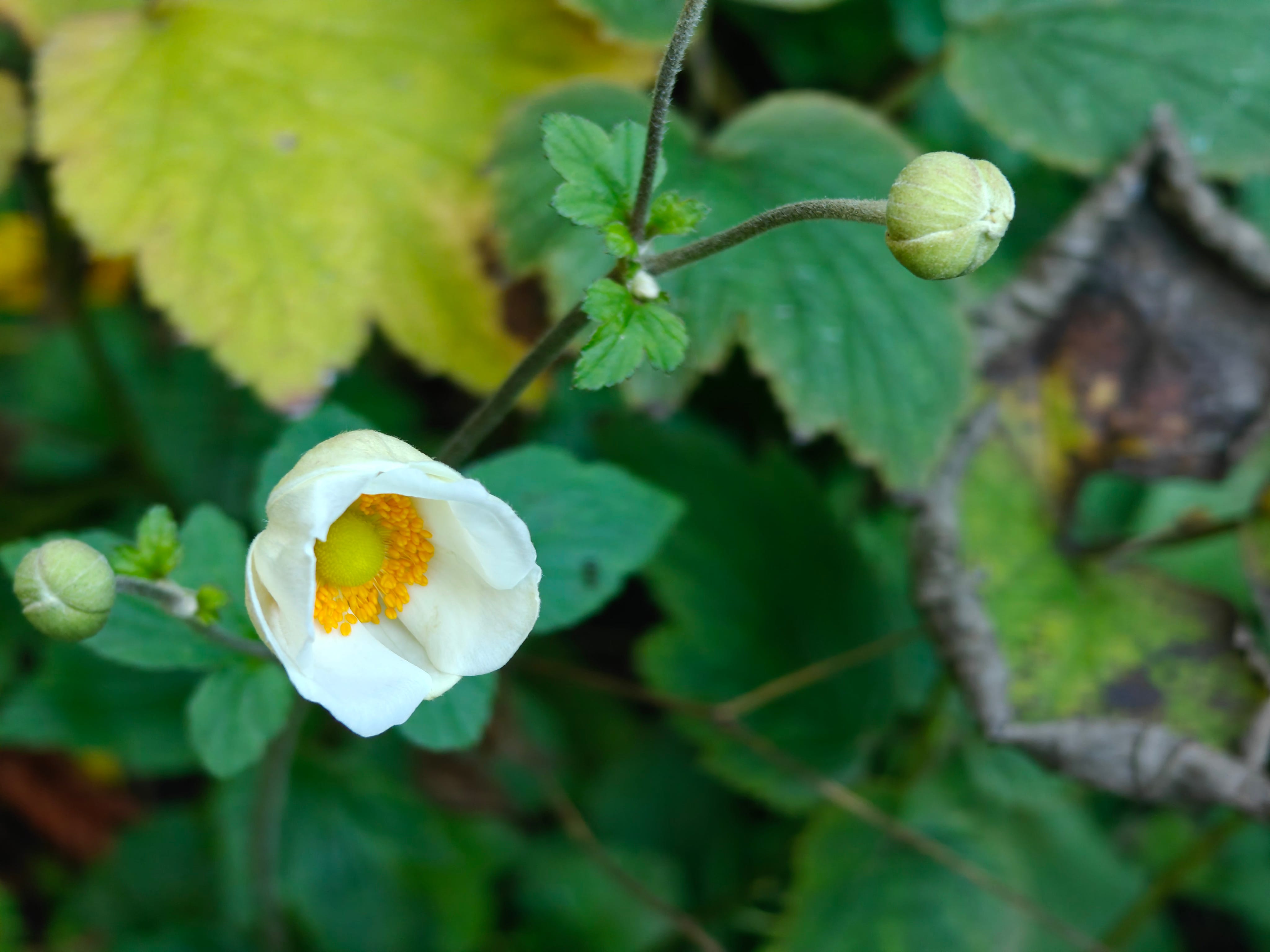
anemones emerging
My few anemones are in glowing white bloom, and the garden is still producing some chiles and a few cherry tomatoes, as well as a vigorous growth of sorrel, parsley, basil, and shiso.


parsley running amok in the garden; and green shiso in bloom (the bees love it)
It’s a time to pivot into autumn. And that has led me to reflect on changes in the work patterns of many food writers.
Whenever I was working on a book, there were long periods where no-one saw what I was writing, what I was thinking. There was a privacy and security in having my thinking and my uncertainties hidden away. Not until all the pieces of a book existed, and their relationship to each other had become clear to me, was I prepared to show my work to anyone. There was peace in the privacy of the process, a calm. A feeling of safe harbour.
What a contrast to the times this year when I sit to write and rewrite and edit and rethink these small weekly Substack pieces. They feel a bit raw and certainly they’re kind of lonely and exposed. They don’t have a larger structure supporting them. Perhaps they cumulatively hang together, in the sense that they’re all pieces I’ve thought about and written, but each is intended to stand alone, bare, you might say.
I attended an online discussion last week amongst a number of terrific women who came together for a first FFF (Feminist Food Friends) conversation. All of them work in some area of food thinking, mostly with writing, some with cinema or podcast, or a mix, in the sphere where food and feminism and labour issues, and more, meet and make connection. I was refreshed and invigorated by the thoughtfulness and awareness in the group.
Writing and thinking about food has become a rich location for inquiry into many political, social, and personal issues: past, present, and future. That process has been enabled by events such as the Oxford Food Symposium as well as by some of the Food Studies programs at universities in many parts of the world.
The food service journalism of traditional newspaper food pages and classic food magazines seems thin and one-dimensional in comparison. Most of this fresh food writing and thinking is taking place outside those traditional institutions. There’s a freedom in self-publishing on the new online platforms, most of which (unlike earlier places where blogs were posted) enable the building of visibility and profile via cross-mentions, cross-posted comments, etc.
Still, except for a few high-profile people (many of whom were high profile before they leapt into posting on Substack or Patreon or wherever), very few of these independently published writers are making much of an income from writing on these platforms. They have a core readership, and that may grow, but it’s rarely large enough or moneyed enough to generate a solid reliable income. (Teachers and professors who are engaged in academic food writing are able to be less anxious about the market for food writing.)
On the other hand, traditional book publishing and most magazine writing both require keeping content inside certain limits. There’s a conservatism that grows in any industry that depends on marketing to a wide audience. If a subject is too niche, or a point of view too outside the expected norms, book publishers and many magazine publishers feel they cannot afford to publish it. A book is an expensive commitment for a publisher, with no guarantee of making money back.
So here we are with most of the interesting writing about food and related subjects happening in an ephemeral electronic space, and not in printed and bound books. What record are we leaving if the printed word is not the most interesting creative work being developed
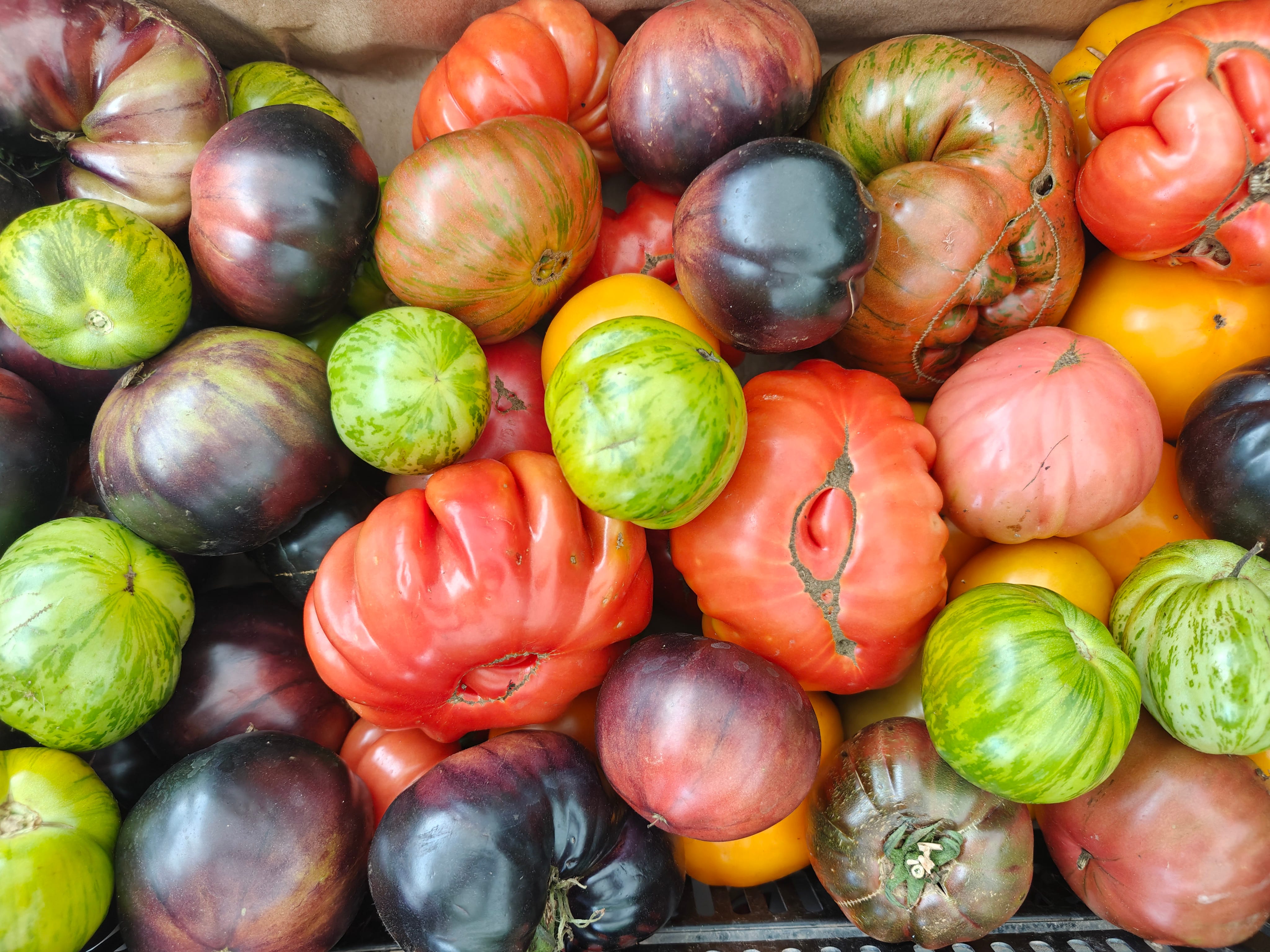
heritage field tomatoes at Wychwood Farmers Market, grown by Marvelous Edibles Farm
A BEEF STEW STORY & A RECIPE
Long ago, in August of 2005, my kids and I made a trip to the UK. They were 14 and 17, the older one about to start his first year of university. We spent a few days in London, then drove north in a small rented car. We visited a cousin in Norwich the first night, then aimed to make our next stop near Hadrian’s Wall. We found a very basic place to stay, a kind of hostel, right by the wall. The innkeeper was an amiable man with a strong Newcastle/Geordie accent. We shared a narrow room with bunkbeds for three. And there was supper on offer, eaten around a table with other travelers, most of them hiking the path along the wall. We dived into piles of good bread and large bowls of beef stew. The stew was loaded with potatoes and carrots in a delicious beefy gravy. No pieces of beef were in sight (we all looked), but beef had clearly been used to make the stew.
Next morning we went for a walk westward along the wall under a big sky. We were on a stretch of ridge, a superb vantage point in the undulating landscape of hills and dales. I tried to imagine the feelings of the soldiers who’d been posted there in Roman times, scanning the vast landscape for danger arriving from the north.
Soon we climbed back into our small rental car and drove on up the road to Edinburgh and beyond. When it came time to pick our route back south to London - no surprise - we all wanted to return to the hostel by Hadrian’s Wall for the beef stew and the view.
A few weeks after we got home, as the days grew shorter and the weather cooler, I thought about making beef stew, for the first time in my life. I’d never made it, not any other one-pot meal kind of dish.
In our house we had decided early on that we’d never argue about food with the kids. We’ ask them to taste things, but that was the limit of the food coerciveness in the household. There were many foods that one or other of my two kids didn’t like, so one-pot meals weren’t on my horizon. A mix of many ingredients in one dish was asking for a problem. The way to avoid stress at the table was to make meals based around rice (usually), with several dishes alongside, say a dal, a vegetable dish, and one or two something elses. That way everyone could find something to eat.
Our stay at Hadrian’s Wall had taught me that both kids loved beef stew. Over the following year it gradually became one of the choices for supper: simple, slow-cooked, and even more flavourful the day after it was made. The recipe has evolved a little over time, and it’s very flexible. You’ll find it below.
When I was invited to a whisky tasting with friends on Toronto Island last weekend, with a request to bring a main dish for ten or more, I decided beef stew would be ideal. It’s a good set of flavours to have with whisky. I made it in my big old Le Creuset pot over the course of two days. The pot is heavy and awkward to carry, so I transferred the cooked stew into a tall stainless steel pot that fit into one of my bicycle panniers. I taped a plastic bag over the pot and then topped that with a lid. It was wonderfully easy to cycle to the ferry terminal, queue up, and then wheel the bike onto the boat and get carried over to Ward’s Island.
People brought so much food to the event that there were loads of leftovers. Some of my stew went to friend on the Island and the rest came home. It made a great supper on Monday evening, alongside a salad of chopped radicchio and other greens in a kefir-enriched vinaigrette.
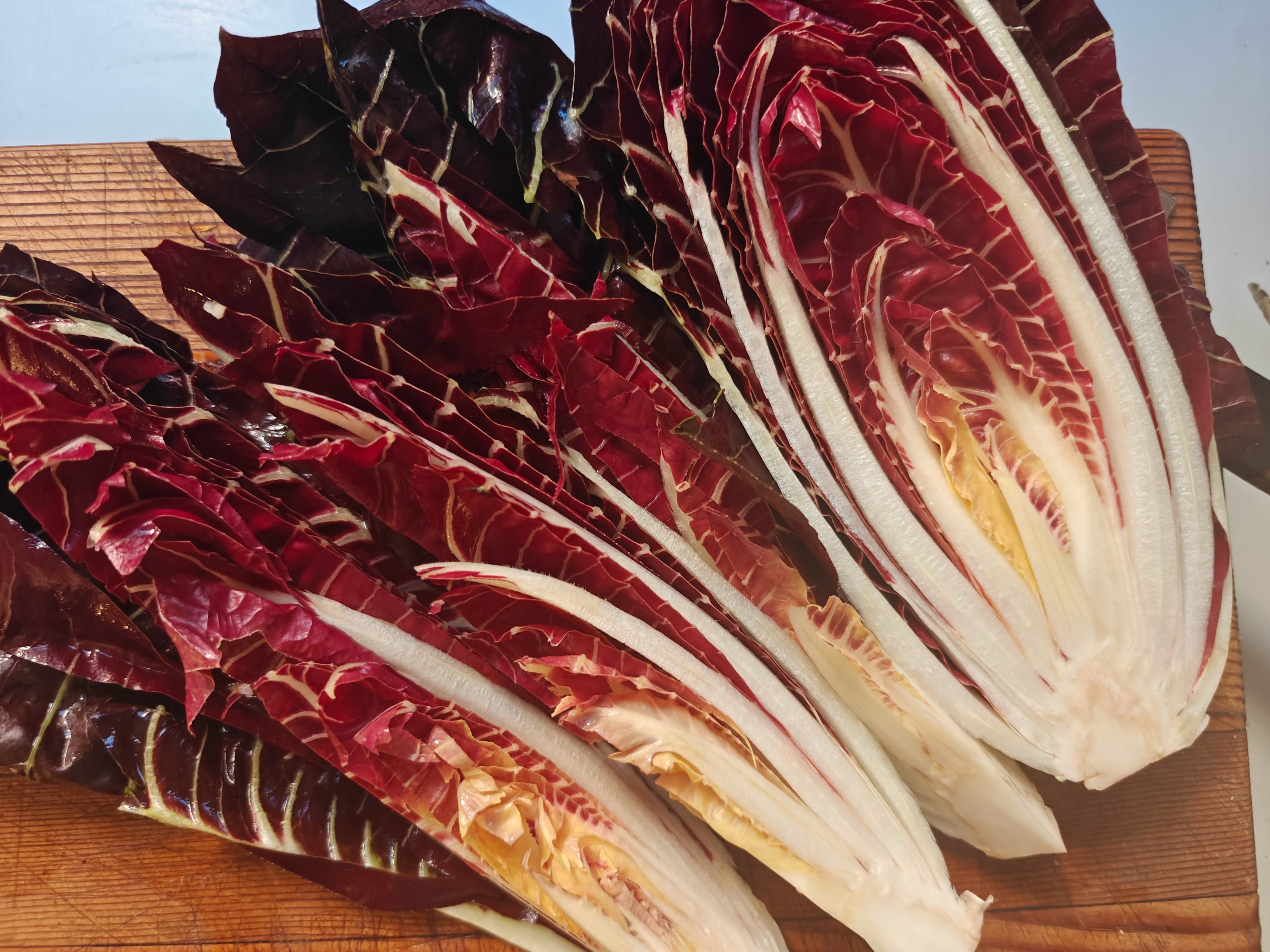
gorgeous Treviso radicchio cut in half lengthwise
COOK’S EASE BEEF STEW FOR A CROWD
Here’s my very casual recipe. You’ll notice there’s a mix of potatoes called for, because ideally I like to have both firm potatoes and floury potatoes for the gravy-thickening help they give. But I use whatever spuds I have on hand (last week I had only firm waxy potatoes). I’ve included the small adjustments I make as a guide, but please don’t feel locked in; proceed in the way that works for you.
This recipe feeds 10 as a main course, with bread and butter, optionally, and perhaps a salad for contrast and freshness, or 4 to 6 with lots for leftovers
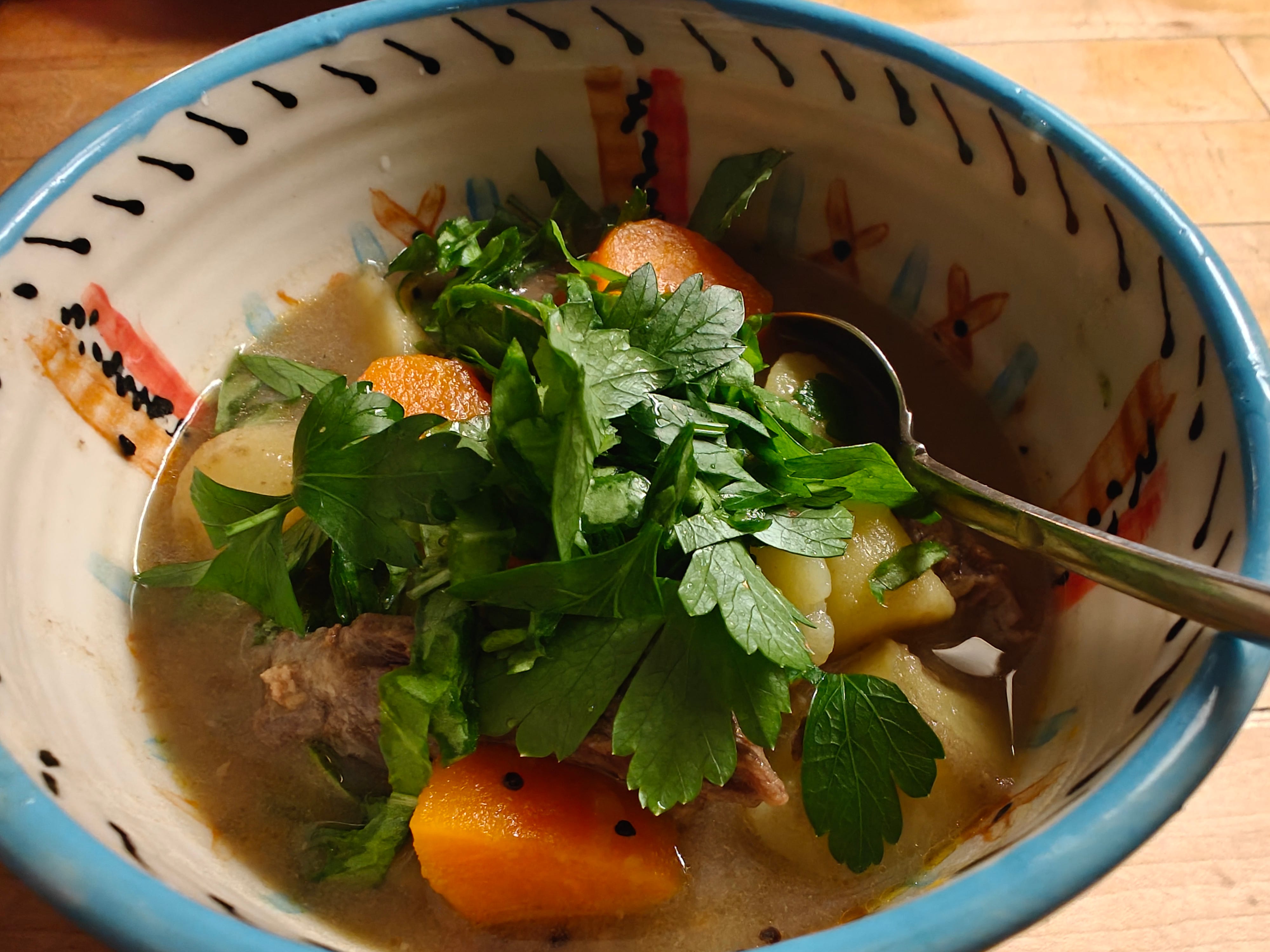
leftover beef stew with loads of parsley on top
3 pounds/1.25 kilos of stewing beef, piecs cut in half, marinated in some shio koji liquid plus some salt under a lid for an hour or so.
About 2 tablespoons/30 grams shio koji; or instead 2 tablespoons/30 ml shio koji liquid or light soy sauce or fish sauce, plus 2 teaspoons/10 grams fine salt
2 large onions, chopped, to yield about 400 grams/2 cups, weighing about 400 g.… - photo
About 3 tablespoons olive oil
1 teaspoon mustard seed
½ teaspoon nigella seed
1 teaspoon fennel seed
About 30 black peppercorns
About 2 inches/5 cm of ginger, peeled and chopped small
Water
About 2 ½ pounds/a generous kilo of potatoes; a mix of floury and firm, peeled and chopped into bite-size
About 1 pound/500 grams carrots, trimmed, and cut into bite-size
A good dollop of dry red wine, about 1 cup/250 ml
A generous handful of fresh flat-leaf parsley (optional), coarsely chopped
Cut the pieces of beef into bite-size (I usually cut most pieces in half). Put them in a bowl and rub on the shio koji; or instead add several splashes of shio koji liquid or light soy sauce or fish sauce and rub on about 2 teaspoons/30 grams of salt. Cover and let marinate for a good half hour or more.
Heat the olive oil in a large heavy pot over medium-high heat. Toss in the mustard seed. When it has popped, add the other spices, stir a moment, then lower to medium heat, add the ginger, and stir. Add the chopped onions and cook until translucent, stirring occasionally (lower the heat if necessary to prevent them catching or burning).
Raise the heat to medium high, add the meat and the juices, and cook, stirring to expose all surfaces of the meat to the hot oil. After about five minutes add enough water to cover and about 1 teaspoon/5 grams salt. Bring to a boil, then lower the heat to maintain a low boil and half-cover the pot. Cook for a couple of hours, checking occasionally and adding a little extra water if the meat is no longer covered. At this point I often remove it from the heat, cover tightly, and set it aside until I have time to continue (sometimes this means that I let it sit overnight).
Bring back to a low boil and add the potatoes. You will probably need to add more water so that they are covered. Cook at a low boil until they are tender, then add the carrots and continue at a low boil until they are cooked but still firm. Just before you remove from the heat, add wine if using, bring to a strong boil, uncovered, for a minute or so, then remove from the heat, cover, and set aside until you’re ready to reheat for serving.
Before reheating, check the amount of liquid and add more water if needed. Bring to a low simmer for a few minutes. Taste for seasoning and adjust as needed. Serve in wide bowls. Sprinkle coarsely chopped parsley over individual servings or instead put the parsley out in a bowl so guests can help themselves.
Note on peppercorns: I leave the peppercorns in; you may feel you want to discard them, in which case use a fine spider to skim them off as the liquid is simmering during reheating.
Note on leftovers: I usually add water as I start heating the leftovers, and I simmer them a little rather than just reheating them. A crunchy fresh salad gives the meal of leftovers extra sparkle.
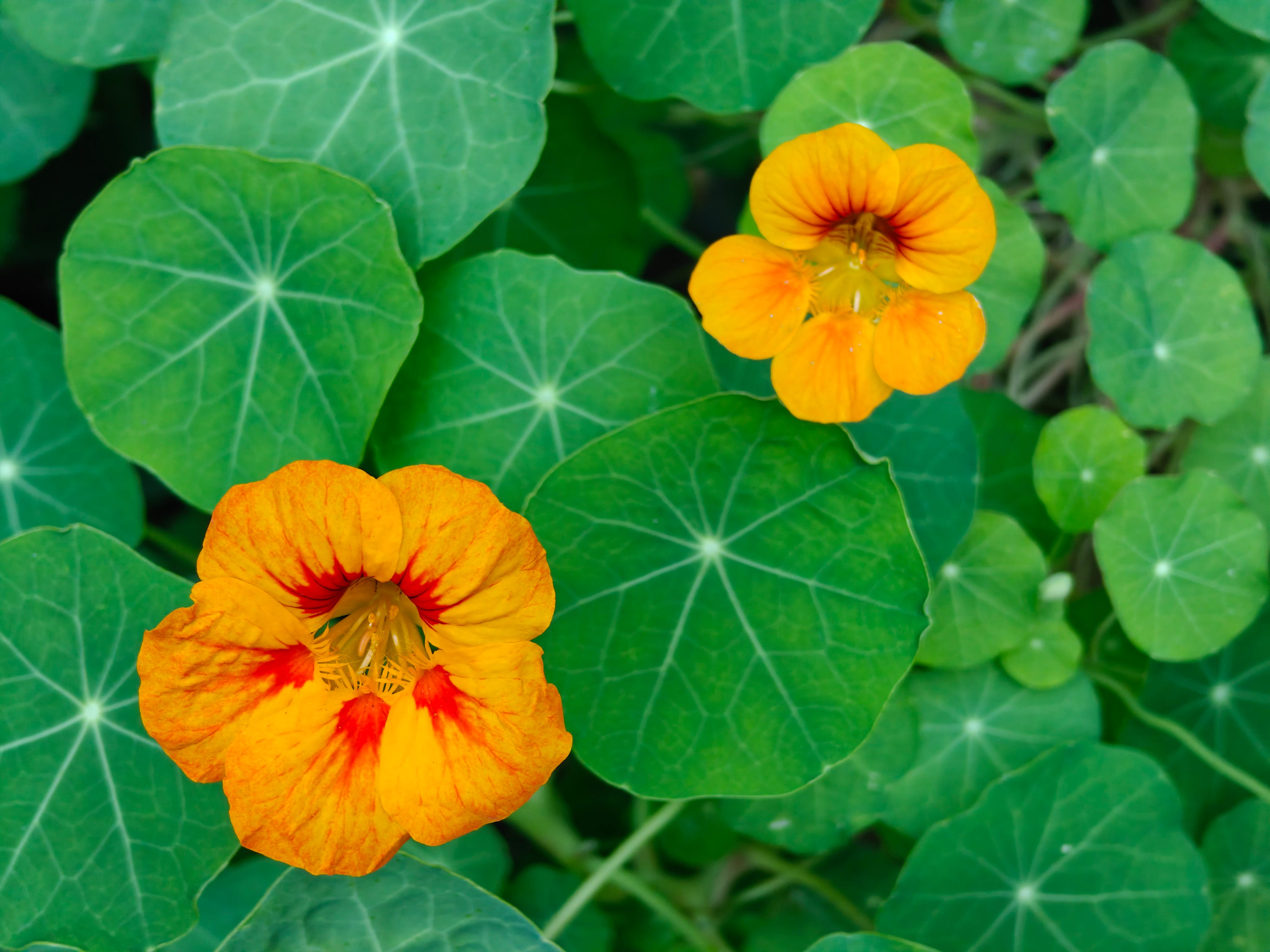
still blooming this week, my nasturtiums. The flowers add a bright note to salads, and the leaves too are a delicious salad ingredient, coarsely chopped.
So interesting, Naomi! I'm with you on the piecemeal process of Substack. It's not only totally different from working on a book, but it almost prevents being able to write a book because the brain gets too fragmented by the need to spout things at such quick regularity. I miss being able to disappear for a year into my thoughts and stay with them all to myself. Mind you, you're right too about the collaborative nature of books. You can't really say whatever you want however you want. Anyway, you've posted a whole dinner party's worth of discussion content today! Thank you. :-) xo
It is the first chilly morning here in Greece and it has been delightful reading and imagining that beef stew. Just need to get hold of some shio koji as I am intrigued, I have never used it before.