
The sprinkler is refreshing my small back garden, as the air lies heavy, moist, and hot over the city. They say it will rain tonight, but somehow cooling things now with cold city water feels like a good idea. I haven’t done much watering at all this summer.
As I sit here the birds are frolicking in the water lying on the flagstones, robins and sparrow, the city survivors, relishing the cool and the wet. The cardinal hasn’t turned up yet. The squirrels are keeping their distance; maybe they don’t like getting wet. It feels as if the temperature has dropped several degrees because of the lightly spraying water.
I remember Patience Gray explaining that in the hot dryness of southern Puglia, she and the sculptor had realized that the tomatoes had more flavour if they were forced to make deep roots and fend for themselves, rather than being watered. And the same went for the rest of their vegetables. When I plant my few tomato and pepper plants each year I water them, then leave them to work hard at making roots. It's a bit of a balancing act, caring for plants sufficiently that they survive and figure out how to thrive, without so coddling them that they fail to flower or fruit properly. A degree of stress seems to be helpful for both humans and plants, pushing them to be their best selves, in some way.
The insight, that humans, like seedlings, need to dig deep/work at things, to grow well is an idea as old as time, and still valid. Adversity is dismaying, discouraging. But like the seedlings, we need to use the pain of adversity as a spur to action, whatever action we can manage, rather than throwing our hands up in despair.
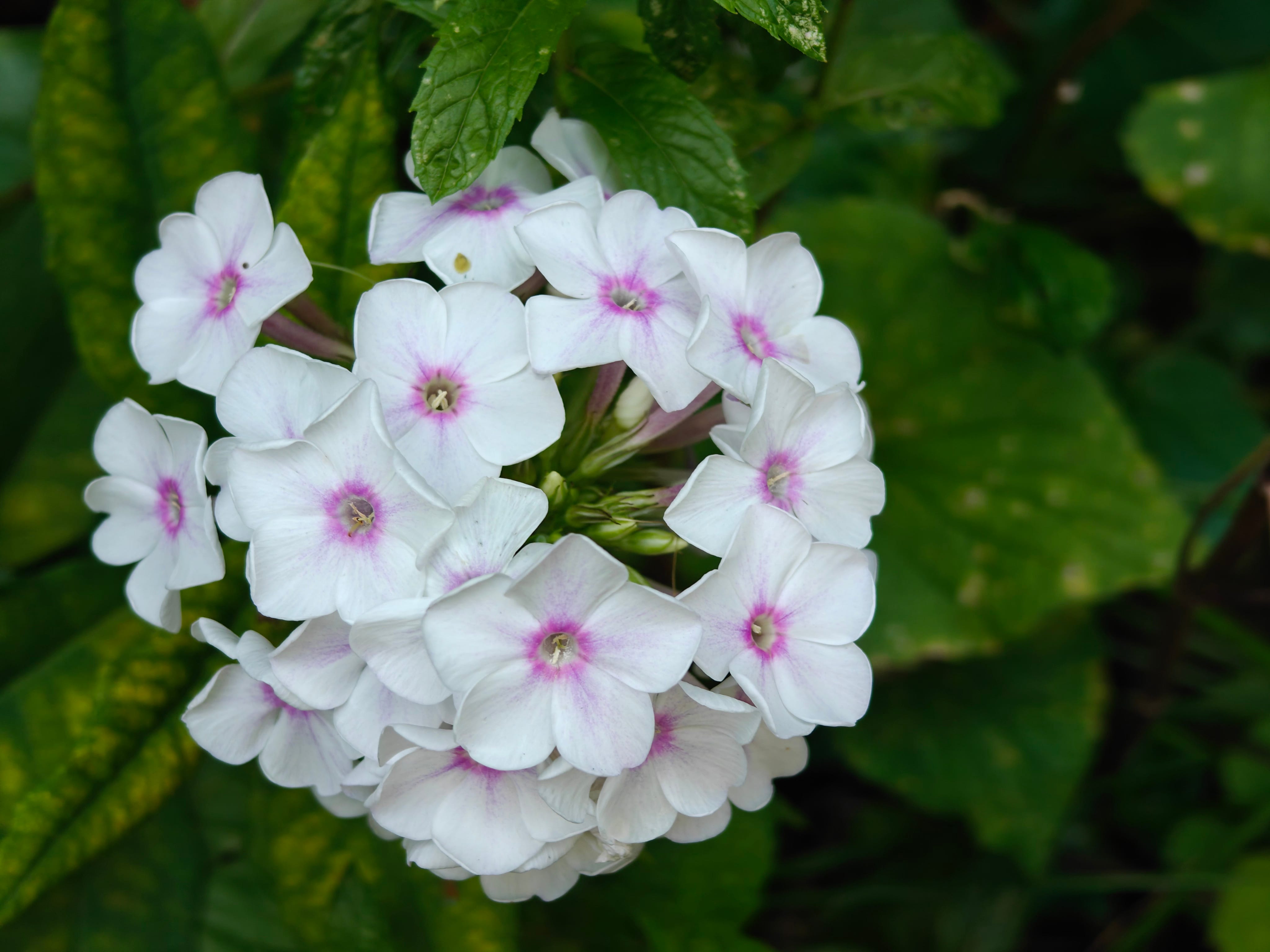
phlox paniculata newly in bloom in the garden
It makes me think of the talk given at this year’s Oxford Food Symposium by Dr. Theodore Kabore, one of our keynote speakers. He described the government-funded World Food Program project in Niger to retrieve land from the desert, improve its soil quality, and hence its productivity. There in the Sahel the climate consists of nine months of dry hot weather and three months of rain, rain that runs off the hardpan soil causing floods, rather than being absorbed.
The remediation efforts involve first talking to villagers to get agreement and commitment. Next the villagers are shown how to dig shallow semi-circular basins 2 to 3 metres/6 to 10 feet in diameter as catchments. During the rains, water gets held in the basins. The villagers can then plant millet and sorghum and other crops in the moistened soil. The difference in fertility and productivity after just one year is amazing. After five years the landscape is unrecognisable. The project runs to thousands of hectares and aims to transform hundreds of thousands.
With an intractable-seeming landscape like the Sahel, confidence and vision are needed to launch and follow through on a project like this. Those who heard Dr Kabore’s keynote in Oxford or who watched the recording of it on the Symposium website were buoyed and inspired by it. You could feel the optimism in the room.
How to find a sense of optimism when things seem impossible to change or improve? That’s always the challenge, both at home and out in the larger world. The answer I think is to get started doing one small thing, on your own or with others. And I find it helpful to analogise in the terms of the project in Niger: getting launched on incremental change by digging one catchment basin at a time.
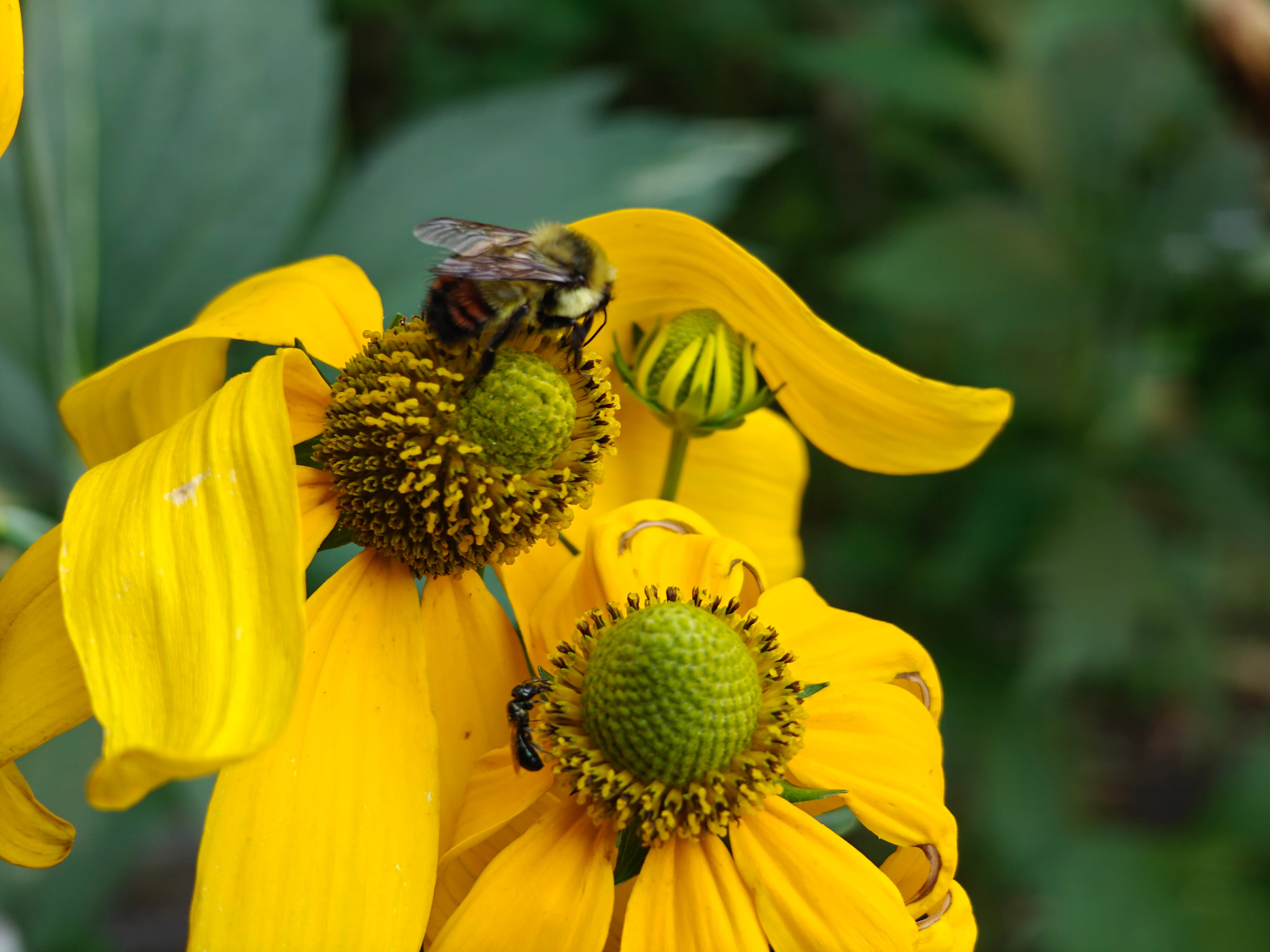
a bee working hard on coneflowers in my small garden
BLACK CURRANT JAM/RED CURRANT JAM
In this fruit-laden season I feel a certain pressure to take advantage of the fresh fruit in the markets. Once I’ve bought it, then there’s pressure to make the best use of it and not waste it. This is a kind of ongoing stress that I imagine many people other than me also feel. Whether it’s green beans or blueberries or zucchini blossoms or asparagus, the fresh fruits of the farm have a short season and need respect. I confess to a bit of anxiety about all this.
I failed to post last week because somehow much-loved out-of-town visitors as well as many wonderful Zoom sessions with the Oxford Food Symposium meant that I couldn’t settle down to writing. On the fruit front, I ate a lot of fresh Ontario fruit: raspberries, blueberries, cherries, but did no cooking or processing of any of them.
Then last Saturday I bought three boxes of black currants and three of red currants at Wychwood Farmers Market. My friend Dawnthebaker brought over another box of red currants, along with some home-made crème fraiche. But instead of eating them with her crème, they got folded into jam. Dawn says that the best jam book she knows of is Pam the Jam: The Book of Preserves by Pam Corbin. It’s reliable, clear, unfussy. I made the jams using the proportions Dawn passed along from the book: black currants need 30% of their weight in sugar, and red currants need 50%.


The black currants went into a heavy pot with a scant ½ cup/250 ml of water (which was a tad over-generous) and came to a strong boil. I lowered the heat and watched them cook until softened, when I added the sugar (at 30% that was 360 grams for 1200 grams fruit).
I cleaned the red currants by stripping them off their delicate stems (see the photo in my last post, on July 18), then set them in a heavy pot with the sugar they’d need (ratio 50% meant 500 grams for 1 kg of fruit). Dawn had told me to let them sit for a day. I put the lid on the pot and set them aside. One day stretched to two before I got back to them. I added a scant ¼ cup/125 ml water and brought them to a boil over medium heat, without stirring. (I just shook the pot a couple of times.)
Then with both jams, once they were boiling, I lowered the heat to maintain a very low boil and let the jam cook with the lid off. I don’t have a reliable thermometer, so I use the cold saucer test. I place a few small saucers in the freezer. After about ten minutes boiling I drop a little jam liquid onto a cold saucer and see if the jam has thickened by pressing a finger into the liquid and pushing it away along the cold surface. If there’s a wrinkle, a kind of bow wave, I can see that the jam has thickened. It usually takes a number of tries.
Since I don’t love fully set jam, and I tend to be impatient, my jams this time, as always, are fairly thick, but not set. And they are completely delicious.
I admit that the black currant is my number one fave, earthy, almost funky. It’s great dropped into a small bowl of crème fraiche, or eaten on toast with some aged cheddar, or…just licked straight off a spoon.
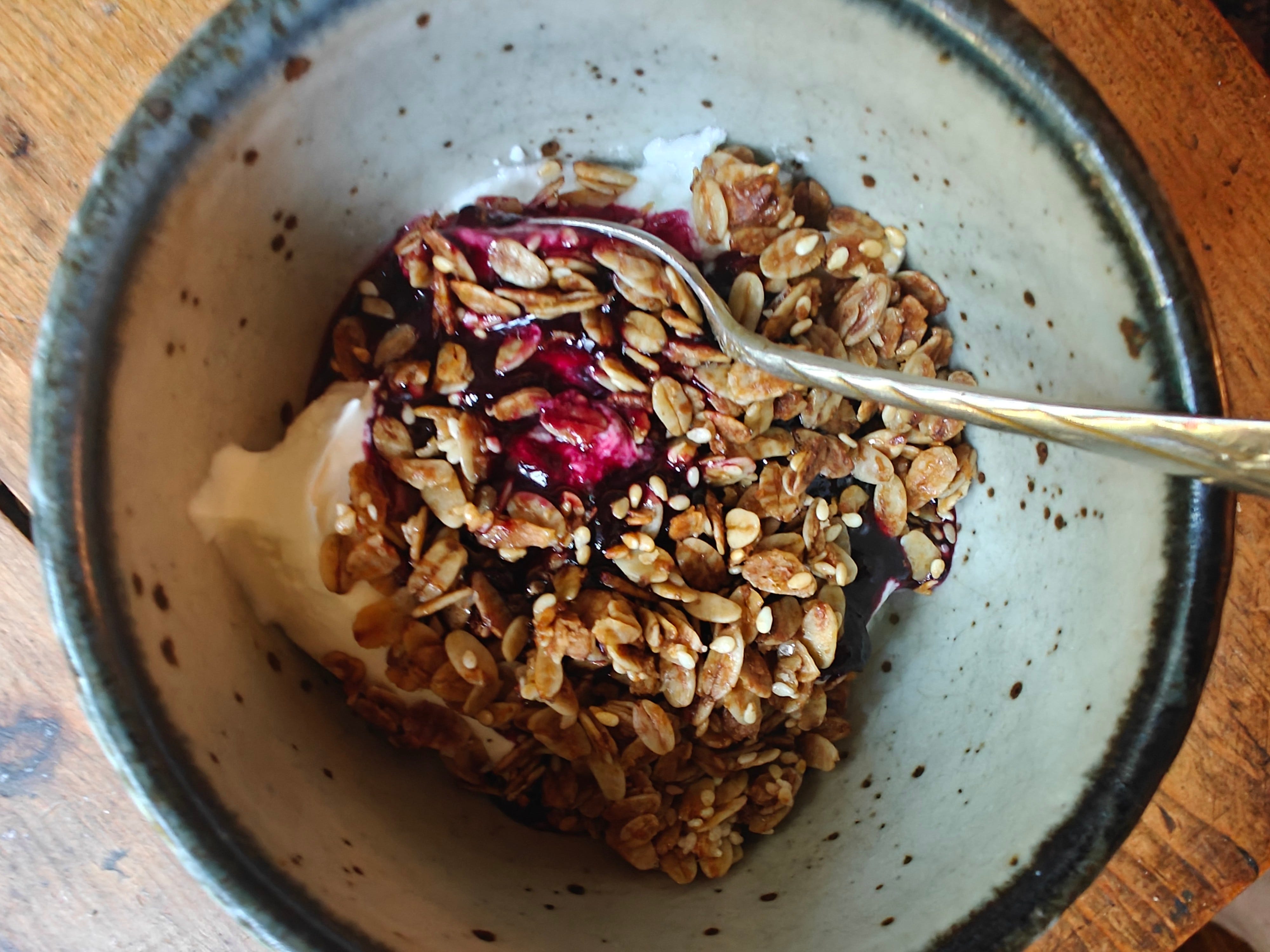
black currant jam with creme fraiche and some of Dawn’s granola
APRICOT CODA
On the guilt front, I had a small basket of apricots that needed attention, and that I failed to take hold of properly.
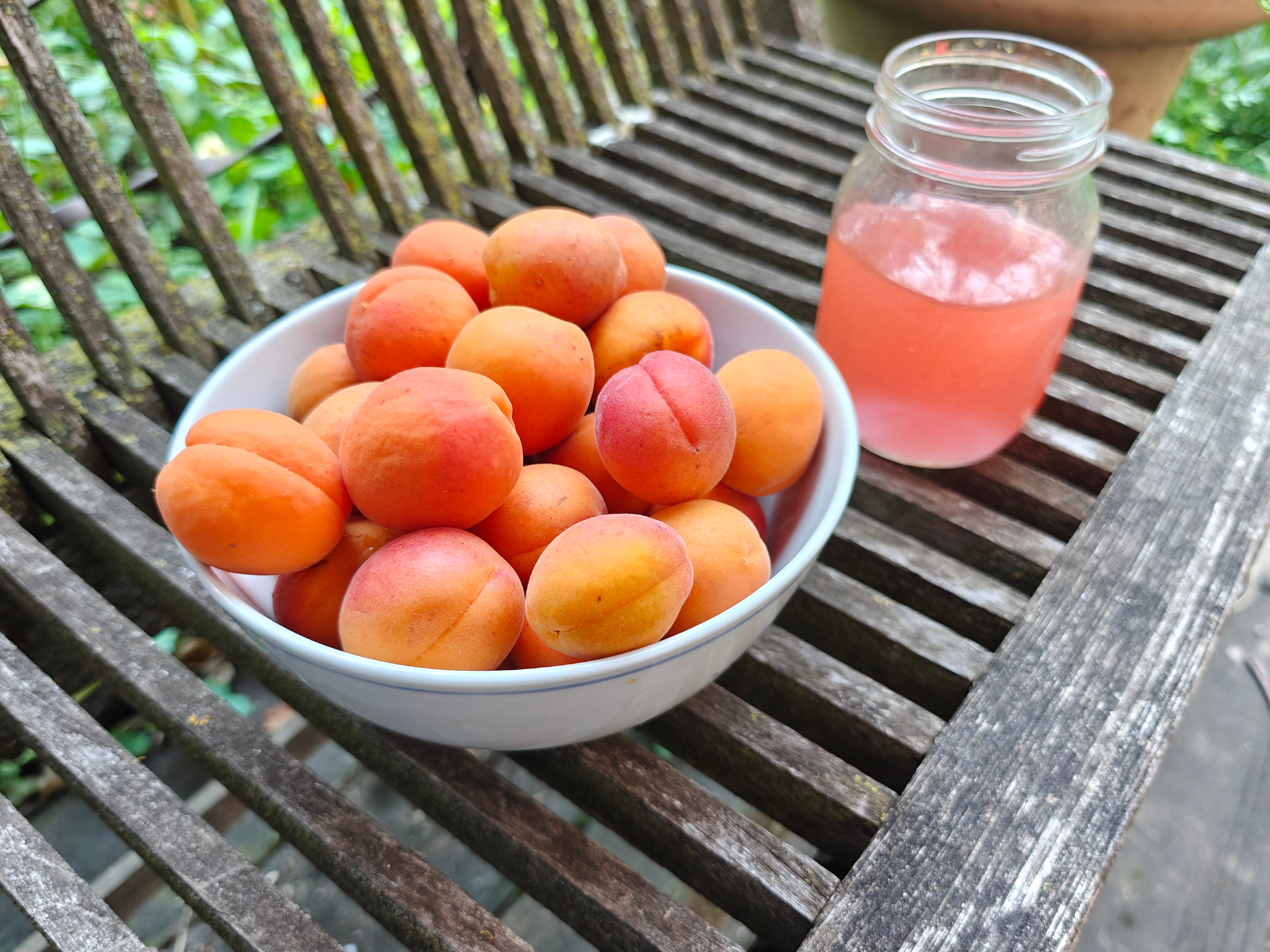
I spent a lot of time admiring the apricots, trying to do a simple watercolour; you can see the colour that came off my brush in the jar beyond
I had a lovely half hour reading the apricot chapter of Jane Grigson’s wonderful unsurpassable Fruit book, but I didn’t manage to choose a recipe to try. Eventually I settled for making a simple sugar syrup flavoured with cardamom (1 cup brown sugar - all I had - to 2 cups water). I dropped my washed halved (pitted) apricots into the syrup to simmer for a few minutes, until soft but not collapsed. The glass container of fruit and syrup (a little dark because of the brown sugar) sitting in my fridge is very inviting. It’s ready to be added to anything: cereal, ice cream, simple cake, or simply to be put in a small bowl and spooned up on its own.
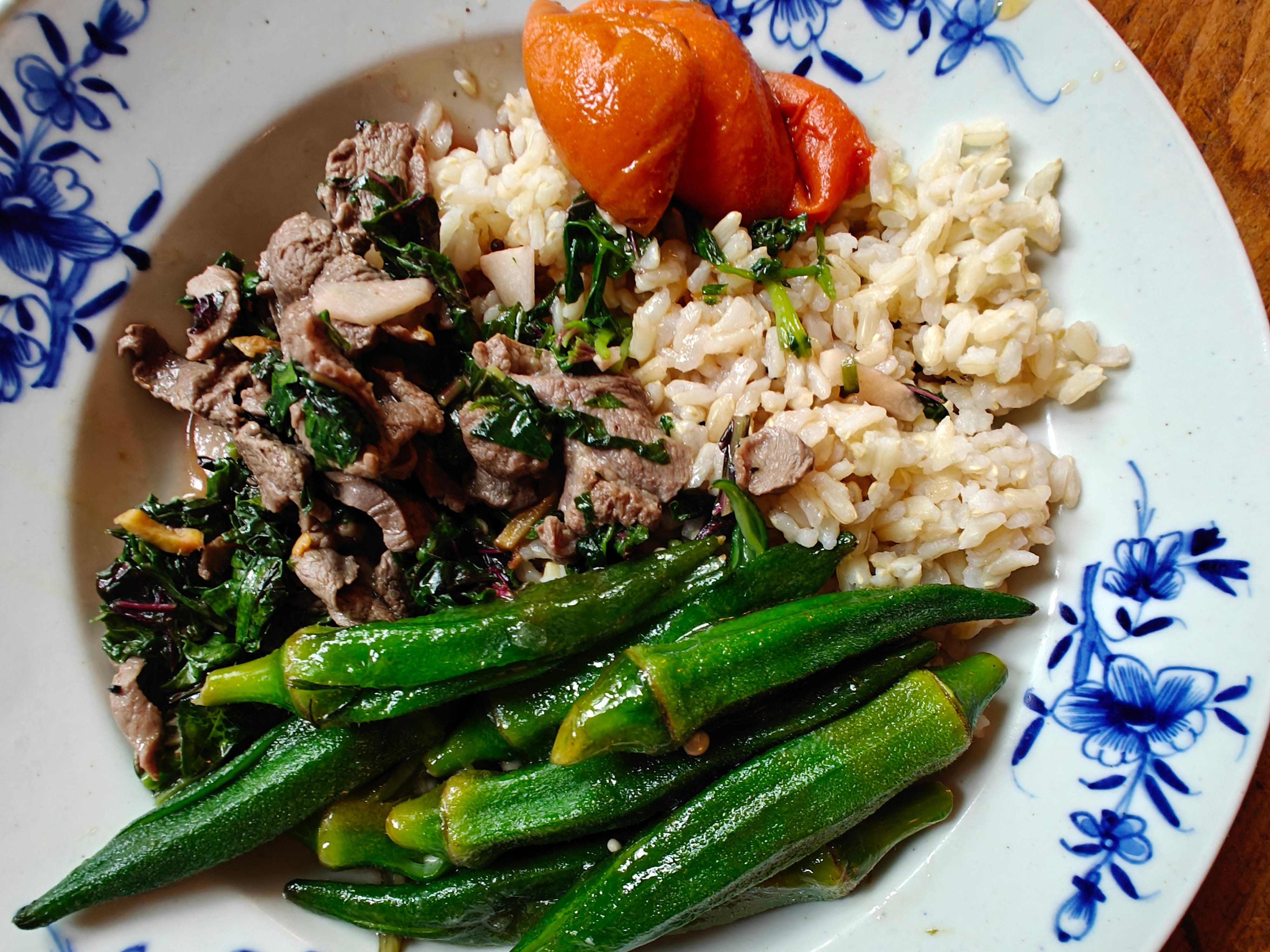
Tonight I found another good use for the apricots. I put them out as an accompaniment to stir-fried duck breast with amaranth, seen here with Ontario okra dressed with a light vinaigrette, and brown jasmine rice
Very nice thoughts about having to make your own roots, all the better in tough soil. Lovely piece. :-)
The presentation about the greening of the Sahel was indeed an inspiration… a reminder of what we humans can achieve with enough good will and cooperation.