
This spring we’ve been lurching toward actual springtime in fits and starts: days of rain and cloud and cold and wind, followed by the gift of one mild sunny day, and then back to more cold and rain. Yesterday there were a few minutes of hail, swept on the wind.
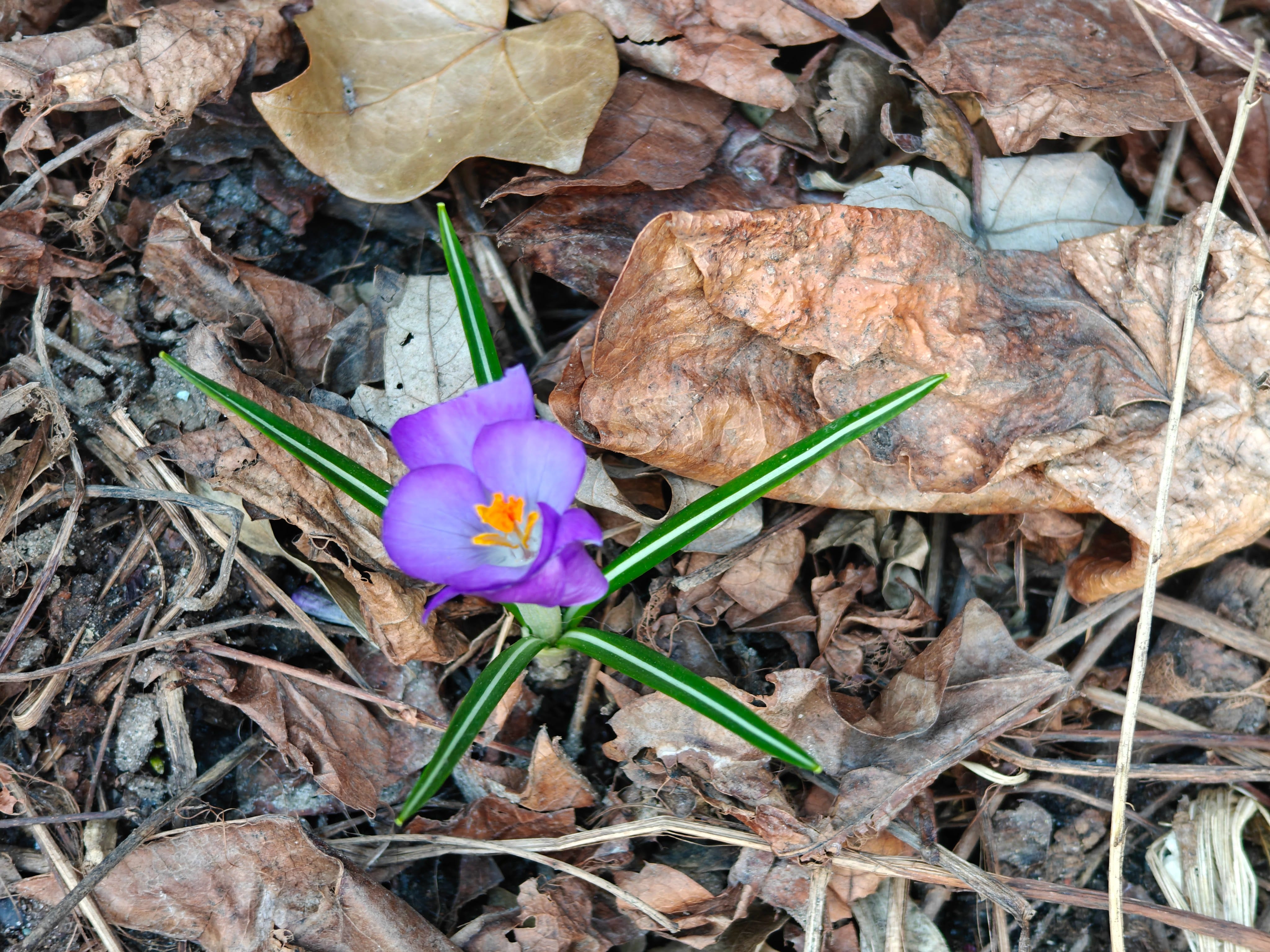
first bloom in my backyard; a lift of the heart
This talk of the weather is not interesting, my apologies, but feels necessary because in a pathetic fallacy kind of way, it feels like it’s mirroring the awfulness of the news cycle.
Until very recently I’ve felt as if I have less forward momentum each week. Surely this is wrong. Surely with the return of the sun at the equinox I should have been retrieving energy and life. Instead there have been days when I’ve retreated into a kind of still place in myself, a kind of holding tight. It never got me anywhere. So I’d start reading various Substack writers I respect, whose words and ideas take me down rabbit holes that sometimes lead to understanding and clarity, but most often these days to anger at the way the world is being held hostage by dishonest and greedy power structures. And then there’s the terrible fact of the suffering of ordinary people in Gaza, Lebanon, Iran, and elsewhere who are being bombed, killed, traumatised
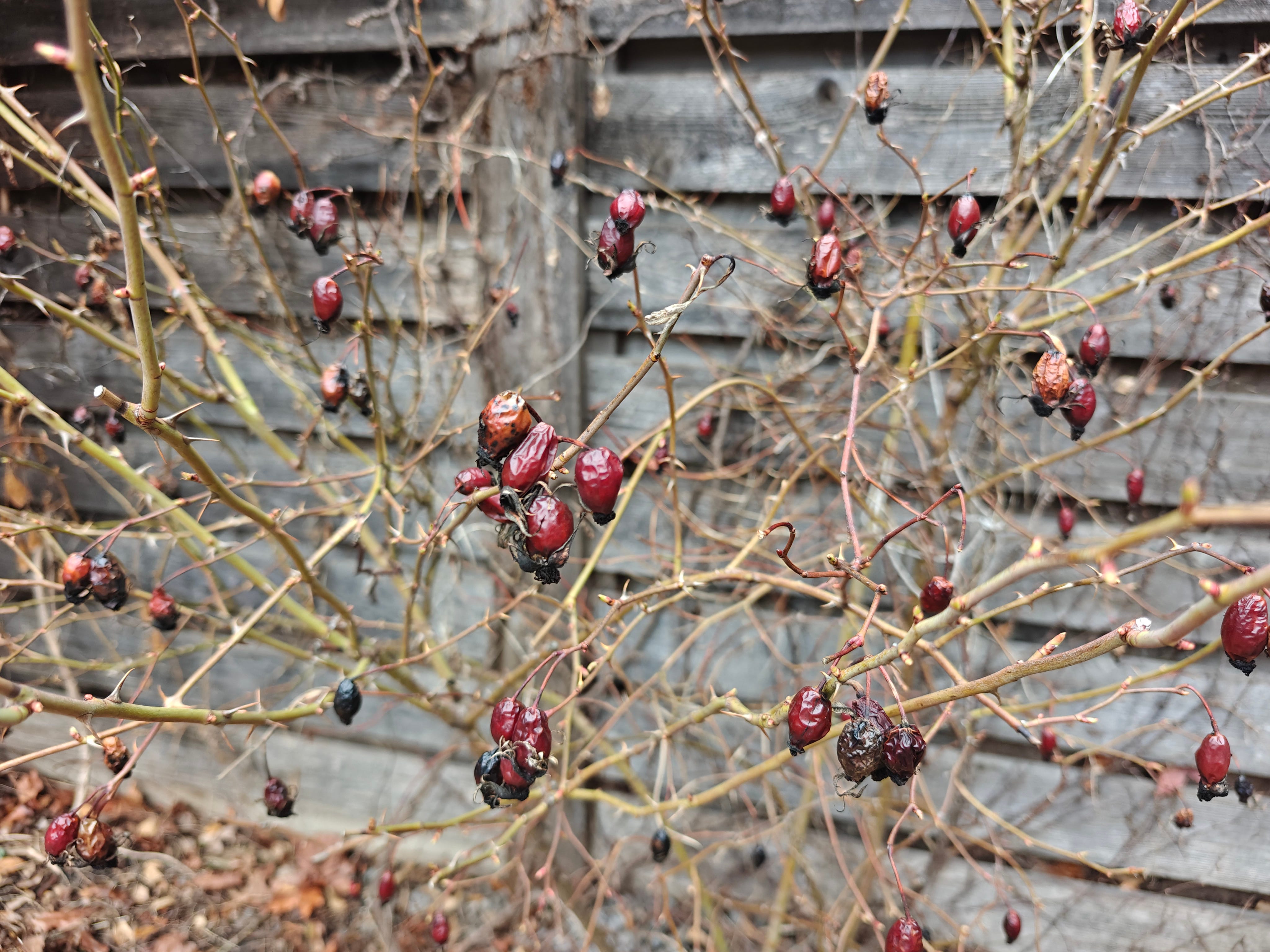
unharvested remnants of last year: rose hips battered by last winter’s snow and cold
When I was on book tour with my Taste of Persia book, in the fall of 2016, I remember that when I spoke at events in various US cities I emphasised that the people of Iran were not the same as the Iranian government, and that it was necessary to distinguish between the state on the one hand, and the people who live there on the other. They had not chosen their government.
The same holds true today. If a foreign government is repressive, it doesn’t mean other countries should start bombing schools, hospitals, and the humans who live there. The daily news of war crimes committed against civilians is sickening; we’ll look back on this era as a horrifying failure of humanity and of our international systems

when I’m in retreat with a book or other reading, I’m often warmed by this quilt I brought back long ago from Gujarat
Helpless bystander is not a role I want. It has felt like a doubling down of the feeble state that grief brings in waves. It’s disabling and disheartening. I wondered where or how to find lightness, or even the basic energy needed to initiate fresh thoughts or plans for each day.
But then late last week I was rescued, pulled out of my stuck state.
I began to leaf through Kaveri Ponnapa’s new book, called Coorg the Cookbook, that had arrived by Fedex.
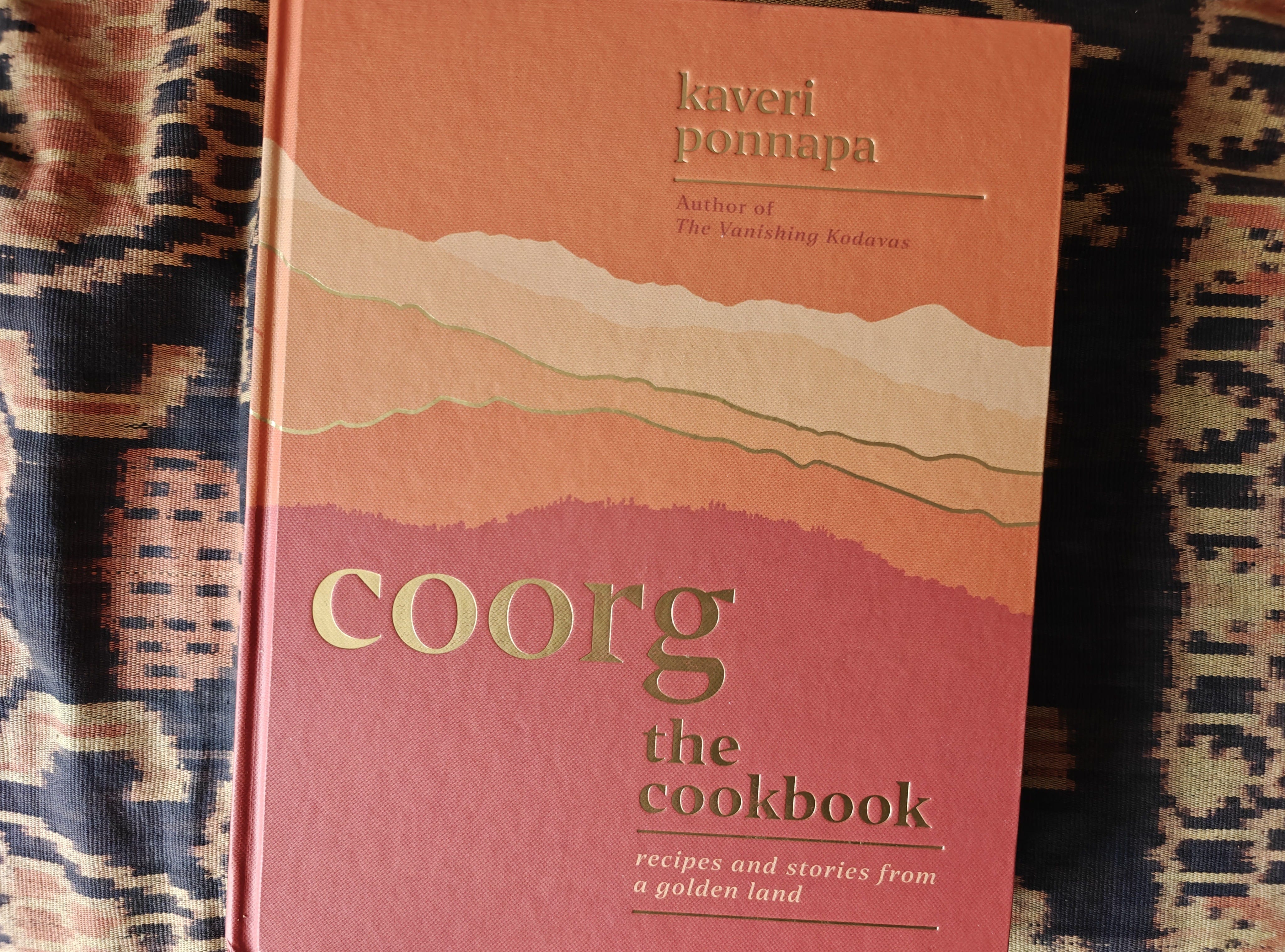
It was beautiful and intriguing. I started to look for recipes to try. Soon I was making notes and lists of ingredients I needed to have on hand. They included lots of red onions and shallots, fresh curry leaves, frozen grated coconut, rice flour, tamarind, and plenty of fresh coriander leaves (cilantro). Once I’d stocked up (I found everything on my list in Kensington Market, a short walk away), I could launch into cooking.


large red onion; and the slightly tired remnants of the bunch of curryl leaves I bought last week
Since I rarely follow recipes and instead usually improvise with the ingredients I have in my fridge and pantry, this shift to exploring Kaveri’s book turned me back into a beginner in the kitchen. What a gift. Being a beginner always gives fresh eyes.
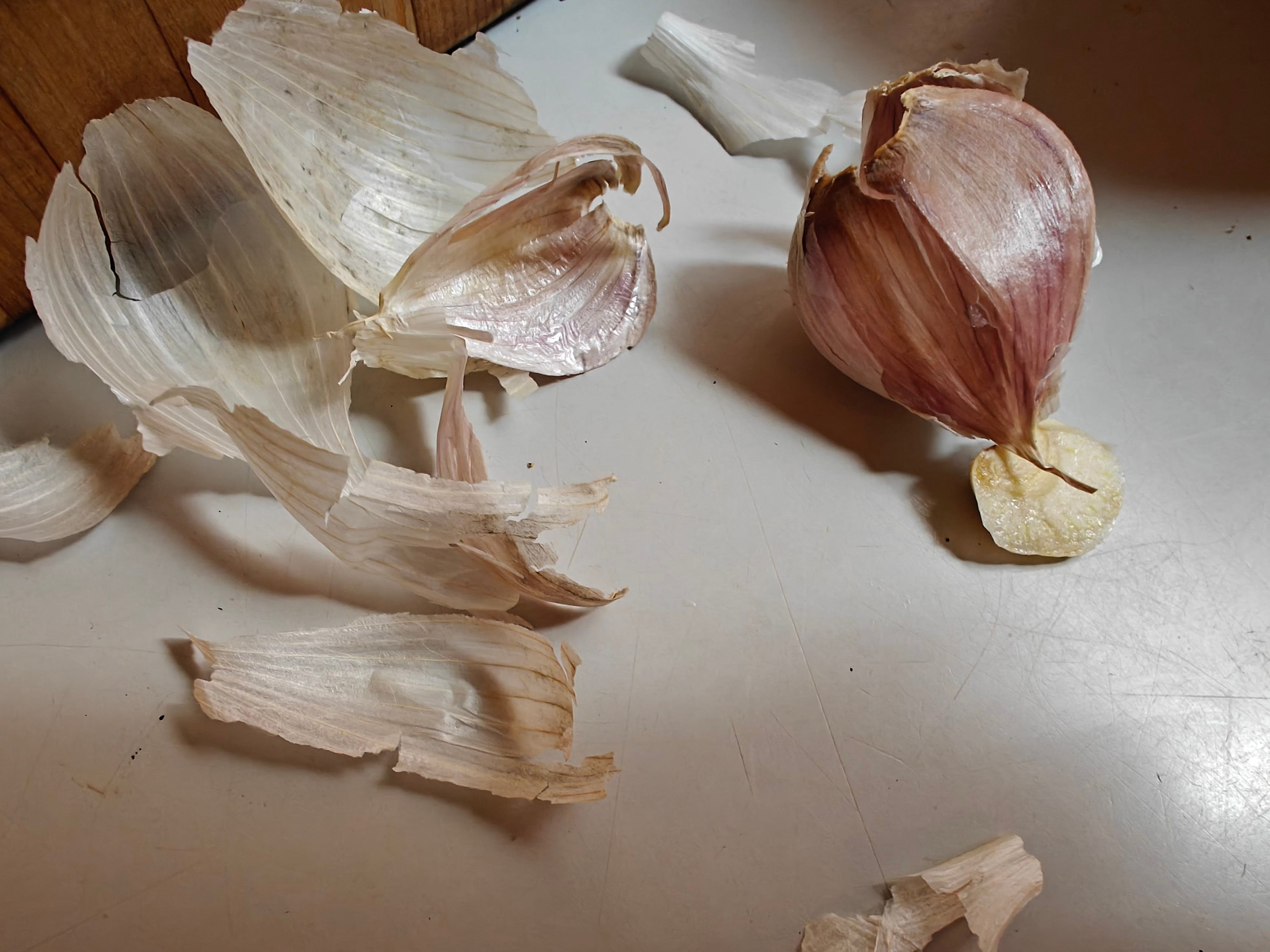
fresh eyes help me notice the beauty in ordinary kitchen moments
There’s real meaning in this food, anchored as it is in a culture and a geographic landscape. Exploring the recipes is a wonderful way to connect, even from far away, and that feeling of connection, however tenuous, is invigorating.


Kaveri’s recipes: pork with two layers of flavour, before being mixed and then slow-fried; sesame chutney tempered with curry leaves
On the other hand, making someone else’s recipes for the first time changes my process in the kitchen, slows it right down. Even with clear instructions (and Kaveri’s recipes are very clear), when I follow a recipe that’s new to me I usually feel slow and inept. I have no reflexes for timing or sequence. I read ahead, I prep, I check back about the order of ingredients, I check timing again, and so it goes, a slow methodical first-time walk to a final dish. It’s humbling to be inept and slow.
But there’s no anxiety about the result. I know I’m in sure hands, so the whole process is also relaxing. Following the recipe means that, like an apprentice, I am doing what I’m told rather than having to make decisions about what to do.
All of which is to say that this exploration of Kaveri’s recipes from Coorg has given me fresh energy and joy. I am so grateful.
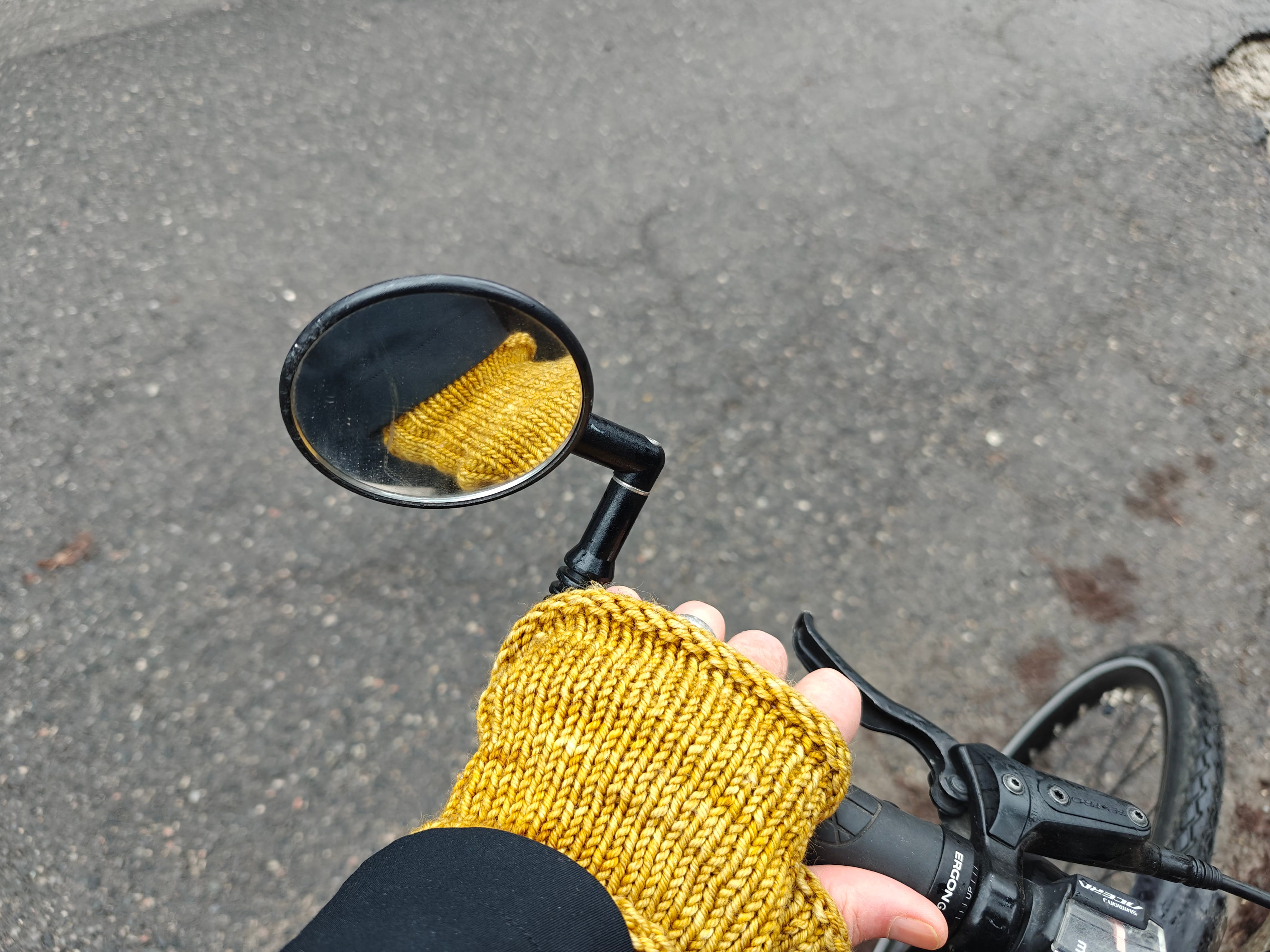
new energy pulled me out onto my bike at last; the cold weather and winds had discouraged me
KITCHEN EXPLORATIONS – the magic of curry leaves, and more
And it’s a good reminder that embarking on making a series of recipes from another culinary culture can refresh many things: our kitchen reflexes, the ingredients on our shelves and in our fridge, the condiments we have around, our state of mind…
I’m going to start with curry leaves. With many of the books I’ve written there’s a particular ingredient I feel needs to be more widely known and enjoyed. In the case of Mangoes & Curry Leaves, about the Subcontinent, it was of course curry leaves.
If there’s a South Asian grocery accessible to you, you’ll should be able to find them (I haven’t tried ordering them online). They usually come as a bundle of leafy branches bound with an elastic band and protected by a plastic bag. (In the photo farther up the bunch is small, the remnant of the bunch I bought last week.) Store them in the fridge or another cool place. The leaves fall off the stems easily, so the bag is helpful. You can also buy a small curry leaf plant and grow it up into a bush indoors, perhaps putting it outside in warmer seasons.
Curry leaves are a much-loved ingredient in many of the cuisines of southern India and Gujarat. (If you haven’t already, I’d encourage you to do some exploring of them via cookbooks.) And once you have fresh curry leaves in the fridge, there are also many other pleasurable possibilities.
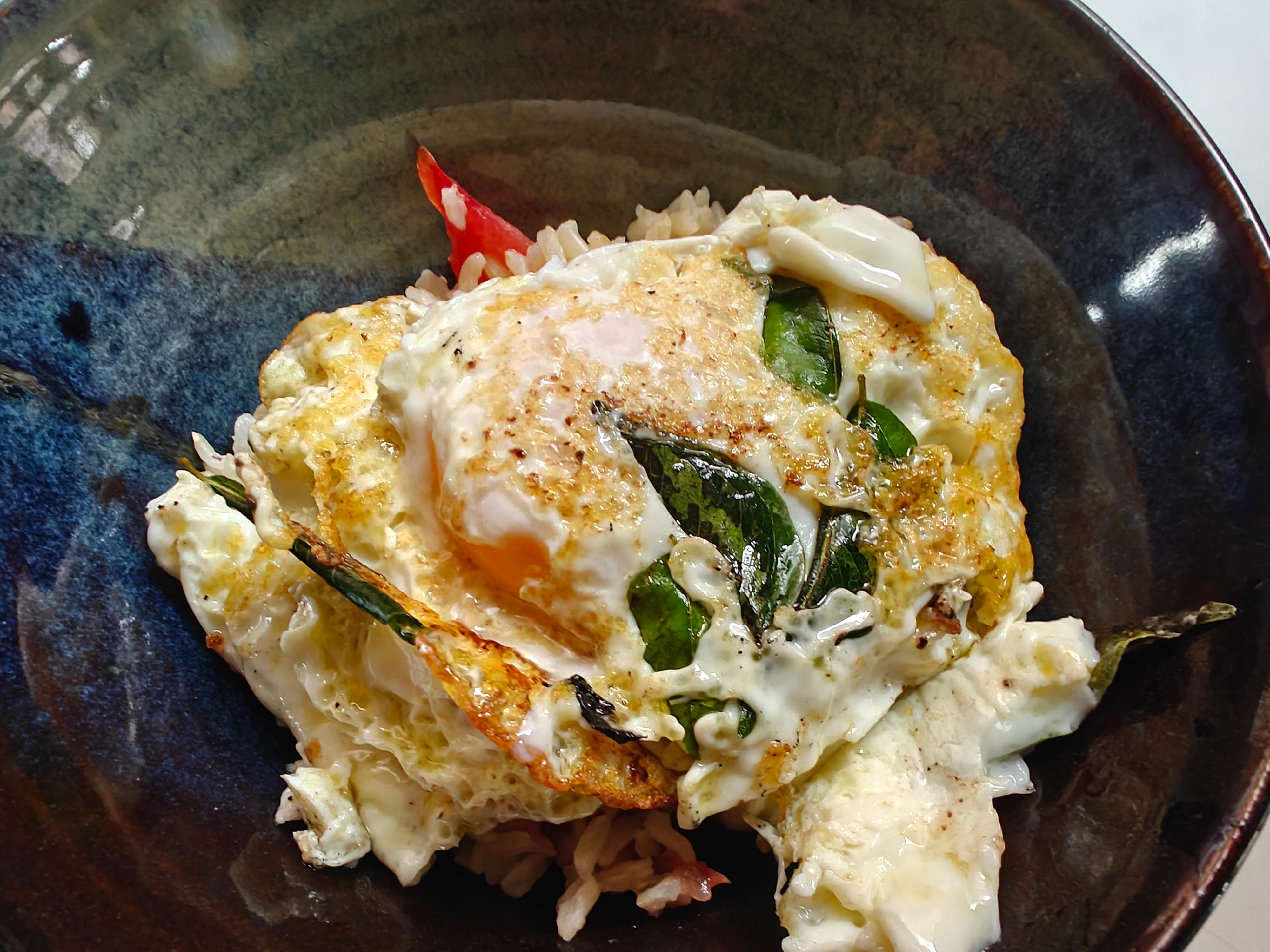
eggs with curry leaves, over some tomato remnants and leftover rice
The last few days I’ve been tossing them into the skillet before frying the eggs that go on top of my morning meal of leftovers. They hiss and sizzle in the hot olive oil and give off a wonderful aroma. I also used them a few days ago to temper a little tomato sauce/chutney. I had simmered coarsely chopped tomatoes with garlic and a couple of chiles. Once they had softened and blended, I heated oil in a small skillet, dropped in mustard seeds, then cumin seeds and curry leaves, and used the flavoured oil to temper the chutney.
Even if you don’t taste the curry leaves strongly as you eat the dish, the aroma that fills the kitchen when you cook them is its own reward.
A couple of nights ago I was cooking for a couple of friends, using mostly ingredients I’d bought that day at Wychwood Market. I boiled small potatoes unpeeled and served them plain. I slow-simmered some chopped washed small leeks with fresh green cayenne chiles, then added a few chopped anchovies before serving. To stir-fry hanger steak (in my very large wok), I started with curry leaves and mustard seed in the hot oil, before tossing in red chiles and a chopped onion. Once it had softened, the sliced meat (I’d rubbed it ahead with shio koji) went into the wok with a generous handful of chopped pea shoots and some chopped radicchio. A few turns and tosses, a splash of water and another toss or two and it was done.
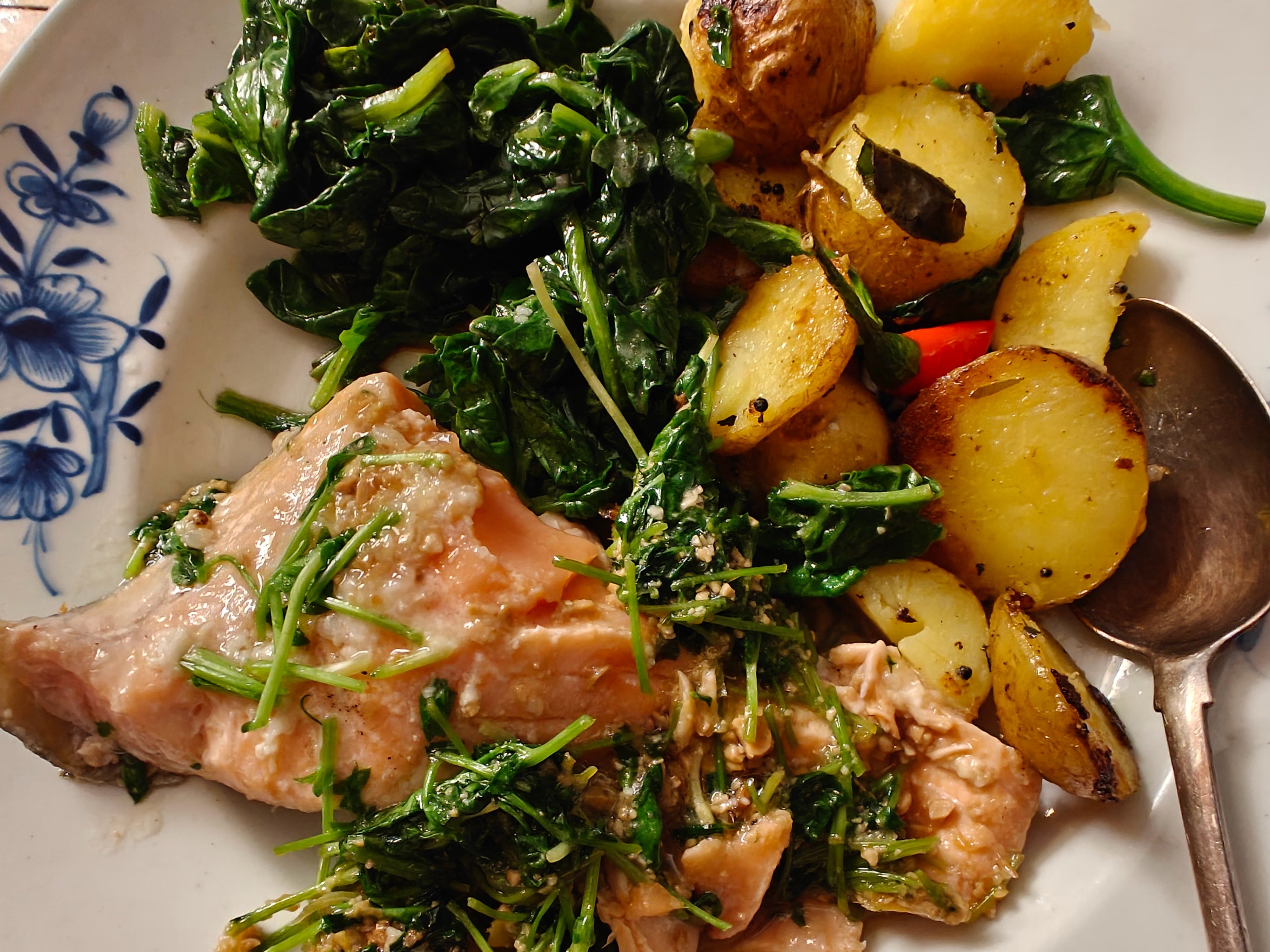
refried spuds with curry leaves, with poached salmon and spinach
Last night I sliced the leftover small potatoes and reheated them with garlic in hot oil flavoured with mustard seed, nigella, red chiles, and fennel, as well as curry leaves. I already need to replenish my stash of curry leaves! (Alongside there was simple cooked spinach dressed in lemon, soy, and sesame oil, and a luxurious piece of Atlantic salmon from Fisherfolk that I poached in a miso flavoured broth with some pea sprouts and chopped ginger).
I’ll write next week about some of Kaveri’s recipes. The ones I’ve made have all worked beautifully. They include a rasam (often called Pepper Water in English), a fascinating and new-to-me rice flatbread (what a gift for people who need to avoid gluten), and a tart-sweet sesame chutney (a condiment I now want to have around all the time; see the photo earlier), plus several very delectable meat dishes. And there are more recipes on my “to try” list.
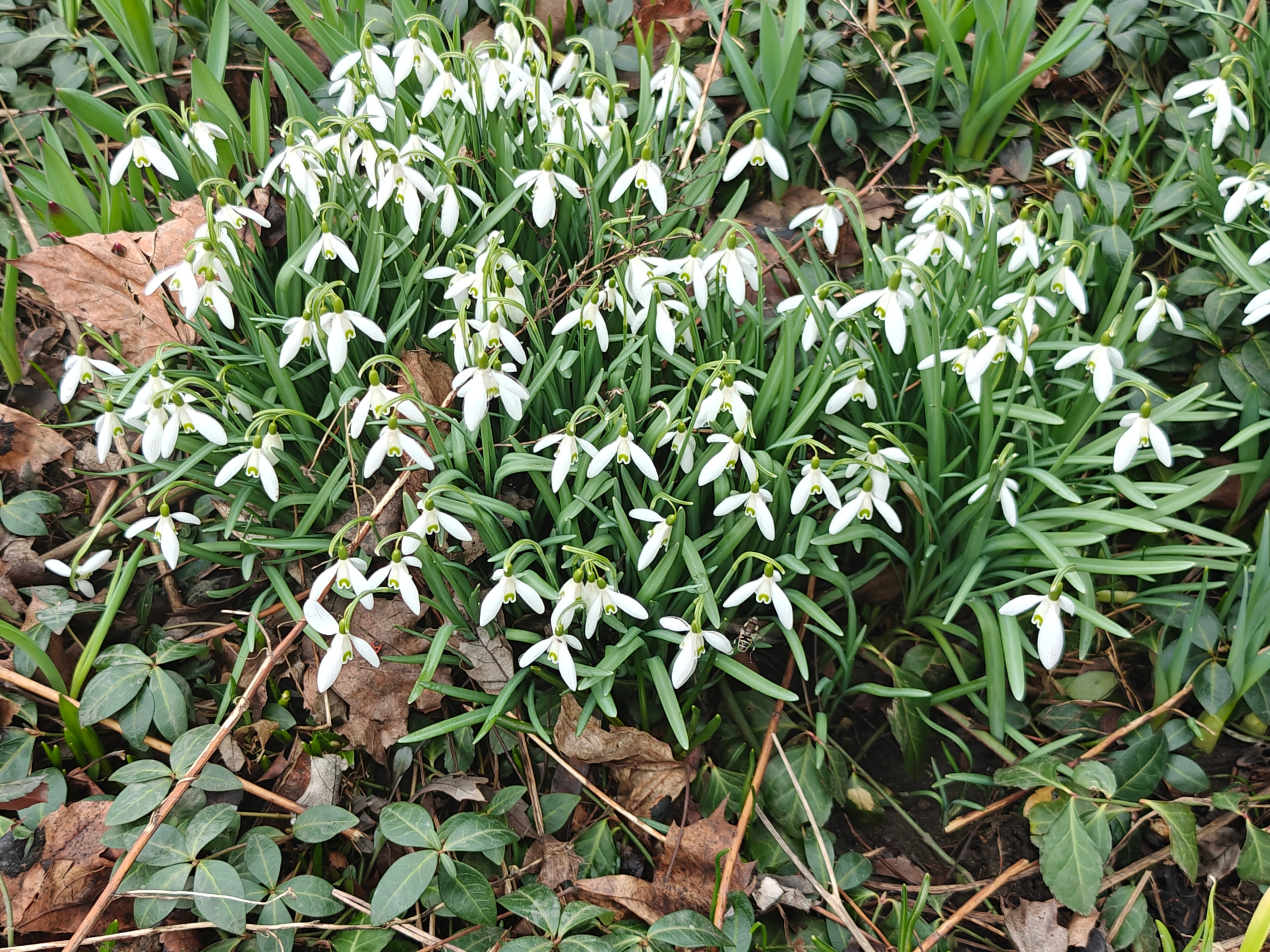
in the west Annex last Friday
I have the book too and have been wanting to cook many a recipe from it.
To add to your discourse on curry leaves, we also make a curry leaf chutney in the South of India, it is superb, I should post a recipe soon.
As you have rightly pointed out, this is an ingredient that is omnipresent across India, and loved, almost taken for granted.
I also freeze them and they last a long time, they don't look as pretty but the flavour is just the same and once your temper them you cannot tell the difference.
Take care
The more I study that book the more I love it. It’s great it bringing attention to the place now because it’s rapidly becoming a tourist trap that’s forcing people who have been there for centuries to selling mushrooms like chiclets on the streets. What a horrific mistake the world made by monetizing everything they considered valuable in their culture. But did they instead of the government have anything to do with it?