
My first time in Asia was a twelve week stay in Nepal. I was in my mid-twenties, travelling with my then boyfriend. In late September we walked eastward into the Everest region for about 12 days, with a young Sherpa guide named Ang Khame. We carried packs with extra clothing, a sleeping bag, and a water bottle, but had no tent, no cooking tools, and no camera.
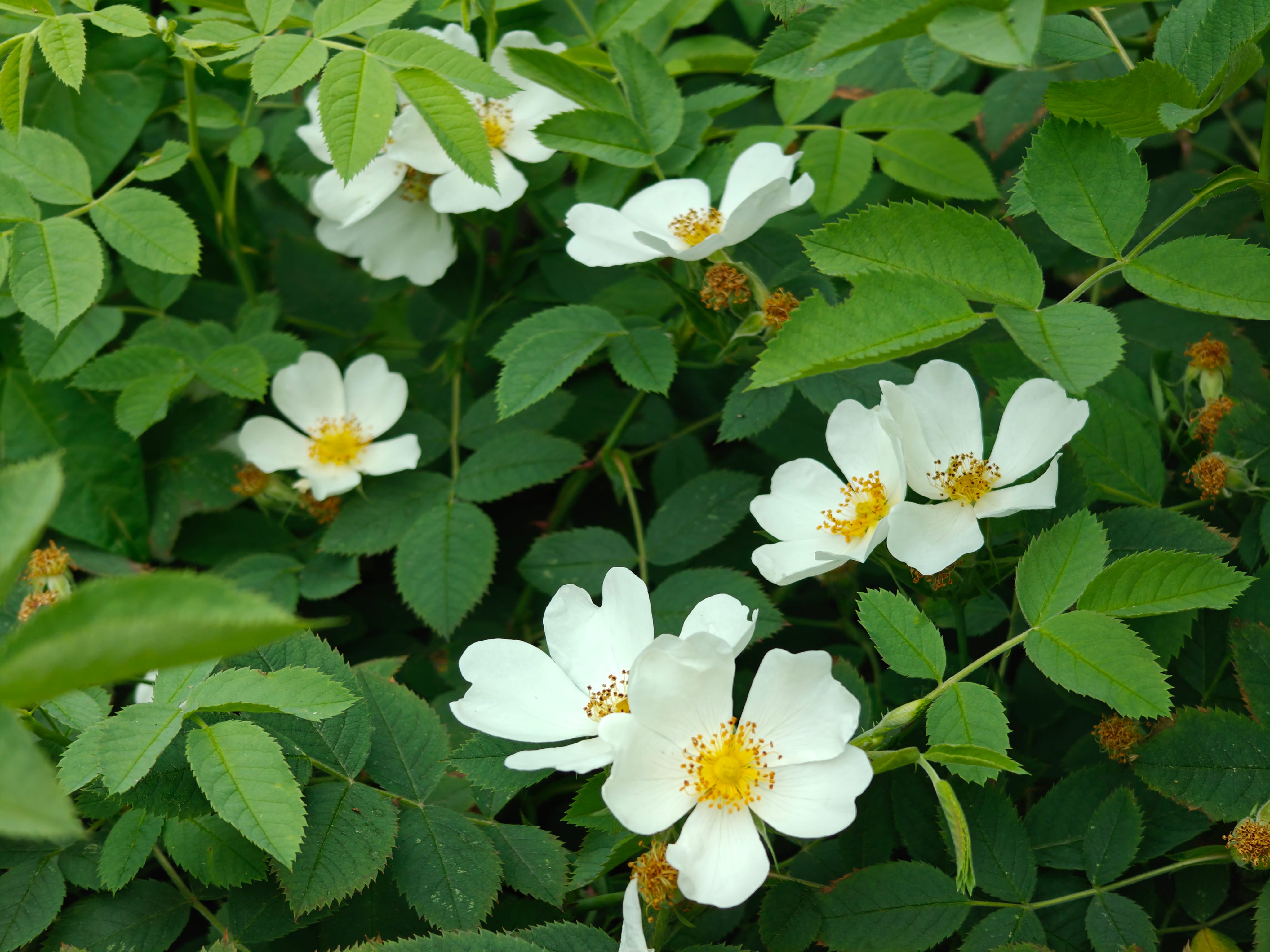
field rose blooms this week in the garden
Each late afternoon we’d stop in a village, find a house where there was a place to sleep, and then hang around the hearth as the woman of the house prepared the family’s and our supper, dal-bhat-sabzi (dal and rice and a cooked vegetable), plus chapatis if we were lucky. The food was filling and the dal and sabzi delicious, but often, especially in the first five or six days, the villages were very poor and the quality of the rice also.
Our path eastward, parallel to the high Himalayan mountains, meant that we were crossing the grain of the country, a succession of narrow north-south river valleys separated by steep hills. We’d walk up a winding trail, up and up past terraced rice and vegetables, the rice golden and the rice harvest beginning, and then at the top of the ridge we’d head back down the steep and winding path to the next valley bottom. Beside the path in each village, and near the crest of each ridge, would be a long stone bench backed by a stone wall, a place for porters to lay their heavy loads and take a break, for this path was the main east-west route that linked the Everest region to the highway that ran north of Kathmandu. At the time there was no road. Everything not locally available had to be carried in.
Ang Khame was only 15 years old, alert and steady. His older brother was a mountain guide. Ang Khame had asked his brother to find him a simple guiding job so he could get experience, and we were it. I imagine he was surprised at how little we knew about walking steadily; he had to remind us several times on the first day not to rush, to take things slowly. Gradually we learned. By day three we had settled into it, not fighting the ups and downs but instead leaning into them.
The simple inescapable fact that I had to put one foot in front of the other, deliberately and without rushing, to get where I wanted to go, whether or not I felt tired or hot or discouraged, was a constant daily lesson in acceptance. I’ve been grateful ever since for that first trek.
As laden porters walked past us on the trail, moving more quickly than we were despite their loads of 70 pounds/over 30 kg, or more, and often in bare feet or flip-flops, we were awed and humbled by their toughness and strength.
The women who were cooking supper each night in the villages were also strong and tough. They worked over a single small wood fire, managing its heat to cook a pot of rice plus the dal and sabzi perfectly, with attentiveness and with the reflexes born of daily practice. That absence of choice, that genuine hunger and plainness, was another lesson in food, in frugality and necessity, and in appreciation. There was no electricity in the villages, nor running water. There was nothing casually consumed, no waste, although Chinese-made packages of dried noodles had started to penetrate the region.
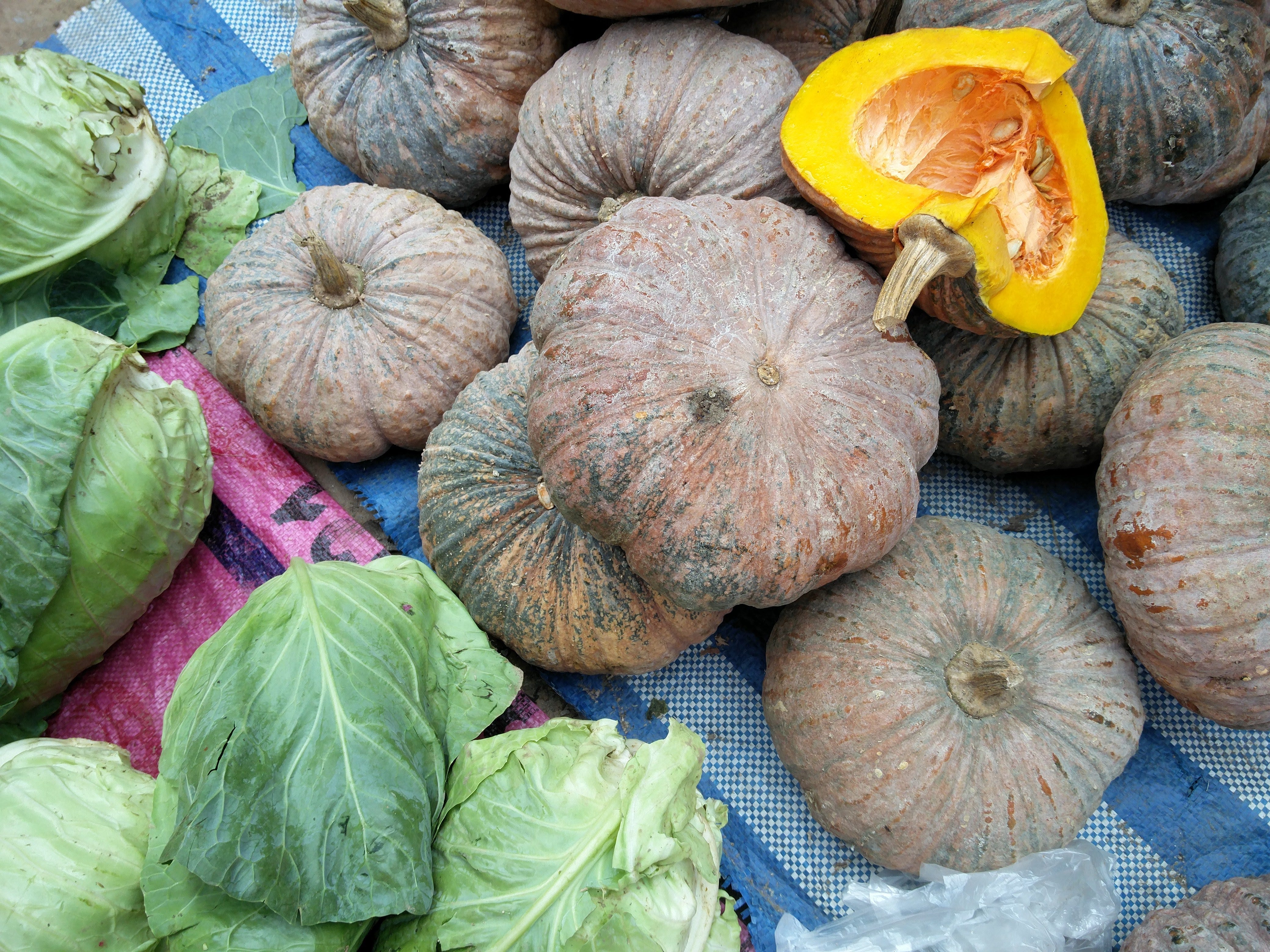
sabzi possibilities: cabbages and pumpkins at a market in northern Thailand
It was the calm practiced attentiveness of the women cooking that imprinted itself. And that is the model I have in mind when I think about cooking, though I rarely achieve their alert deliberateness. They were doing things the same way each time, with tools (the fire, the supply of wood and water) that require constant attention. In contrast, in a modern kitchen with reliable electricity, a stove with heat settings, hot and cold running water, and counters to work at, cooking is less fraught; there are more safety nets.
Perhaps that’s why I look for adrenaline by varying what and how I cook each night. Perhaps if I were working over a fire of wood that had to be chopped and hauled and stacked, whose temperature had to be carefully monitored and adjusted, that would be challenge enough, and I’d be very content to make a consistent supper each night of similar and predictable ingredients. I’d in fact be grateful to have food to work with, instead of thrill-seeking with my improvisations.
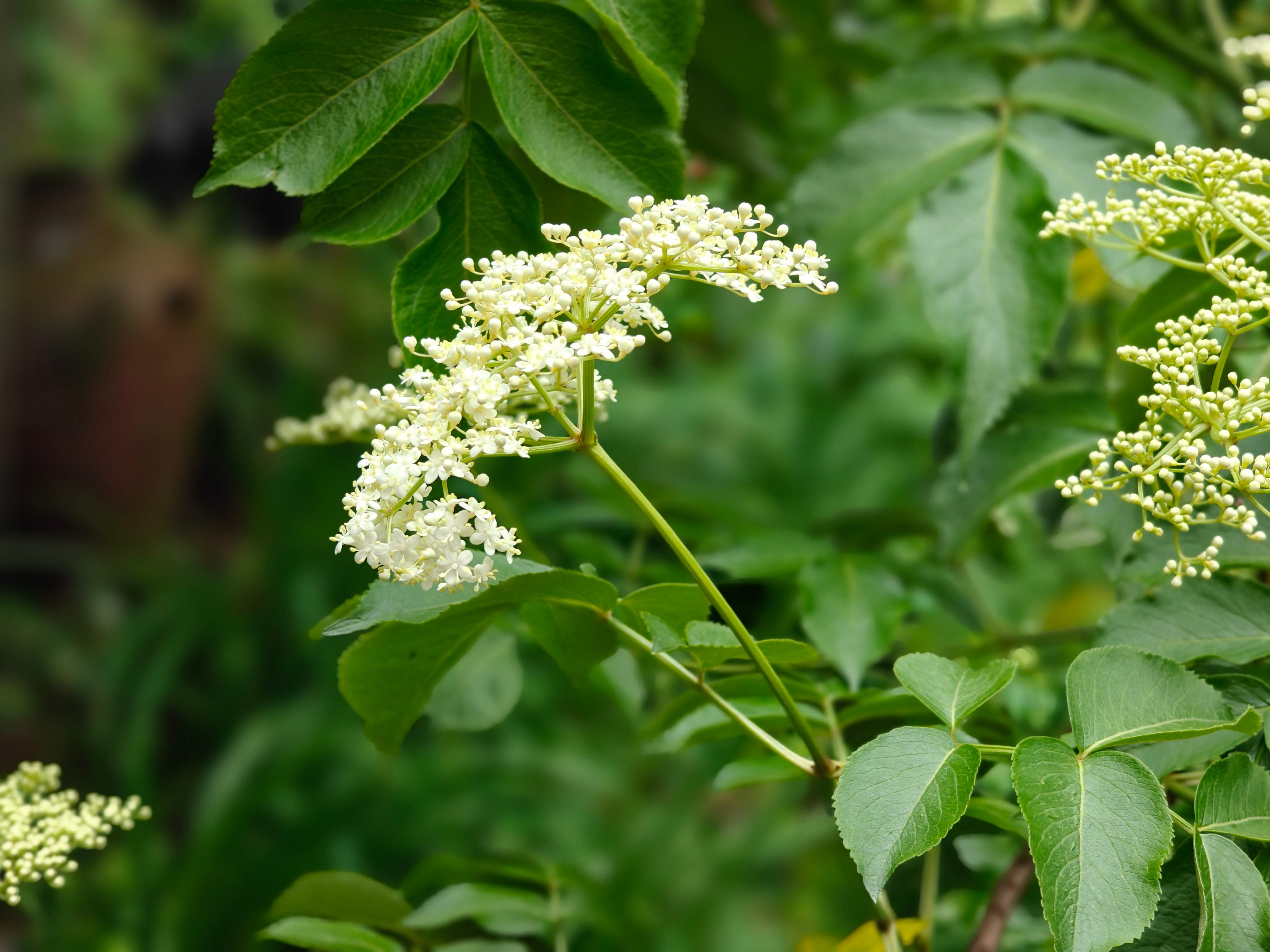
first blooms on my elderflower bush this summer
KITCHEN EXPLORATIONS - with a look at tart-sour from yogurt
Yesterday evening I had to get a head start on supper, for I was going out at 7. I knew there was leftover rice (delicious small red Sri Lankan rice now available here in Toronto). But what to make for the two members of the household who were staying home?
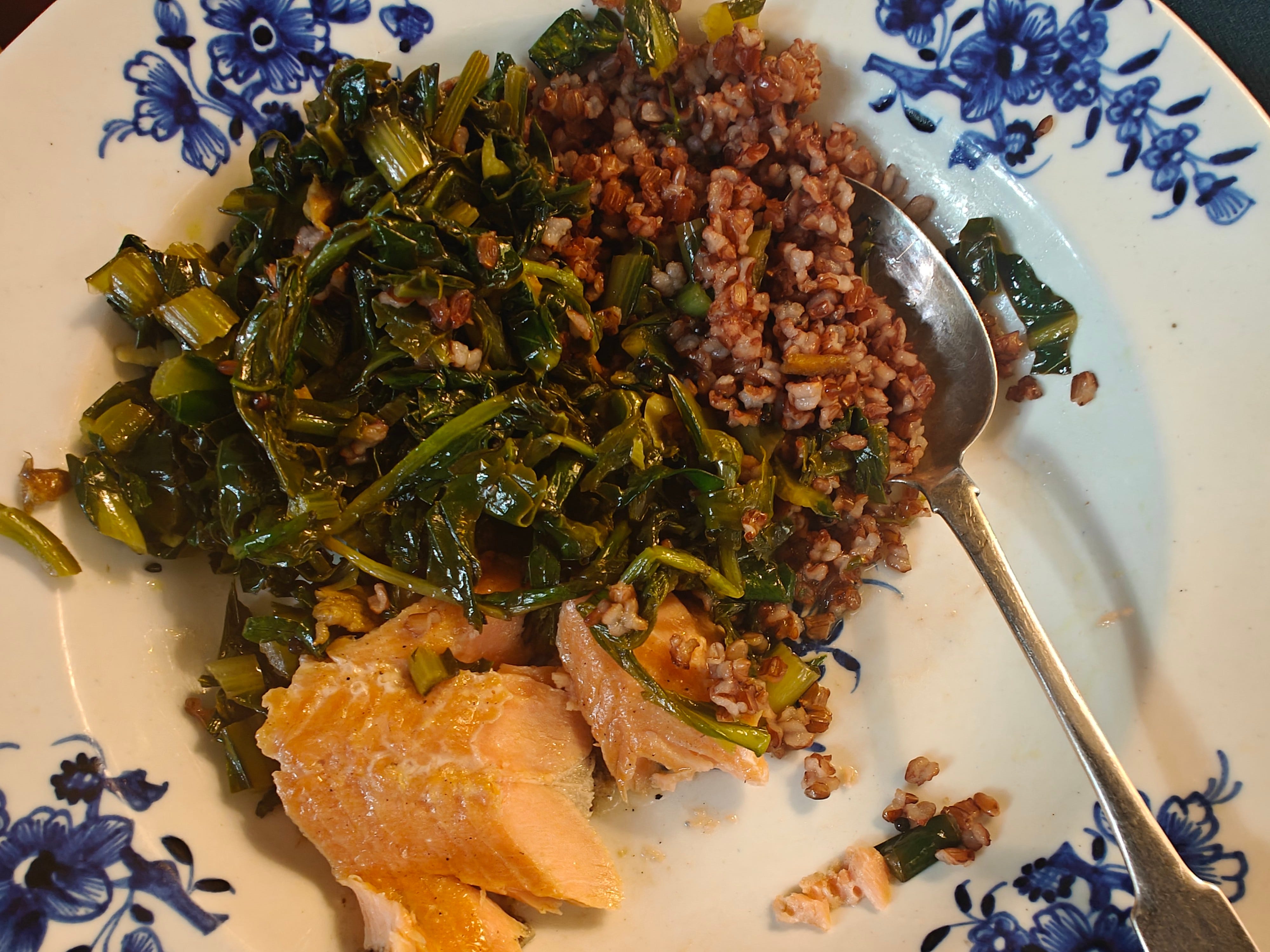
supper earlier this week: Sri Lankan red rice with stir-fried greens and some fish
My easiest and favourite fallback in that situation is dal of some kind. I like making blends of several dals/lentils. This time I combined a good handful each of brown lentils, hulled mung dal (pretty pale yellow), and hulled urad dal (ivory white). I always rinse dals in several changes of water, then bring them to a boil in plenty of salted water, before letting them cook on low heat, covered. I added a couple of bay leaves and a cinnamon stick to the dal when it started cooking. It was tender in about an hour, after which it sat covered until late afternoon.
An hour before supper, I started to complete the dal: There were some very tired carrots, from last year, that I scraped clean and sliced, and one fresh medium head of fennel, which I sliced. I put the dal back on low heat and stirred in a little extra water.
A wide heavy cast-iron skillet went on medium-high with a generous dollop of oil to coat it, then in went mustard, nigella, cumin, and fenugreek seeds. Once the mustard had popped I added (about an inch of) ginger cut in matchstick, then a minute later four smashed cloves of garlic and the carrots. After a quick stir in the hot oil, they cooked over medium heat for a minute or two before I added some water and brought it to a simmer. In went the chopped fennel, a little salt, and a little more water. And a few minutes later I added several ladlesful of the dal. Once it was nicely blended, all the contents of the skillet went back into the pot of dal, along with several dashes of soy sauce and a dollop of pomegranate molasses. It all cooked over low heat , half-covered for about fifteen minutes.
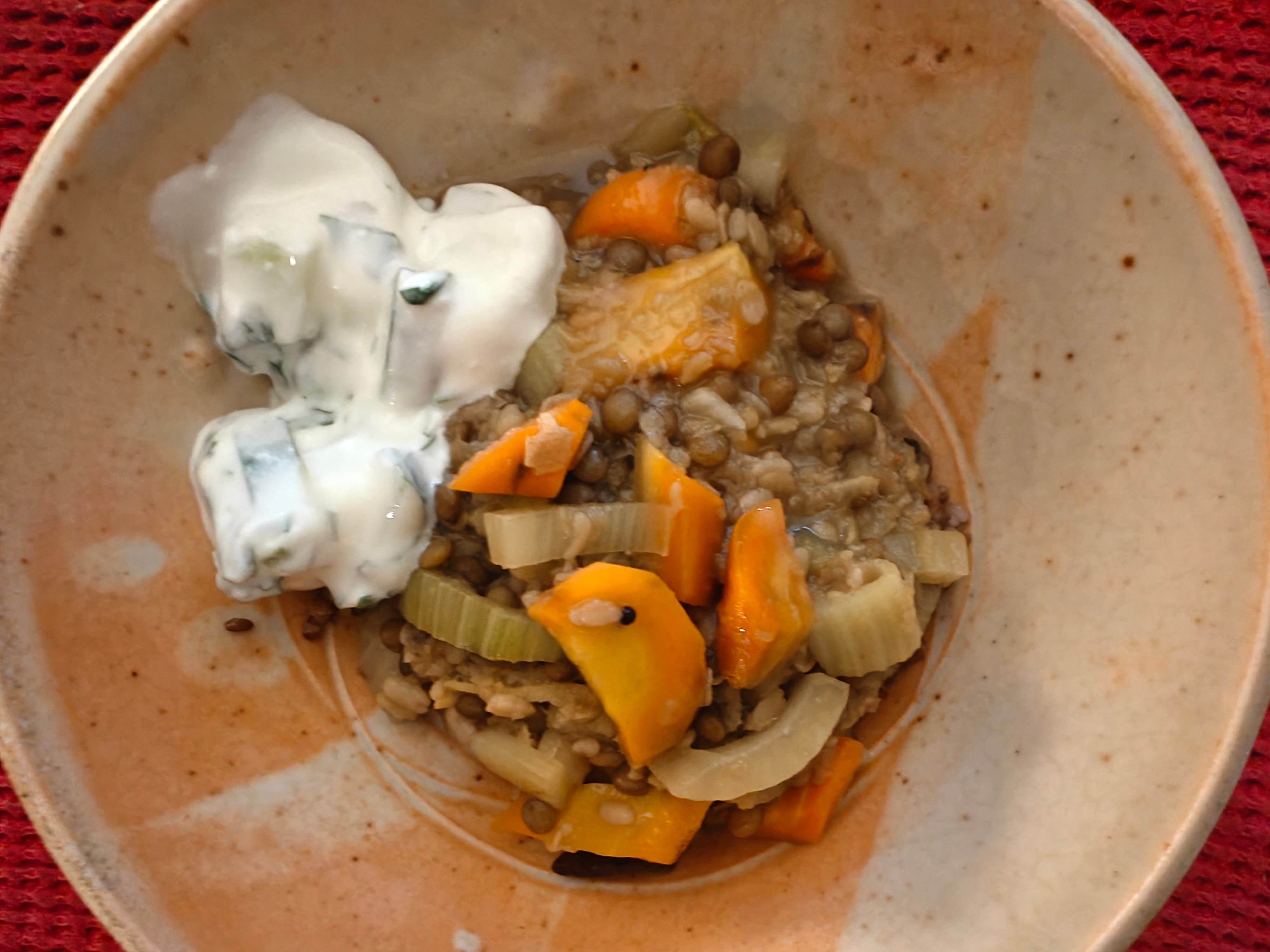
a small helping of carrot and fennel mixed dal with cucumber raita on the side
I’ve told you all the above to set the stage for the tart-acid question: there was a bit of a hit from the pomegranate molasses, but what else could help brighten and spike flavours? A side dish of simple raita was the obvious answer: thick drained full-fat yogurt, lightly salted, and flavoured with finely chopped mint from the garden, and some chopped cucumber for crunch. Aha!
The tartness of yogurt or kefir is a wonderful tool for the cook. It can be an ingredient in a dish, but it’s more easily useful as a side dish, a complement, as this raita was. The brilliant Persian dishes called borani, yogurt blended with cooked chopped vegetables, are another delicious option.
There are several borani recipes in my Taste of Persia book, and raita and other yogurt sauce suggestions in Flatbreads and Flavors and in Mangoes & Curry Leaves.
I loved this, Naomi. It brought back my own early (only) visit to Nepal back in the remoteness of 1975 when, with my ex and a small group of friends, we hiked (trekked was the word used then) up to Everest base camp. Every night our Sherpa guide, Pasang Kami, had two fires built, one for us and one for the bearers who carried tents, cooking pots, etc. That seemed so wasteful to me, but I could not persuade Pasang Kami to let us all share the fire. I don't remember what we ate but rice and dal were significant on the menu. I thought we were overburdened with Stuff that the bearers carried but when, on our return, we passed an incoming group of Italian mountaineers, headed for the top of Everest, I realized we were modest by comparison. Their equipment included cases of San Pellegrino water, cases of wine, and, I was told, plenty of pasta and parmigiano reggiano. I'm sure there must have been several jugs of olive oil in there as well. And they had not only human bearers but also yaks to carry the goods.
But your thoughts about the women cooking were so very much to the point. I was unaware of all that, just starting to wake up to the importance of food, where it comes from, how it gets to us, and especially how we prepare it and share it. Your words, at least to me, sound like the beginning of a memoir and I do wish you would write that. You could work the sourness and bitterness into that too!
What a captivating memory!
I have both Mangoes & Curry Leaves and Hot, Sour, Salty, Sweet. (I had to buy them used and when they arrived they had the library cards from Niagara College glued inside!) Your stories are remarkable.