
After weeks of complaints about the cold and the non-arrival of spring, people in my part of Canada find themselves launched into a high-speed take-off. It feels like the whole landscape is visibly growing. Suddenly there’s asparagus at the farmers’ markets (last Saturday). My rhubarb will soon be ready for a first pick. The tall maple tree that fills my view to the west has greened up overnight. I can no longer see through bare branches to the sky beyond.
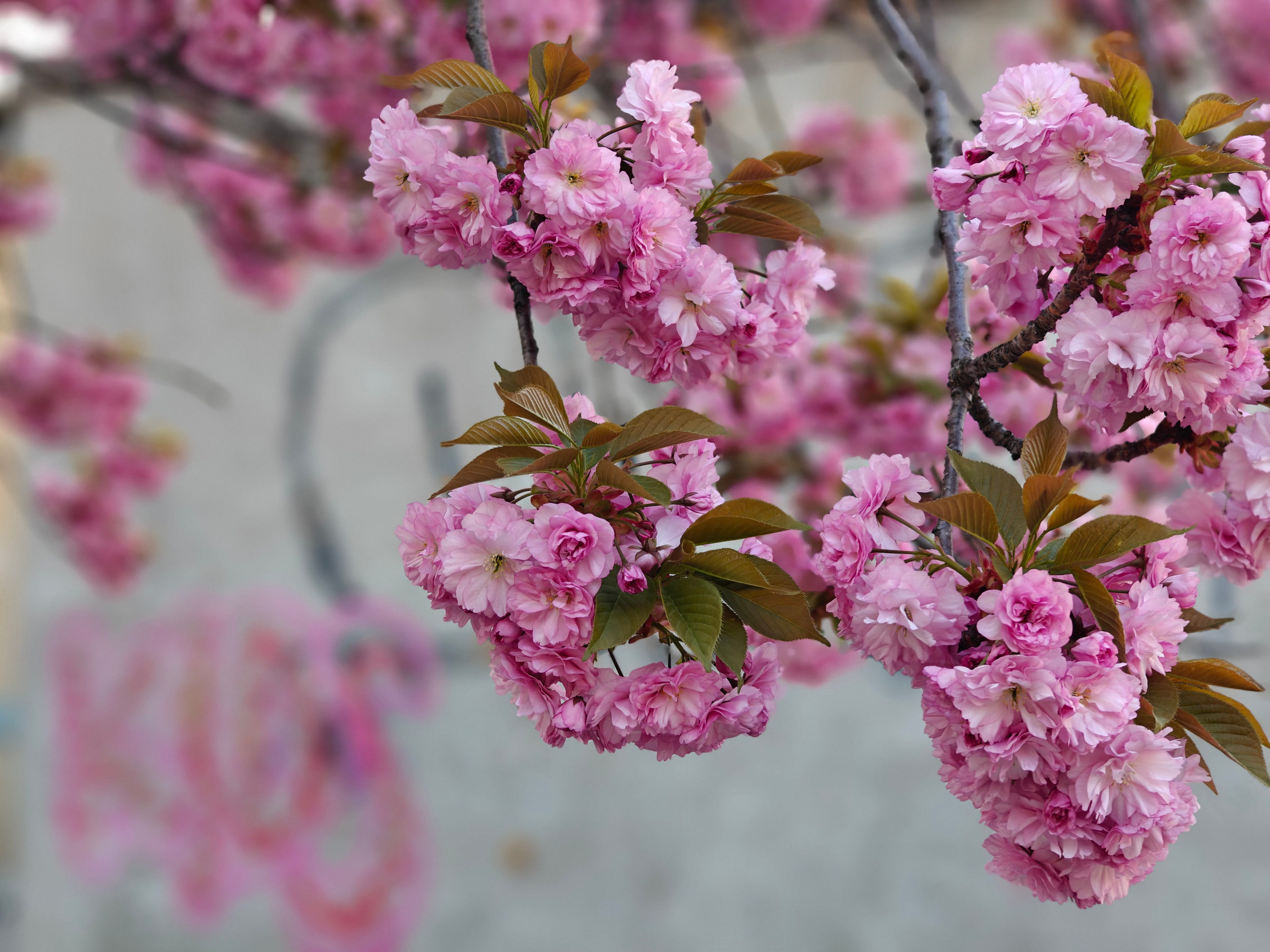
my neighbour’s flowering almond (I think) in its glory
There’s a clarity and beauty in bare branches. I love looking at their geometry silhouetted against the changing sky. And out in the countryside we can see through them to the detailed contours of the hills and valleys in the landscape. When leaves come it’s as if a large watercolour brush had smudged everything into rough shapes, hiding the landscape’s details. Months later, after the explosion of autumn colours, the branches are stripped by wind and rain and we’re back to silhouetted geometries.
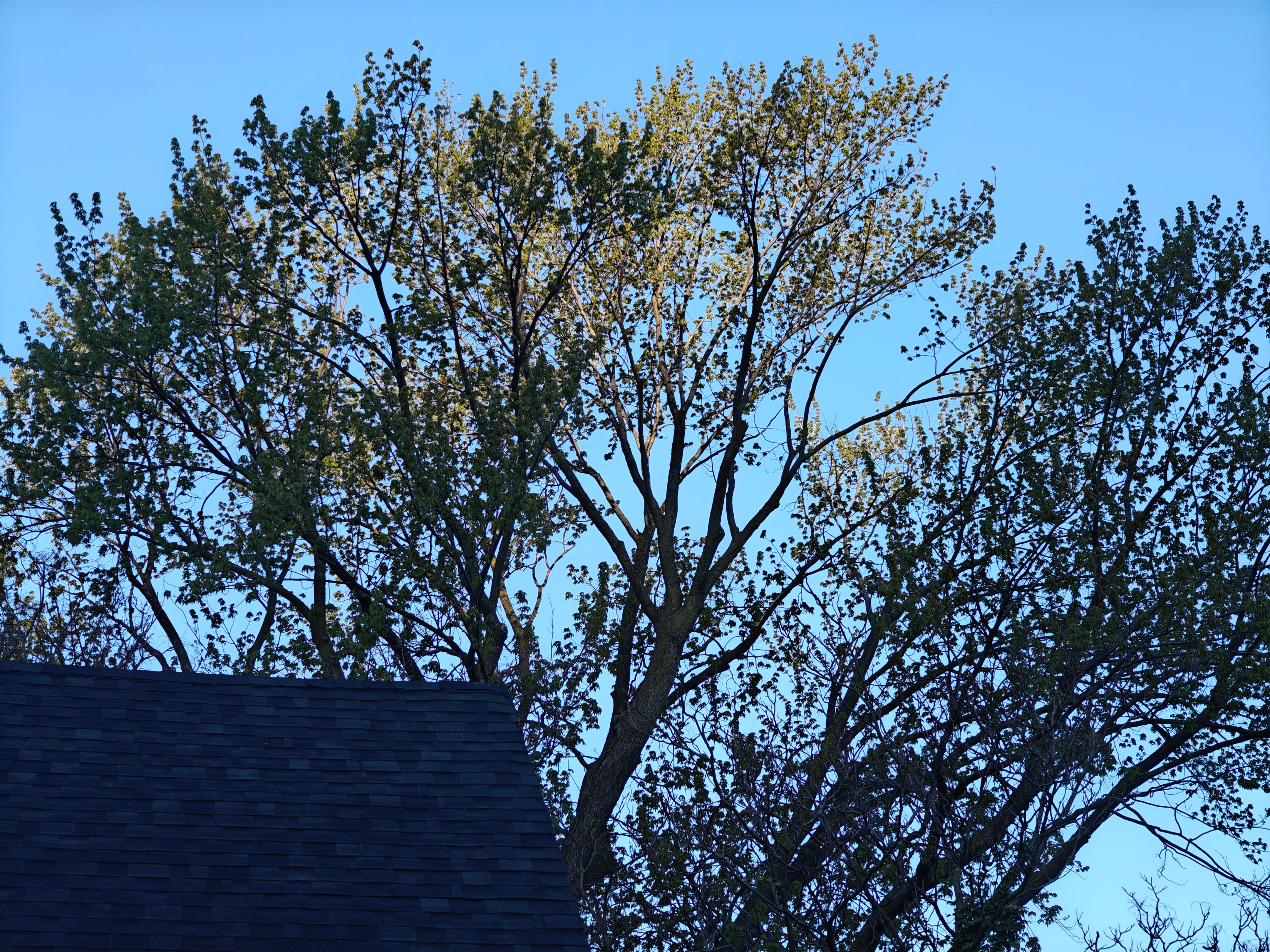
the big maple starting into leaf
I love these transformations of our perception. They keep me noticing. They keep my eyes fresh.
Even as we complain about the discomforts of winter most of us don’t despair because we know it will eventually yield to spring. Our experience of the seasonal cycles gives us the tools we need to hang in through the difficulties and discomforts of winter. But if you arrive here from another part of the world, say a tropical place, then surely the bareness of your first winter is as intimidating as the cold. The following year, after you’ve experienced the full seasonal cycle, you can have a bit more confidence that the bare branches of winter are only temporary, that they’ll green up come spring.
When we’re faced with a new personal landscape, we’re like migrants arriving in a new country, not knowing the cycles of the seasons, not able to read the social and cultural signposts. Like them we look for patterns to help us understand. We ask questions, seeking guidance for ourselves, and we improvise.
As I watch young friends move from high school to university, as people in my cohort move into older age with its attendant physical and emotional challenges, as I hear stories about parents navigating the challenges of raising young children, it strikes me that at various points in our lives we become migrants arriving in new unfamiliar territory. Sometimes the change of context is exciting and full of a sense of possibility; often it also comes with a measure of fear and anxiety.
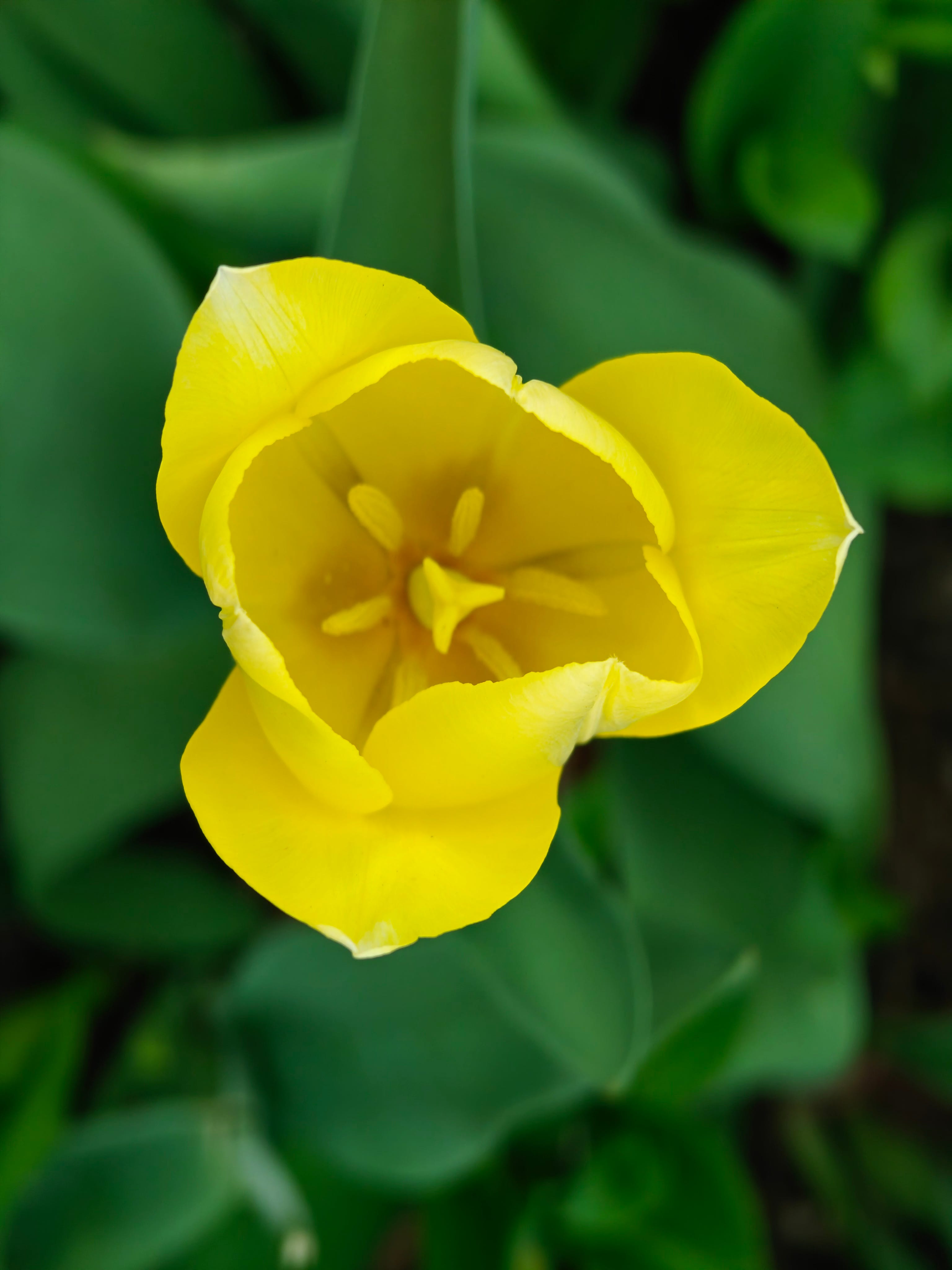
yellow tulip not yet eaten by the local squirrels
Yes, here I am talking of life as a voyage. It’s an old trope, a cliché, perhaps. But the insight is still helpful I think. It’s a reminder that intermittently throughout our lives we are beginners. The experience can be humbling and anxiety-making. We need to have patience with ourselves, and with others, as we navigate unfamiliar waters.
KITCHEN EXPLORATIONS
Earlier this week I pedalled to Kensington Market to shop for ingredients for supper. I found hangar steak, small unglamourous pieces from an Ontario farm, at Sanagan’s Meat Locker. It has great flavour and stir-fries beautifully when thinly sliced. The nearby tofu shop (tofu freshly made each day) carries fresh rice noodles (made elsewhere in the city). For some reason it had been a long while since I last bought fresh noodles. That day they had not yet sold out, so I bought about two pounds of them, white and slippery, weighed out on a scale and tied into a plastic bag.
One of my favourite versions of guay tio, as rice noodles are called in Thai, is guaytio ladna. Meat and greens are stir-fried and simmered in a gravy flavoured with fermented soybeans. The noodles are stir-fried separately, then served topped with the soupy delectable meat and greens. I had no jar of fermented soybeans in the house, but figured I could improvise.
I sliced about 1 pound of the hangar steak thinly and tossed it with some shio koji and a tiny bit of cornstarch. I chopped up the one large-ish bok choi and washed it well, then washed and chopped a bunch of the early chard and kale greens I’d found at the Saturday farmers’ market.
Six or more years ago, when I was working on The Miracle of Salt book, I bought a small fridge for my fermentation projects. (It fit into the space left by the dishwasher I never used.) I still have ferments in there, including several opened jars of miso paste.. I scooped the remaining thick miso paste, about 3 tablespoons of it, out of a nearly empty jar labelled March 2021, and stirred in a little water to loosen it into a paste. It smelled great, almost as good as Thai fermented soybeans.
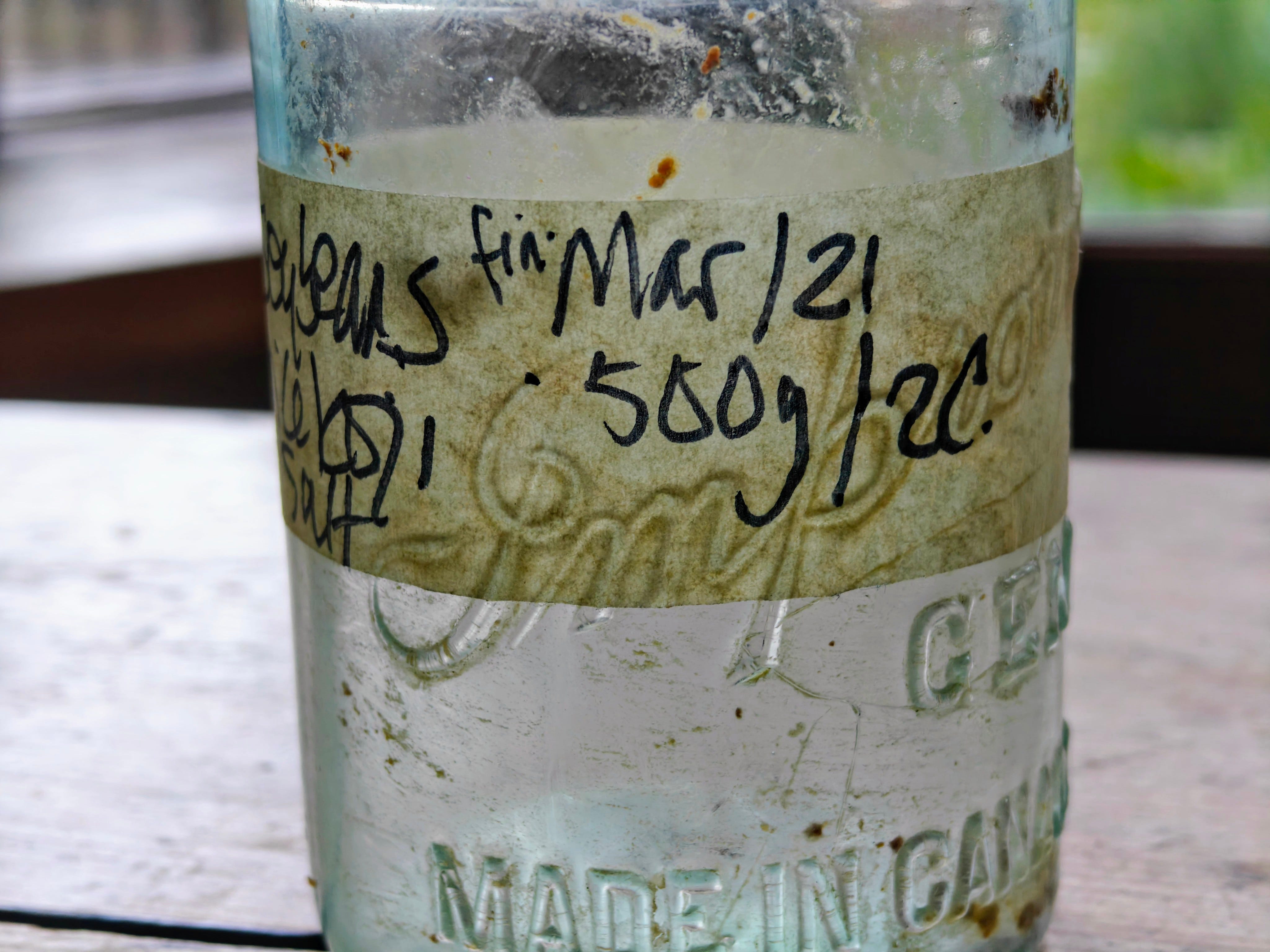
the emptied jar of miso
The thing about guay tio ladna, as with any stir-fry, is to have all your ingredients ready by the stove, and your serving dishes too. I often add non-traditional flavourings to my stir-fry. Into the hot wok went olive oil, then mustard seed and some nigella, then a touch later a load of finely chopped ginger and a chopped red cayenne chile, followed by chopped garlic. Then came the meat, which I stir-fried quickly, just to colour it all over, then turned out into a bowl, followed by a little water to deglaze the wok. Another dash of oil into the hot wok, more chopped garlic, then the bok choi with a touch of salt to stir-fry a bit, and then the remaining greens and a dash of fish sauce.
Finally, I added the meat back into the wok with its extra water, added more water, the bean paste, and some fish sauce, and turned and stirred for about a minute. I had a quick taste – hmmm, yes! - before turning the whole succulent mass out into a wide serving bowl.
(Since jars of plain fermented soybeans can be hard to find, and often taste slightly chemical to me (a preservative perhaps?), this impromptu substitution of red miso (that is soybean miso fermented to rice or soybean koji) is a great idea. I wish I’d thought of it long ago.)
I cooked a batch of new asparagus and dressed it with lemon juice, olive oil, and salt.
Back to the guay tio: It’s important to wash out and dry the wok before cooking the noodles. My wok is nice and big, so it can handle the large volume of noodles I had. With a smaller wok they’d need to be cooked in two batches. Into a hot wok goes the oil that you swirl to coat the surface, and then in go the noodles, to be turned, pressed against the sides of the wok, turned again, and so on, until they’re marked with the heat of the wok. I turned them out into a bowl, and supper was ready.
Four of us served ourselves and dug in happily. So delectable.
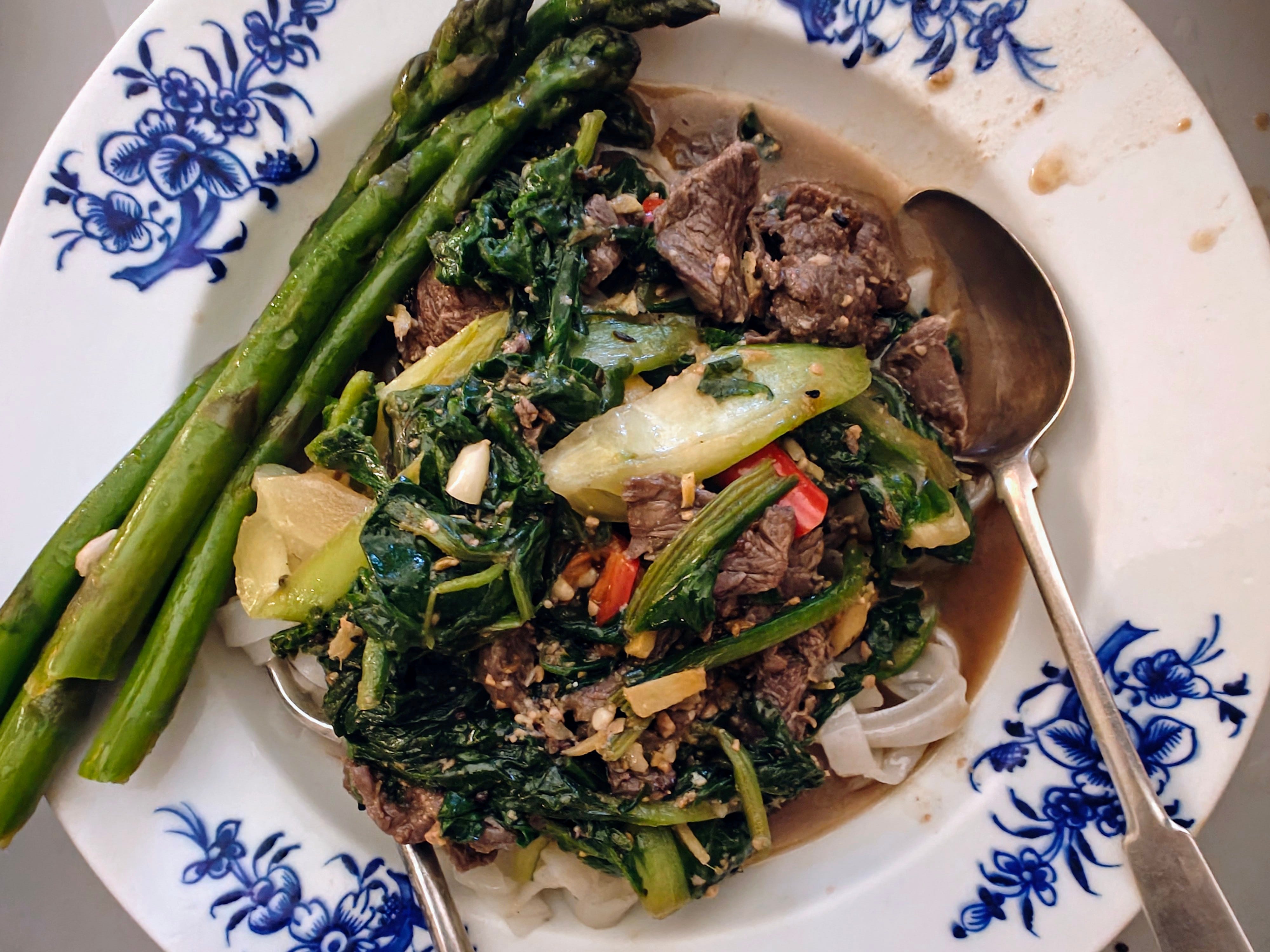
a heaped bowl of rather untraditional guay tio ladna, with new asparagus alongside
AND SOME RECOMMENDATIONS:
Miso and shio koji (which I mention quite frequently here, because it is such a terrific tool of flavour) are just two of a huge array of fermented ingredients that are gifts to the cook (and to the guts of all who eat them). If you’re interested in Fermentation, I highly recommend Ken Fornataro’s substack, called @CulturesGroup, and Kirsten Shockey’s posts @FermentingChange.
Lovely piece Naomi—and as always that dish sounded so delicious. I was also excited to see asparagus at Wychwood this past weekend. Milan at Bizjak Farms says his strawberries are two weeks away. Dare I start dreaming about tomatoes yet?
What a lovely article. We can have new beginnings even in our dotage!
Thank you, Naomi.